Lingering Effects of the Bush Doctrine on Contemporary US Foreign Policy
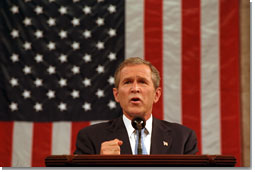
The Bush Doctrine, formulated in the wake of the tragic 9/11 attacks in the US might officially be an inactive approach to contemporary US foreign policy, but it introduced a stark shift in the intent and use of force. It was understood and accepted that a military retaliation would be the apt mechanism to combat the perpetrators of the 9/11 attacks, under President George W. Bush’s banner of GWOT - Global War on Terrorism. However, the loose labelling of the ‘enemy’ as terror - ranging from organisations to individuals to movements to nations, i.e. any entity that poses terror has yielded grave chinks in the armour of the American Empire. Subsequent US foreign policies are presumably still drafted on the dated Bush Doctrine Template, which can explain American participation in the ongoing conflict with Iran, animosity with Venezuela, eye on Greenland, etc. which stands in contrast with President Trump’s much championed America First policy. Let us understand the Doctrine and how it shows through the cracks of US foreign strategies and engagements to this date
The Bush Doctrine
In an instance of granting inordinate power to the government, especially the President, the US officially adopted a set of striking foreign-policy strategies in 2002, under the presidency of George W. Bush. In his address to the congress post the attacks, Bush describes the enemy as a ‘radical network of terrorists and every country that supports them’ declaring that the US shall wage a War on Terror. The message, that the war to be waged was not just against the direct perpetrator of the 9/11 attacks, i.e. Al-Qaeda, or the Taliban regime harbouring them, was murky at the time. Amidst this, The Bush Doctrine emerged as a solid spine to this strategy and equipped the US to make decisions and act unilaterally1 unconstrained by allies or the authorization of international organisations, have a worldwide scope when it comes to striking, undertake the Right to Strike first preemptively in case of any imminent, gathering, emerging threat was perceived. While the word imminent denotes an immediate crisis to be dealt with, ‘gathering’ and ‘emerging’ crises would mean expected or in-process threats. Flimsy and rickety as it may be, the idea of tackling emerging threats would mean envisaging a permanent war. The Bush Doctrine acknowledged the idea of the War on Terror being a permanent war, included the dismantling of terrorist-harbouring regimes across the world to erase the slightest threat of any terror to the US, but also involved the annihilation of oppressive regimes and their replacement with democracies friendly to the US. Replacement of oppressive regimes was sold as sufficient justification to intervene in another nation’s state of affairs and even to invade or occupy land for the same. Hence, the idea of a just war laced the ideas of the doctrine.
The Bush Doctrine did draw criticism by some, and its vocabulary was particularly perceived to be vague on purpose in order to legitimately act against what Bush called the ‘Axis of Evil’ - Iran, Iraq and North Korea.
The Doctrine in Action
When Saddam Hussain (former leader, Iraq) invaded Kuwait in 1990, there was fear that his next target would be Saudi Arabia - a giant oil exporter to the US. While already being engaged in a full-scale conflict with the Taliban-ruled Afghanistan to search and deliver the 9/11 mastermind, Osama Bin Laden to justice, the US in 2003 also invaded Iraq claiming its links with Al-Qaeda and sheltering terrorists. The interim government in Iraq then organised by the US, put Saddam Hussain on trial who was executed in 2006 through the verdicts of the Iraqi Special tribunal.
This was the Bush Doctrine in prime action.
Decades later, with subsequent changes to the US administration and adoption of new foreign policies, the tenets of the Bush Doctrine appear to season the dynamics of the US with other global players. This qualifies to offer substantial explanation to the recent US-Israel’s military campaign against Iran under the suspicion of Iran’s supposed existing and growing nuclear capabilities and the fear that Iran would deploy its alleged WMDs (Weapons of Mass Destruction) for posing terror. This calls to mind the aforementioned Bush-administered US invasion of Iraq on grounds that, “Iraq's weapons of mass destruction are controlled by a murderous tyrant, who has already used chemical weapons to kill thousands of people.1” It should be noted that no WMDs were found in Iraq. A 2005 report issued by Commission on the Intelligence Capabilities of the US mentions:
“While the intelligence services of many other nations also thought that Iraq had weapons of mass destruction, in the end it was the United States that put its credibility on the line, making this one of the most public and most damaging intelligence failures in recent American history.”
Like the Iraqi invasion, there is no intelligence report to prove the presence of WMDs in Iranian possession. In a recent interview, Israeli Prime Minister Benjamin Netanyahu accused Iran of building and backing the terrorist proxy network which he structures to be the trio of Hezbollah, Hamas and the Houthis. With this, PM Netanyahu justifies US backed Israeli preemptive strikes on Tehran by indicting Iran of uranium enrichment beyond permissible limits and providing safe havens to terrorists. Iran and Israel hostilities go long back in history and have severed especially with Iran’s open support and recognition of Palestine - a prime adversary of Israel. In his speech2 on the US-Israel military campaign President Trump states his reasons to collaborate with Israel and attack Iran. Calling Iran the number one state sponsor of terrorism, he cited the history of US-Iran historical tensions - Iranian attacks on Americans worldwide and stated the danger of not undertaking preventive measures soon.
Hence, consciously or otherwise, the Trump administration has been observed to be operating on the Bush Doctrine blue-print of pursuing regime-change with an unconstrained right to strike. The repercussions of functioning in the shadow of the Doctrine are likely to be catastrophic globally but especially for the USA.
American Empire’s future
While the entire world is likely to head to an economic meltdown owing to tensions between US-Israel and Iran, Professor Richard Wolff claims that we may now be witnessing the historic and accelerated passing of the American Empire which once replaced the global hegemony of Europe with the dominance of the dollar and the mighty US military. It can be fairly argued that Trump - in stark contrast with the Bush Doctrine tenets - is attempting to reassert American hegemony by a more muscular-natured foreign policy prioritising and keeping domestic affairs paramount e.g. immigration restrictions. This is part of his MAGA campaign and the America First Policy, where the administration strategised walking away from alliances or allied-nations that are benefitting through exhaustion of US resources and imposing global unprecedented tariffs to the benefit of the US. With the America First Policy, the US also sternly decided to stay out of any external global issues to avoid burdening itself.
However, US’s current war engagements, its intervention in South America, Cuba, offer to buy off Greenland, supposed defusing of tensions between India and Pakistan in April 2025, involvement in Taiwan, threats4 to take over the Panama Canal and even Canada - are a diametrically opposite move to the America First Policy and instead align yet again with the philosophy of the Bush Doctrine.
Professor Wolff says that despite the National Security Strategy 3(November 2025) claiming that the, “elites [of America] badly miscalculated America’s willingness to shoulder forever global burdens..” - and how Trump now welcomes ‘correction’- the US seems to not have learnt from the historical failures of its war engagements and is doing a template-repeat with Iran.
Karl Marlantes, Navy Cross Awardee writes in the Time5;
“In Vietnam, Afghanistan, and Iraq we sacrificed our young and spent massive amounts of money fighting to build nations that look and think like we do, a goal that most Americans don’t really care about, especially when they don’t face getting drafted. In those wars there was no direct threat to Americans that our fundamental values would be taken from us.”
The military expenditure and the human cost has been immense for the US as well as for the counter parties. Internally - owing to the conflict in Iran - the income disparity has widened, the defence spending is now moving toward a trillion dollar budget while there are tight strains on the domestic kitchen table with food prices6 soaring. The stock market may be flourishing but it is to be noted that the richest 10% of Americans own 80% of the shares, hence it benefits only a few and is next to irrelevant for the rest. The allyship of nations with the US has suffered a blow as well, with nations refusing to participate in the conflict from the side of the US despite Trump’s call for the same. It is an exigent and critical situation of deepened crisis in the US that seems to be neglected due to preoccupation with external affairs.
Conclusion
In its purported quest of pursuing the HST (Hegemonic Stability Theory), the US has resorted to foreign policies of diverse natures. In its time and today, a major foreign policy revolution in the US is arguably The Bush Doctrine. Even in its dormancy, it continues to shape wars and decide the fate of countries - especially those that are non-allies to the US. Overtime it has faced massive backlash having gathered critique from scholars who deem the doctrine to be craving for a US-dominated unipolar world, being a neo-conservative approach to building national interest at the expense of other nations, putting the US economy on permanent war footing and permitting the US to safely carry out its neo-imperialist agendas. With the belligerent-natured actions undertaken by the US globally today, it is neither easy to refute these critical claims nor ignore the substantial and consequential re-emergence of the Bush Doctrine through the cracks of the current US foreign policy.
Endnotes
1. https://www.theguardian.com/world/2002/oct/08/iraq.usa
2. https://www.youtube.com/watch?v=EGDkKMZ4klk
3. https://www.whitehouse.gov/wp-content/uploads/2025/12/2025-National-Security-Strategy.pdf
5. https://time.com/6092818/iraq-afghanistan-unnecessary-wars/
6. https://time.com/article/2026/05/13/inflation-gas-prices-food-tariffs-trump/\
7. https://www.lunduniversity.lu.se/lup/publication/1561219
8. https://link.springer.com/article/10.1057/s41311-023-00461-9
Others;
a) The 60 Minutes Interview of PM Benjamin Netanyahu
b) Decline of the US Empire with Richard Wolff (Al Jazeera)
c) JStor articles on American Hegemony and Interventionist Nature
d) Turning Point: 9/11 and the War on Terror (a Netflix Documentary)
e) DW Commentary on US-placed limitations on Cuba
Author Remarks:
This article seeks to primarily focus on the continued interventionary nature of the US foreign policy, and is time sensitive to the period between 1990 and 2026 (till date). The motives of such acts undertaken by the US have been cited as per official claims made by Trump’s office. Deepened analysis of true ulterior motives (e.g. eventually the expansionary system of capitalism at play) has been kept out of this article as of now owing to that being a fresh angle of analysis reasonably beyond connections with the Bush Doctrine.
(The views expressed are those of the author and do not represent the views of CESCUBE)
Image Source: The White House