The Strait of Hormuz and India’s Energy Security: Strategic Vulnerabilities in Critical Sea Lanes of Communication
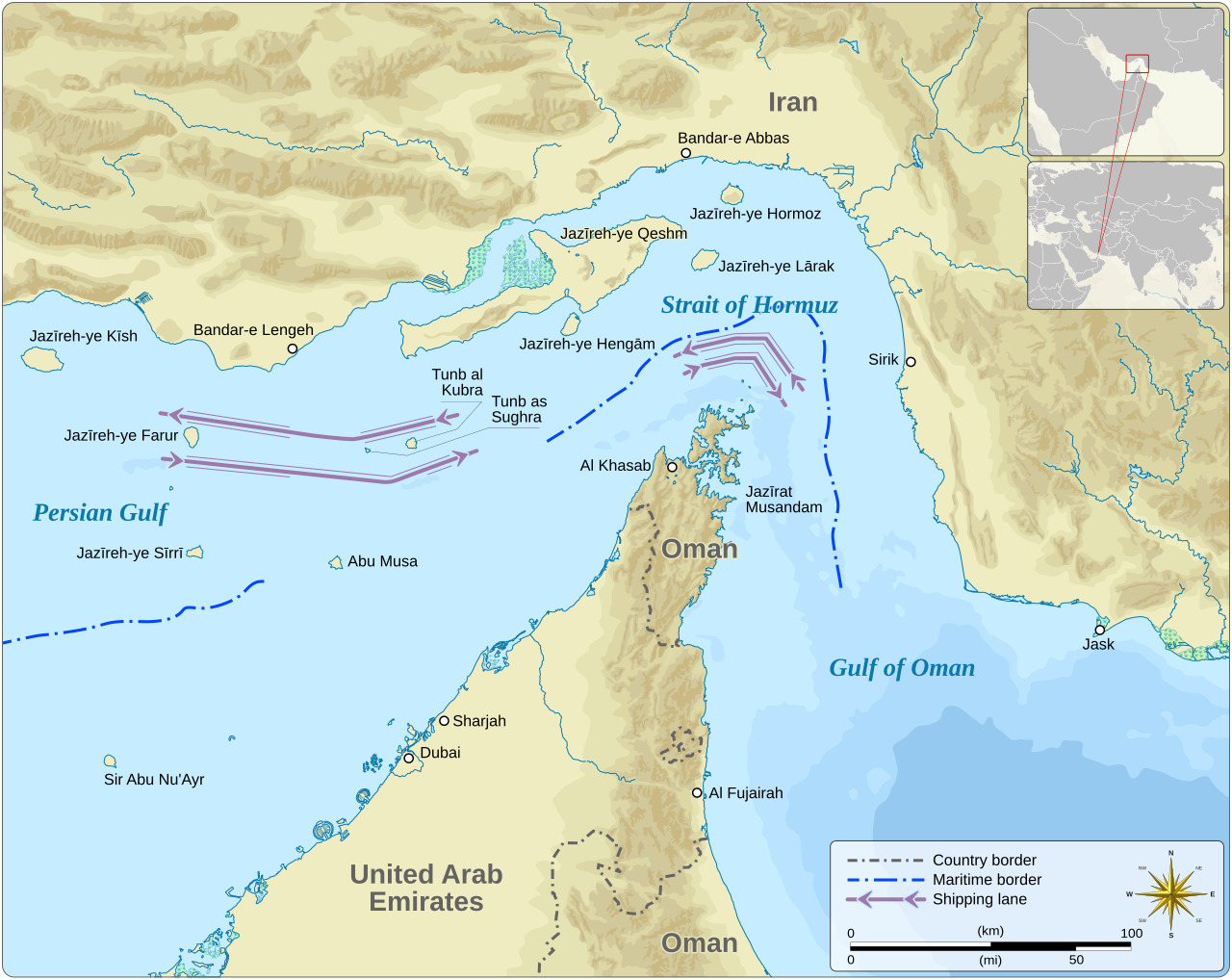
The Strait of Hormuz constitutes a critical chokepoint in the global energy architecture, rendering India’s energy security structurally vulnerable to disruptions arising from regional instability and maritime insecurity. With a significant dependence on West Asian crude oil and LNG imports, any escalation in conflict or blockade scenarios directly impacts supply continuity, price stability, and broader economic resilience. While India has undertaken measures such as diversification of energy sources, expansion of strategic petroleum reserves, and strengthened naval presence to secure Sea Lanes of Communication (SLOCs), these responses mitigate but do not eliminate systemic exposure. The persistence of geopolitical tensions, coupled with rising risks to maritime transit, underscores the need for a more resilient and adaptive energy security framework that balances immediate supply imperatives with long-term strategic autonomy and maritime capability.
Introduction
The Strait of Hormuz remains one of the world’s most critical energy chokepoints, through which a substantial share of global crude oil and liquefied natural gas flows. For a country like India, whose economic growth is closely tied to stable energy supplies, dependence on West Asia for energy imports underscores the strategic importance of secure Sea Lanes of Communication (SLOCs). Any sustained disruption due to regional conflicts, blockade scenarios, or naval escalation like the ongoing West Asian crisis can pose significant risks to energy security and economic stability as emphasised by the Ministry of Petroleum and Natural Gas and the Parliamentary Standing Committee (2023) which stressed expanding crude sourcing, building ~90-day strategic reserves, and strengthening logistics.[i] Recognising these vulnerabilities, the Government of India prepared a policy response beforehand to diversify energy imports, increase strategic petroleum reserves, and ensure maritime surveillance as in 2026, Union Minister Hardeep Singh Puri informed the Lok Sabha on 12 March 2026 that India has significantly enhanced its energy resilience with ~70% non-Hormuz sourcing and increased LPG production to safeguard essential sectors.[ii]
Importance of the Strait of Hormuz as a global energy chokepoint
As the conflict between Iran and Israel continues to escalate, the Strait of Hormuz has become a point of scrutiny among international observers, situated between Oman and Iran, the Strait of Hormuz is deep and wide enough to accommodate the world’s largest crude oil tankers. It serves as a vital oil chokepoint that connects the Persian Gulf with the Gulf of Oman and the Arabian Sea. Large barrels of oil transit through this strait and very few options are available to move oil out the strait if it is closed.[iii] While most chokepoints can be bypassed by using other routes, doing so would greatly increase transit times. Some chokepoints, however, have no practical alternatives. The world energy prices can potentially increase if the oil is unable to pass a major chokepoint. Chokepoints are narrow channels that are critical to global energy security.
According to the analysis of the U.S. Energy Information Administration, “World Oil Transit Chokepoints report in the first half of 2025, Asian markets received 89% of the crude oil and condensate that crossed the Strait of Hormuz. In the first half of 2025 the main destinations were China, India, Japan, and South Korea that accounted for 74% of all Hormuz crude oil and condensate flows. With China being the largest destination for LNG flows transiting Hormuz. China dominated 20% of the global LNG trade transiting the Strait of Hormuz.[iv] In the first half of 2025 total world petroleum and other liquids supply was about 104.4 million barrels per day. It was estimated that about 76% of that amount travelled via seaborne trade. Oil tankers accounted for 28% of the world’s shipping in 2024, according to data from the United Nations Conference on Trade and Development (UNCTAD).

Figure 1: Maritime oil trade flows through the Strait of Hormuz (Q1 2025).
Source: Statista (2026), based on U.S. Energy Information Administration (EIA) data.
https://www.statista.com/chart/35914/destination-maritime-crude-oil-strait-of-hormuz/
The significance of the Strait of Hormuz as a key global energy chokepoint can be seen by the fact that Iraq and Kuwait rely entirely on this strait for their energy supply. While Saudi Arabia and the United Arab Emirates have some alternative infrastructure that allows for limited crude oil exports outside the strait, these options do not fully substitute for the large volumes typically shipped through Hormuz.[v] In 2026, amid the ongoing Iran–U.S.–Israel conflict, multiple merchant ships, oil tankers, and cargo vessels were targeted in and around the Strait of Hormuz, causing major concern about global energy security. The Iranian Islamic Revolutionary Guard Corps has also claimed that the strait is effectively closed to international shipping.[vi]
Fertiliser supply chain in particular is disturbed in addition to various other commodities markets that have been affected due the shipping disruptions in the strait of Hormuz. Over 30% of the global trade in urea passes through the Strait, alongside about 20% of the trade in ammonia and phosphate, which poses risks to food prices and security.[vii] Since some countries use imported LNG to run domestic fertiliser plants and Sulphuric acid is used in refining petroleum and critical minerals such as copper, nickel, and zinc. Around half of global seaborne sulphur trade also moves through the Strait of Hormuz and any disruptions in this sector could have indirect effects on energy markets.
India’s dependence on West Asian crude oil and LNG imports
India is the world’s largest energy consumer and therefore its dependence on imported oil and gas has shaped its energy strategy. To reduce dependence on any one region it diversifies sources by the deliberate strategy of purchasing crude oil from more than 40 different countries around the world. Russia dominates the top-most position as India’s largest crude supplier after the Western sanctions reshaped global energy trade flow.
Saudi Arabia supplies about 1.01 million barrels per day becoming the second-largest supplier of crude oil to India. As per India’s refining infrastructure public-sector refineries are set up to process its medium and heavy grades of crude oil, which is particularly supplied by Iraq making it another prominent supplier, by shipping about 1.01 million barrels per day. The strengthened economic cooperation agreements between the United Arab Emirates and India have led to the UAE securing a key position in India’s import portfolio as roughly 0.55 million barrels per day of crude oil arrive from the UAE. Kuwait is the additional supplier that further helps to diversify the supply network.[viii]
Nigeria, Mexico, Brazil, Guyana, Angola, and other west African nations have also contributed to the diversification strategy, particularly as India seeks to reduce its reliance on West Asian energy shipments during periods of instability. The public-sector oil companies like Hindustan Petroleum Corporation Limited, Indian Oil Corporation and Bharat Petroleum Corporation Limited signed a deal to import 2.2 million tonnes of LPG annually from the United States’ Gulf Coast. To counter the shortage India will be looking to import gas from Norway and the United States, according to the report.
India is the fourth and second largest importer of liquefied natural gas (LNG) and liquefied petroleum gas (LPG) respectively. The recent crisis has already started to impact LPG supplies, which are a vital fuel used extensively in households and commercial sectors across India. Due to the disruption in the transit of energy through the Strait of Hormuz since the beginning of the conflict, supplies from oil-rich West Asian countries have fallen drastically compared to the flow in February. India imported LNG worth $ 9.2 billion from West Asia, accounting for about 68.4% of its total LNG import in the year 2025 but amidst the conflict in the Gulf countries Qatar’s Petronet LNG suspended LNG delivery to GAIL from March 4 2026 due to restrictions affecting vessel movement. [ix]
Role of Sea Lanes of Communication (SLOCs) in sustaining India’s economy
Sea Lanes of Communication (SLOCs) are critical maritime routes that describe the sea as the lifeblood of India’s commerce, as nearly 95% of India’s trade by volume and about 70% by value is transported through maritime routes.[x] With a 7,516 km coastline and a geographically strategic location in the Indian Ocean, SLOCs play a crucial role as the lifelines of India’s economy.
India’s Maritime doctrine is based on the element of protecting the Sea Lines of Communication (SLOCs). The maritime power of any country is tested by its ability to safeguard the SLOCs during a period of crisis. India has demonstrated its operational capability and institutional experience in safeguarding maritime trade routes through the Sankalp in 2019, ensuring the safety of Indian-flagged merchant vessels in the Persian Gulf and Gulf of Oman following attacks on oil tankers.[xi]
Rising tensions and attacks on merchant ships near the Strait of Hormuz have disrupted global shipping and energy supplies, with several vessels struck by projectiles and maritime mines during the ongoing regional conflict.[xii] These incidents have increased risks for commercial navigation and even led to casualties among seafarers operating in the region
Recent developments in 2026 are particularly critical for India so in response India has intensified diplomatic engagement with regional actors and deployed naval escorts to safeguard Indian-flagged vessels.[xiii] Recently, LPG tankers bound for India were escorted across the Strait by the Indian Navy amid heightened security concerns, demonstrating the country’s commitment to protecting its maritime trade routes and energy lifelines.
Risks posed by regional conflict, blockade scenarios, or naval escalation
The ongoing conflict between Iran, the United States, and other regional actors in West Asia has significantly heightened the risk to India’s energy security. Reports indicate that multiple LPG tankers, which were scheduled to arrive in India, are stranded in the Persian Gulf due to restrictions imposed on maritime traffic. This disruption has created an environment of domestic LPG shortages, pressuring the government to invoke the Essential Commodities Act, 195,5 to manage the Liquefied Petroleum Gas (LPG) supply.[xiv] If the conflict is prolonged India could face industrial slowdowns, and shutdown of commercial establishments, particularly in energy-intensive sectors. The West Asia crisis could also affect India’s financial markets, with energy price variation influencing stock market performance and investor confidence.
Operation Sankalp launched on June 19, 2019. 23 Indian Navy warships were deployed in rotation across the Gulf of Oman and the Persian Gulf, and several vessels continue to remain stationed in the region that provides surveillance and protection to the Indian commercial ships. Two Indian-flagged LPG tankers owned by the Shipping Corporation of India, Shivalik and Nanda Devi, had successfully crossed the Strait of Hormuz and reached India under the surveillance of the Indian Navy.[xv]
On 4 March 2026 The United States recently torpedoed the Iranian naval frigate IRIS Dena near Sri Lanka during the ongoing Iran war, killing dozens of sailors. Shortly after the ship had participated in the MILAN 2026 and the International Fleet Review 2026 hosted by the Indian Navy in Visakhapatnam expanding the conflict beyond the Persian Gulf and affecting wider maritime spaces in the Indian Ocean region. Meanwhile Another Iranian naval ship, IRIS Lavan, was allowed to dock at Kochi due to technical issues, and its crew stayed at Indian naval facilities.[xvi]
Policy responses: diversification of energy imports, strategic petroleum reserves, and Indian naval presence in the Indian Ocean
India has significantly increased its reliance on Russian crude to avoid the conflict-affected Gulf route and undertaken many new initiatives such as LPG sourcing from the US and finalising strategic energy agreements with Canada. India is now more focused on alternative regional suppliers to broaden its import portfolio, shifting imports from Middle Eastern suppliers to Atlantic Basin nations like West Africa and Latin America.[xvii] To compensate for disruptions to Qatari shipments, India is sourcing extra LPG through alternate routes and increasing domestic production capacity. Additionally, India also plans to secure crude through Saudi Arabia from the Red Sea and Abu Dhabi Crude Oil Pipeline (to Fujairah) to bypass the Strait of Hormuz.
Experts believe that India’s near-term supply looks secure, but there are inherent risks in the system due to the large dependence on imports. In addition to commercial stocks held by refiners and oil marketing firms, India maintains strategic petroleum reserves. The purpose of these buffers is to handle brief supply shocks. Based on Kpler inventory data, commercial crude stocks are around 100 million barrels, including volumes in the SPR facilities at Mangalore, Padur and Visakhapatnam.[xviii] According to an ANI report at present India has around 8 weeks of crude oil and petroleum products inventory. This includes India’s strategic reserves.
Indian Navy has served as a “first responder” in the Red Sea and Gulf of Aden since December 2023, It has carried out several anti-piracy operations, including protecting Indian-flagged tankers in the Strait of Hormuz In addition to regularly deploying MARCOS commandos to thwart hijacking attempts in the Arabian Sea, India is bolstering its position as a regional maritime force through naval development headed by INS Vikrant and meaningful involvement in Exercise Milan 2026.[xix]
Conclusion
In conclusion, the Strait of Hormuz can be considered the inevitable geographical bottleneck and a strategic vulnerability in India’s energy security policy. India remains vulnerable to disruptions arising from regional instability and great power conflict between Iran, Israel, and the United States of America; however, there is notable progress through diversifying energy imports and strengthening maritime capabilities. The challenges therefore lie not only in meeting the immediate energy requirements but to reimagine energy security framework from future perspectives that would ensure resilient supply chains, accelerate the transition to cleaner and more sustainable energy options and undertake a more active, sustained, and strategic role in protecting sea lanes of communication. Amidst the geopolitical tension and increasingly uncertain global order India’s ability to navigate the vulnerabilities will ultimately depend on its potential to balance strategic autonomy and the multilateral maritime and energy diplomacy framework
References
[i] PRS Legislative Research. “Review of Policy on Import of Crude Oil.” Accessed March 18, 2026. https://prsindia.org/policy/report-summaries/review-of-policy-on-import-of-crude-oil
[ii] Government of India, Press Information Bureau. “Union Minister for Petroleum and Natural Gas Shri Hardeep Singh Puri’s Statement in Lok Sabha on Steps Taken to Address Energy Supply Disruptions.” March 12, 2026. https://www.pib.gov.in/PressReleasePage.aspx?PRID=2239021
[iii] U.S. Energy Information Administration (EIA). “Amid Regional Conflict, the Strait of Hormuz Remains Critical Oil Chokepoint.” Today in Energy, June 16, 2025. https://www.eia.gov/todayinenergy/detail.php?id=65504.
[iv] U.S. Energy Information Administration. “World Oil Transit Chokepoints.” Last modified June 25, 2024. https://www.eia.gov/international/content/analysis/special_topics/World_Oil_Transit_Chokepoints/.
[v] Ballast Markets. “Strait of Hormuz: The World’s Most Critical Oil Chokepoint.” November 24, 2025. https://content.ballastmarkets.com/blog/2025-11-24-strait-hormuz-oil-chokepoint/.
[vi] Times of India. “Oil Tanker Carrying 15 Indian Nationals, 5 Iranians Attacked Near Oman Coast; 4 Crew Injured.” The Times of India, March 2, 2026. https://timesofindia.indiatimes.com/india/oil-tanker-carrying-15-indian-nationals-5-iranians-attacked-near-oman-coast-4-crew-injured/articleshow/128930733.cms.
[vii] International Energy Agency (IEA). “The Middle East and Global Energy Markets.” Accessed March 11, 2026. https://www.iea.org/topics/the-middle-east-and-global-energy-markets.
[viii] India Energy Imports: Oil and Gas Suppliers Explained Amid Iran War and Hormuz Tensions.” Firstpost, 2026. https://www.firstpost.com/explainers/india-energy-imports-oil-gas-suppliers-hormuz-iran-war-russia-qatar-explained-13988259.html.
[ix] Sawhney, Anoushka. “Why the West Asia War Is Threatening India’s Economy: Rising Fuel Prices and Household Impact.” The Economic Times, March 2026. https://economictimes.indiatimes.com/industry/energy/oil-gas/why-the-west-asia-war-is-threatening-indias-economy-rising-fuel-prices-and-household-impact/articleshow/129491877.cms
[x] Press Information Bureau. “Maritime India – From Vision 2030 to Amrit Kaal 2047.” October 26, 2025. https://www.pib.gov.in/PressReleasePage.aspx?PRID=2182563®=3&lang=2
[xi] Singh, Karambir. “Iran-Israel War: Keep India out of Hormuz Harm’s Way.” The Economic Times, March 10, 2026. https://m.economictimes.com/opinion/et-commentary/iran-israel-war-middle-east-conflict-keep-india-out-of-hormuz-harms-way/articleshow/129410178.cms.
[xii] US Attacks Iran’s Mine-Laying Boats in Strait of Hormuz as Tensions Rise over Oil,” The Guardian, March 11, 2026, https://www.theguardian.com/news/2026/mar/11/us-iran-strait-of-hormuz-mine-boat-attacks
[xiii] Ujwal Jalali, “First LPG Ships in Two Weeks Cross Strait of Hormuz under Indian Navy Escort,” The Tribune, March 13, 2026, https://www.tribuneindia.com/news/india/first-lpg-ships-in-two-weeks-cross-strait-of-hormuz-under-indian-navy-escort/.
[xiv] Indian-Flagged LPG Tanker Crosses Strait of Hormuz; Two Vessels Headed to Gujarat Ports,” The Indian Express, March 15, 2026, https://indianexpress.com/article/business/indian-flagged-lpg-tanker-crosses-strait-of-hormuz-10581380/.
[xv] ET Online. “Strait of Hormuz Watch: How Navy Warships Are Protecting India-Bound Ships Amid Rising Gulf Tensions.” The Economic Times, March 16, 2026. https://economictimes.indiatimes.com/news/defence/strait-of-hormuz-watch-how-navy-warships-are-protecting-india-bound-ships-amid-rising-gulf-tensions/articleshow/129584358.cms
[xvi] Menon, Adithya Krishna. “India Allowed Another Iranian Warship to Dock in Kochi Days Before US Torpedoed IRIS Dena.” The New Indian Express, March 6, 2026. https://www.newindianexpress.com/nation/2026/Mar/06/india-allowed-another-iranian-warship-to-dock-in-kochi-days-before-us-torpedoed-iris-dena.
[xvii] The Times of India. “US-Iran War Impact: How Can India Shock-Proof Itself against Future Oil, LPG, LNG Supply Disruptions?” March 10, 2026. https://timesofindia.indiatimes.com/business/india-business/us-iran-war-impact-how-can-india-shock-proof-itself-against-future-oil-lpg-lng-supply-disruptions/articleshow/129401144.cms
[xviii] The Times of India. “US-Israel-Iran War Impact on India’s Energy Security: Exposure to Middle East; How Much Oil, LPG, LNG Reserves Do We Have?” March 4, 2026. https://timesofindia.indiatimes.com/business/india-business/us-israel-iran-war-impact-on-indias-energy-security-exposure-to-middle-east-how-much-oil-lpg-lng-reserves-do-we-have/articleshow/128975545.cms
[xix] Pant, Harsh V., and Kartik Bommakanti. “Dynamic Shift: Indian Navy in the Red Sea.” Observer Research Foundation, February 7, 2024. https://www.orfonline.org/research/dynamic-shift-indian-navy-in-the-red-sea
(The views expressed are those of the author and do not represent the views of CESCUBE)
Image Source: Wikimedia