Internal Security and Regional Instability in South Asia: Spillover Effects and Strategic Risks for India
The evolving security landscape of South Asia reflects a complex interplay of domestic instability, transnational threats, and great-power competition, with significant implications for India’s internal security architecture. The persistenc...
South Asia comprises countries such as India, Pakistan, Sri Lanka, Bangladesh, Nepal, the Maldives, Afghanistan, and Bhutan, where almost one-fourth of the global population resides. Due to this reason, the South Asian region has faced the challenges of peaceful coexistence and cooperation. Traditionally, South Asia faced instability due to the conventional concerns related to the military interest, but presently scholars are greatly emphasising non-traditional security threats as the leading source of instability in the region.[i]
Over the past few years Indian neighbouring countries have been grappling with a range of domestic, regional, and global challenges. South Asian nations have witnessed violent popular uprisings that began with the dismissal of the elected governments. The "modus operandi" of such protests has tried to rewrite history through street violence and vandalism.[ii]
Civil Conflicts and Spillover Effects
Civil wars are disruptive and harmful to the stability of the state, not only for the states experiencing conflict but also for neighbouring states and other global players. The spill-over effects include tangible flows of people and resources, such as refugees, rebel forces, arms, and military supplies. The non-material effects of conflict, such as disruption of the economy, the spread of ideas, and changed political incentives across national boundaries, are referred to as intangible spill-over.[iii]
For example, the intensified civil conflict in Myanmar following the military coup in 2021 has led to an influx of refugees into north-eastern states of India like Mizoram, Nagaland and Manipur and concerns regarding illicit arms trafficking along Porus India Myanmar border. Manipur had also witnessed internal tension since 2023 due to ethnic polarisation, cross-border arms supply and weakened border governance.
Geopolitical Balancing and China’s Expanding Role
Since most of these countries are smaller than India so India suffers from what Serge Desilva Ranasinghe a defence and security analyst whose also Indian ocean specialist calls “kautilian dictum” which means the smaller countries that are surrounded by bigger countries naturally try to balance out the equation by establishing closer relations with distant but larger power and in this case, China seems to be the viable option for the neighbouring countries of India. The south Asia policy of China is mostly India centric resulting in security, economic and diplomatic ties with the neighbouring countries of India. Initiatives like the grand Belt and Road project (BRI) and China Pakistan Economic Corridor (CPEC) have considerably brought China much closer to the South Asian states.[iv]
Terrorism and Cross-Border Extremism
Failure of the government to address overwhelming challenges regarding development arising from rapid economic, social and demographic changes gradually became the prime factor behind the rise of extremism in Pakistan.[v] Terrorist organisations in South Asia operate sophisticated networks that span multiple countries using traditional and new ways of radicalisation as the Groups like Lashkar-e-Taiba, Jaish-e-Mohammed, and various factions of the Taliban have established bases, training camps, and operational cells across the border areas. These networks exploit the porous borders between countries like India, Pakistan and Afghanistan as weak border governance leads to these Areas becoming safe havens for terrorist activities. Pakistan provides easy movement for militants as Ethnic and religious connections across the border facilitate recruitment and support.[vi]
The Red Fort bombing incident that came to light on the 10th of November uncovers the new ‘white-collar’ terror module that led to the online radicalisation of the doctor involved in the attack. This shows an alarming shift towards the cross-border terror strategy of Pakistan where digital means by handlers operating from Pakistan and around the world are adapting to groom the highly educated professionals against anti-India activities. This affects India's internal security, influences its foreign policy, strains its economy, and undermines social cohesiveness. India's strategic environment would continue to be unpredictable and prone to crises as long as extremist networks are active in Pakistan.[vii]
Rohingya Crisis and Emerging Security Risks
The Rohingya refugee crisis has become a major problem for India as the Indian government views the presence of Rohingya refugees as a national security concern because of potential radicalisation, illegal immigration, and links to extremist groups. Pakistan's Harkat-ul-Jihad Islami-Arakan (HUJI-A) and the Inter-Services Intelligence (ISI) are connected to Organizations such as the Rohingya Solidarity Organisation, the Arakan Rohingya Salvation Army, and the Arakan Army, along with the Aqa-Mul-Mujahideen. They are reportedly mobilising the Rohingya Muslims against Buddhist in Myanmar. China is also reported to supply advanced weapons to this military group. Along the India-Bangladesh border, new jihadist and militant groups are emerging according to an intelligence assessment which has direct implications for maritime security in the Bay of Bengal.[viii]
Narco-Terrorism and Transnational Crime
Illegal drugs are used in South Asia as a market for consumption as well as a transit route. India is a transit hub for transnational operations, especially drug trafficking, and is situated between the Golden Triangle and Golden Crescent. Insurgent groups like the United National Liberation Front (UNLF), People's Liberation Army (PLA), and Kukis/Zomis are using the profit from drug sales to fund weapons, camps, recruitment, and training, effectively weaponising local populations. Myanmar, which is the world's centre for the production and trafficking of illegal drugs, also shares a long porous border with India. This surge is contributing to the trend toward narco-terrorism mainly in north eastern states of India. [ix]
External Powers and Regional Instability
Several security concerns are created due to the fact that most of the south Asian countries import energy heavily particularly oil and gas. Countries like Pakistan and Bangladesh also rely heavily on imports. 85% of India’s oil requirements are also imported. Price volatility, supply disruption and foreign exchange pressures are some of the security problems faced by countries of South Asia. Additionally involving Islamabad in Gulf defence indirectly leads to Beijing’s influence as Pakistan, which is considered as “iron brother” by China is increasingly reliant on China for procurement of arms and strategic support therefore the recent Saudi- Pakistan pact does more than elevate Islamabad’s role it provides China a channel to indirectly become a player in Gulf security.[x]
External players are also responsible for creating instability in the region like China’s debt trap diplomacy with Sri Lanka who suffered from a balance of payments crisis leading to ultimately giving Hambantota Port on lease to China Merchants Port for 99 years in 2017, which is strategically located near important shipping lanes of South Asia which is part of the larger string of pearls strategy of China
Following the overthrow of a long-standing leader of Bangladesh huge protests and transitional rule, have all contributed to Bangladesh's recent political turmoil. A complicated interaction of internal and international pressures results from the United States' balancing of economic influence and democratic advocacy with China's growing economic and political participation, which is considered as part of its larger strategic outreach in the Bay of Bengal region and the larger Indo-Pacific region.[xi]
Political unrest in Nepal leads to frequent coalition collapses and reshuffles since 2023–25 And reports suggest indirect intervention of China to secure the Tibet border and expand influence through the Belt and Road Initiative (BRI) project. U.S. engagement is often framed domestically as Pro-democracy but it is geopolitically motivated to Counter China’s influence in Nepal. [xii]
Conclusion
Regional instability in South Asia continues to pose profound challenges to India’s internal security that transcend borders. Regional instability in south Asia directly affects India’s border state and strategic corridors particularly in northeast and Bay of Bengal region. India faces intensified threats of illegal migration, radicalisation, narco-terrorism, arms trafficking, and maritime insecurity due to regional instability caused by persistence of militancy in Pakistan and Afghanistan, great-power competition in the Indian Ocean, Conflicts in Myanmar and political unrest in Bangladesh and Nepal. Addressing these challenges requires a comprehensive strategy that combines economic integration, humanitarian engagement, border management, intelligence coordination, and regional diplomacy.
Apart from the domestic factors the regional turbulence and external geopolitical rivalries shape India's security environment resulting in national security interests becoming deeply interconnected with the foreign policy. India can safeguard it national security amidst the geo political turmoil in South Asia through sustained cooperation among the members countries and proactive role of India to counter the strategic risk
References
[i] Jawad, Khizar, Ghulam Shabbir, and Madiha Abbas. “South Asia and the Challenges of Regional Stability: Geopolitical, Security, and Developmental Perspectives.” Pakistan Languages and Humanities Review 9, no. 1 (2025): 528–539. https://doi.org/10.47205/plhr.2025(9-I)48.
[ii] Pandey, Pragya. Tremors of Geo-Political Churn in South Asia: A Sapru House Assessment. New Delhi: Indian Council of World Affairs, November 10, 2025. PDF file, accessed February 3, 2026. https://icwa.in/pdfs/TremorsGeoPoliticalWeb.pdf.
[iii] Pack, Tyler. “Civil War Spillover.” Oxford Research Encyclopedia of International Studies. May 22, 2024. Accessed February 6, 2026. https://oxfordre.com/internationalstudies/view/10.1093/acrefore/9780190846626.001.0001/acrefore-9780190846626-e-905.
[iv] India’s Rise as an Asia–Pacific Power: Rhetoric and Reality. Strategic Insights report, Lowy Institute. Accessed February 6, 2026. https://www.jstor.org/stable/resrep04017.
[v] Sadia Nasir, Rise of Extremism in South Asia, IPRI Paper 7 (Islamabad Policy Research Institute, October 2004), https://ipripak.org/wp-content/uploads/2014/01/paper7f.pdf
[vi] PolSci Institute. “Non-traditional Security Dynamics in South Asia: Terrorism, Organized Crime, and Environmental Challenges.” Last updated November 26, 2025. https://polsci.institute/south-asia/security-dynamics-south-asia-challenges/.
[vii] Telegram, VPNs and AI videos: How Pakistani handlers trained doctors from ‘white collar’ module; radicalisation began in 2019, The Times of India, November 24, 2025, sec. Delhi News, https://timesofindia.indiatimes.com/city/delhi/encrypted-apps-vpns-ai-videos-white-collar-jem-module-used-telegram-youtube-to-train-doctors-in-delhi-blast-case-radicalisation-began-online-in-2019/articleshow/125532370.cms.
[viii] Bhasin, Sumeer. “Shifting Sands in the Middle East and the Stakes for India.” Vivekananda International Foundation, October 7, 2025. https://www.vifindia.org/2025/october/07/Shifting-Sands-in-the-Middle-East-and-the-Stakes-for-India.
[ix] Upadhyay, Shailendra. “Rohingya Crisis: Security Concerns and Diplomacy Dilemma for India.” International Centre for Peace Studies (ICPS), December 18, 2024. https://www.icpsnet.org/index.php/issuebrief/Rohingya-Crisis-Security-Concerns-Shailendra-181224
[x] Mixed Migration Centre. Keeping Track in Asia: Migration in the Context of Geopolitical Turmoil. Mixed Migration Review 2025. Accessed February 10, 2026. https://mixedmigration.org/publications/mmr/2025/keeping-track-migration-asia-2025/?
[xi] Moneycontrol World Desk. “Dhaka at the Crossroads: Why Bangladesh Elections Have Become a US-China Battleground | Explained.” Moneycontrol, January 22, 2026. https://www.moneycontrol.com/world/dhaka-at-the-crossroads-why-bangladesh-elections-have-become-a-us-china-battleground-explained-article-13786658.html
[xii] Basu Ray Chaudhury, Anasua, and Subhangi Mukherjee. “Nepal’s Gen Z Uprising: A New Test for India–China Dynamics.” Observer Research Foundation (ORF) Online, December 19, 2025. https://www.orfonline.org/expert-speak/nepal-s-gen-z-uprising-a-new-test-for-india-china-dynamics.
(The views expressed are those of the author and do not represent the views of CESCUBE)
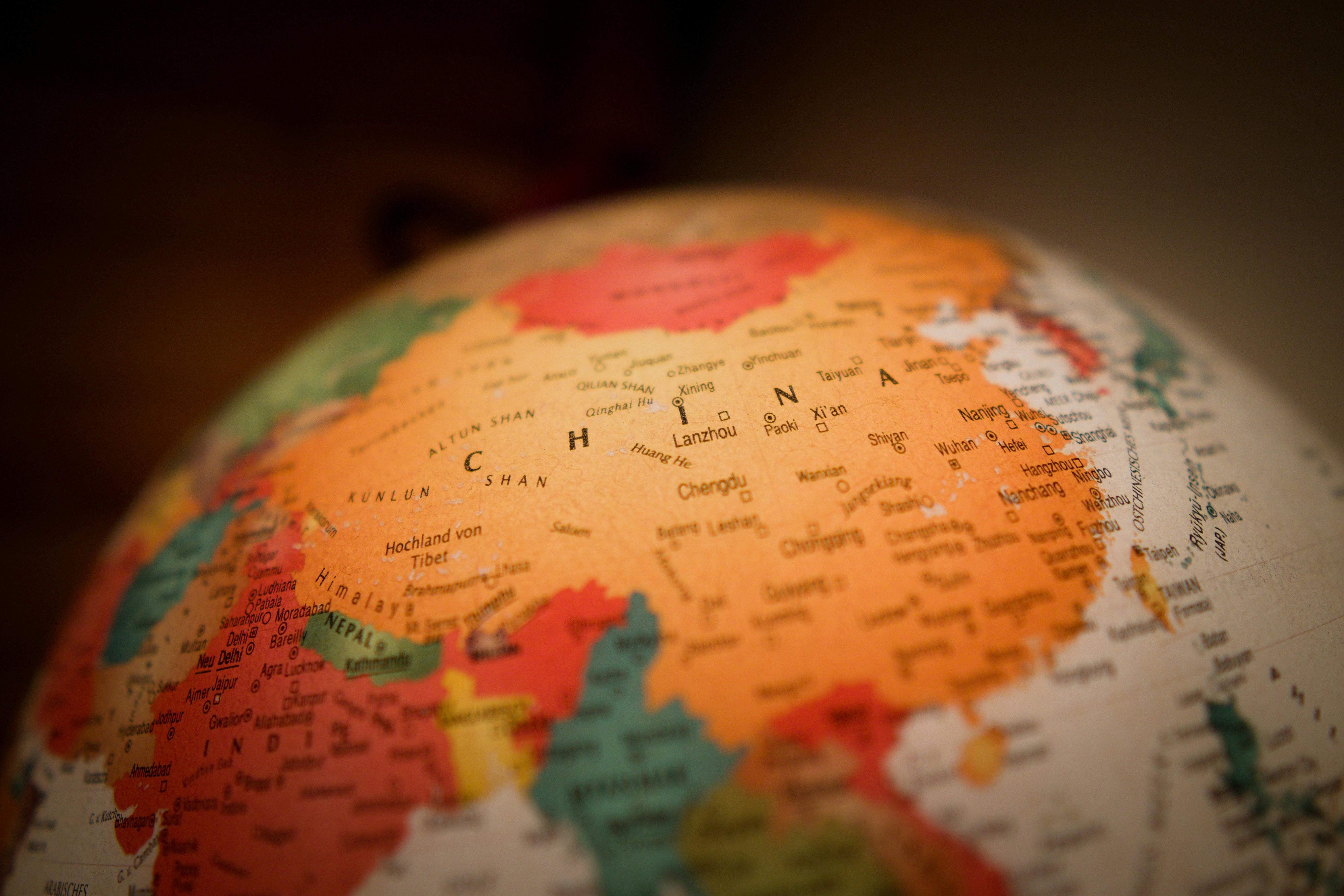
Photo by Christian Lue on Unsplash

Riddhi Suthar is a final-year undergraduate student of Political Science with academic interests in international relations, internal security, public policy, and governance. Her research engages with contemporary security dynamics, institutional frameworks, and policy processes in the Indian and global context. She has presented a research paper at an academic conference, demonstrating her commitment to scholarly dialogue and analytical research. She is currently interning at the Mahatma Gandhi Labour Institute, Ahmedabad, where she is gaining practical insights into labour policy, governance mechanisms, and socio-economic policy research.