Defence Contractors and American Strategy: Revisiting the Military-Industrial Complex
In the aftermath of former United States of America (USA) President Dwight D. Eisenhower’s farewell address in 1961, welcoming the development of large-scale industries working on military equipment, the same industries have now been in the...
This was closely followed by the Cold War, a time of difference which allowed the US to use any number of resources to stand out and above their communist counterparts. The Military Industrial Complex (MIC) constituted a significant locus of power during the Cold War. The complex refers to a network of military agencies and firms that produce military goods, along with the political and economic actors, such as legislators and businesses, that depend on the defense program. It was tailored to develop and produce military technologies equal to the existential threat perceived to be posed by the Soviet Union. However, the emergence and the subsequent growth of these industries is not only due to the fact that they are able to provide marginally superior equipment than government-based research and development centres. Up until the First World War, and even later, the United States of America was dependent on “citizen soldiers”, citizens who sacrificed their personal goals to support the nationalized war effort. They essentially built army equipment. However, both the First and Second World Wars required an enormous supply of guns, cannons, planes, ships, and other vehicles, as well as supplies, fuel, and ammunition. Such manufacturing demands placed a huge burden on the American citizenry, where everyone was not trained for such a task.
Following the end of the Second World War, officials in the US became convinced of the necessity for an industry dedicated to satisfying the military needs of the government. This concern gained more ground with the Korean War, during which private entrepreneurs who were contractually obligated to produce weapons and related military supplies worked closely with the US government to help the US armed forces operate with expediency. At the same time, the United States got embroiled into an arms race with the Soviet Union (USSR), which further made the suppliers essential, not only in the eyes of the American army and political officials, but also in the eyes of the public.
A mega industry is born:
The military industrial complex has the unique ability to continue to turn extraordinary profits, with an unwavering demand of their equipment, which leads to multinational corporations like Lockheed Martin, Boeing Co, to even have influence in American foreign policy decisions. This is mostly due to the unique position these corporations are in. The industry for military equipment never dies out. During the Cold War, weapons, including nuclear weapons, were amassed on a large scale in order to stand up to the Soviet Union, and surpass them. With the disintegration of the USSR, a period of American hegemony started, where we saw constant invasions and wars in West Asia, under the guise of democracy promotion. The invasion of Iraq, Afghanistan, Libya, Syria, and currently, Iran, has required massive arms and equipment, which the US has continued to amass, and very crudely put, business has continued to boom for the multinational corporations like Lockheed and Boeing. Moreover, the rise of China, and the continuation of Russia as an ideological enemy of the United States, along with the empowerment of nations like North Korea, continues to play into the hands of the military industrial complex, to counter which, the United States of America has assigned the Department of Defense a total of 1.43 trillion US dollars for the defense budget. This accounts for more than 10 per cent of the total budgetary resources for the Financial Year of 2026, for the United States. This business with the United States is supplemented by business with other countries in the East, most important of them being India, followed by Taiwan.
The United States is widely regarded as the country with the most advanced military and defence in the world. Since the end of the Cold War, military spending in the beginning of former President Clinton’s era was 265 billion US dollars, today, under President Trump, the amount already spent is 881 billion US dollars. This amount of spending undoubtedly gives these companies an amount of “undue influence” in the federal government (Eisenhower, 1961).
Undue influence:
With the amount of business that the United States and other nation-states engage in with these companies, it can safely be concluded that the continuation of wars and genocides in different parts of the world are in the profit of these corporations. Lockheed Martin for example, who is the world’s largest weapons manufacturer, supplies Israel with F-16 and F-35 fighter jets, which Israel has been using extensively to bomb Gaza. Israel also uses the company’s C-130 Hercules transport planes to support the ground invasion of Gaza. Lockheed Martin manufactures AGM-114 Hellfire missiles for Israel’s Apache helicopters. One of the main weapon types used in aerial attacks on Gaza, these missiles have been used extensively in 2023. Some 2,000 Hellfire missiles were delivered to Israel sometime between Oct. 7 and Nov. 14. On Dec. 28, Lockheed Martin was awarded a $10.5 million contract for continued support for Israel's fleet of F-35 warplanes. On an Oct. 17, 2023 call with investors, Lockheed Martin CEO, Jim Taiclet, “highlighted the Israel and Ukraine conflicts as potential drivers for increased revenue in the coming years.”
This amount of business stands for only one thing. Weapons manufacturers like Lockheed Martin and Boeing want the genocide in Gaza to continue, just as they want the war in Ukraine to continue. Regardless of whatever politics is at play in these regions, neither can be supported, because it leads to the deaths of innocent men, women, and most importantly, innocent little children, who are born and subsequently live in war zones. Votes in the United States Senate, and the United States Congress for the continuation of wars in Iran, for supporting the war in Ukraine, and diplomats using their veto power in the United Nations Security Council to continue the genocide in Gaza, only means that these officials in the federal government stand to profit as well, from the continuation of wars.
The implicit Western support of wars and genocides around the world is a shameful act of money-making, one that must be condemned. These nations, who work with, and are clients of the military industrial complex, engage in weapons deals with them, and prolong wars and genocides for money-making. The deaths of so many millions of individuals is nothing but collateral for them, their end goal is to ensure that their pockets are full. The involvement of weapons manufacturing multinational corporations is evident to the common man, and for a safer world, there must be protests against these companies’ activities.
References:
1. U.S. Politics: The Military-Industrial Complex | Social Sciences and Humanities | Research Starters | EBSCO Research. (n.d.). EBSCO. https://www.ebsco.com/research-starters/social-sciences-and-humanities/us-politics-military-industrial-complex
2. USAspending.gov. (n.d.). https://www.usaspending.gov/agency/department-of-defense?fy=2026
3. Henson, N., & Henson, N. (2026, March 21). Lockheed Martin is up 30% in 2026. Here’s what’s driving the rally. TIKR.com. https://www.tikr.com/blog/lockheed-martin-is-up-30-in-2026-heres-whats-driving-the-rally
4. Madeo. (n.d.). Companies Profiting from the Gaza Genocide. American Friends Service Committee. https://afsc.org/gaza-genocide-companies
5. Hartung, W. D. (2001). Eisenhower’s Warning the Military-Industrial Complex Forty Years Later. World Policy Journal, 18(1), 39–44. http://www.jstor.org/stable/40209730
(The views expressed are those of the author and do not represent the views of CESCUBE)
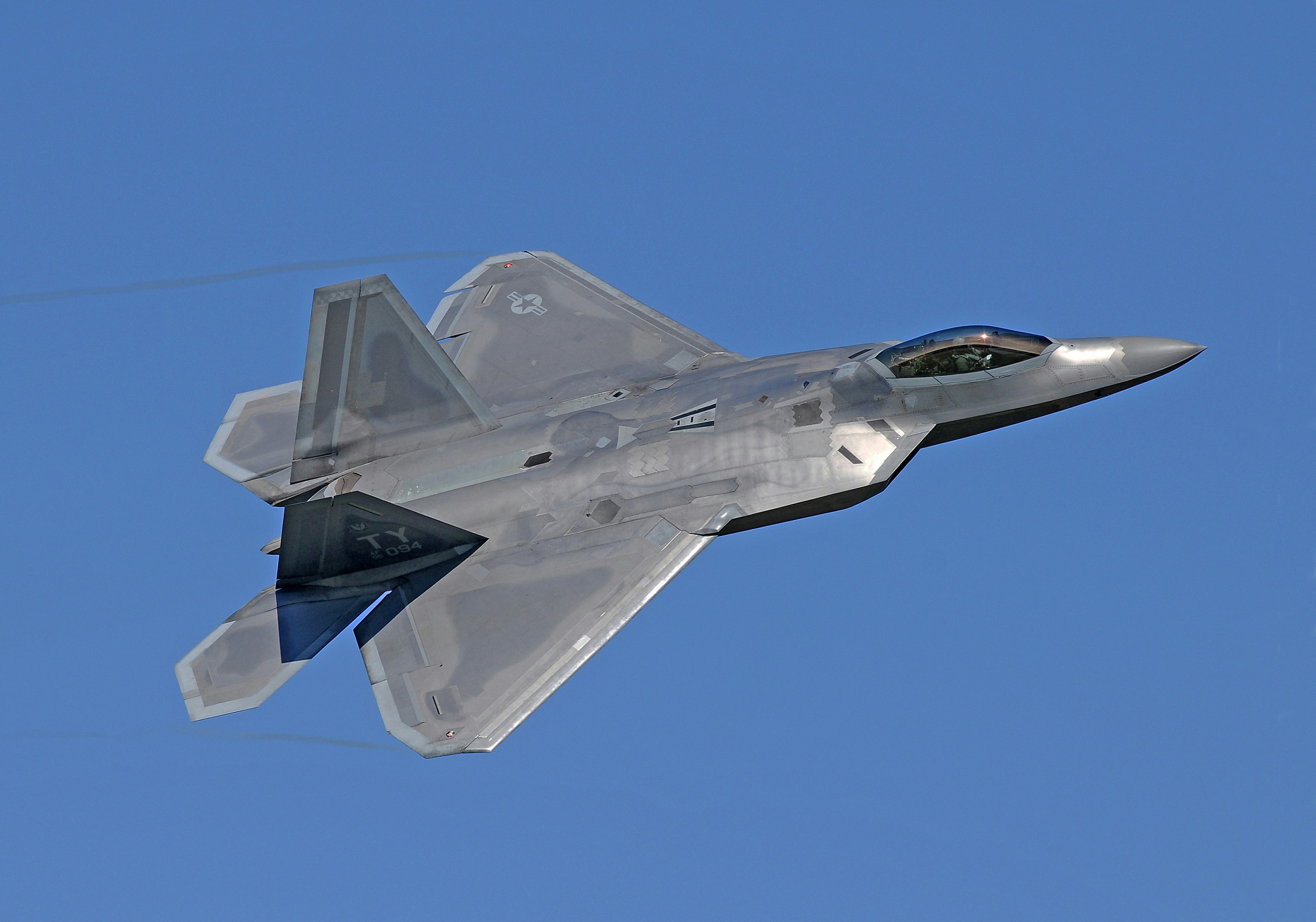
Image Source: Photo by Terence Burke on Unsplash

Rohitaswa Das is currently pursuing his BA Hons degree in Political Science from St. Xavier's College (Autonomous), Kolkata. He takes special interest in International Relations, keenly following US foreign policy decisions, and is also a massive fan of football. He loves. to read when free, and is also a national level debater.