Grey-Zone Maritime Rivalry: China's Strategies and Regional Responses in the East China Sea and Yellow Sea
The maritime security landscape in the East China Sea has experienced a major and long-term shift in the last ten years, shifting away from the periodical territorial conflicts to a state of long-term strategic rivalry characterised by pers...
The most advanced grey-zone practitioner in the maritime domain, especially in the East China Sea, has become the People’s Republic of China (PRC). By the coordinated action of coast guard ships and maritime militias, China has successfully managed to blur the line between civilian and military operations so that it can be able to make sovereignty claims without provoking a direct military conflict 1. The article explores the conceptual underpinnings of the grey-zone strategy, the institutional framework of the maritime approach of China, and the changing reactions to the grey-zone activities of regional actors, including Japan and South Korea, with the argument being that grey-zone operations are transforming the character of maritime conflict and require more multi-dimensional responses.
Grey-Zone Strategy in the Maritime Domain
Grey-zone operations can be most effectively viewed as a form of incrementalism, whereby states seek to achieve long-term strategic goals by a sequence of actions, which are ambiguous and incremental in nature, but which cumulatively lead to dramatic changes in the balance of power. Instead of trying to achieve decisive victories by engaging the opponent directly, this strategy is based on slow change that takes advantage of the fact that the opponent is risk-averse, especially when the possible consequences of escalation might result in a wider conflict. One of the key strategies in this context is the so-called salami slicing, according to which every step in the direction should be calculated to ensure that it does not exceed the limit that would lead to a full-scale retaliatory reaction, thus enabling the initiating state to gain advantages over time without escalating into a direct confrontation 2. It is especially useful in the maritime context, where the ambiguity of jurisdiction and the relative instability of territorial control open the possibility of incremental encroachment.
Grey-zone strategy in the maritime domain is frequently carried out by layered deployments referred to as the cabbage strategy. Here, civilian fishing ships or maritime militia forces constitute the closest layer, which surrounds disputed features or areas of operation, with coast guard vessels forming an outermost layer of protection and enforcement, and naval forces being kept in reserve to prevent escalation 3. The structure permits a fine degree of control over the escalation, and the initiating state can respond to the situation on the ground by increasing or decreasing its level of coercion without losing plausible deniability. Asymmetry also contributes to the effectiveness of this strategy, because comparatively cheap assets like fishing vessels and lightly armed coast guard ships are employed to inflict disproportionate operational and political costs on enemies. Additionally, grey-zone competition is always multi-dimensional and combines diplomatic pressure, economic coercion, and information operations with physical presence on the sea. The synergistic effect of these tools of national power allows states to develop a holistic atmosphere of pressure that disintegrates and postpones coherent responses by the targeted actors, enhancing the impact of incremental action.
The Strategic Integration of Maritime Forces and the Strategic Integration of PRC.
The integration of the maritime forces into a coherent and centrally coordinated structure commonly known as the Three seas force which includes the people liberation army navy (PLAN), the China coast guard (CCG) and the people armed forces maritime militia (PAFMM) is the backbone of China dominance in maritime grey-zone competition 4. This combined system enables China to work effectively in the civilian, paramilitary, and military spheres and provides a very flexible and adaptable method of coercion, which can be adjusted to the needs of each situation. This layer of force structure helps China to increase or reduce its actions without losing the strategic momentum, thus creating a constant pressure in disputed maritime areas.
The China Coast Guard is especially important in this context, as it has been subjected to a major institutional reform since 2013. It was originally a combination of several fragmented agencies, but has since been centralized into a single force under the People’s Armed Police and finally subordinated to the Central Military Commission, which has essentially militarized its capabilities without losing a law enforcement identity. This two-sided nature is at the heart of its involvement in grey-zone operations because it enables China to position its actions as normal law enforcement operations despite having obvious strategic consequences. This framework is further reinforced by the introduction of the 2021 Coast Guard Law that permits the employment of force in waters within the jurisdiction of China, which is a deliberately ambiguous term that will enable China to use the local legal frameworks to the disputed territories. This is sometimes referred to as lawfare, which allows China to strengthen its territorial claims by using the legal means, thus making it difficult to question its actions without seeming to act against legal standards.
The People’s Armed Forces Maritime Militia, the complement to the coast guard, is a major tool of grey-zone operations since it offers a civilian cover to state-directed operations 5. They are carried out by these units which are usually made up of fishermen but supported and trained by the state to carry out surveillance, harassment and swarming operations against foreign vessels. Their civilian nature poses major limitations to targeted states because any aggressive action is prone to political backlash and reputation losses. Simultaneously, their participation in maritime events enables China to influence narratives via information operations, which depict such incidents as assaults on civilian actors and, thus, affect domestic and foreign opinion. The synergy between the coast guard and maritime militia forces allows China to maintain a continuous presence in disputed waters and control the escalation without open military confrontation and effectively redesign the new operational environment to its advantage.
Japan’s Response: Proactive Restraint and Strategic Adaptation
The reaction of Japan to the grey-zone pressure in the East China Sea and specifically around the Senkaku Islands has been described as a policy of proactive restraint, which aims at preserving the sovereignty and administrative control without the development into a conventional military confrontation 6. The key to this strategy is the Japan Coast Guard (JCG) which serves as the main tool of dealing with maritime incursions by addressing them as law enforcement problems as opposed to military ones. This legal framing is crucial because it enables Japan to have its administrative authority over the disputed regions without taking the risks of militarization. The JCG has been constantly patrolling contested waters, monitoring, intercepting foreign ships, and asserting Japan’s authority by regularly carrying out enforcement operations 7.
Simultaneously, Japan has recognised the shortcomings of law enforcement tools alone in the face of more sophisticated grey-zone operations, leading to broader adjustments to its security framework. The 2015 security bill came up with the notion of seamless response, which allows the civilian and military agencies to be more coordinated and more adaptable in responding to complex security issues. This change is an acknowledgement that grey-zone competition needs to be addressed using combined strategies that go beyond the conventional institutional boundaries. The 2022 National Security Strategy continues this strategy by focusing on deterrence via improved defense capacities, such as investing in surveillance infrastructure, quick deployment forces, and better alliance coordination with the United States. Japan has also given particular attention to enhancing the defenses of its southwestern islands as a form of deterrence by denial strategy, in the hope of deterring aggressors to gain territories in the short term and thus make aggression more costly. It is this restraint, adaptation, and capability enhancement that Japan is trying to counter grey-zone challenges and at the same time remain stable in the region.
The Yellow Sea Challenge and South Korea.
Although a lot of the attention on maritime grey-zone rivalry has been centered on the East China Sea, a comparable trend is occurring in the Yellow Sea, where South Korea is experiencing growing Chinese aggression within the Provisional Measures Zone (PMZ). This zone, initially created to address overlapping maritime claims, has become a location of strategic rivalry, with the broader trends of grey-zone behaviour. Chinese operations in the PMZ have also involved the installation of infrastructure like observation buoys and aquaculture platforms which, despite being ostensibly civilian, have the potential to be used dual-purpose and help to build what can be termed as creeping sovereignty 8. China can assert its claims by creating a permanent physical presence in disputed regions, without the need to enter open conflict, thus slowly changing the status quo.
Besides these installations, Chinese coast guard ships also patrol the PMZ on a regular basis, usually following South Korean research vessels and disrupting maritime operations. The activities are like those in other seas, indicating a strategic approach as opposed to single cases. In the case of South Korea, this is a complicated issue, because they have to respond with great precision so as not to escalate but at the same time claim their sovereignty and safeguard national interests. The growing rate and geographical distribution of such operations demonstrate that grey-zone strategies are progressively being expanded into various maritime theatres, creating concerns about the stability of the region and the efficiency of current conflict management mechanisms. It is not just the response to individual incidents but the challenge is the greater strategic logic that these actions are based on as in the case of the East China Sea.
Alliance Dynamics and Strategic Implications.
The emergence of the grey-zone competition in the maritime sphere has profound effects on the security of the region and the state of alliances, especially regarding the deterrence, credibility, and coordination. The main problem is that it is hard to develop effective responses to the actions that intentionally do not cross the line of armed conflict, thus compromising the classical models of deterrence. Through this grey area, the approach of China poses ambiguity as to whether the defense commitments, especially those between the United States and its regional partners, are applicable, and this brings into question the credibility of the alliance.
In reaction, there has been increased attention to trilateral collaboration between the United States, Japan and South Korea and programs have been undertaken to joint exercises, sharing of intelligence and joint strategic planning. These efforts aim to enhance collective resilience and improve the ability of allied states to respond to grey-zone challenges in a coordinated manner. Also, transparency measures have been increasingly used as a means of combating grey-zone actions, and states are increasingly recording and publicizing maritime incidents to create reputational costs on the initiating party and establish international backing. This picture is further complicated by the technological developments, with the introduction of unmanned systems, artificial intelligence, and other sophisticated surveillance tools, both increasing the efficiency of grey-zone operations and making them more difficult to monitor. The developments highlight the importance of adaptive strategies that combine legal, technological, and operational responses.
Conclusion
Grey-zone competition in the East China Sea is a model change in maritime conflict, where ambiguity and asymmetry are strategically employed to meet geopolitical goals without instigating a traditional military conflict. By combining the forces of the coast guard and maritime militias, China has created a complex strategy that allows maintaining its presence, the ability to control the escalation flexibly, and the gradual normalization of its operations in disputed waters. As a reaction to this, regional powers like Japan and South Korea have pursued policies characterized by restraint, institutional adjustment, and greater coordination, as part of a continuing process of striking a balance between deterrence and stability.
Nevertheless, the continuity of grey-zone strategies and their growth indicates that current strategies might be inadequate to combat this problem comprehensively. The success of the responses in the future will be determined by the capability of the states to formulate holistic approaches that will incorporate legal innovation, technological development and strategic coordination. Finally, the competition in the maritime sphere goes beyond the immediate territorial conflicts to bigger questions about the principles of international order, so it is a highly important area of interest to policymakers and scholars.
References
1. Chubb, Andrew. “China’s Grey Zone Strategy: Historical Trajectory, Recent Trends and Policy Options.” RSIS_NTU, May 23, 2022. https://rsis.edu.sg/rsis-publication/rsis/ip22031-chinas-grey-zone-strategy-historical-trajectory-recent-trends-and-policy-options/.
2. Adinda, “China’S ‘Salami-Slicing’ Strategy: How Beijing Is Redrawing the Map of the South China Sea,” Modern Diplomacy, November 24, 2025, https://moderndiplomacy.eu/2025/11/24/chinas-salami-slicing-strategy-how-beijing-is-redrawing-the-map-of-the-south-china-sea/.
3. Heydarian, Richard Javad. “China’s Economic Cabbage Strategy.” Asia Maritime Transparency Initiative, March 11, 2019. https://amti.csis.org/chinas-economic-cabbage-strategy/.
4. S. Erickson, Andrew. “Understanding China’s Third Sea Force: The Maritime Militia,” September 8, 2017. https://www.andrewerickson.com/2017/09/understanding-chinas-third-sea-force-the-maritime-militia/.
5. Fillingham, Zachary. “Backgrounder: The People’s Armed Forces Maritime Militia (PAFMM).” Geopolitical Monitor, September 11, 2024. https://www.geopoliticalmonitor.com/backgrounder-the-peoples-armed-forces-maritime-militia-pafmm/.
6. Furuya, Kentaro. “Japan’s Strategy of ‘Proactive Restraint’ in Defending the Senkaku Islands.” International Information Network Analysis | SPF, July 1, 2025. https://www.spf.org/iina/en/articles/furuya_06.html.
7. Ministry of Foreign Affairs of Japan. “Trends in China Coast Guard and Other Vessels in the Waters Surrounding the Senkaku Islands, and Japan’s Response.” MOFA, April 1, 2026. https://www.mofa.go.jp/region/page23e_000021.html.
8. Jun, Jennifer, Victor Cha, and Asia Maritime Transparency Initiative. “Korea-China Standoffs in the PMZ.” Asia Maritime Transparency Initiative, October 27, 2025. https://amti.csis.org/continued-korea-china-standoffs-in-the-pmz/.
(The views expressed are those of the author and do not represent the views of CESCUBE)
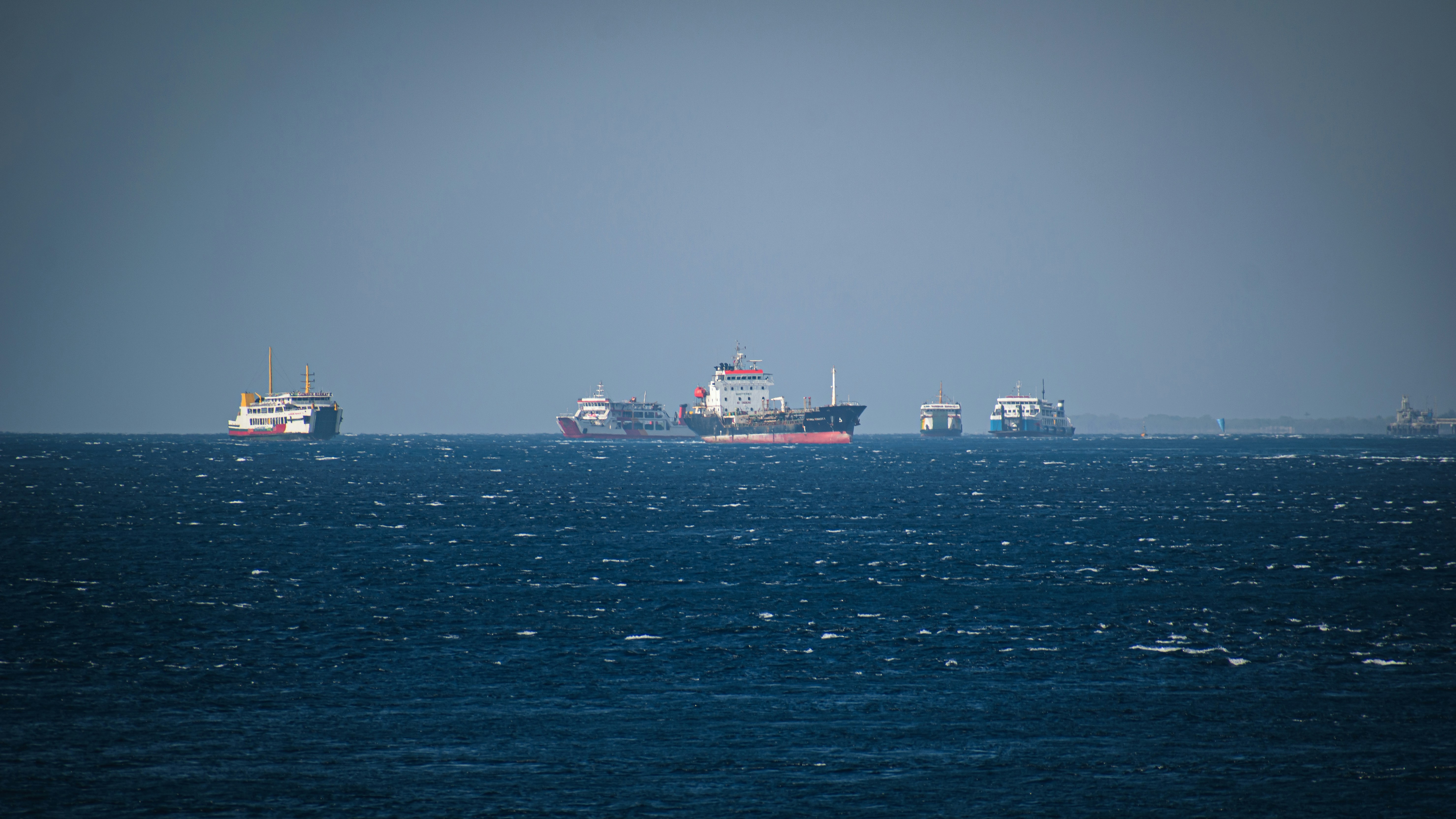
Photo by Fahrul Razi on Unsplash

Rinto Sebastian Charles is currently pursuing a Master’s degree in International Studies at CHRIST (Deemed to be University), Bangalore. He has completed his Bachelor’s in English Language and Literature from Kerala University. His core interests lie in international relations, diplomacy and policy-oriented research. He also aspires to contribute to research-driven institutions, think tanks, and initiatives that engage with global governance and Indo-Pacific perspectives.