Europe’s Strategic Autonomy Debate: Can the European Union Reduce Dependence on the United States?
The contemporary European security architecture is navigating a period of profound transformation characterized by the re-emergence of high-intensity interstate conflict on the continent and the onset of what scholars identify as the third nuclear age. This new era is defined by systemic great power competition, destabilizing arms races, and the unraveling of traditional arms control frameworks that provided predictability during the Cold War. Within this volatile environment, the concept of strategic autonomy has shifted from a peripheral theoretical aspiration to a central pillar of the European Union's security discourse. The impetus for this shift is dual-faceted: the immediate existential threat posed by Russian revisionism following the full-scale invasions of Ukraine and the long-term structural uncertainty regarding the durability of the United States' security guarantee. As the European Union attempts to reconcile its historical identity as a "normative power" with the harsh requirements of traditional hard power, the debate over its ability to act independently of Washington has become the defining challenge of transatlantic relations. Strategic autonomy, in this context, is increasingly viewed not as a desire for isolation but as a necessary capacity to foster peace and safeguard security both within and beyond European borders when the United States is either unable or unwilling to lead.
The Structural Legacy of Asymmetric Interdependence
To understand the current hurdles to autonomy, one must acknowledge the historical depth of Europe’s reliance on the United States. Following World War II, the North Atlantic Treaty Organization (NATO) established a framework of asymmetric interdependence where the United States served as the unique security provider, particularly through its conventional and nuclear umbrellas. This arrangement allowed European integration to focus primarily on economic development and welfare while outsourcing territorial defense to Washington. Even as the European Union grew into a global economic peer, its political and military clout remained constrained by institutional fragmentation. The 2009 Treaty of Lisbon attempted to address this by creating the office of the High Representative and the European External Action Service, yet essential foreign and security policy decisions still require unanimous consent among all member states. This institutional inertia has historically reinforced the perception of the EU as a "nonmilitary power" that prefers "effective multilateralism" and economic incentives over the credible threat of force. Consequently, the United States remains the "indispensable nation" for European security, a reality that persists despite periodic transatlantic tensions over burden-sharing and unilateral American policy shifts.
Dimensions of Strategic Autonomy: Military, Industrial, and Political
Strategic autonomy is a multidimensional concept requiring the alignment of military capability, industrial capacity, and political will. In military terms, it implies the autonomous capacity to take decisions and conduct operations where NATO as a whole is not engaged, a goal explicitly set during the 1999 Helsinki Summit. Industrially, it requires the development of a self-sustaining European defense technological and industrial base to reduce technological dependence on the United States. The reliance on American high-end assets, such as the F-35 fighter program and advanced intelligence, surveillance, and reconnaissance (ISR) systems, currently creates a "technological paralysis" risk where European action is contingent on American policy or technical approval. Politically, autonomy requires a coherent strategic vision that can reconcile the divergent threat perceptions of 27 sovereign states. Without an EU counterpart to the U.S. National Security Council to define priorities and set long-term strategies, Europe’s international presence remains diffuse and easily undermined by external actors seeking to divide individual member states. Therefore, true autonomy is defined as the capacity to manage the full spectrum of security challenges, from hybrid threats to conventional territorial defense, without being structurally tethered to a single external guarantor.
Operationalizing Autonomy: Policy Instruments and Institutional Mechanisms
Strategic autonomy is not only a conceptual aspiration but an institutional project already embedded within European policy frameworks. The evolution of the EU’s defense posture has been supported by a growing architecture of financial and regulatory instruments designed to translate political intent into material capability. The European Defence Fund represents a structural attempt to correct market fragmentation by incentivizing joint research and development across member states, thereby reducing duplication, and strengthening economies of scale in defense production. Similarly, coordinated capability planning mechanisms seek to align national procurement cycles with collective strategic priorities. These initiatives reflect a gradual shift from ad hoc cooperation toward structured integration, indicating that autonomy is emerging through institutional layering rather than revolutionary transformation. The significance of these mechanisms lies not in immediate operational independence but in their cumulative effect: the creation of a European defense ecosystem capable of sustaining long-term strategic agency
Evidence of Growing European Capability Post-2014
The Russian annexation of Crimea in 2014 and the subsequent 2022 invasion of Ukraine served as critical turning points that accelerated the militarization of the European Union. There is clear empirical evidence of a reversal in the "peace dividend" trend, with European defense spending hitting record highs as member states strive to meet NATO’s 2% GDP target. Beyond mere spending, the institutionalization of the Permanent Structured Cooperation (PESCO) in 2017 represents a significant qualitative shift toward defense integration. PESCO projects, such as Military Mobility, are specifically designed to tackle the logistical and infrastructural bottlenecks that prevent the rapid movement of forces across the continent, thereby strengthening the "European pillar" of collective defense. Furthermore, the procurement efforts of frontline states in the Eastern Flank, particularly Poland and the Baltic states, demonstrate a renewed focus on heavy weaponry and territorial defense assets that had been neglected during the era of expeditionary operations. The EU has also demonstrated an unprecedented ability to act as a security mediator, as seen in its response to conflicts in Georgia and its growing role in securing maritime trade routes through operations like NAVFOR Somalia. These developments suggest that Europe is "slowly awakening" to its strategic responsibilities, transitioning from a purely civilian power to one capable of generating credible military deterrence.
Energy and Technological Sovereignty as Security Imperatives
The pursuit of strategic autonomy extends beyond military capability into domains traditionally categorized as economic policy. The restructuring of European energy dependence following Russia’s invasion of Ukraine demonstrated that supply chains constitute strategic vulnerabilities with direct security implications. Rapid diversification of energy imports, expansion of liquefied natural gas infrastructure, and acceleration of renewable energy deployment illustrate the EU’s capacity for coordinated structural adjustment under crisis conditions. Technological sovereignty presents a parallel challenge. Dependence on external providers for advanced semiconductors, digital infrastructure, and artificial intelligence capabilities risks constraining strategic decision-making in future crises. As competition between major powers increasingly unfolds through technological ecosystems, the ability to secure critical supply chains becomes integral to defense preparedness. Strategic autonomy, therefore, must be understood as a comprehensive resilience framework encompassing military readiness, industrial capacity, and technological independence.
Structural Constraints and the Paradox of NATO Unity
Despite these gains, significant structural limits prevent the achievement of full strategic autonomy. The foremost constraint is the persistent political fragmentation regarding threat perception. While Eastern European and Baltic states view Russia as an existential threat and emphasize the necessity of the U.S. security umbrella, Southern European states often prioritize threats emanating from the Middle East and North Africa (MENA) and are more supportive of autonomous European structures. This divergence is exacerbated by US political uncertainty, where shifting presidential rhetoric and transactional approaches to alliances have caused a sharp decline in public trust regarding the automaticity of NATO Article 5. Quantitative analytics show a downward trend in "Article 5 trust scores," reflecting deep anxiety that American commitments may be conditional rather than absolute. However, this distrust creates a strategic paradox: while it prompts calls for autonomy, it simultaneously drives some members to double down on Atlanticism to secure bilateral American guarantees, as seen in Germany’s leadership of the "Framework Nation Concept" within NATO rather than the EU. Furthermore, the lack of standardized training and the duplication of weapon systems across 27 national armies continue to impede the "interoperability" required for a truly unified European force.
Future Scenarios for EU–US Security Relations
The future of the EU–US security relationship will likely be dictated by three possible strategic trajectories. The first scenario is asymmetric interdependence persistent, where Europe continues to increase its capabilities but remains fundamentally nested within NATO’s command structure, acting as a regional power that supports American global interests. This scenario assumes that the United States remains committed to Europe despite its "pivot to Asia". The second scenario is strategic drift, where continued American focus on the Indo-Pacific and isolationist domestic trends in the U.S. force the EU to operationalize its "strategic autonomy" provisions rapidly, leading to a more bifurcated transatlantic architecture. This would involve Europe developing its own nuclear deterrent capabilities and high-end military assets to hedge against American disengagement. The third, and most disruptive, scenario is alliance fracture, characterized by a complete collapse of trust in Article 5 and a return to nationalized defense policies or competing sub-regional blocs. In this case, the lack of a unified European strategic vision would leave individual states vulnerable to external subversion and hybrid tactics from adversaries like Russia or China.
The Transatlantic Paradox: Autonomy Through Alliance
A central tension in the European debate is that the pursuit of autonomy has been accelerated not by the weakening of the transatlantic alliance, but by its operational indispensability. The war in Ukraine has simultaneously reaffirmed the centrality of NATO and exposed the imbalance within it. American logistical coordination, intelligence provision, and strategic deterrence continue to anchor European defense, even as European leaders articulate the necessity of reducing structural dependence on the United States. This paradox suggests that autonomy is not a centrifugal force pulling Europe away from alliance structures, but a centripetal one aimed at redistributing responsibility within them. The development of a credible European pillar would not supplant transatlantic security but stabilize it by reducing asymmetry. Autonomy, in this sense, emerges as a mechanism for alliance sustainability rather than its erosion.
Conclusion: Autonomy as Capacity for Interdependence
The European Union’s strategic autonomy debate ultimately reflects a transition from dependence as stability to capability as credibility. The post-Ukraine security environment has demonstrated that economic integration alone cannot guarantee geopolitical security. Military readiness, industrial resilience, and political coherence now constitute the foundation of strategic legitimacy. Reducing reliance on external guarantees does not require severing transatlantic ties; it requires recalibrating them. A Europe capable of independent action strengthens collective deterrence by transforming partnership into reciprocity. The challenge facing the European Union is therefore not whether it can replace external security providers, but whether it can generate sufficient capacity to ensure that reliance remains a strategic choice rather than a structural necessity. Strategic autonomy, properly understood, is not sovereignty against alliance but sovereignty within interdependence. Its success will depend not on declarations of ambition but on sustained institutional consolidation, coordinated investment, and the political willingness to treat security as a shared European public good. In an era defined by contested order and strategic uncertainty, Europe’s credibility will rest on its ability to act not alone, but not dependent.
References:
1. Michal Smetana, Marek Vranka, and Ondrej Rosendorf, “Public Support for Arms Control in the Third Nuclear Age,” European Journal of International Relations 32, no. 1 (2026): 30– 58.
2. Beate Neuss, “Asymmetric Interdependence: Do America and Europe Need Each Other?” Strategic Studies Quarterly 3, no. 4 (Winter 2009): 110–124.
3. Ahmet Erciyas, “Militarization on the Horizon? Transition of the Common Security and Defence Policy of the European Union” (Master’s thesis, Université Libre de Bruxelles, 2020).
4. Bohdan M. Pavlyshenko, “AI Approaches to Qualitative and Quantitative News Analytics on NATO Unity” (research paper, Ivan Franko National University of Lviv, 2025).
5. Dražen Smiljani?, “The Evolution of NATO: Strategic Adaptation in a Changing Security Landscape,” Strategos 9, no. 1 (2025).
(The views expressed are those of the author and do not represent the views of CESCUBE)
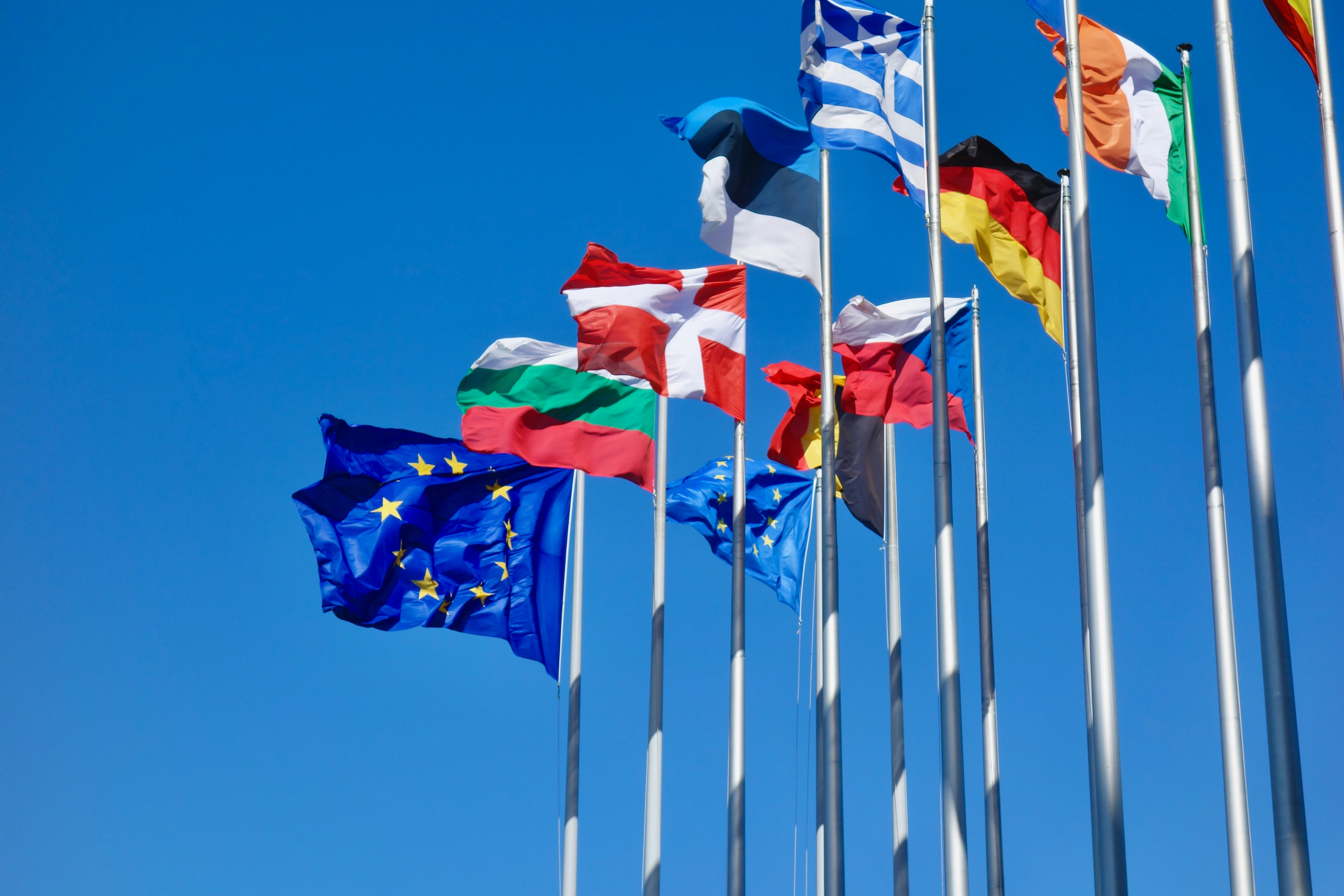
Image Source: Photo by Antoine Schibler on Unsplash