Operation Sindoor and the Changing Dynamics of India–Pakistan Security
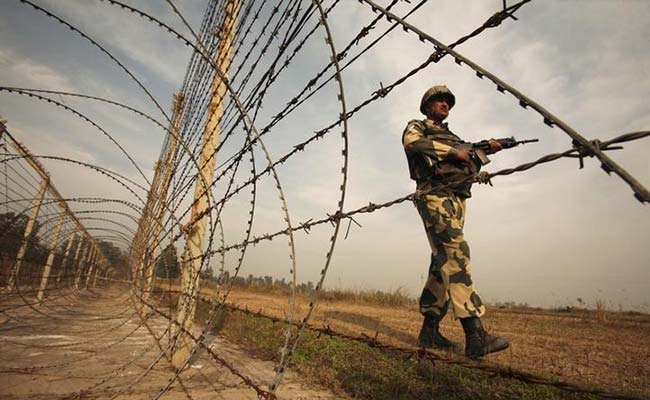
The security landscape between India and Pakistan has undergone a significant transformation following Operation Sindoor, extending beyond traditional concerns of cross-border terrorism and Kashmir. This article examines the operation's strategic implications, the evolving role of deterrence, the growing China–Pakistan partnership, and the broader challenges posed by military modernisation, nuclear stability, and the emerging two-front security environment confronting India.
Kashmir has always been a sore point of relations between India and Pakistan. For years, India-Pakistan ties were viewed mainly through the lens of Kashmir and repeated border skirmishes. This is not true anymore. Since Partition, both countries have fought many military wars and border disputes. The transition from a largely bilateral rivalry to the involvement of major external players such as China and the United States has changed the nature of India-Pakistan relations and the current security dilemmas in the region. The Pahalgam terrorist attack of April 2025, in which 25 Indians and one Nepali citizen were killed1, pushed the relationship into a new and volatile phase, resulting in Operation Sindoor, conducted by the Indian Armed Forces2. What followed was the suspension of the Indus Waters Treaty, an agreement that had survived four wars1, and a new doctrine on cross-border terrorism, refusing to distinguish between terrorist groups and the states that shelter them3. This whole phase also raised a new question about the relevance of old, long-standing agreements in escalatory situations like this, while also expanding the horizon to nuclear deterrence and the importance of strategic balance.
India Pakistan Relations Current Security Challenges
The India-Pakistan relations are largely shaped by traditional security challenges like cross border terrorism, ceasefire violations and militant infiltration. But the contemporary security environment is much more complex. The increasing use of drones, hybrid warfare, military modernization and the role of outside powers have also expanded the arena of the rivalry beyond traditional military confrontations.
India also faces the two-front squeeze4, where it has to focus not only on Pakistan but also on China's growing strategic partnership with Pakistan. This poses a major obstacle to India’s resource allocation and national security as China and Pakistan are becoming increasingly strategic partners. India cannot just look at its western border, it has to keep an eye on its northern border with China all the time. According to the 2026 SIPRI metrics, China accounts for almost 80% of Pakistan’s total arms imports, while Pakistan receives over 60% of China’s global arms exports.5 Pakistan has also moved its precision-guided conventional strike missiles from commercial GPS to China’s BeiDou Satellite Navigation System.6,7 This means that in a wartime scenario Pakistan's precision-guided weapons would be much less reliant on navigation systems controlled by the west.
Another challenge is on the diplomatic front. Today, India and Pakistan are hostile to any direct dialogue and trust between the two countries is at its lowest in years. High level engagement is less frequent and confidence building measures are deteriorating. Even the basic channels that once existed; trade talks, cultural exchanges, backchannel talks, are no longer working well. So, these technological, military and diplomatic developments together have fundamentally reshaped the security environment between the two nations. For now, the strategic balance between India and Pakistan is not stable; it remains uneasy and fragile.
Operation Sindoor Military Analysis
India's Armed Forces carried out Operation Sindoor overnight between 6 and 7 May 2025, in a narrow 25-minute window from 1:05 to 1:30 a.m.2 All three services took part, and the strikes targeted terrorist infrastructure in Pakistan and Pakistan-occupied Jammu and Kashmir (PoJK). The operation was carried out in response to the Pahalgam terrorist attack of 22 April 2025, which claimed the lives of 26 innocent people. India asserted that the operation was based on credible intelligence and was aimed only at terrorist infrastructure.8 It deliberately avoided Pakistani military installations during the initial phase in an effort to prevent unnecessary escalation.
Any military analysis of Operation Sindoor should consider the broader strategic message, not just the strikes themselves. This operation was notable and unique, not only for its execution but the strategic implications it carried. Another important feature was that it brought together all three-armed forces. It was planned and executed jointly by the Army, Navy and Air Force instead of depending on a single military branch. This reflects India's increasing focus on coordinated military operations. It also marked a shift in India’s counterterrorism posture, indicating that future terrorist attacks would provoke a stronger and more coordinated response. In his address to the Lok Sabha on 29 July 2025, Prime Minister Narendra Modi stated that 'Operation Sindoor has established a new doctrine,' claiming that any future terrorist attack on India would lead to severe consequences for both the attackers and their supporters.3
This response was not completely different from India's earlier responses. Instead, it built upon them and took India's counterterrorism strategy a step further. The operation involved not only the fight against a terrorist attack but also giving out a clear message that terrorism from across the border will carry a heavy cost. On the other hand, it is evident that India refrained from attacking Pakistani military installations, thus making it clear that India did not intend to escalate the conflict into a fully blown war. Rather, the target was the punishing of the terrorist facilities. As a result of Indian military installations being attacked, the conflict entered its retaliatory phase. This shows how strategic relations are developing between countries like India and Pakistan, with deterrence becoming as important as military might.
India's deterrence stance has also evolved. According to Carnegie, then - Army Chief General Upendra Dwivedi cautioned it would be unwise to assume Sindoor ends cross-border terrorism outright. But the operation did establish 'a much higher deterrence level' than Balakot (2019) or the 2016 surgical strikes9, even though the outcome for future crises remains uncertain. In many ways it can be said that India has raised the price of the next attack, it isn't guaranteed there won't be one.
SIPRI Report 2026 Nuclear Warheads India Pakistan
This military engagement has once again brought the nuclear dimension of India-Pakistan relations into focus. The SIPRI report 2026 nuclear warheads India Pakistan estimates highlight that both countries continue to maintain and modernize their nuclear arsenals. India's stockpile now stands at approximately 190 warheads, of which around 12 are believed to be operationally deployed for the first time in the country's history, with the remainder held in reserve. Pakistan's stockpile is estimated at around 170 warheads with none being currently deployed. China, by contrast, is estimated to hold around 620 warheads, reflecting the fastest expansion of any nuclear power tracked in the report.5,10
The most noticeable feature of this finding is that India is not simply increasing its warhead count, but changing the direction of its modernization. SIPRI researchers note that many of India's newer delivery systems have the range and capability to deter China as well. This is indicative of the changing security situation where India has to be prepared for challenges from both its western and northern borders.
Also, nuclear modernization can be a source of both stability and instability, a situation that strategic academics term as the stability-instability paradox. Nuclear modernization does not necessarily make the region more secure. It enhances deterrence and reduces the likelihood of a major war, but can also promote limited military conflicts on the assumption that nuclear weapons will preclude the war from escalating further.
Ultimately, the importance of these findings is less about which country has more nuclear warheads but about how the very nature of deterrence is changing. India's nuclear doctrine has always been broadly framed - as deterrence against any nuclear armed state, not just its immediate neighbours.11 But in reality, its modernization is now being shaped by two distinct rivals at the same time, Pakistan and China, not just Pakistan. India is looking to strengthen itself not only in numbers but in technological capability, so that its security is not left dependent on the numbers alone.
China Pakistan Partnership on Western Himalayas Security
China has an important role to play in the present strategic balance between India and Pakistan. China-Pakistan relations have transformed into a deep strategic partnership, which has profoundly impacted India’s security calculations and its plan to deal with bilateral relations with Pakistan. From the Indian perspective, these changing dynamics have forced India to prepare not only for conventional threats from Pakistan but also for the greater threat of a possible two-front scenario. This shift is now evident in military cooperation, economic connectivity, defense technology, and the alignment of geopolitical interests between Beijing and Islamabad.
China and Pakistan’s military relationship is not merely diplomatic cooperation. According to SIPRI, China supplied nearly 81% of Pakistan's arms imports between 2020 and 2024, making Pakistan its largest defense customer.12This partnership was also seen during the 2025 India-Pakistan conflict where Pakistan operated Chinese made fighter aircraft like J-10C and JF-17, PL-15E missiles and Chinese origin drones along with Turkish UAVs.13 India later recovered debris of PL-15E missiles, indicating operational use of Chinese weapon systems in the conflict. What started out as arms sales has developed into something more like a working military alliance.
This partnership is not only confined to the realm of cooperation in the field of defense. It has extended to the economic corridor between the two nations in the shape of the China-Pakistan Economic Corridor (CPEC). The advent of CPEC 2.0 has made significant improvement in the aspect of connectivity, trade and technology shared between the two nations.14 But the significance of this bilateral agreement is not just economic, as it gives China a critical geopolitical foothold in opening up the Arabian Sea through Gwadar Port. This suggests that in the realm of geopolitics and international relations, every agreement or transaction is driven by an agenda, with each nation aiming to achieve the greatest benefit for itself.
The China-Pakistan nexus complicates matters further in the Western Himalayas security landscape. In spite of improved diplomatic relations between India & China, there are still some unresolved border conflicts and there are substantial forces of both the nations deployed along the Line of Actual Control (LAC). It indicates that even if there is improvement in diplomatic relations, there are security related issues. This creates yet another obligation in the process of strategic planning for the biggest democracy in the world. Since, according to the U.S. Department of Defense, the increasing cooperation between China and Pakistan increases the likelihood of both countries pressuring India simultaneously.15 This observation can be summed up as China and Pakistan are no longer separate issues for India to manage; they are now one. As a result, defense planning, resource allocation, and strategic coordination have become far more complicated than before.
Conclusion:
There have been significant changes in the security situation between India and Pakistan lately. This balance is no longer influenced solely by traditional military strength or nuclear weapon stockpiles. Operation Sindoor, the suspension of the Indus Waters Treaty, the findings from the SIPRI Report 2026, and the growing China-Pakistan partnership all signify that the security environment is much more complex than before. The China-Pakistan link is increasingly shaping India’s future border management plans. Consequently, India must also pay more attention to its Himalayan border as well as its border with Pakistan, and each time Beijing and Islamabad reach an agreement, this task becomes more challenging.
One of the most important lessons that should be learned from the events that have occurred recently is that deterrence is not equal to stability. Although deterrence can prevent war on a large scale, there is still a possibility of armed conflicts between countries, which is why crisis management is equally important. Ultimately, the balance of power between India and Pakistan cannot be determined solely by which country has more military power. It will depend largely on how well both nations handle competition and new security threats while working to prevent any crisis from escalating into war.
Endnotes:
1. Press Information Bureau (PIB), Government of India. “Global Solidarity with India: A United Front Against Cross-Border Terrorism.” PRID 2128747, 14 May 2025. https://www.pib.gov.in/PressReleasePage.aspx?PRID=2128747®=48&lang=2
2. Press Information Bureau (PIB), Government of India. “Operation SINDOOR: India’s Strategic Clarity and Calculated Force.” PRID 2128748, 12 May 2025. https://www.pib.gov.in/PressReleasePage.aspx?PRID=2128748
3. Prime Minister’s Office (PMO), Government of India. “PM Addresses the Lok Sabha during a Special Discussion on Operation Sindoor.” 29 July 2025. https://www.pmindia.gov.in/en/news_updates/pm-addresses-the-lok-sabha-during-a-special-discussion-on-operation-sindoor/
4. Patil, Sameer and Atul Kumar, eds. “Current Trends in India’s National Security.” ORF Special Report No. 298, Observer Research Foundation, March 2026. https://www.orfonline.org/research/current-trends-in-india-s-national-security
5. Stockholm International Peace Research Institute (SIPRI). “Increasing Focus on Nuclear Weapons amid Heightened Escalation Risks — New SIPRI Yearbook Out Now.” Press release, 8 June 2026. https://www.sipri.org/media/press-release/2026/increasing-focus-nuclear-weapons-amid-heightened-escalation-risks-new-sipri-yearbook-out-now
6. Sewall, Sarah, Tyler Vandenberg, and Kaj Malden. “China’s BeiDou: New Dimensions of Great Power Competition.” Belfer Center for Science and International Affairs, Harvard Kennedy School, February 2023. https://www.belfercenter.org/publication/chinas-beidou-new-dimensions-great-power-competition
7. Jamestown Foundation. “BeiDou and Strategic Advancements in PRC Space Navigation.” China Brief, Vol. 25, 2025. https://jamestown.org/beidou-and-strategic-advancements-in-prc-space-navigation/
8. Ministry of External Affairs (MEA), Government of India. “Transcript of Special Briefing by MEA.” New Delhi, 23 April 2025. https://www.globalsecurity.org/wmd/library/news/india/2025/india-250423-india-meab01.htm
9. Peri, Dinakar. “Military Lessons from Operation Sindoor.” Carnegie Endowment for International Peace, October 2025. https://carnegieendowment.org/india/research/2025/10/military-lessons-from-operation-sindoor
10. Business Standard. “India Modernises Nuclear Programme, Deploys Warheads for First Time: Sipri.” 9 June 2026. https://www.business-standard.com/external-affairs-defence-security/news/india-modernises-nuclear-programme-deploys-warheads-for-first-time-sipri-126060900978_1.html
11. Arms Control Association. “India’s Draft Nuclear Doctrine.” August 1999. https://www.armscontrol.org/act/1999-07/indias-draft-nuclear-doctrine
12. South China Morning Post. “China Supplied 81% of Pakistan’s Arms Imports in the Past 5 Years, SIPRI Says.” 16 March 2025. https://www.scmp.com/news/china/military/article/3302515/china-supplied-81-pakistans-arms-imports-past-5-years-sipri-says
13. Zhang, Junhua. “China’s Increasing Footprint in South Asia.” Geopolitical Intelligence Services (GIS) Reports, 2025. https://www.gisreportsonline.com/r/china-south-asia-india/
14. The Express Tribune. “Pakistan, China to Advance Next Phase of CPEC with Five Corridors.” 2 September 2025. https://tribune.com.pk/story/2564633/pakistan-china-to-advance-next-phase-of-cpec-with-five-corridors
15. U.S. Department of War (formerly Department of Defense). “Annual Report to Congress: Military and Security Developments Involving the People’s Republic of China.” 23 December 2025. https://media.defense.gov/2025/Dec/23/2003849070/-1/-1/1/annual-report-to-congress-military-and-security-developments-involving-the-peoples-republic-of-china-2025.pdf
(The views expressed are those of the author and do not represent the views of CESCUBE)
Image Source: Reuters, https://www.reuters.com/world/china/kashmir-villagers-hopeful-wary-after-india-pakistan-agree-ceasefire-2021-02-26/