The Long Shadow of 1953: Understanding the Iran–US Conflict
The conflict and contemporary war in Iran are only the present manifestation of a decades old issue, dating back to the 1953 coup d’etat, orchestrated by the Central Intelligence Agency (CIA), of the United States of America (US), which installed the pro-US shah in the position of leader of Iran. The reasoning behind such a coup, in layman’s terms, are the petroleum reserves present in Iran. With its strategic location and vast oil reserves, Iran was of special interest to the United States, the United Kingdom, and other powers. Britain had established their presence in the country during the Second World War, using Iran’s oil to supply it to close ally Soviet Union, and also using the oil-rich nation’s strategic location to prevent the supply from falling into German hands.
However, this arrangement changed abruptly in 1951 when the Iranian parliament, led by Mosaddegh’s nationalist and democratically elected government, voted to nationalize the country’s oil industry. This change in the arrangement led the United Kingdom to join forces with the United States, playing on Cold War fears. The ploy was that Mosaddegh, an avowed anticommunist, was aligning himself with Tudeh, the Iranian Communist Party.
The United States took the leading role in a covert operation, called Operation ‘Ajax’, whereby CIA-funded agents were used to foment unrest inside Iran by way of the harassment of religious and political leaders and a media disinformation campaign. These efforts, formally approved by President Dwight D. Eisenhower. came to a head in August 1953 when Mosaddegh and his government were overthrown and Mohammad Reza, a pro-Western monarch, was returned to power.
The aftermath of the coup
The next 25 years, following the installation of the Shah Mohammad Reza Shah Pahlavi in 1953, came to be referred to as the “Shah’s golden era”. The US supported Iran with massive military and economic aid, and Iran became a key US stronghold in the Middle East. The height of this collaboration was the beginning of Iran’s nuclear programme, which, ironically enough, was started with US support, through then President Dwight D. Eisenhower’s “Atoms for Peace” programme. In 1967, the U.S. provided Iran with its first research reactor, a nuclear reactor, a 5-megawatt nuclear reactor that is still functioning and still operational in Tehran. It also provided Iran with fuel for that reactor and weapons-grade enriched uranium. Many Iranian students also studied nuclear technology in the Massachusetts Institute of Technology. It was part of President Eisenhower's Atoms for Peace program, an initiative to provide countries with peaceful, civilian nuclear technologies in the hope that they wouldn't pursue military nuclear programs. In the year 1970, Iran even ratified the Non-Proliferation Treaty, therefore, limiting its nuclear use to civilian purposes only. Iran was part of the 62 original signatories of the nuclear Non-Proliferation Treaty. Yet, in the mid-1970s, the USA faced a separate problem. Despite signing the nuclear Non-Proliferation Treaty, Iran had begun to put forward its right to have nuclear weapons. It had also bought nuclear plants from countries like West Germany and France. In addition to receiving international help, the Shah insured home-grown nuclear development. In 1974, he established the Atomic Energy Organisation of Iran (AEOI).
The Iranian Revolution
The 1979 Revolution resulted in the toppling of the monarchy, and the subsequent establishment of an Islamic republic. It involved the participation of a wide range of Iranians, from the secular left to the religious right, who sought an end to the shah’s autocracy and Western interference in the country’s policies. The Revolution echoed in an era of dramatic chance, including in the nuclear domain. Leading up to and during the Revolution, many of the foreign and Iranian nuclear workers fled the country. The new leader, Ayatollah Khomeini, viewed the nuclear program as “un-Islamic” until 1984.
Due to the newly hostile relationship between Iran and the United States, who was Iran’s previous benefactor, Iran no longer received any support from the Americans. This was true also of the allies of the United States, as any country supporting Iran was put under pressure. Eventually, Iran made deals with Pakistan and China, but the United States blocked parts of the Chinese agreement that would have given Iran additional reactors. The United States successfully blocked many other Iranian nuclear contracts, forcing Iran to seek help from nations and actors Americans could not control. Beginning in 1987, Iran received nuclear plans and imports, such as centrifuges, from unknown foreign entities.
Many aspects of the Iranian nuclear weapons program and exchanges with undisclosed countries remain a mystery, but some facets have been revealed over time. It is now known that Iran established its nuclear weapons program, known as Project Amad, in the late 1990s/early 2000s. The project entailed the acquisition and production of weapons-grade nuclear material, testing of nuclear weapon components, and planning for the construction of a unique nuclear weapon. The project appears to have ended suddenly in 2003.
In the same year, Iran welcomed the IAEA through the signing of the Additional Protocol, which granted the IAEA information and access to Iran’s nuclear program facilities. This protocol also allowed the IAEA to use the most advanced technology to inspect all nuclear sites in Iran. Three years later, Iran backed out of this deal, following the IAEA’s discovery of undisclosed parts of the nuclear program, leading to American sanctions. Right after its departure from the Additional Protocol in 2006, Iran announced the construction of new nuclear facilities expected to hold 2,784 centrifuges to enrich uranium. Four years later, Iran announced it could produce highly enriched uranium (HEU - uranium enriched to over 20%, or uranium containing at least 20% of Uranium 235), the minimum agreed enrichment necessary for the construction of nuclear weapons. Uranium only needs to be enriched to about 3 to 5% to be used for generating electricity in nuclear power plants, which qualifies as peaceful nuclear use. Right up to this point, Iran depended on other countries to obtain HEU. In 2011, the IAEA released a document containing all the information known about Project Amad at that time and explained that it remained unclear whether any remnants of the project, particularly those related to a nuclear explosive device, remained. Iran’s announcement regarding uranium enrichment sparked concern in the international community, leading to additional sanctions imposed on the country, and secret actions to halt Iran’s nuclear development.
Contemporary Connection
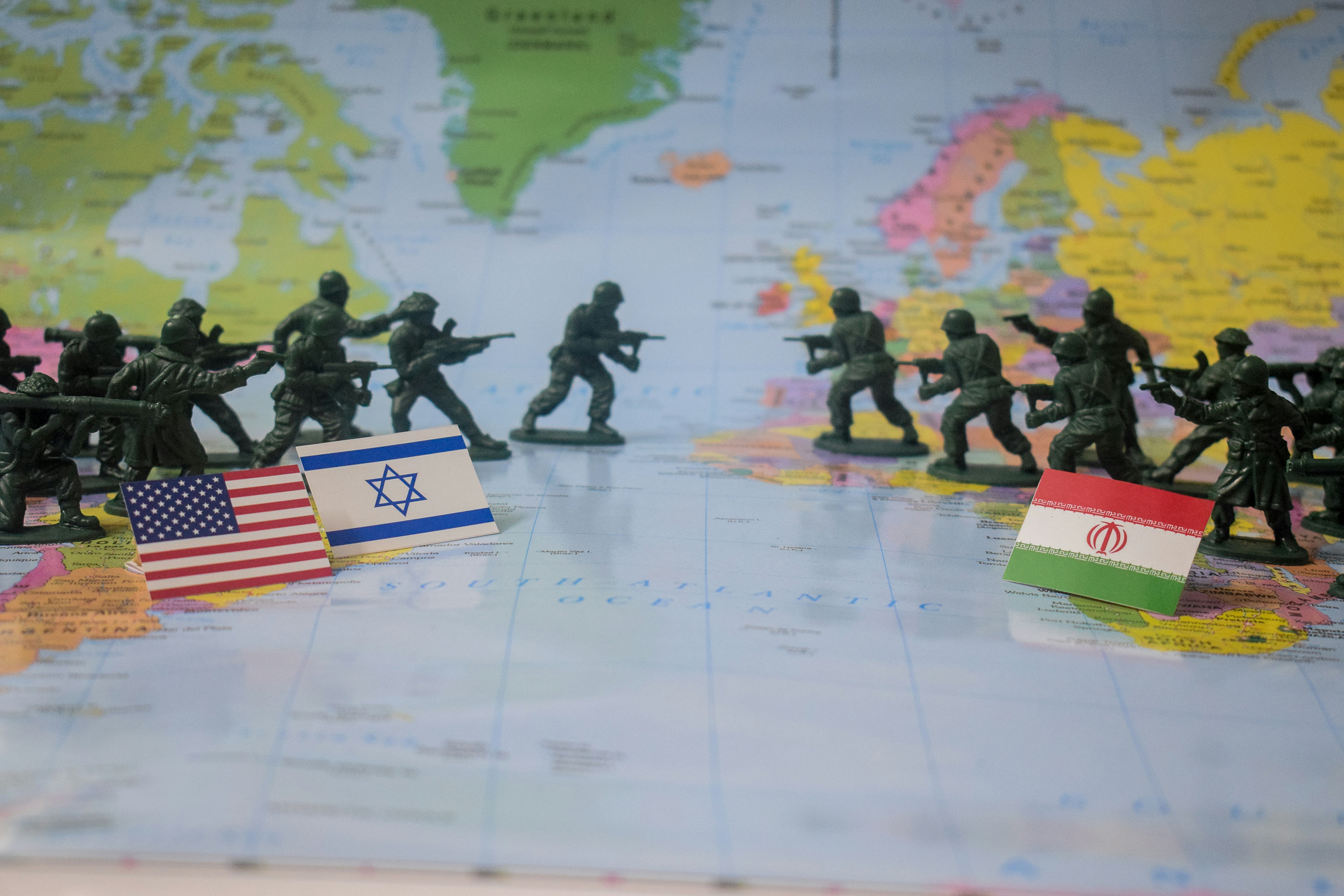
The contemporary US-Israel and Iran conflict, which has culminated in an ongoing war, can be understood partially through this rabbit hole. The US-Iran nexus can be tracked back to the 1953 coup, marking the official entry of US interference in Iranian politics, and the subsequent creation of the Iranian nuclear programme, with US support. The 1979 revolution marked Iran’s return to pro-religion politics, and the end of the US-Iran collaboration. The years that have followed have only worsened the relations between the two nations, and the current conflict, part of it, can be posited to be due to this nuclear fiasco. With the end of the war still not in sight, despite ceasefire agreements, some experts have posited that this might see the employment of nuclear weapons yet again. Whether Iran actually possesses nuclear might cannot be positively concluded, and perhaps only time will tell whether either power involved do end up going the nuclear route.
References:
1.Robinson, K. (2023, October 27). What is the Iran nuclear deal? Council on Foreign Relations. https://www.cfr.org/backgrounder/what-iran-nuclear-deal
2.A history of US-Iranian relations. (n.d.). Middle East Studies Center. https://mesc.osu.edu/news/history-us-iranian-relations
(The views expressed are those of the author and do not represent the views of CESCUBE)
Photo by Saifee Art on Unsplash

Rohitaswa Das is currently pursuing his BA Hons degree in Political Science from St. Xavier's College (Autonomous), Kolkata. He takes special interest in International Relations, keenly following US foreign policy decisions, and is also a massive fan of football. He loves. to read when free, and is also a national level debater.