Hardening the Quad: From Strategic Dialogue to Operational Cooperation
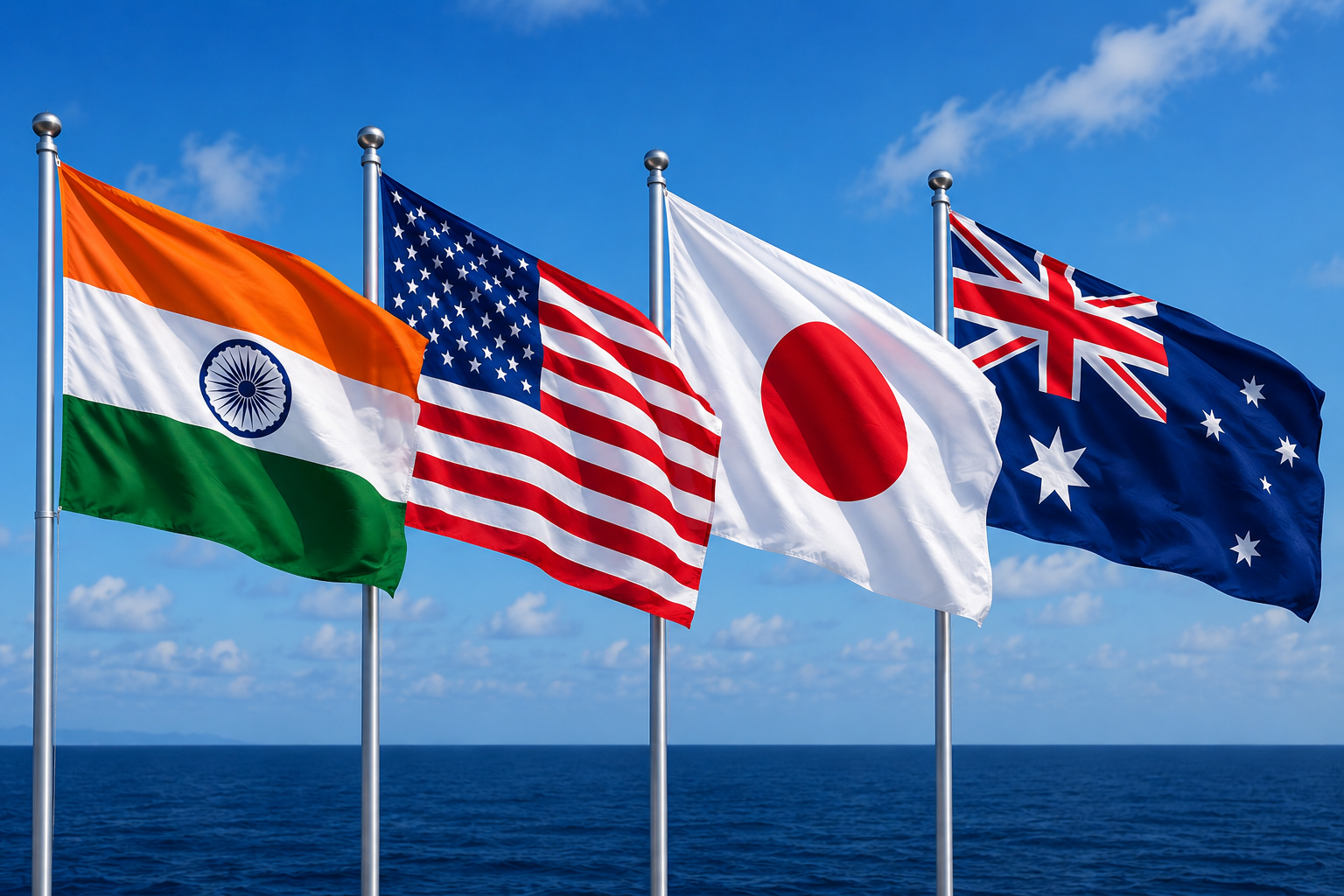
The 2026 Quad Foreign Ministers' Meeting in New Delhi marked an important step in the evolution of the Quadrilateral Security Dialogue from a primarily consultative forum into a platform increasingly focused on operational cooperation and p...
New Delhi witnessed a critical juncture in the broader geopolitical scenario, as it hosted the Quadrilateral Security Dialogue Foreign Ministers’ Meeting on May 26. The meeting held between India’s External Affairs Minister S. Jaishankar, Australian Foreign Minister Penny Wong, Japanese Foreign Minister Toshimitsu Motegi, and U.S. Secretary of State Marco Rubio, can stand decisive for both the Indian Ocean Region and the extended Indo Pacific, as the international world order goes through a significant phase of evolution.1
The event worked on a pragmatic set of steps towards enhancing defence interoperability between the QUAD states and improving operational coordination, in an attempt to make productive advancements in the domain of hard security. The platform refuses to take a formal structure of alliance. However, initiatives such as India’s commitment towards hosting the Quad-at-Sea Ship Observer Mission highlight a gradual progress towards a more active approach taken, amidst potentially vehement power struggles in the Indo-Pacific region.2
The following article will examine the significance, the developments and the implications through a lens of hard security and geopolitical hedging, emphasising on their role in fostering collective capability enhancement, firm deterrence measures and a process of developing a strategic domain awareness, in a highly contested environment.
The QUAD’s pivot to Operational Cooperation
QUAD, which was a temporary grouping for disaster management and relief operations in the 2000s has gained traction, since its revival in 2017. The bloc works on a non – treaty understanding, encompassing the strategic priorities of its partners. While the initial phase of the grouping has been based in diplomatic alignments, conducting high-profile exercises like MALABAR, the group has gradually covered more operational elements as it expands on its mandate. It advocated for a free and open Indo-Pacific, which has now expanded coordinating activities in-order to improve interoperability.3
The Quad-at-Sea Ship Observer Mission in 2025, where officials from the four member states boarded a US Vessel sailing between Palau and Guam, set a precedent for joint-exercises in the maritime domain. The recent New-Delhi meet was based on this foundation, as India intends at hosting similar missions. This rotation of responsibilities helps in encouraging exchange of personnel, standardisation of procedure and building trust amongst the member states, which will prove to be critical if a joint-exercise is on the cards.
This also acts in tandem with broader geostrategic objectives, emboldening the deterrence through maintaining a presence in critical areas and employing shared capabilities in order to enhance the maritime domain awareness and foster peace and security in the region without indulging into violent alternatives, or getting sucked into bloc-politics.
The Crucial Outcomes that Promote Interoperability
The meeting in New Delhi resulted in deliverables that can be pivotal in the domain of enhancing operation cooperation between the member states and facilitate better relations with other littoral states in the Indo-Pacific region.
The theme that stood out amongst other decisions was launching the Indo-Pacific Maritime Surveillance Collaboration (IPMSC), where each member pool its surveillance assets for better information sharing, focused in the Indian Ocean Region currently. This will also include academic exchanges from subject-matter experts and tabletop exercises, which will support operability by improving on the data-integration, assessing and responding to unlawful maritime activities in a coordinated fashion.4
The IMPSC will be followed by the Indo-Pacific Partnership for Maritime Domain Awareness (IPMDA) coordinated by India's Fusion Centre – Indian Ocean Region (IFC – IOR) in Gurugram. This initiative will create a Common Operating Picture across the region, facilitating the QUAD member states to mine and analyse data, enhancing quicker-decision making in emergency situations.5
Australia will conduct a Quad Counterterrorism Tabletop Exercise on counterterrorism, which will emphasise on threats that are state-sponsored, and unmanned aerial vehicles (UAVs). This will be based on the foundations set in similar workshops in 2025, on themes like enhanced technical interoperability and doctrinal alignment in environments which encounter hybrid threats.6
India’s leading the next Quad-at-Sea Ship Mission stands critical as it reflects a symbolic and practical weight that India bears. It cements India’s position as a significant stakeholder in the Indo-Pacific region, enabling its partner littoral states, enhancing their response mechanism, through knowledge transfer regarding paradigms like anti-piracy, search and rescue operations, illegal fishing. These initiatives together strengthen QUAD capabilities in operating cohesively, in grey-zone situations, where information sharing and coordinated action can help deter destabilisation action by various state and non-state actors.
The Geostrategic Implications
These deliverables have strengthened QUAD’s framework in creating layered structure to dissuade, deter and defend threats in the Indo-Pacific region. It also enhances its mini-lateral and multilateral alliances by working on interoperability.
The US gets a credible and resilient mechanism to sustain any kind of engagement in the Indian Ocean Region, while it focuses on competing global demands. Australia and Japan gain from sharing its burden with other formidable partners and expand regional presence. India gets access to best-practices and advanced technologies without bargaining its autonomy, through these initiatives.
The focus on regulating unlawful maritime activities, is particularly highlighted because of the recent blockade at the strait of Hormuz – promoting peaceful moves against coercive tactics, which include military aircrafts and maritime militias. This signalling aims at promoting investment in the rule based international order, while maintaining strategic ambiguity to avoid direct confrontation.
The recent Quad meeting highlighted Quad’s evolution towards operationalising cooperation which is a process of knowledge sharing and shared best practices, utilised in order to convert high – level principles into actionable capability. This will raise the stakes against any kind of adversarial behaviour in contested waters.7
Challenges to Cooperation:
With all the advancements in the positive direction, critical challenges have persisted, which harden QUAD’s defence and operation. These obstacles can be categorised in the following way:
Different Strategic Priorities and Threat Perception:
The member states make different assessments of the immediate threats, as they prioritise different domains based on their national interests. The U.S. and Australia will focus on high-end deterrence against their competitors with a special emphasis on the Pacific Islands. India attempts at navigating through its QUAD engagement, while balancing it with its plurilateral aspirations. Japan puts an emphasis on the Northeast Asian region. This difference of interests complicates a coordinated workflow.
Technological and Logistical Gaps
While the military exercises conducted by the member states encourage an exchange of personnel, the integration and application of advanced command-and-control systems, communication protocols and logistics remain tough to manage. A difference in the equipment standards, policies regarding data-sharing and different levels and measures for classification make it tough to become completely interoperable in an emergency situation, which requires a quick and coordinated approach.
Political and Domestic Limitations
Leadership changes in the member states lead to inconsistent policy changes, evident from the recent changes in the approach employed by the U.S. From India’s perspective, its prioritisation of its strategic autonomy, adds a constraint to the amount of participation that it intends to undertake. Domestic politics can affect the funding and political capital required for initiatives like Ship Observer Missions.
Regional Intricacies and Escalation
An advanced and motivated approach towards these operations can also label entities as being intimidating and provocative, leading to an acceleration to an arms race, alienating ASEAN or Pacific Island countries. Therefore, measures of deterrence have to be balanced with inclusivity, in order to keep the broader geostrategic goals intact.
Implementation and Sustainability
Ideas and Declarations need to be followed by form bureaucratic action, joint infrastructure investments and metrics for assessing progress. If there is no proper system to make after action reviews and capability assessment, the ideas won’t be converted into productive deliverables.
Policy Recommendations:
These obstructions need to be dealt with, in order to maximise the interoperability of these initiatives. This would require improvements which are industry specific:
Defence and Aerospace Industry
The QUAD member states can create a Joint Defence Industry Working Group, in order to encourage co-development and co-production in interoperable domains, like unmanned systems, sensors, and communication systems.
Policy incentives can also be provided, like shared research and development funding, and streamlined export controls. This will provide private companies like Mitsubishi Heavy Industries, Lockheed Martin, and the Indian Firms under the Atmanirbhar Bharat umbrella to abide by the standards set by the Modular Open Systems Approach (MOSA) principles, which further facilitates integration and improve the scalability for these operations.
Maritime and Shipbuilding Sector
The QUAD Governments can encourage agreements that provide reciprocal access and create joint training facilities for the Navy and the Coast Guard Assets. Recommendations can also incorporate incentives for all the member states to include common protocols for maintenance and data architectures for future designs of vessels. This would contribute in sustaining the Quad-at-Sea missions and improve logical interoperability during operations regarding Humanitarian Assistance and Disaster Relief Operations.
Cybersecurity and Technology Industry
The Quad Countries can also encourage and incentivise public-private partnerships, with an emphasis on secure data-sharing platforms and AI driven fusion tools. A QUAD-wide certification for cyber-secure systems and innovation challenges that can provide solutions to Hybrid threats, also supporting the counterterrorism exercises.
Critical Minerals and Supply Chain
Hard Security gains can be linked with economic resilience, if defence contractors are incentivised to diversify their sourcing, via QUAD Critical Minerals Framework. Recommendations include tax-breaks for the companies that invest in secure, allied supply chains for rare earths and battery tech, which is critical for military platforms as well. These recommendations hold the ability to convert high level political outcomes into productive deliverables, if implemented through dedicated QUAD groups. This can also increase interoperability and create economic benefits as well.
Conclusion
The 2026 New Delhi Quad Foreign Ministers’ Meeting deliberated and advanced on hard security cooperation, by taking initiatives which will improve interoperability and co-ordination through the Quad-at-Sea Ship Observer Mission and supporting surveillance efforts. These steps show a positive and pragmatic approach towards geostrategic adaptation to the Indo-Pacific’s security architecture, building resilience while being flexible.
There are challenges, when it comes to priority, technology sharing, political interests and implementation, but advancements in the following direction provide a solution to overcome these issues. While the great power struggles continue, the QUAD’s capacity and capability of improving the efficiency of its operations through cooperation, will be pivotal, in order to maintain stability and deter violence in the region. The New Delhi meet provides a roadmap for deliverables, implementation of which will result in enhancing the role of the group in the region.
Endnotes
1. U.S. Department of State, “Joint Statement from the Quad Foreign Ministers’ Meeting in New Delhi,” May 26, 2026, https://www.state.gov/releases/office-of-the-spokesperson/2026/05/joint-statement-from-the-quad-foreign-ministers-meeting-in-new-delhi; Ministry of External Affairs, Government of India, “Quad Foreign Ministers’ Meeting Joint Statement,” May 26, 2026, https://www.mea.gov.in/bilateral-documents.htm?dtl/41233/Quad_Foreign_Ministers_Meeting_Joint_Statement_May_26_2026.
2. Australian Department of Foreign Affairs and Trade, “Quad Foreign Ministers’ Meeting Joint Statement,” May 26, 2026, https://www.foreignminister.gov.au/minister/penny-wong/media-release/quad-foreign-ministers-meeting-joint-statement; U.S. Embassy & Consulates in India, “Factsheet: 2026 Quad Foreign Ministers’ Meeting in New Delhi,” May 27, 2026, https://in.usembassy.gov/factsheet-2026-quad-foreign-ministers-meeting-in-new-delhi/ (India to host next Quad-at-Sea mission).
3. U.S. Department of State, “2026 Quad Foreign Ministers’ Meeting in New Delhi,” Fact Sheet, May 26, 2026, https://www.state.gov/releases/office-of-the-spokesperson/2026/05/2026-quad-foreign-ministers-meeting-in-new-delhi.
4. Australian Department of Foreign Affairs and Trade, “Media Address, Quad Foreign Ministers’ Meeting,” May 26, 2026, https://www.foreignminister.gov.au/minister/penny-wong/transcript/media-address-quad-foreign-ministers-meeting (announcing IPMSC).
5. U.S. Department of State, “Joint Statement from the Quad Foreign Ministers’ Meeting in New Delhi,” May 26, 2026, https://www.state.gov/releases/office-of-the-spokesperson/2026/05/joint-statement-from-the-quad-foreign-ministers-meeting-in-new-delhi; Ministry of External Affairs, “Quad Foreign Ministers’ Meeting Joint Statement,” May 26, 2026, https://www.mea.gov.in/bilateral-documents.htm?dtl/41233/Quad_Foreign_Ministers_Meeting_Joint_Statement_May_26_2026.
6. Australian Department of Foreign Affairs and Trade, “Factsheet: Quad Foreign Ministers’ Meeting in New Delhi (May 2026),” May 26, 2026, https://www.mea.gov.in/bilateral-documents?dtl/41234/Factsheet_Quad_Foreign_Ministers_Meeting_in_New_Delhi_May_2026.
7. Stimson Center, “Takeaways from the Quad Foreign Ministers’ Meeting,” May 27, 2026, https://www.stimson.org/2026/takeaways-from-the-quad-foreign-ministers-meeting/ (discussing Strait of Hormuz concerns).
Bibliography
1. Australian Department of Foreign Affairs and Trade. “Media Address, Quad Foreign Ministers’ Meeting.” May 26, 2026. https://www.foreignminister.gov.au/minister/penny-wong/transcript/media-address-quad-foreign-ministers-meeting.
2. Australian Department of Foreign Affairs and Trade. “Quad Foreign Ministers’ Meeting Joint Statement.” May 26, 2026. https://www.foreignminister.gov.au/minister/penny-wong/media-release/quad-foreign-ministers-meeting-joint-statement.
3. Ministry of External Affairs, Government of India. “Factsheet: Quad Foreign Ministers’ Meeting in New Delhi (May 2026).” May 26, 2026. https://www.mea.gov.in/bilateral-documents?dtl/41234/Factsheet_Quad_Foreign_Ministers_Meeting_in_New_Delhi_May_2026.
4. Ministry of External Affairs, Government of India. “Quad Foreign Ministers’ Meeting Joint Statement.” May 26, 2026. https://www.mea.gov.in/bilateral-documents.htm?dtl/41233/Quad_Foreign_Ministers_Meeting_Joint_Statement_May_26_2026.
5. Stimson Center. “Takeaways from the Quad Foreign Ministers’ Meeting.” May 27, 2026. https://www.stimson.org/2026/takeaways-from-the-quad-foreign-ministers-meeting/.
6. U.S. Department of State. “2026 Quad Foreign Ministers’ Meeting in New Delhi.” Fact Sheet. May 26, 2026. https://www.state.gov/releases/office-of-the-spokesperson/2026/05/2026-quad-foreign-ministers-meeting-in-new-delhi.
7. U.S. Department of State. “Joint Statement from the Quad Foreign Ministers’ Meeting in New Delhi.” May 26, 2026. https://www.state.gov/releases/office-of-the-spokesperson/2026/05/joint-statement-from-the-quad-foreign-ministers-meeting-in-new-delhi.
8. U.S. Embassy & Consulates in India. “Factsheet: 2026 Quad Foreign Ministers’ Meeting in New Delhi.” May 27, 2026. https://in.usembassy.gov/factsheet-2026-quad-foreign-ministers-meeting-in-new-delhi/.
(The views expressed are those of the author and do not represent the views of CESCUBE)
Image Source: AI Generated
Bhaskar Jha is a master's student in OP Jindal Global University. He is a budding researcher who has prior research experience gained at research centres and think tanks like the The Indian Netizens Co. And Center For Land Warfare Studies. He is a Political Science Gold Medalist and takes keen interest in Geopolitical hedging and Security Studies.