The Return of Unipolarity? U.S Strategic Primacy and the Future of the Global Order
The contemporary international system is widely described as moving toward multipolarity, driven by the rise of China, Russia’s strategic assertiveness, and the growing influence of middle powers. Yet beneath these visible shifts, the insti...
Since the end of the Cold War, the international system has been characterised by the unchallenged dominance of the United States, giving rise to what scholars term a unipolar moment. Geopolitical analysts around the world believe that the world is transitioning towards multipolarity, a global order where multiple and relatively equal power centres such as China, the European Union and Russia shape global outcomes.
However, this assumption requires a closer scrutiny as the institutional underpinnings of global power, from military reach and alliance networks to technology leadership and financial systems, are firmly rooted in U.S. primacy despite the rise of competing actors and apparent shift in political influence. While the global system may appear multipolar at the surface level, it remains fundamentally embedded within a U.S.-anchored framework of power.
The challenge however lies for countries like India who believes in strategic autonomy as the increasing polarisation of the international order due to intensified U.S.–China rivalry has placed pressure on India to take positions in the space where neutrality or equidistance may shrink. Economic interdependence further complicates the situation as autonomy is not absolute, but negotiated within existing structural constraints because India remains integrated within global financial and technological systems that are still significantly influenced by U.S. power.[1]
Debate over whether the world is multipolar or reverting to a form of U.S.-led unipolar dominance
Today’s world reflects the quest to achieve the amalgamation of Multipolarity and multilateralism, where the multipolar world seeks to create fluid alignments and strategic competition while multilateralism manages interdependence through rules and institutions. A multipolar world is one where several major powers hold significant influence and no single country dominates the global arena nor does any other single alliance system dictate outcomes providing greater room for manoeuvre for middle powers.[2]
China has emerged as a peer competitor specifically in economic and technological sectors meanwhile Russia also maintains a strong conventional military presence but the fact that the U.S. is a holistic global power is difficult to challenge because it retains unmatched global reach, institutional dominance, and technological leadership. The global footprint of the U.S military facilitates the projection of its “global reach” as it maintains approximately 800 military bases in over 70 countries and territories in comparison to its contrasting powers like China and Russia that have limited overseas bases.
Over the last decade, China has taken a massive leap in becoming technologically self-reliant and can significantly influence the supply chain because it manufactures over 30% of global goods but the U.S. has used technology containment policies to challenge China’s goal of rapid technological superiority. The U.S. maintains critical advantages in innovation, artificial intelligence, research, and high-end semiconductor design.[3] The U.S. holds unparalleled influence over global institutions, like the U.S dollar dominance, which allows it to impose several financial sanctions and its control over key global banking communication networks acts as a multiplier for its military and economic power. The world may appear multipolar politically, but structurally still U.S.-led. The emerging order reflects not pure multipolarity, but an uneven distribution of power embedded within a U.S anchored system.
U.S. influence in NATO expansion Indo-Pacific alliances (QUAD, AUKUS)
Post-Cold War, NATO was reconceived as a “cooperative-security” organisation, whose main objectives were to foster dialogue and cooperation with former adversaries of the Warsaw Pact. During the presidency of Bill Clinton, the United States led an initiative to enlarge NATO membership. In 2004, former Soviet and Warsaw Pact states, such as Bulgaria, Estonia, Latvia, Lithuania, Romania, Slovakia, and Slovenia, formed an extraordinary group known as the Bucharest Nine in response to Russian aggression and joined the NATO alliance. Presently, Europe also remains heavily reliant on U.S. security guarantees via NATO, including its nuclear umbrella and intelligence sharing, key technology, and weapons supplies.[4]
When Russia launched a full-scale invasion in Ukraine on February 24th. The U.S. administration under President Joe Biden considered the act as the greatest threat to European security since the Second World War and played a key part in coordinating the response. Any doubts regarding the continued relevance of the alliance were dispelled by the speed and unity of NATO’s reaction to Russian aggression. In April 2023 Finland became the 31st member of NATO and Sweden became the alliance’s 32nd member in March 2024, the two countries with a long history of neutrality, announced their intention to join NATO in the wake of the Russian invasion.
The Quadrilateral Security Dialogue (QUAD), which was revived in 2017 as a response to China’s growing maritime footprint evolved into a platform of “soft balancing,” due to India’s push to prioritise maritime governance, resilient supply chains, climate action, and connectivity across the Indo-Pacific. Recent developments such as the Indo-Pacific Maritime Domain Awareness (IPMDA) initiative, and undersea cable security reflects India’s vision of an inclusive and multipolar regional order rather than a rigid military bloc.[5]
In contrast the current developments of trilateral security partnership formed between Australia, United Kingdom and USA in 2021 known as AUKUS to equip Australia with nuclear-powered submarines (SSNs), along with cooperation on quantum technologies, and hypersonic weapons highlights AUKUS as a “hard balancing” alliance led by the United States, focusing on advanced military capabilities to counter China’s growing naval power.[6] The role of the U.S. in Indo pacific alliance such as QUAD and AUKUS showcases U.S primacy as it can restructure its role as per region-specific alliance systems.
Economic power through sanctions regimes, financial institutions, and dollar dominance
One of the most visible instruments of U.S. power is its ability to impose sanctions on rival states such as Russia and Iran. These sanctions are effective because the USA occupies a central position in the global financial system. By restricting access to international markets, banking systems, and investment flows, the U.S. can significantly isolate target economies. Sanctions go beyond trade limits as they could freeze foreign reserves and restrict access to critical technologies.[7] This creates immediate economic pressure and slows long-term growth by cutting off key sectors like energy and semiconductors as seen with Russia after it invaded Ukraine.
In the highly interconnected financial system, countries like the United States and its allies, which hold greater voting power in institutions such as the IMF and the World Bank indirectly influence the assistance received by the vulnerable economies under conditions like structural reforms, fiscal discipline, and governance changes which can shape domestic policies.[8] The influence of dollar dominance can be understood by the fact that a large share of global trade especially oil, commodities, and shipping is invoiced in dollars. Additionally, the foreign exchange reserves in the Central banks across the world hold a significant portion of their reserves in dollars. This is because dollar assets are considered stable, liquid, and widely accepted during crises.

Figure 1 “U.S. Dollar Dominates Global Payment Network SWIFT”
Source Statista (based on data from SWIFT) https://www.statista.com/chart/26943/currency-composition-of-payments-processed-on-swift
The global financial networks such as SWIFT (Society for Worldwide Interbank Financial Telecommunication) play a role in the economic isolation of targeted economies as their operations at the intersection of dollar-based banking systems, allow powerful states to influence access and enforce sanctions.[9] There are growing efforts to reduce reliance on the dollar by BRICS countries to promote trade in local currencies and discuss alternative financial systems. And especially China’s push for the yuan through trade agreements, digital currency initiatives, and institutions like the Cross-Border Interbank Payment System (CIPS).[10]
Despite these efforts, a key reality remains the same that even rivals operate within a U.S.-dominated financial architecture because alternatives like the yuan lack full convertibility, transparency, & global trust. While multipolarity in finance is slowly emerging, the dollar-centric system remains deeply entrenched.
Responses from China, Russia, and middle powers
China’s response to American Unipolarity is most clearly reflected in the Belt and Road Initiative, (BRI) launched in 2013. Through the BRI, China provides infrastructure financing without the same political or economic conditions as the IMF or the World Bank. By investing in ports, railways, and energy corridors across Asia, Africa, and Europe, China is building long-term strategic influence. BRI promotes the use of China’s currency (renminbi) in trade and investments, to reduce U.S. global dominance by creating a China-centred sphere of connectivity and dependence while presenting itself as a partner in development with a different approach in comparison to Western conditionalities.[11]
Russia’s response has been a mix of military assertiveness, energy geopolitics, and a systemic effort to bypass the U.S imposed sanctions. Russia continues to leverage its Energy supplies as a Strategic Weapon by redirecting oil and gas flows toward Asia particularly to countries like India and China, often offering discounted supplies. Russia has created a parallel economy, especially after the Russia-Ukraine War, by relying on cryptocurrencies and shadow financial networks, and expanding a “shadow fleet” to transport oil outside Western oversight. In order to create a sanctions-resistant economic network Russia has restructured its entire economic and financial engagement with the world.[12]
Middle powers like India do not directly oppose U.S. dominance instead it tries to balance relations between competing powers rather than choosing sides. For example, it participates in the Quadrilateral Security Dialogue to strengthen its security cooperation with the U.S while simultaneously maintaining long-standing defence and energy ties with Russia. Countries like India prioritise flexibility over alignment as it continues energy imports from Russia despite Western sanctions, engages China economically while managing border tensions and Aligns with the U.S. on Indo-Pacific security reinforcing the strategy of hedging and multi-alignment to maximise strategic autonomy.[13]
As a result, while U.S. Unipolarity is being challenged, it is not being replaced by a stable alternative order. Instead, the world is moving toward a fragmented and fluid multipolarity While Russia projects autonomy, its growing reliance on China has created an asymmetrical partnership, where Russia increasingly acts as a junior partner. This limits its ability to independently challenge U.S. dominance.
Implications for strategic autonomy for countries like India
The purpose behind adopting strategic autonomy and retaining independent decision-making in foreign policy is not about isolation, but about maximising flexibility, allowing India to reduce its dependency on any single power while fostering multiple partnerships. India engages with the US, Japan, and Australia to maintain a rule-based maritime order in the Indo-Pacific and to build supply chain resilience to keep Chinese assertiveness in check by participating in the U.S.-led QUAD while also maintaining a “resilient” partnership with Russia, which is essential for defence supplies like S-400 systems and energy security. This partnership also helps Moscow from becoming completely subordinate to Beijing.[14]
India’s autonomy is increasingly based on specific national interest rather than ideological alignment. India’s strategy is designed to prevent it from being a “junior partner” to any power, ensuring it retains the ability to make its own security and economic decisions. This autonomy allows India to handle pressure and resist Western demands for a total break with Moscow during the Ukraine crisis. In the phase of U.S. primacy, India can assert its leadership within the Global South. By actively participating in initiatives such as the G20, engagement with BRICS, and advocacy on issues like climate equity and digital public infrastructure strengthen its image as a bridge between the developed and developing worlds[15]
India faces a complex challenge of maintaining a balancing act by deepening security and technological cooperation with the United States and its partners through the Quad while maintaining legacy defence and energy ties with Russia. The risk lies in potentially constraining India’s strategic flexibility because of the intensifying pressures arising from U.S.-China strategic rivalry. Hence, for India, the evolving order is less about choosing sides and more about managing dependencies without compromising autonomy.
Conclusion
The emerging order reflects not pure multipolarity, but an uneven distribution of power embedded within a U.S. anchored system. Rather than declining, U.S. primacy is being reconfigured through flexible and region-specific alliance systems. Economic interdependence has not diluted U.S. power rather it has transformed it into a tool of coercion. The absence of a cohesive counter-order limits the transition to true multipolarity.
The growing rivalry between the US and China is creating a fragmented, competitive environment where power is unequally dispersed rather than a stable multipolar equilibrium in this changing terrain. Although they represent opposition, rising powers’ attempts to create alternative institutions and lessen reliance on US-dominated systems do not yet fully alter the global order.
For countries like India, this shifting dynamic presents both opportunities and constraints. India maintains its strategic autonomy, but economic ties and international pressures now have an impact on its foreign policy. Its multi-alignment strategy, which involves managing connections with China and Russia while collaborating with organizations like the Quadrilateral Security Dialogue, demonstrates a sensible way to remain adaptable without entirely supporting any one state.
References
[1] Carnegie Endowment for International Peace. “What Kind of Great Power Will India Become?” Grand Tamasha, hosted by Milan Vaishnav, featuring Ashley J. Tellis. July 2, 2025.
[2] Gateway House. “Managing Multipolarity in a Multilateral World.”
https://www.gatewayhouse.in/managing-multipolarity-in-a-multilateral-world/ (accessed April 6, 2026).
[3] William J. Perry, “Foreword,” in The Modern American Military, American Academy of Arts and Sciences,
https://www.amacad.org/publication/foreword-modern-american-military.
[4] The Editors of Encyclopaedia Britannica, “NATO in the Post-Cold War Era,” Encyclopaedia Britannica, last modified March 9, 2026, https://www.britannica.com/topic/North-Atlantic-Treaty-Organization/NATO-in-the-post-Cold-War-era.
[5] Vivek Mishra, “India’s Understanding of the Quad & Indo-Pacific: Distinct Narrative or a Flawed One?” Observer Research Foundation, March 19, 2019, https://www.orfonline.org/expert-speak/indias-understanding-of-the-quad-indo-pacific-distinct-narrative-or-a-flawed-one-49068.
[6] Prime Minister of Australia, “Joint Leaders Statement on AUKUS,” March 14, 2023, https://www.pm.gov.au/media/joint-leaders-statement-aukus.
[7] U.S. Department of the Treasury. “Russia-related Sanctions.”
[8] International Monetary Fund. “IMF Conditionality.” Accessed April 11, 2026. https://www.imf.org/en/About/Factsheets/Sheets/2023/IMF-Conditionality
[9] Barry Eichengreen, “Sanctions, SWIFT, and China’s Cross-Border Interbank Payments System,” Center for Strategic and International Studies, May 20, 2022, https://www.csis.org/analysis/sanctions-swift-and-chinas-cross-border-interbank-payments-system.
[10] Olusegun Obasun, “Dollar Dominance and Global Financial Power.” American International Journal of Business Management 8, no. 4 (2025): 10–18. https://www.aijbm.com/wp-content/uploads/2025/04/G845978.pdf.
[11] World Bank. Belt and Road Economics: Opportunities and Risks of Transport Corridors. Washington, DC: World Bank, 2019. https://documents1.worldbank.org/curated/en/715511560787699851/txt/Main-Report.txt
[12] McKinney, Byron, and Jeremy Domballe. 2024. “Russia’s Shadow Fleet – Formation, Operation and Continued Risks for Sanctions Compliance Teams.” S&P Global Market Intelligence. https://www.spglobal.com/market-intelligence/en/news-insights/research/russia-s-shadow-fleet-formation-operation-and-continued-risks-for-sanctions-compliance-teams
[13] Asif, Mohd. “The Era of Strategic Multi-Alignment: Can India Sustain Autonomy Amid Competing Power Blocs?” Society for Policy Research. https://sprf.in/the-era-of-strategic-multi-alignment-can-india-sustain-autonomy-amid-competing-power-blocs/
[14] South Asia Policy Research Foundation, “The Era of Strategic Multi-Alignment: Can India Sustain Autonomy amid Competing Power Blocs?” accessed April 13, 2026, https://sprf.in/the-era-of-strategic-multi-alignment-can-india-sustain-autonomy-amid-competing-power-blocs/
[15] Stroikos, Dimitrios. 2024. “India’s Space Policy: Between Strategic Autonomy and Alignment with the United States.” Council on Foreign Relations. https://www.cfr.org/articles/indias-space-policy-between-strategic-autonomy-and-alignment-united-states
(The views expressed are those of the author and do not represent the views of CESCUBE)
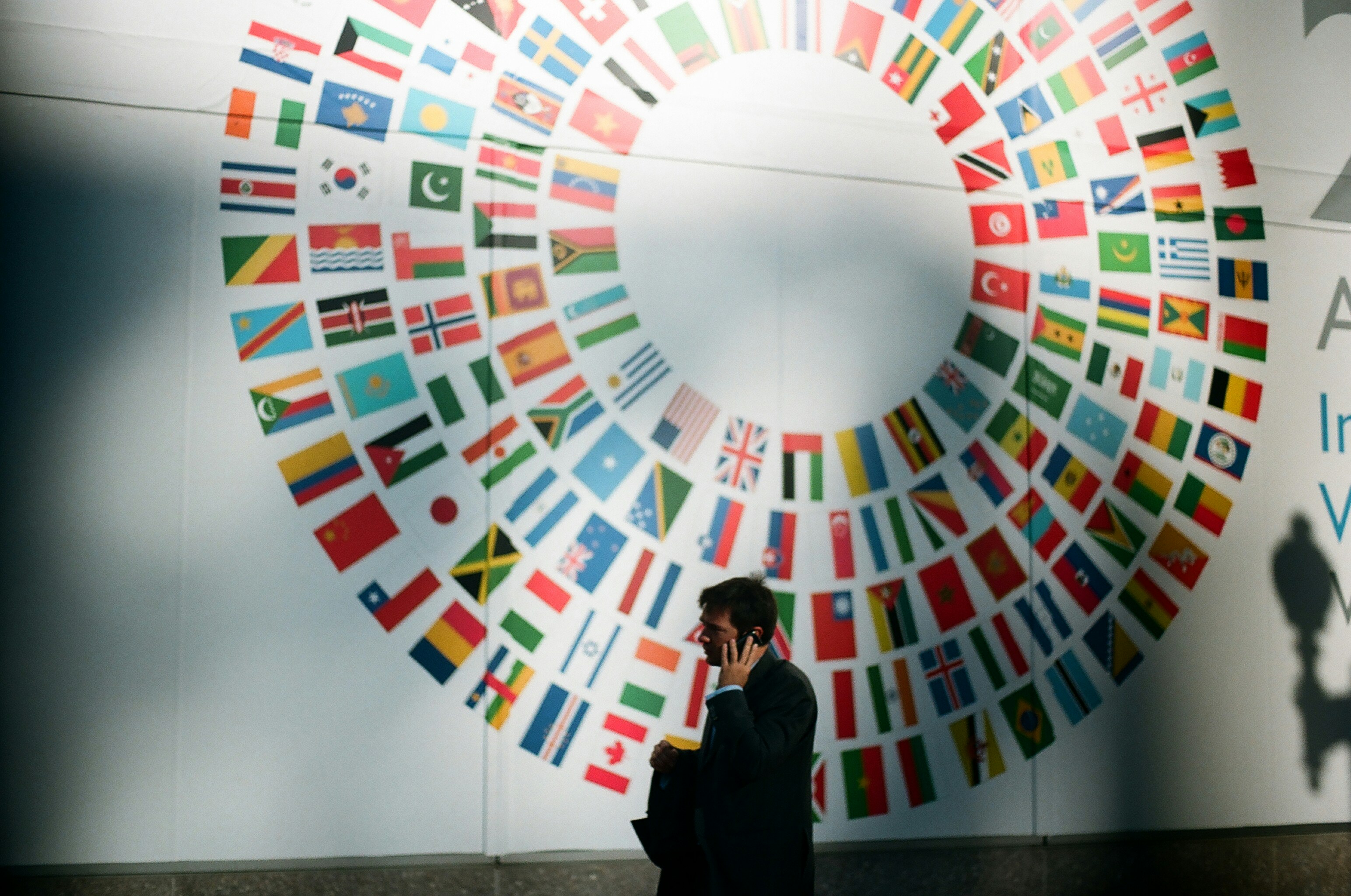
Photo by Markus Krisetya on Unsplash
Riddhi Suthar is a final-year undergraduate student of Political Science with academic interests in international relations, internal security, public policy, and governance. Her research engages with contemporary security dynamics, institutional frameworks, and policy processes in the Indian and global context. She has presented a research paper at an academic conference, demonstrating her commitment to scholarly dialogue and analytical research. She is currently interning at the Mahatma Gandhi Labour Institute, Ahmedabad, where she is gaining practical insights into labour policy, governance mechanisms, and socio-economic policy research.