The use of disinformation and propaganda as a tool of Foreign Policy by the Pakistani State and Military apparatus: A Case Study of Operation Sindoor
In the contemporary landscape of hybrid warfare, information has emerged as a strategic weapon. State and non-state actors deploy disinformation (intentional deception), fake narratives to shape public opinion, manipulate facts, and delegit...
Background to Disinformation and Propaganda in International Politics
Propaganda, deep fakes, and disinformation have become powerful tools of political warfare in the digital age, changing the face of global politics (Paterson & Hanley, 2020). These days, disinformation is a component of a larger strategy known as cyber subversion, in which state and non-state actors use digital technology to stoke division, alter public opinion, and undermine democratic processes. Their paradigm emphasizes how instruments such as deep fakes can undermine public confidence and make diplomacy more difficult by obfuscating the distinction between fact and fiction. According to Lanoszka (2019), misinformation is a low-cost, debatable strategy used to sway narratives and sway foreign publics, even though its efficacy is dependent on contextual weaknesses.
Fake news and Disinformation existed before the digital age, though the internet and social media have greatly increased their reach (Lanoszka, 2019). Gerrits (2018) provides a critical evaluation of the function of disinformation in international relations, recognizing its potential to stifle public debate, erode institutional trust, and increase geopolitical uncertainty while warning against overestimating its influence without empirical support. Conceptual frameworks around disinformation posit it as a strategic, context-dependent tool of influence that is bolstered by technological advancements like deep fakes, magnified by digital platforms, and ingrained in historical propaganda traditions. This approach complicates conventional notions of combat and diplomacy in a hyper-connected world by illuminating how modern players operationalize information as a weapon. In a theoretical sense, Barry Buzan's (1998) security framework holds significance, as the nature of security threats has expanded to include actors and factors beyond the state and its associated activities. It is clear that strategic information warfare profoundly shapes global perceptions and impacts the global image of a nation-state. In the case of the India-Pakistan conflict, disinformation escalates during times of crisis such as during the Pulwama-Balakot standoff (2019) and recently in the aftermath of the Pahalgam incident (2025), particularly from the Pakistani which flooded social media with manipulated videos and false claims, intensifying the perception war amid already heightened tensions.
Disinformation campaign by Pakistan during Operation Sindoor
Disinformation campaigns are not peripheral irritants but core components of modern asymmetric warfare. By systematically analyzing the narratives surrounding Operation Sindoor, one can discuss means of strengthening India's informational security ecosystem and contribute to global conversations on digital truth, narrative sovereignty, and democratic resilience.


During Operation Sindoor, Pakistan launched a coordinated disinformation campaign featuring fabricated narratives such as claims of Indian jet losses, civilian deaths, fake government advisories, and doctored videos of Indian officials apologizing or surrendering (Government of India, Ministry of Information & Broadcasting, 2025). These falsehoods were primarily disseminated via X (formerly Twitter), Facebook, Instagram, YouTube, WhatsApp, and TikTok, with high engagement driven by low digital literacy, algorithmic amplification, and delayed content moderation. State-linked bodies like ISPR, Pakistani media houses (e.g., PTV, Geo News), and political figures lent legitimacy to disinformation against India. While these efforts briefly influenced international media and confused segments of the Indian public, India responded through swift fact-checking, official briefings by military spokespersons, and directives to social media platforms for immediate takedowns. Diplomatic rebuttals, including statements from those in authority and at the helm of affairs played a role in restoring India’s narrative abroad. Meanwhile, Pakistan’s use of emotional imagery and community-shared Disinformation highlighted the dangerous impact of such campaigns on regional stability. Despite a lack of real-time global content moderation, India’s multi-pronged response combining cyber monitoring, strategic communication, and information diplomacy helped mitigate the long-term impact, although the episode exposed vulnerabilities in the information ecosystem and reinforced the urgency of digital media literacy and regulatory preparedness.
India’s Response to Pakistan’s Information Offensive
Strategic-military actions carried out by India against Pakistan were epitomized clarity and precision as only terror camps and military establishments were targeted. As a responsible military power, Indian defense forces did their best to avoid civilian casualties highlighting regard for international law (Press Information Bureau, 2025). In a statement issued on August 9, Indian Air Force (IAF) Chief Amar Preet Singh said the forces shot down five Pakistani jets and one airborne early warning and control (AEW&C) aircraft during the Operation Sindoor (The Times of India, 2025).
Narrative warfare emerged as a significant battlefront during Operation Sindoor, especially since the Pakistani state and military establishment engaged in incessant propaganda and disinformation as highlighted through examples shared in previous sections. Warfare in the digital age doesn’t remain confined to remote locations, border areas or physical spaces but reaches every home through the power of traditional mass media and new age media technology. Pakistan employed three steps to mount its disinformation campaign (Network Contagion Research Institute, 2025), namely:
1) use of state-linked Pakistani actors to spread the narrative that Pahalgam was a false flag operation by India
2) use of bot networks, AI-generated memes and state media to validate their side of the story
3) leveraging western influencers and their network to influence western audiences into accepting the Pakistani narrative, and discredit India.
The Indian response comprised of a systematic, methodical and fact-based counter to the lies spread by Pakistan. This was done in a manner where knee jerk reactions were avoided and careful and composed messages were crafted to dispel falsehood circulated in international media by stakeholders sympathetic to Pakistan’s stance. Daily press briefings by the Indian defense forces, representatives from the external affairs ministry were curated to convey India’s position and actions during Operation Sindoor. The focus of these briefings was on putting forth evidence from the military operation, communicating technical details in simple yet effective language so as to reinstate citizen’s confidence in the country’s leadership and commitment of the armed forces to defeat the enemy. For instance, in one such briefing, Foreign Secretary Vikram Misri showed photographs of how the top Pakistani establishment attended funerals of terrorists killed by India. This worked well to expose Pakistan’s nefarious agendas as the epicenter of international terror.

Another example is the special press briefing on Operation Sindoor on May 11, 2025 in which Air Marshal Awadhesh Kumar Bharti quoted from the Ramcharitmanas to emphasize why India’s military offensive against Pakistan was necessary and how India's air defence thwarted Pakistani attempts on installations (Sinha, 2025). As one carefully observes the nature of these briefings, it is evident that India relied only on official mechanisms to bust Pakistan’s propaganda and most of the time found itself on the defensive side. Communication from the Indian side reflected a mature, professional and formal stance both for domestic and global audiences.
India’s Information Strategy
India led its information campaign with a clear objective to validate its globally, highlighting how it has been a victim of Pakistan sponsored terrorism and low intensity conflict since the early nineties. India sought support from countries which were themselves victims of terror and had displayed resilience for long. The Indian establishment assumed an educative role during Operation Sindoor constantly reinforcing that citizens should share information only from official sources, should avoid falling for manipulation tactics used by Pakistan backed accounts on the digital sphere. The Press Information Bureau (PIB) released regular guidelines about information consumption during military operations and urged caution on a collective level to show strength and solidarity with the defence forces (The Times of India, 2025; Press Information Bureau, 2025). The campaign was ably supported by influencers, celebrities, public personalities, film stars, sport stars across all platforms in all Indian languages emphasizing how this was a crucial time for the country to stay united and not fall for the enemy’s plan of sowing hatred and division (The Times of India, 2025).
Indian social media also witnessed an organic, self-driven campaign by citizens across the country sharing their support for India’s action. They expressed pride in the Indian response and countered any disinformation that belittled or ridiculed India. The authors observed such a trend of information-dissemination especially among young social media users. Such organic digital efforts are noteworthy because the digital space is highly influential among young people who depend on it for news and updates on politics, sports and international affairs.

Virality of trends and hashtags contribute to psyops and narrative building. An example of this organic digital counter-response is the role and influence of Indian K-Pop fans in the social media space. They responded brilliantly to Pakistani and liberal propaganda, creating threads of information that were retweeted widely, united across rival fandoms. Owing to TikTok ban in India, a digital vacuum emerged, and Pakistan tried to take advantage of the same by wrongly portraying itself as a victim of India’s offensive actions, denying the history of terrorism it had perpetrated on India. This was decisively countered with evidence-based threads and posts about Pakistan’s initiation of violence and terrorism flooding both TikTok and X, in formats, languages, and fora most familiar to their peers, i.e., young people from other countries (Ahlawat, 2025).

Parliamentary Delegation on Operation Sindoor
Another decisive counter strategy adopted by the Indian government that garnered praise from all quarters was an all-party parliamentary delegation appointed to visit key partner countries to convey India’s message of zero tolerance on terror post Pahalgam and Operation Sindoor. These delegations that rightfully comprised of Parliamentarians from across party and ideological lines travelled across the globe as part of India’s public diplomacy outreach to state its position on Pakistan sponsored terror. These delegations which were led by experienced public leaders like Baijayant Jay Panda, Dr. Shashi Tharoor, Supriya Sule, Sanjay Jha among others rightfully conveyed a unifying message of India’s conviction and solidarity to fight terrorism not only on its land but also in the world. The objective was to shape global perceptions, counter Pakistan’s rogue ways in international affairs, and send a stern message that when it comes to national security, India speaks in one voice (The Hindu, 2025; Tharoor, 2025).
Conclusion
The path ahead for a diverse country like India is challenging in terms of safeguarding national security in an extremely hostile neighbourhood. India is a modern nation-state with firm civilizational roots that it ought to safeguard in the wake of threats from fundamentalist and radical forces both in its immediate neighbourhood and in the global space. India needs to take pro-active steps to counter disinformation during special circumstances such as Operation Sindoor as well as stand up to the continuous flow of malice and anti-India portrayals in global media, especially western media. The NCRI report (2025) observes fundamental differences in the way in which the Indian and Pakistani establishments handled narratives coming from the other side. Pakistan’s approach was more pro-active whereas India resorted to flagging content, banning platforms and issuing guidelines. The report suggests an approach where India leads in engaging with public figures, especially in the alternative media space which has greater impact on minds and perceptions, especially during wartime. We have already witnessed how information warfare plays out in the case of the Russia-Ukraine conflict and the war in the Middle East. A broader international outreach for filling in the information vacuum left by circumstances where Indian viewpoints are missing is to be urgently addressed in order to ensure that both mainstream and alternative news media tell India’s story to the world. This can only be achieved through coordinated and tactful efforts on part of all stakeholders – government, administration, media, intellectuals, academia, public influencers and citizens – in preparing for the wars of the future.
Endnotes:
- Ahlawat, D. 2025. “Jungkook’ed: When Indian K-Pop Fans United To Crush Pakistan's Propaganda.” Swarajya, June 19. https://swarajyamag.com/culture/jungkooked-how-indian-k-pop-fans-united-to-crush-pakistans-narrative-war.
- Buzan, Barry, Ole Wæver, and Jaap de Wilde. 1998. Security: A New Framework for Analysis. Boulder and London: Lynne Rienner Publishers. De Gruyter BrillWikipedia
- Gerrits, André W. 2018. “Disinformation in International Relations: How Important Is It?” Security and Human Rights 29: 3–23. https://doi.org/10.1163/18750230-02901007.
- Lanoszka, Alexander. 2019. “Disinformation in International Politics.” European Journal of International Security 4 (2): 227–48. https://doi.org/10.1017/eis.2019.6.
- Network Contagion Research Institute. 2025. From State Actors to Western Influencers: The Transnational Surge of “False Flag” Disinformation After Terror Attack in India. New Brunswick: Rutgers University. https://networkcontagion.us/reports/5-20-25-from-actors-to-western-influencers-the-transnational-surge-of-false-flag-disinformation-after-terror-attack-in-india/.
- Pandey, Devesh K. 2025. “Operation Sindoor: Pakistan Has Unleashed a Disinformation Offensive, Says Govt.” The Hindu, May 8. https://www.thehindu.com/news/national/pakistan-has-unleashed-propaganda-machine-in-response-to-successful-operation-sindoor-ib-ministry/article69549084.ece.
- Paterson, Thomas, and Luke Hanley. 2020. “Political Warfare in the Digital Age: Cyber Subversion, Information Operations and ‘Deep Fakes.’” Australian Journal of International Affairs 74 (4): 439–54. https://doi.org/10.1080/10357718.2020.1734772.
- Press Information Bureau. 2025a. “Overall Politico-Military Objective of Operation Sindoor Was to Punish Pakistan for Fighting a Proxy War.” Press Information Bureau, July 28. https://www.pib.gov.in/PressReleasePage.aspx?PRID=2149356.
- Press Information Bureau. 2025b. “Government Debunks Pakistani Propaganda Against India and Armed Forces via Official Fact-Check Unit.” Press Information Bureau, July 30. https://www.pib.gov.in/PressReleseDetailm.aspx?PRID=2150213.
- Singh, Kanishka. 2025. “India's Narrative Integrity amid Pakistan's Digital Provocation.” Defence and Security Alert, May 9. https://dsalert.org/article/indias-narrative-integrity-amid-pakistans-digital-provocation.
- Sinha, Saurabh. 2025. “‘Without Fear…’: Air Marshal Quotes Ramcharitmanas at Operation Sindoor Briefing.” India Today, May 13. https://www.indiatoday.in/india/story/operation-sindoor-air-marshal-defence-briefing-ramcharitmanas-pakistan-conflict-2723565-2025-05-12.
- Tharoor, Shashi. 2025. “Lessons from Operation Sindoor’s Global Outreach.” The Hindu, June 23. https://www.thehindu.com/opinion/lead/lessons-from-operation-sindoors-global-outreach/article69725201.ece.
- Thornton, Thomas T. 2024. The Effects of Fact-Checking Misinformation About US Politics on TikTok Through the Lens of Two-Step Flow Theory: A Quantitative Content Analysis. Doctoral dissertation, Liberty University.
- The Economic Times. 2025. “PIB Fact Check Debunks Fake Video Alleging Indian Post Destroyed by Pakistani Army.” The Economic Times, May 9. https://economictimes.indiatimes.com/news/india/pib-fact-check-debunks-fake-video-alleging-indian-post-destroyed-by-pakistani-army/articleshow/121014047.cms?from=mdr.
- The Hindu. 2025. “India’s Global Outreach on Operation Sindoor: Full List of Delegation Members and Destinations.” The Hindu, May 22. https://www.thehindu.com/news/national/india-diplomatic-push-operation-sindoor-delegation-leaders-countries-mission-details/article69590359.ece.
- The Times of India. 2025a. “Operation Sindoor: IT Ministry Shares Important Dos and Don'ts for Internet Users across India.” The Times of India, May 10. https://timesofindia.indiatimes.com/technology/tech-news/operation-sindoor-it-ministry-shares-important-dos-and-donts-for-internet-users-across-india/articleshow/121023911.cms.
- The Times of India. 2025b. “Parineeti Chopra Urges People to Act Responsibly amid the Growing India-Pakistan Tension.” The Times of India, May 10. https://timesofindia.indiatimes.com/entertainment/hindi/bollywood/news/parineeti-chopra-urges-people-to-act-responsibly-amid-the-growing-india-pakistan-tension/articleshow/121052604.cms.
- The Times of India. 2025c. “‘S-400 Game Changer’: IAF Chief Says India Shot Down 6 Pakistani Aircraft during Operation Sindoor, Trashes Trump’s Claim.” The Times of India, August 9. https://timesofindia.indiatimes.com/india/operation-sindoor-iaf-chief-says-india-shot-down-5-pakistani-jets-calls-s-400-game-changer/articleshow/123201973.cms.
Pic Courtesy- Photo by Kedar Gadge on Unsplash
(The views expressed are those of the author and do not represent the views of CESCUBE.)
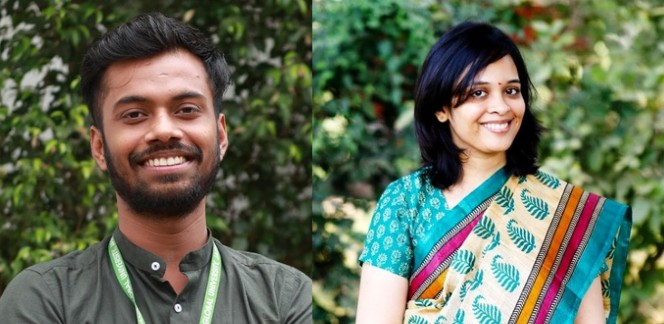
Mr. Pinku Jha is an Assistant Professor of Political Science at Vivekananda Global University, Jaipur, with research expertise in Indic studies, the Mahabharata, and Indian political thought. He has been a Fellow at the Impact and Policy Research Institute (IMPRI) and has edited Welfare and Development, Vol. I & II. His Ph.D. at The Maharaja Sayajirao University of Baroda explores ideas of welfare in the Mahabharata and their influence on modern Indian thinkers, blending classical texts with contemporary political discourse. Dr. Nidhi Shendurnikar has a doctoral degree in Political Science from The Maharaja Sayajirao University of Baroda, Gujarat. She has close to a decade of teaching and research experience in media and communication studies having supervised over sixty postgraduate dissertations. At present, she is an independent media educator and researcher working freelance on documentation, consultancy and research projects.