A Land of Unfulfilled Promises: Balochistan, CPEC, and The Limits of China-Pakistan Strategic Convergence
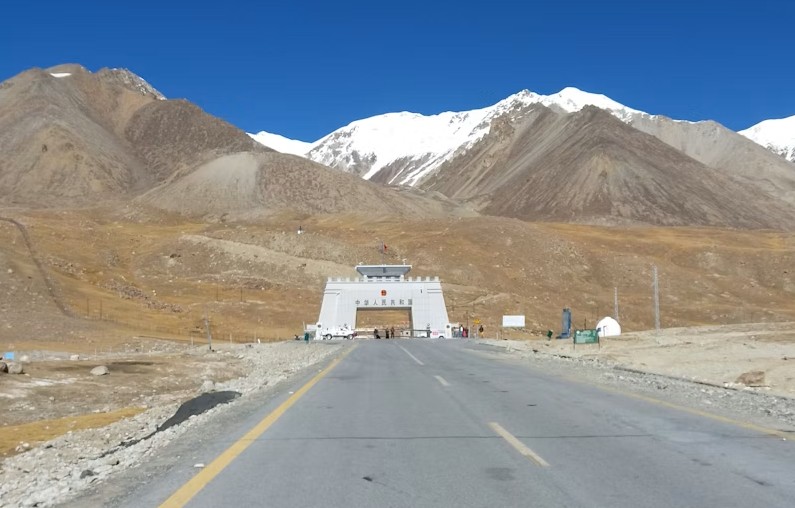
Frequently appearing in headlines for insurgency, enforced disappearances and large-scale development initiatives, Balochistan, stands as one of South Asia’s most complex and misunderstood regions. Despite being Pakistan’s largest and most ...
Over the past decade, Balochistan has been placed at the centre of a new geopolitical calculus, owing to the China-Pakistan Economic Corridor, a transformative economic initiative that has further intensified existing tensions in the region by reinforcing perceptions of external control, exclusion and dispossession. This article aims not only to expose the structural limits of the China-Pakistan strategic convergence, but also highlight the persistent insurgency in Balochistan that continues to weaken CPEC’s operational capabilities.
Autonomy and Resentment: A Historical Continuum
The geography and governance of the region have played an integral role in shaping the political character of Balochistan. Its rugged mountains and arid deserts have historically functioned as buffers for many empires- from the Persians and Mughals to the British empire, while rarely submitting to centralised control through them all. The Baloch society developed along strong decentralised, tribal lines- with authority dispersed among local chieftains. This autonomy, fostered a political culture, deeply resistant towards external domination.
Baloch territories were merged into the Indian empire after the British annexation in 1876. This was carried out through treaties with tribal leaders, which preserved indigenous power while subordinating them to imperial authorities. The most prominent political entity in the region was the Khanate of Kalat- which retained a semi-autonomous status under British suzerainty. This ambiguous arrangement, later became a focal point of nationalist contestation.
Post the creation of Pakistan in 1947, the Khan of Kalat sought independence by invoking pre-existing treaty arrangements with the British, however political and military pressure led to the eventual accession in 1948. This moment represented the origin of political disenfranchisement within the Baloch nationalist historiography- a foundational grievance that has continued to shape Baloch political consciousness and underpins recurring resistance to the Pakistani state.
Insurgency as a Structural Condition
Balochistan has experienced five major insurgencies since its accession- each driven by the demands for better economy, control over natural resources and resistance towards Pakistani centralisation. The most violent period being the 1970s, when Zulfikar Ali Bhutto sought to suppress nationalist movements through military operations, embedding mistrust and militarisation into everyday governance- profoundly altering the region’s state-society relations.
Balochistan, despite its abundant reserves of natural gas, coal, copper and gold- remains one of the poorest provinces in Pakistan. The resource revenues extracted by federal authorities and military linked enterprises rarely reinvest in local development- reinforcing economic disparity and political alienation.
Over the decades, allegations of disappearances, extrajudicial killings and collective punishment have entrenched grievances- in addition to human rights activists claiming the “vanishing” of thousands of students, political workers and suspected militants. In this situation, the Pakistani state has maintained a posture of using legitimate counterinsurgency measures against separatist groups in the province, allegedly supported by foreign intelligence agencies.
CPEC: Development, Dispossession, and Corridor Politics
From a peripheral province to now, a strategic linchpin- the CPEC has been outlined as a catalyst for interconnectedness and national growth. For Islamabad, this serves as an economic revival as well as a geopolitical tool and for Beijing- it offers strategic access to the Arabian Sea and diversification of trade routes.
Yet for many in Balochistan, CPEC is perceived less as a development opportunity and more as a dispossession. The province has been reduced to a mere transit space, rather than a political stakeholder in the corridors-based planning. The decision-making process is centralised, with limited local consultation, and opportunities disproportionately benefitting non-Baloch labours. This influx of external workers, combined with the militarisation of project zones, has intensified fears of demographic marginalisation and cultural erosion.
Chinese workers and installations have increasingly become targets of insurgent violence in the province- attacks that are not simply acts of terrorism but symbolic rejections of a development model perceived as extractive and externally imposed. In this landscape, insurgency functions as resistance to the political economy of the corridor itself.
Militarisation and the Erosion of Developmental Legitimacy
Pakistan has extensively deployed security forces in the province, establishing dedicated protection units and surveillance units to safeguard the CPEC; measures that have enabled project continuity, while reinforcing an enclave model of development- secure islands of infrastructure surrounded by politically alienated populations.
However, this securitisation distorts governance priorities. Development has become a contingent on coercive control, while political reconciliation and institutional reform have deferred. This has resulted in a feedback loop, where insecurity justifies militarisation, which in turn deepens resentment, risking CPEC to become a strategic liability instead of an economic initiative.
This dynamic significantly complicates China’s policy of non-interference. The protection of Chinese nationals increasingly ties Beijing to Pakistan’s internal security practices, exposing it to reputational risks and domestic scrutiny. Strategic convergence, once framed as economic complementarity, becomes constrained by Pakistan’s unresolved internal conflicts.
Gwadar and the Enclave Development Paradox
Being envisaged as a regional centre, the Gwadar port in Balochistan has developed in terms of its technology, yet the communities in the province continue to lack basic facilities like water, healthcare, and long-term employment- epitomising the contradictions of CPEC in Balochistan. Local protests have focused not on opposition to development itself, but on exclusion from its benefits.
This is an analytically significant difference- as the resistance stems not from the anti-modern sentiment, but from the politics of distribution and rule. Gwadar illustrates the effects of being connected without integration- a condition which fuels instability, particularly in regions where historical grievances remain unresolved.
Identity, Fragmentation, and the Limits of Insurgency Narratives
Balochistan’s challenges cannot be reduced to a singular nationalist movement. The province is a home to multiple ethnic and sectarian identities with overlapping and sometimes conflicting interests- added to this, violence against the Shia Hazara community, particularly by extremist groups such as Lashkar-e-Jhangvi, further introduce a layer of hostility, unrelated to Baloch nationalism.
Treating Balochistan as a monolithic insurgent region obscures the intersecting dynamics of sectarian violence, ethnic fragmentation, and socio-economic deprivation- complexifying both counterinsurgency and development. Effective engagement in this situation, requires recognising this plurality rather than subduing it under a singular security lens.
Strategic Convergence and Its Structural Limits
The asymmetries within the China-Pakistan strategic convergence, have been continuously exposed by the persistent insurgency in the province. While China’s engagement is more conditional, shaped by risk assessments and returns- Pakistan remains desperately invested in CPEC as a national project. Project delays, renegotiations, and scaled-down commitments reflect a cautious recalibration rather than unconditional alignment.
This demonstrates that infrastructure alone cannot resolve political alienation and that strategic partnerships anchored at the elite level may falter when local legitimacy is absent, making Balochistan a test case for the hopeless sustainability of corridor based geoeconomics.
Between Potential and Peril
Balochistan now stands at the intersection of strategic ambition and historical neglect- embodying the contradictions of Pakistan’s state-building project and China’s geoeconomic outreach. Insurgency in the province is not merely a security challenge to CPEC; it is an indictment of a development model that prioritises connectivity over consent.
The future of Balochistan- and by extension, the long-term viability of CPEC, depends on whether Pakistan can move towards a more inclusive federal structure that respects regional identities and local governance. Whether Balochistan becomes a bridge of regional integration or a fault line of strategic overreach will be determined not by infrastructure alone, but by the political choices that accompany it.
(The views expressed are those of the author and do not represent the views of CESCUBE)
Photo by Ahmed Raza on Unsplash

Aavriti Chauhan is a political science and journalism graduate who is presently completing her Master’s in Political Science, with a concentrated interest in defence strategy, national security, and international relations. Shaped by her upbringing in an infantry family, she brings practical insight and a grounded understanding of military culture to her analysis. Her work examines India’s strategic challenges, military affairs, and the broader shifts defining the global security environment.