India and the Gulf Security Architecture: Navigating Strategic Autonomy and West Asian Realignments
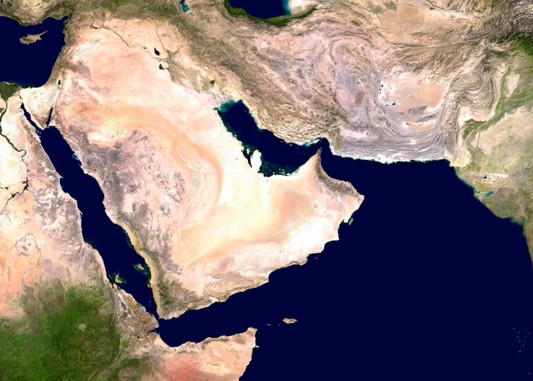
India’s engagement with the West Asian security architecture has undergone a significant transformation amid shifting regional and global power dynamics. Relations that were once centred on energy security, trade, and expatriate welfare hav...
Introduction
India’s relations with the broader West Asia Region are as old as the Indus Valley and Mesopotamia Civilisations, dating back to 3000 BCE. Archaeological evidence found in Mesopotamia, such as Harappan pottery, coins, square Harappan seals, and other artifacts, conforms to this fact. Most importantly, Indus inscriptions on the ‘Gulf type’ seals found in Bahrain (home to the Dilmun Civilisation, a trade simulator between the Indus Valley and Mesopotamia) highlight the deeper engagement between India and the Persian Gulf area.[1] This engagement grew deeper in the medieval period with growing trade connections between the Indian and Arab merchants, which also resulted in cultural transmissions between the two regions and left a remarkable influence on the music, architecture, literature, and overall culture of India. Arabs called the Indian Sub-continent ‘Sind’ and traded in spices, timber, coconut, sandalwood, precious stones, horses, and Basra dates, among others.[2]
However, India’s relations with West Asia changed after the British control of the country. To protect its empire in India and to ensure the safety of maritime route via the Persian Gulf, Britain signed various maritime agreements with the tribal principalities of the Gulf region and established the office of Political Resident in the Persian Gulf (PRPG) in “Muscat (1758-1971), Manama (1861-1971), Sharjah (1823-1953), Kuwait (1899-1961), Doha (1949-1971), and Abu Dhabi (1957-1971).”[3] From the early 19th century till Indian independence in 1947, the Bombay presidency acted as the administrative office for British control in the Persian Gulf and Indian Police Service officers were appointed as political agents in the PRPG offices till 1953.[4] With the Indian independence in 1947 and British withdrawal from the region in 1971, the relations between India and West Asia grew primarily on the 3Es of Energy, Economy, and Expatriates. Over 60% of India’s crude oil imports come from West Asia, and close to 9.5 million Indians live in the region, constituting the largest expatriate community.[5] However, the last decade has witnessed a paradigm shift in India’s ties with the region as new avenues of cooperation have emerged, such as food security, cyber security, renewable and nuclear energy, maritime security, connectivity, infrastructure, and artificial intelligence, among others. Besides, the Gulf region’s concerted efforts to move away from oil revenues and diversify their economies, along with the relative retrenchment of the United States from the region, have led them to ‘Look East’ and strengthened their partnerships with South Asian, East Asian, and Southeast Asian countries. Simultaneously, India’s ‘Act West’ or ‘Think West’ policy towards West Asia aims to deepen its relations with the region in strategic domains and take the relationship beyond buyer and seller of oil and petroleum products.[6] The recent Saudi-Pakistan Defence pact has also enhanced the need for proactive engagement between New Delhi and key players of the Persian Gulf region.
With this context, this article aims to highlight the geopolitical shifts in West Asia and its implications for India in light of the United States’s relative retrenchment, growing Chinese presence, and complex internal dynamics in the Gulf Cooperation Council (GCC) countries. Following this, the article goes on to explain India’s balancing act in the region by highlighting how it has strengthened its economic and strategic engagement with the UAE, Israel, and Saudi Arabia, while maintaining its ties with Iran.
Geopolitical Shifts in West Asia and Implications for India
Uncertainty over the United States’ Role
The increasing uncertainty over the role of the United States is one of the most complex scenarios of contemporary West Asia. On the one hand, Washington has reduced its on the ground military presence in the region, from 250,000 troops[7] at the height of war on terror to around 45,000 at the present,[8] while on the other hand, it has not hesitated in using direct military strikes against Tehran and increased its diplomatic role by mediating the Abraham Accords and suggesting the Peace Plan on Gaza. Scholars have identified some structural conditions that might explain this strategic shift in the United States’ foreign policy calculus in the region. These are ally availability, commitment independence, conquest calculus, and relative rank. In this article, two of the above-mentioned conditions, that is, ally availability and commitment independence, have been used.
The term ally availability describes that “where local powers are willing and able to contain rising regional powers, great powers are better positioned to shed burdens and draw down forces.”[9] In the context of West Asia, several allies of the United States have become strategically and militarily capable of containing each other’s hegemonic tendencies and maintaining a balance of power dynamics in the region. For instance, concerns over Iran’s nuclear program had led Tel Aviv to launch direct military strikes on the Iranian “nuclear facilities, missile factories, senior military officials, and nuclear scientists”[10] in June 2025. Besides, despite being close allies of Washington, both Saudi Arabia and the UAE follow their own independent foreign policies.
The term commitment independence means that “where commitments are independent rather than interdependent, great powers can retrench without fear of a negative domino effect.”[11] American interests in West Asia are independent and not interdependent, which means that withdrawal from the region will not affect its larger interests of containing the Iranian nuclear program, promoting freedom of navigation in the strategic chokepoints, and acting against the Violent non-state actors (VNSAs) of the region. Its most pressing example could be the formation of Combined Task Force (CTF)-153 and leading Operation ‘Prosperity Guardian’ to create deterrence against maritime threats of the area.
The unpredictable US presence in the region creates some opportunities as well as challenges for India. The possible power vacuum created by the US actions has led regional and extra-regional powers such as China, Russia, and others to assert their influence in the region more vigorously. This multipolarity presents a complex environment for India to navigate and maintain strategic ties with Arab as well as non-Arab states. Besides, it also has a positive dimension as India can utilize its friendly position in the region to collaborate on the most pressing challenges of the region, such as food insecurity, climate change, transition towards clean energy, etc., and strengthen its foothold.
Growing Chinese Footprint
China is asserting its influence across the globe through tactical or non-tactical means in economic, political, and security domains, and West Asia is no exception. Economically, China has become the Gulf’s largest trading partner, with trade between the two reaching US$257 billion in 2024 and projected to reach US$375 billion in 2028.[12] For Israel, China is the largest trading partner globally. From 2020-2025, trade between Beijing and Tel Aviv has grown at an annual rate of 6.47%.[13] With China’s heavy dependence on West Asian oil imports (see Table 1.1), stability and security in the region are very crucial for its energy security. To ensure this, China has now deepened its ties with major players of the region in the non-energy sectors, such as digital economy, artificial intelligence, and infrastructure, through megaprojects like the Belt and Road Initiative (BRI).[14] China has also synergized its objectives under the BRI with the long-term visions of Gulf countries, primarily with the Saudi Vision-2030. For example, in 2017, Beijing and Riyadh agreed to establish “a joint investment fund and a “Saudi Silk Road company for industrial services” to boost investments in Saudi Arabia’s Jizan province.”[15] As Figure 1.1 highlights, China has invested heavily in the construction sector of Riyadh across domains. Again in 2019, both countries signed “thirty-five economic cooperation agreements worth US$28 billion across sectors, including the manufacturing of electric control devices, wind turbine structures, turbine blades, etc.”[16] Moreover, Saudi Arabia has also created an easy environment for China to invest in its economy and strengthen its economic diversification efforts.
Table 1.1: China’s Oil Imports from West Asia (October 2025)

Figure 1.1: China’s Investment in the Construction Sector of Saudi Arabia (January 2016 to June 2024)

In the security and strategic arena, China has enhanced its diplomatic posture in the region by entering mediation diplomacy. Chinese led mediation between Iran and Saudi Arabia in 2023 marked an inflection point for the region as it was primarily based on “economy-first, neutral, and transactional nature” rather than “ideological spectacles of ‘democracy vs. autocracy.’[17] For New Delhi, the increasing Chinese footprint demands proactive engagement with the major regional players but as Kabir Taneja writes, “formation of economic cooperation led ‘minilateral’ groups such as the I2U2 have a strong tinge in their construct to both, push back on China’s influence while simultaneously keep the US involved.”[18]
Complex Internal Dynamics among the Gulf Cooperation Council (GCC) Countries
The GCC countries, comprising Saudi Arabia, the United Arab Emirates, Bahrain, Qatar, Kuwait, and Oman, have taken the multipolar post-Cold War World Order to promote their national interests by following independent foreign policy orientations. And this independent strategic calculus has highlighted fragmentations over various regional and global issues among the member countries. For instance, the Qatar blockade in 2017, started by Saudi Arabia, Bahrain and the UAE, brought into light the rifts very openly. The crisis also allowed Iran and Turkey to strengthen their relations with Qatar by becoming its savior as they provided military and non-military support to Doha, which helped in circumventing the sanctions.[19]
Next in line comes the Abraham Accords. The accord normalized the relations between some of the Arab countries (the UAE, Bahrain, Morocco and Sudan) and Israel, but it marked an inflection point in the geopolitical landscape of the region. The signatories moved away from the Saudi-led Arab Peace Initiative, which had made an independent Palestinian state mandatory for normalizing relations with Israel. Although the accords created a conducive environment for collaboration in the region, it can be cited as a prime example of divergent political opinion among the GCC countries.[20]
The most recent rift between Saudi Arabia and the UAE over Yemen is another key example of complex internal dynamics among the GCC countries. Once on the same side of the conflict, both Riyadh and Abu Dhabi have now followed the opposite path, primarily due to differing interests. Riyadh had even gone to the extent of conducting direct “air strikes on UAE’s military assets inside Yemen” and providing “direct military support to operations”[21] that helped in the removal of UAE-backed Southern Transitional Council (STC) forces from the Hadhramaut and Al-Mahra, the two Yemeni governorates captured by the STC.
This fragmented political reality leaves less space for New Delhi to diplomatically maneuver and to follow the equidistance and non-interference policy for the Gulf region. But this diplomatic posture has allowed India to balance its ties with both sides of the Persian Gulf, along with Israel and maintain an issue-based cooperation to navigate the ever-changing regional alignments and realignments.
India’s Balancing Act in the Region: Strategic Autonomy amid the Complex Rivalries
The term ‘strategic autonomy’ is deeply embedded in India’s diplomatic conduct since independence. It points towards independent decision-making by nation-states in an established international system, along with “unwillingness to depend on great powers.”[22] As a founding member of the non-aligned movement (NAM), India has always followed a path of its own, without adhering to any prescribed norms or conditions by great powers. India’s diplomacy in West Asia can be described as ‘strategic autonomy in action’ because the level of complexity and uncertainty the region brings in global politics requires cautious decision-making by nations to secure their national interests and maintain friendly ties with the major regional players.
Israel-Iran entanglement and India
New Delhi’s diplomatic approach towards Israel and Iran has been pragmatic, based on securing the national interests without getting entangled in regional polarization. With Iran, India enjoys a strong civilizational and historical bond, later transformed into cooperation in the energy sector and connectivity, which is very crucial for India’s outreach to Central Asia, Russia, and Europe. On the other hand, India’s relations with Israel are primarily based on defense and security cooperation, with Tel Aviv being one of the largest suppliers of military equipment to India. Both nations also cooperate in the areas of counterterrorism, intelligence sharing, joint manufacturing of defense equipment, food security, agri-tech, and artificial intelligence, among others.
Although October 2023 presented New Delhi with a direct challenge of pursuing the multi-layered strategy as the Hamas-Israel conflict had flared up the tensions between Tehran and Tel Aviv. India continued to hold on to its non-partisan stance, calling for dialogue, ceasefire and peace, along with reiterating its long-standing support for the two-state solution. Just two months after the incident, India’s External Affairs Minister S. Jaishankar visited Tehran in January 2024, which primarily focused on trade, investment, and connectivity projects like the Chabahar Port and International North-South Transport Corridor (INSTC).[23] And in March 2024, India’s National Security Advisor Ajit Doval visited Tel Aviv to discuss issues related to “the release of hostages from Gaza and deliver humanitarian aid.”[24] This ‘all-alignment’ or ‘multi-alignment’ diplomacy has proved to be successful for New Delhi as it allows for extensive engagement with key players amid complex regional rivalries.
United Arab Emirates and Saudi Arabia: Pillars of India’s Gulf Policy
Saudi Arabia and the UAE have been the major pillars of India’s outreach to the Gulf region, with Abu Dhabi taking precedence in the past decade. The UAE has become India’s third-largest trading partner and second-largest export destination, with trade between the two crossing US$100 billion in FY 2024-25. The signing of the Comprehensive Economic Partnership Agreement (CEPA) in May 2022 has been a watershed moment in the bilateral ties as it was the first of its kind signed by India with any country of the West Asia and North Africa (WANA) region and first by the UAE with any country of the world.[25] Saudi Arabia is India’s fifth-largest trading partner and second-largest source of crude oil, thus playing a crucial role in India’s energy security.[26]
India’s proactive approach towards West Asia via ‘Link West’ or ‘Act West’ policy and Gulf states’ economic diversification efforts, along with convergence of interests in areas like clean energy, maritime security, and counterterrorism, has expanded the partnership beyond buyer and seller of hydrocarbons. India has elevated its relations with both Abu Dhabi and Riyadh to the level of Comprehensive Strategic Partnership in the year 2017 and 2019, respectively. Besides, the UAE has become the first country in the world to invest in India’s strategic oil reserves, which will provide around “21 days of emergency coverage for India’s crude oil requirements.”[27]
Furthermore, minilateral initiatives like the India-Israel-UAE trilateral, I2U2 and mega-connectivity projects like the IMEC have provided a new geostrategic and geoeconomic platform for deeper cooperation between the member countries. India’s involvement in all of them again highlights the level of diplomatic capital being put in by New Delhi to strengthen its foothold in the region.
Conclusion
As highlighted by India’s External Affairs Minister S. Jaishankar, “India’s interest is best secured by maximising its options, maintaining its freedom of choices, and adopting strategic autonomy.”[28] Although ties with the West Asian countries have been a roller-coaster ride for New Delhi, regular outreach and frequent high-level visits, along with mutual trust and understanding, have pushed diplomatic limits by looking beyond regional volatility and moving with the strategy of ‘multi-alignment without entanglement.
Endnotes
[1] Laursen, Steffen Terp. 2010. “The Westward Transmission of Indus Valley Sealing Technology: Origin and Development of the ‘Gulf Type’ Seal and Other Administrative Technologies in Early Dilmun, c.2100–2000 BC,” Arabian Archaeology and Epigraphy 21 (2): 96-134. https://www.harappa.com/sites/default/files/pdf/The_westward_transmission_of_Indus_Valle.pdf
[2] Agarwal, Rajeev. 2025. “India and the UAE: Crafting a Model Strategic Partnership amid a Tumultuous Global Order.” Chintan Research Foundation, September 8, 2025. https://www.crfindia.org/publications/research-article/india-and-the-uae-crafting-a-model-strategic-partnership-amid-a-tumultuous-global-order
[3] Onley, James. 2009. “Britain and the Gulf Shaikhdoms, 1820-1971: The Politics of Protection.” Centre for International and Regional Studies, Georgetown University. https://www.files.ethz.ch/isn/110431/cirsoccasionalpaper4jamesonley2009.pdf
[4] Bradshaw, Tancred. 2020. The End of Empire in the Gulf: From Trucial States to United Arab Emirates. London: I. B. Tauris.
[5] Trigunayat, Anil. 2024. “Key Changes in India’s Approach Towards West Asia over the last Ten Years: From Link West to Act West.” Vivekanand International Foundation, April 30, 2024. https://www.vifindia.org/print/12606?via=Azure
[6] Janardhan, N. ‘India’s ‘Think West’ Matches Gulf’s ‘Look East’ Policy.’ In The Arab Gulf’s Pivot to Asia: From Transactional to Strategic Partnerships, edited by N. Janardhan. Gerlach Press: Germany, 2020.
[7] MacDonald, Paul K., and Joseph M. Parent. 2024. “The Dynamics of US Retrenchment in the Middle East.” US Army War College Publications, May 29, 2024. https://publications.armywarcollege.edu/News/Display/Article/3789938/the-dynamics-of-us-retrenchment-in-the-middle-east/
[8] Ferragamo, Mariel, et.al. 2025. “U.S. Forces in the Middle East: Mapping the Military Presence. Council on Foreign Relations.” Council on Foreign Relations, June 23, 2025. https://www.cfr.org/article/us-forces-middle-east-mapping-military-presence
[9]MacDonald, Paul K., and Joseph M. Parent. 2024. https://publications.armywarcollege.edu/News/Display/Article/3789938/the-dynamics-of-us-retrenchment-in-the-middle-east/
[10] Centre for Preventive Action. 2026. “Iran’s Conflict with Israel and the United States.” January 5, 2026. https://www.cfr.org/global-conflict-tracker/conflict/confrontation-between-united-states-and-iran
[11] MacDonald, Paul K., and Joseph M. Parent.
[12] Salaam Gateway. 2025. “China overtakes West as the Gulf’s largest Trading Partner.” November 13, 2025. https://salaamgateway.com/story/china-overtakes-west-as-the-gulfs-largest-trading-partner
[13] The Observatory of Economic Complexity. n.d. Accessed December 15, 2025. https://oec.world/en/profile/bilateral-country/chn/partner/isr
[14] Sun, Yun. 2024. “Forecasting China’s Strategy in the Middle East over the Next Four Years.” Brookings, December 19, 2024. https://www.brookings.edu/articles/forecasting-chinas-strategy-in-the-middle-east-over-the-next-four-years/
[15] Alghannam, Hesham. 2025. “How China Aligned Itself with Saudi Arabia’s Vision 2030.” Carnegie Endowment for International Peace, January 21, 2025. https://carnegieendowment.org/posts/2025/01/how-china-aligned-itself-with-saudi-arabias-vision-2030?lang=en
[16] Ibid.
[17] Mathew, Megha Joshy. 2025. “China as a Mediator in the Middle East: A Challenge to the Abraham Accords.” The dialectics, May 24, 2025. https://thedialectics.org/china-as-a-mediator-in-the-middle-east-a-challenge-to-the-abraham-accords/
[18]Taneja, Kabir. 2023. “Is China Challenging West Asia’s Success Story.” Observer Research Foundation, August 23, 2023. https://www.orfonline.org/research/is-china-challenging-indias-west-asia-success-story
[19] Cafiero, Giorgio, and Andreas Paraskevopoulos. 2019. “GCC Dispute Pushes Iran and Qatar Closer but with Caveats.” Atlantic Council, June 17, 2019. https://www.atlanticcouncil.org/blogs/iransource/gcc-dispute-pushes-iran-and-qatar-closer-but-with-caveats/
[20] Keshavarzian, Arang. 2025. “The Limits of Protection and Profits – five years into the Abraham Accords.” Middle East Research and Information, October 20, 2025. https://www.atlanticcouncil.org/blogs/iransource/gcc-dispute-pushes-iran-and-qatar-closer-but-with-caveats/
[21] Al-Muslimi, Farea. 2026. “Oman, Eastern Yemen, and the Fragile Geometry of Neutrality.” Chatham House, January 7, 2026. https://www.chathamhouse.org/2026/01/oman-eastern-yemen-and-fragile-geometry-neutrality
[22] Monsonis, Guillem. 2010. “India’s Strategic Autonomy and Rapprochement with the US.” Strategic Analysis 34 (4): 611-624. https://doi.org/10.1080/09700161003802802
[23] Sela, Ori. 2024. “India between Iran and the West: The Travels of Minister Jaishankar.” The Institute for National Security Studies, January 25, 2024. https://www.inss.org.il/social_media/india-between-iran-and-the-west-the-travels-of-minister-jaishankar/
[24] Bhamidipati, Gopi Krishna. 2024. “India’s Balancing Act in the Middle East.” Arab Gulf States Institute, April 5, 2024. https://www.inss.org.il/social_media/india-between-iran-and-the-west-the-travels-of-minister-jaishankar/
[25] Ministry of Economy and Tourism, United Arab Emirates. “UAE-India Comprehensive Economic Partnership Agreement.” Accessed December 20, 2025. https://www.moet.gov.ae/en/cepa_india
[26] Ministry of External Affairs. n.d. “India-Saudi Arabia Bilateral Brief.” Accessed December 20, 2025. https://www.mea.gov.in/Portal/ForeignRelation/India-Saudi_Arabia.pdf
[27] Priyadarshi, Shishir. 2025. “India and the UAE: Crafting a Model Strategic Partnership Amid a Tumultuous Global Order.” Chintan Research Foundation, September 2025. https://www.crfindia.org/-/media/Project/ChintanResearchFoundation/Publications%20PDF/8%20Sep/India%20and%20the%20UAE.pdf
[28] Haidar, Suhasini. 2025. “India’s Interests are best Secured by Strategic Autonomy.” The Hindu, October 6, 2025. https://www.thehindu.com/news/national/indias-interests-are-best-secured-by-strategic-autonomy-jaishankar-at-jnu/article70132525.ece
(The views expressed are those of the author and do not represent the views of CESCUBE)

Navodita Kumari is a Research Scholar in International Relations at the Department of Political Science, University of Allahabad, Prayagraj, India. Her research primarily focuses on the evolving dynamics of India-United Arab Emirates relations and their broader geopolitical implications for India’s engagement with the Gulf region. She has deep interest in the ever-changing political scenario of the West Asia and North Africa (WANA) region and is committed to exploring its shifting realities. Her interest areas include Indian Foreign Policy, India-UAE relations, GCC countries, India-Israel relations, Israel and the Arab World, North-western Indian Ocean. A recipient of Junior Research Fellowship, she actively participates in academic seminars and conferences, contributing to scholarly discussions on international politics.