Border Tensions Without War: India’s Management of Protracted Low-Intensity Conflicts
The security environment of the world has become less defined by conventional warfare and more by persistent, low-intensity tensions over certain periods of time as such conflicts have become the rage in the current scenario. Protracted arm...
This term of conflict lacks a decisive definition per se, since there is no fixed standard for how long a conflict must go on to be considered “protracted.” Such armed conflicts may occur in episodes or cycles; they might be long continuous insurgencies or even long-standing occupations. Interpreted differently by developing and developed nations apart, there is a somewhat general agreement over considering such conflicts to be a limited military struggle, protracted by diplomatic, economic, and psychological pressures of insurgency or terrorism, where conventional military tactics or strategies rarely succeed.
In the Indian context, we realise how paradoxical dealing with these conflicts tend to be since despite the consensus on how such low-intensity conflicts remain the most persistent threat, there is a general reluctance to deal with these using proper strategy. Since independence, India has dealt with numerous PLIC situations along the borders, arising due to several unregulated dynamics with her neighbours, the levels of hostility in their relationships fluctuating over the decades. From the unresolved ambiguity of the Line of Actual Control (LAC) with China, to the volatile yet somewhat understood dynamics along the Line of Control (LoC) with Pakistan and the complex internal security challenges along the India-Bangladesh Border, India continues to face a pattern of protracted conflict that somehow remains right under the threshold of full-scale warfare, yet remains alive in the form of border frictions that demand sustained diplomatic and military attention. Studying India’s management of such hostilities across multiple border avenues gives us a valuable insight into its broader security strategies as it highlights the diplomatic navigation of such conflicts in the long-term environment of persisting disputes without crossing the threshold of war.
Managing Ambiguity and Deterrence at the Line of Actual Control
There technically exists no defined demarcation of border between the two nations of India and China since there is no mutually agreed Line of Actual Control along the border’s 3488 km length. Nearly six decades have passed and yet the Line of Actual Control still remains as a site of one of the most enduring examples of protracted conflicts in India’s security landscape. The lack of clarity has acted as a source of strategic ambiguity, which has only transformed the LAC into a dynamic zone of diplomatic signalling and crisis management conducted below the threshold of open warfare. Since 1981, from the time of the first round of border-talks held between the officials of both sides, nearly four decades have passed as the two countries have engaged in several Confidence Building Measures (CBMs) with bilateral agreements signed from the 1990s-2010s. While doctrines such as the Agreement on Political Parameters and Guiding principles for the Settlement of the India-China Boundary Question have repeatedly emphasized on institutionalised mechanisms for disengagement as primary means of conflict management, incidents on the border claimed to be as “intrusions” or ”incursions” have been reported on multiple occasions by the Indian media, which the Indian government preferred to call as “transgressions”, underplaying the events of the Sino-Indian Border as a general trend of restriction.
Although such denials were established as a general trend reflecting the strategic restraint diplomacy of India, episodes such as the April 2013 breach of the LAC by the Chinese People’s Liberation Army (PLA) into the Indian territory of eastern Ladakh, was, by the Indian Government's own definition, one of the first cases of intrusion. Consequently, several separate incidents, particularly the Sumdorong Chu Standoff of 1986-87, Doklam Standoff in 2017 and the series of clashes in Eastern Ladakh since 2020, particularly the Galwan Valley incident, reinforces how the LAC has become a site of confrontations marked by deployment of armaments, patrol face-offs and military signalling, trying to avoid complete escalation. Such incidents remained geographically contained, reflecting the commitment to escalation control on both sides, primarily India, despite rising tensions.
Following the realisation that CBMs and negotiations were only getting indefinitely stalled over the decades due to differing strategic cultures, India's response along the LAC has come to depict a mixed strategy of scaled deterrence combined with strategic restraint. On one hand, while the Indian government has managed to expand infrastructure developments to improve coverage of the LAC and adjusted deployment patterns to counter China’s growing military presence, on the other, it has continued to rely on diplomatic engagement and military dialogues, including conducting WMCC meetings (Working Mechanism for Consultation and Coordination) to manage crises and prevent inadvertent escalation. This dual approach acts as a reminder of the political, economic and strategic risk carried along with escalation at the LAC.
China’s willingness to actually alter the status quo through incremental actions is in strict contrast to India’s emphasis on maintaining stability and safeguarding territorial sovereignty, a difference that only ensures that friction along the LAC persists in cycles, with disengagement following renewal of tensions in other sectors. In this sense, India’s management of the LAC is a reflection on the limits of military solutions in such cases and highlights the centrality of long term strategic patience and restraint in navigating such unresolved territorial disputes.
Cross-Border Dynamics at the Line of Control
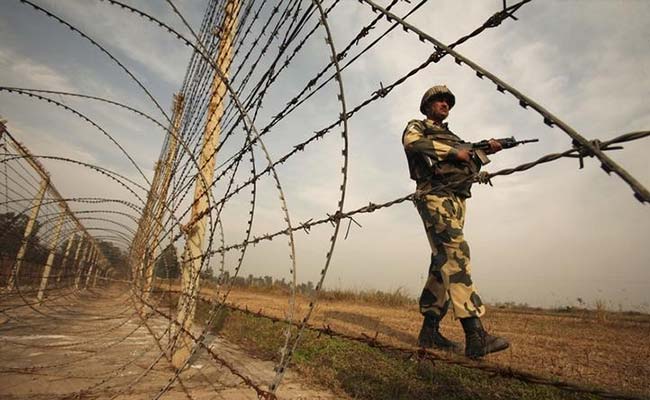
The Line of Control (LoC) between India and Pakistan is another example of a distinct form of protracted low-intensity conflict, a direct result of an overt history of cyclic hostilities, military intervention and even interference by non-state actors on multiple occasions. It is a de facto military demarcation between the two States, in the region of Jammu & Kashmir and Ladakh. However, it is not an internationally recognized border, more of a ceasefire line, originating in the post India-Pakistan conflict of 1947-48, redefined formally under the Shimla Agreement of 1972. Unlike the ambiguity that familiarises the LAC, the LoC is thus a proper militarized boundary which remains highly volatile due to recurring incursions along the borders, even including repeated ceasefire violations, making it a site of regulated cycles of escalation and restraint.
The LoC remains a site of sustained hostilities over the decades, as low-intensity frictions along this border have continued in a cycle of violence and ceasefire agreements, such as the 2003 Ceasefire agreement understanding, which has institutionalized the rhythm of these conflicts. While Pakistan has reasserted its revisionist agendas on multiple occasions, attempting multiple infiltrations, pushing to balkanise India, in recent years, India’s response strategy to Pakistan, even though complicated, has evolved significantly to reflect its increasing risk-taking ability, while maintaining restraint to avoid escalation and internationalisation.
India’s approach to managing conflicts at the LoC has continued to reflect a careful balance of deterrence with military preparedness and actions in the post-independence era, as India's security posture only hardens in the contemporary political scenario. Previously, while tactical responses in the form of enhanced surveillance and confined military actions had been employed as a step forward to limiting conflicts under the shadow of nuclear deterrence, the contemporary scenario of deliberate ceasefire violations by Pakistani forces has pushed India to develop punishment-based deterrence policies, reinforced with capability denial to Pakistan. The 2016 surgical strikes, the 2019 Balakot air strikes and the recent Operation Sindoor in 2025, though occurring beyond the LoC itself and escalatory in nature, only exemplify the carefully assessed use of force by India, aimed at restoring deterrence without crossing the threshold of full-scale warfare.
Yet, despite such periodic escalations, both India and Pakistan now demonstrate a consistent willingness to de-escalate through backchannel diplomacy and inter-military communication, reflecting the mutual recognition risks of escalation. Thus, the LoC continues to exist as a contested area of friction where strategic restraint, although tested repeatedly, continues to function as a stabilising mechanism.
Deterrence at India-Bangladesh Border
In a similar context, we see the India-Bangladesh Border representing a form of PLIC based environment significantly different to that at the LAC and LoC. Stretching over 4351 km, as per the Indian Ministry of Defence, the notoriously porous India-Bangladesh border is more than often referred to as the “problem area”, characterized by chronic socio-economic and security challenges. Even though it stands as one of the largest land frontiers in South Asia, the difficult terrain of this area, mainly due to the riverine stretches, leaves the border land non-demarcated and porous, which acts as the primary cause of contention between the two countries since poorly demarcated borders and legacy enclaves only created zones with jurisdictional ambiguity, contributing to series of armed clashes in the 1970s-90s. Several unresolved issues arising out of trans-border terrorism, movement of insurgents, illegal migration and even narcotics smuggling lead to further challenges in management of strategic relations. Moreover, emergence of non-state actors, such as the Harkat-al-Jihad-al-Islami (HUJI) and Jamaat-e-Islami further fuel radical propaganda against India, which spills over the border, aiding the rise of Separatist Movements and Rebel Groups across the demography of the northeastern part of India. Such pressing issues further hamper relations between two nations broadly considered as strategic partners.
Operationally, the Border Security Forces (BSF), responsible for management of border issues on the Indian side, have reported frequent clashes with the Border Guard Bangladesh (BGB) over encroachment and enclaves. In contemporary era, these incidents have escalated beyond local skirmishes, transforming into active diplomatic disputes between India and Bangladesh, particularly following the fall of the Sheikh Hasina led government in Bangladesh. This drastic shift in leadership has led to changes in border dynamics between the two countries as political sensitivities have heightened. Managing such conflicts in this context now involves a stabilizing act between security necessities and the need to avoid any form of militarized confrontation. India already pursues overhead fencing across possible sectors of the border and provides extensive surveillance to curb illegal migration, a phenomenon which has increased due to severe cases of violence against minorities in Bangladesh in the last six months of 2025. Deployment of ‘Coordinated Border Management System’ (CIBMS) by India, join engagements such as DG level talks between the BSF and BGB reflect the efforts made to coordinate and resolve periodic disagreements as effective management of frontiers at this border becomes imperative to preserve the cooperation between two nations so closely interlinked since independence.
Strategic Restraint as a Deliberate Policy Choice and its Challenges
In the Indian experience, “strategic restraint/constraint” has been a predominant theme in India’s Foreign Policy objectives, with a few exceptions over the years. This deliberate policy choice gave India the opportunity to not only project itself as a global peacemaker, presenting its record of restraint in both world affairs and regional border conflicts, it also helped develop India’s exemplary non-proliferation record, even facilitating the Indo-US Nuclear Deal, crediting a claim at a permanent membership at the United Nations Security Council.
Strategic Restraint in the Indian context came up more from the default cultural and ideological options of a non-assertive state, rooted in its history of non-violence, which was later adopted as a conscious policy choice. More often than not has this policy served us well, being in tune with India’s spiritual and diplomatic identity. Scholars such as Sunil Dasgupta and Stephen Cohen have gone on to highlight India’s inhibitions regarding application of military force as the first resort, noting a historical pattern of avoiding undertaking of high-intensity actions, even in crisis situations, for instance, India’s decades long hiatus prior to the 1998 nuclear testings and restrained military responses in earlier conflicts. India’s enviable strength and strategic position in South Asia is largely attributed to its restrained foreign policy.
In practice however, the policy of strategic restraint has had both its benefits and challenges as it has also led to significant missed opportunities for India. Restraint in dealing with Chinese incursions, particularly regarding support to Tibet, might have given India a good chance at putting a brake to the Chinese expansionism as well as having a chance to an “equitable dialectic” with the People's Republic of China, as noted by Colonel Ashwin Baindur. Timely development and testing of a strong nuclear programme without delay, might have led to an assured chance of inclusion in the Security Council, where the primary qualification for membership was being established as a strong nuclear power. It has been observed by many scholars that pursuing strategic restraint had been many a times at the cost of India’s chances of becoming a super power, a far more developed nation, much earlier, when our nations’ position could have been at the top of affairs at a global level instead of a suppliant, as has been the case. Critics have argued that excessive perusal of restraint as a dominant policy has led to the development of a misinterpreted image of India with a weak strategic structure amongst adversaries, only leading to increased challenges in resolving conflicts or deterring persistent provocations at escalation to high intensity conflicts.
Conclusion
Therefore, in the context of India’s management of protracted low-intensity conflicts, strategic restraint as a policy has allowed the security forces to manage frictions along the LAC, LoC, India-Bangladesh Border, and other such land boundaries without leading to large scale war. As a deliberate policy choice, restraint complemented with carefully assessed deterrence has enabled India to navigate the road to maintaining national sovereignty and security while avoiding high scale escalation in the contemporary geopolitical environment characterized by hanging nuclear threats and rising competitive regional ambitions.
However, a purely restrained approach can undermine the integrity of a nation’s diplomatic and defensive strength, as has been noted in the case of India on many occasions as well. There have been imbalances in the security structure with little or no integration of proper strategic planning, let alone operational coordination, which have led to the Indian Armed Forces maintaining the belief that strategic restraint is a poor policy choice, which has been ignored and overruled in Indian civil-military relations. Although wise in several contexts, what India needs is a greater balance between courage and restraint in face of de-escalating military stand-offs along the borders and in the region over all, as the preference for such restraint has ultimately shaped the Indian security norm and will continue to do so into the foreseeable future.
References-
- Swartz, John. “Tracking India’s Infrastructure Development Near the Line of Actual Control.” ORF Occasional Paper No. 417. Observer Research Foundation. October 17, 2023. https://www.orfonline.org/research/tracking-indias-infrastructure-development-near-the-lac
- Brig Grewal, SS, SM and Col BK Khanna, SM. 2015. “Low Intensity Conflict in Indian Context”. The Journal of the United Service Institution of India: 206-223. https://usiofindia.org/pdf/2015.279805.Usi-Journal-71-89.pdf
- Policinski, Ellen and Jovana Kuzmanovic. 2019. “Protracted Conflicts: The enduring legacy of endless war”. International Review of Red Cross 1(912). http://international-review.icrc.org/articles/protracted-conflicts-enduring-legacy-endless-war-ir912
- Bhonsale, Mihir. “Understanding Sino-Indian border issues: An analysis of incidents reported in the Indian media”. ORF Occasional Paper No. 143. Observer Research Foundation. February 12, 2018. https://www.orfonline.org/research/understanding-sino-indian-border-issues-an-analysis-of-incidents-reported-in-the-indian-media
- Saxena, Anushka and Amit Kumar. “India-China Border, Tactics, Talks and Transgressions.” Takshashila Position Paper Version 1.0. Takshashila Institution. March, 2023. https://takshashila.org.in/content/publications/assets/india-china-border-tactics-talks.pdf
- Joshi, Manoj. “Diplomacy, Sanctions, and Military Might: India’s Post-Galwan Strategies in Managing China”. ORF Occasional Paper No. 508. Observer Research Foundation. November 29, 2025. https://www.orfonline.org/research/diplomacy-sanctions-and-military-might-india-s-post-galwan-strategies-in-managing-china
- Singh, Rajneesh. “Risk Assessment and Escalation Management in India-Pakistan Conflicts”. ORF Issue Briefs No. 511. Observer Research Foundation. December 15, 2021. https://www.orfonline.org/research/risk-assessment-and-escalation-management-in-india-pakistan-conflicts
- Mitra, Joy. “Line (Out) of Control?” Institute of Peace and Conflict Studies Article No. 5219. January 06, 2017. https://www.ipcs.org/comm_select.php?articleNo=5219
- India’s World. 2025. India-Bangladesh Border Skirmishes. February 06, 2025. https://indiasworld.in/india-bangladesh-border-skirmishes/
- Dr. Mehrotra, Mansi. “ Management of India-Bangladesh Border.” CLAWS Article No. 182. Centre For Land Warfare Studies. May 08, 2009. https://archive.claws.co.in/182/management-of-india-bangladesh-border-dr-mansi-mehrotra.html
- Col Baindur, Ashwin. 2015. “Has Strategic Military Restraint during Most of the Last Six Decades Served India’s National Interests?” United Service Institution of India. https://usiofindia.org/pdf/Jan%20-Mar%202016-30-42.pdf
(The views expressed are those of the author and do not represent the views of CESCUBE)
Image Source: NDTV https://www.ndtv.com/india-news/smart-fences-set-up-along-line-of-control-to-thwart-infiltration-attempts-4295194

Adrija Bhattacharjee is an undergraduate student of International Relations with research interests spanning security studies, geopolitics, public policy, and international law. With her minor in World History, her work engages with themes involving hybrid and grey-zone conflicts, border security and strategic studies surrounding South Asia and the Middle East. She is also interested in global governance, humanitarian issues, and policy-oriented research that bridges academic analysis with contemporary geopolitical developments. Adrija enjoys exploring how evolving political realities shape state behaviour and security strategies in the twenty-first century, on a global level.