Beyond RAA: Deepening Defense Cooperation between Japan and the Philippines.
Deepening defence cooperation between Japan and the Philippines through the Reciprocal Access Agreement (RAA) and the Access and Cross-Servicing Agreement (ACSA) reflects an important shift in the Indo-Pacific security architecture. Against...
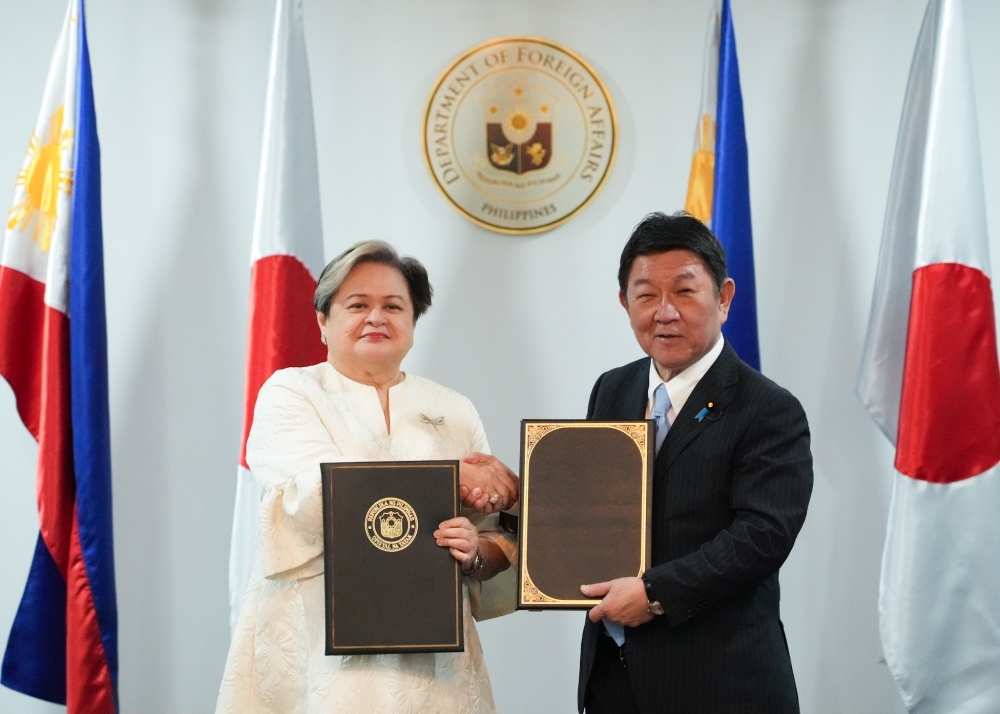
On January 15 2026, the Access and Cross-Servicing agreement (ACSA), a security agreement, was signed between Motegi Toshimitsu, Japanese Foreign Minister and his counterpart Theresa Lazaro, the Philippine Foreign Secretary in Manila. This agreement will facilitate tax-free reciprocal provisions of fuel, supplies and services between the two nations during the joint military drills, deepening the bilateral defense partnership.
This agreement aims to strengthen the security of these two Asian nations and to deter China and prepare for assistance during natural disasters and reaffirm their commitment to a vision of a free and Open Indo-Pacific. Notably, both countries are in separate territorial conflicts with China in the East China Sea and the South China Sea, creating a persistent environment of maritime tensions in the region.
ACSA is parallel and complements the Reciprocal Access Agreement (RAA), a major bilateral defence agreement, which permits the visa-free troop movements and joint military drills, together institutionalising the structured security framework between the two nations.
Table - 01. Relationship between RAA and ACSA.

These agreements are not random defense engagements but are very systematic, following the constant maritime tensions between Philippines and China in the Indo-Pacific, particularly in the West Philippine Sea, and the Philippines is enhancing its defense capabilities by securing defense partnerships with other countries and trying to escape a hub-and-spokes security framework of the USA, where Japan is emerging as a key security partner in Southeast Asia. The ACSA-RAA reflects a growing significance of networked security arrangements in the region, aimed at deterring China, enhancing interoperability and regional security. For India, these recent developments in the defense security architecture compel India to re-think its role, defense partnerships and involvement with like-minded countries in the Indo-Pacific.
RAA and Strategic Outlook
The RAA is a significant defense tool that facilitates legal military movement from one country to another and joint training of troops. Japan has signed an RAA with Australia, the UK and the Philippines. The RAA provides interoperability, which also means sharing technologies, equipment and systems. For a long time, Japan and the Philippines have faced similar security challenges in their maritime activities and lawful territories from the Chinese Coast Guard (CCG) and Militias (CMM) in the contested waters of the East China Sea and the South China Sea. With agreements like RAA, both nations can share information and conduct joint patrols, making it harder for China to pressurise them. On October 7 2025, for the first time, RAA was applied to the Doshin-Bayanihan bilateral exercise between Japan’s Air Self-Defense Force (JASDF) and the Philippines Air Force (PAF).
Table - 02. Evolution of the RAA between Japan and the Philippines.

(Disclaimer: except for the Doshin-Bayanihan exercise, all the information is compiled from the Department of Defense and Foreign Affairs of the Philippines web-page.)
In the past few years, CCG and CMM harassed and attacked filipino-fisherman, the Coast Guard, and built artificial islands deep into the territory of the Philippines, which indeed attracted international criticism, warnings from treaty ally—USA but it continues with not a little change in the behavior of China. And the reason is quite clear the weak security arrangement of the Philippines despite the three phases of Armed Forces of the Philippines (AFP) Modernisation Programme, which is set to expire in 2027. Though the country has also gained an unprecedented defense position under this programme and acquired different army, air, marine and navy equipment and especially secured the BrahMos deal with India.
By signing RAA-ACSA with Japan, which is playing a proactive role in regional security these days while working on defense diplomacy with countries of Southeast Asia and India, the Philippines has shown a shift in its security posture and is diversifying its defence partnership beyond the USA, believing bilateral cooperation with regional countries will give it more leverage on maritime issues, creating a hurdle for China.
What it means for Regional Security
The networked security arrangements like RAA-ACSA will strengthen security and deterrence in the East China Sea and South China Sea in a broader sense in the Indo-Pacific region. Though, ACSA is yet to be ratified by Japan’s National Diet and Philippines’ Senate. These new defense agreements are not an alternative of the QUAD, ASEAN or any other security arrangements but it complements them. Due to internal divisions in ASEAN over China, the countries of Southeast Asia prefer a security framework with countries like Japan, which is more practically engaged in the idea of the rule of law in the Indo-Pacific. Most importantly, RAA should not be confused with militarisation, it aims to promote security by sharing information and joint friendly drills, deterring or lowering China’s assertiveness in the region.
Why is it important for India
India’s maritime security policy revolves around SAGAR (Security and Growth for All in the Region) committed to free and open and rule-based order by upholding UNCLOS in the Indo-Pacific. India is a very active and heavily invested country in the region, and it has sound maritime relations with Japan. In fact, very recently, India increased security- related engagement with Japan by signing the ACSA, providing logistical support during joint drills. India and Japan share the same interest in freedom of navigation in the Indo-Pacific. Like the Philippines, India should also act firmly to secure RAA with Japan, strengthening its defense capabilities for countering a common adversary in the region—China. It can also explore potential trilateral security engagement with Japan and the Philippines, giving India leverage in maritime issues of the South China Sea and the East China Sea, where India can supply defense equipment, conduct joint military patrols and enhance interoperability in the Indo-Pacific. Therefore, Japan’s defence and diplomatic tools like RAA and ACSA should serve as lessons for India’s defence diplomacy and future repair and logistic agreements.
Policy Lessons for India
In the Indo-Pacific, Japan is definitely emerging as a key security partner by its innovative defense tools, and engaging diplomacy with South Asian and Southeast Asian countries and international players involved in the region. This is the high-time, India should move beyond economic engagement with Japan as well as Southeast Asian nations and should reformulate its Act East and Indo-Pacific Strategy from economic to security-based policy. Additionally, India should engage more with ASEAN through different maritime projects and joint military exercises while supporting multilateral maritime security frameworks. Meanwhile, India should hold firmly to its strategic autonomy in this unstable and less secure maritime region while dealing with like-minded countries.
Hence, RAA reflects the bright future for the peace and security of the region by making countries more comfortable in joint operations and exercises. But, with RAA also comes carefulness and it requires countries to be cautious of their sovereignty while making structural changes. Globalisation is also hitting the security and defense of the countries in the Indo-Pacific, as the security in this region becomes more networked and interconnected. In this new and expanding networked security arrangement India should keep up, it should partner with more countries and deepen its defense cooperation and maximise security and ruled-based order in the region.
(The views expressed are those of the author and do not represent the views of CESCUBE)
Image Source: Ministry of Foreign Affairs of Japan, https://www.mofa.go.jp/s_sa/sea2/ph/pageite_000001_01456.html

Afridi Ahmed is a postgraduate in Conflict Analysis and Peacebuilding from Jamia Millia Islamia, New Delhi. He has interned with the Council for Strategic and Defense Research (CSDR), a New Delhi-based think tank. His research interests include strategic studies, Indo-Pacific security, China's strategic behaviour, and maritime geopolitics, with a particular focus on South and Southeast Asia.