From Glacier to Border: The Politics of the Indus Water Basin
Water is not only just a source of life but also been a source of cooperation and conflict between the states in South Asia. It can be observed particularly in the Asia continent where the Indus Waters Treaty (IWT) signed in 1960 between In...
Indus Waters Treaty: History and Conflict:
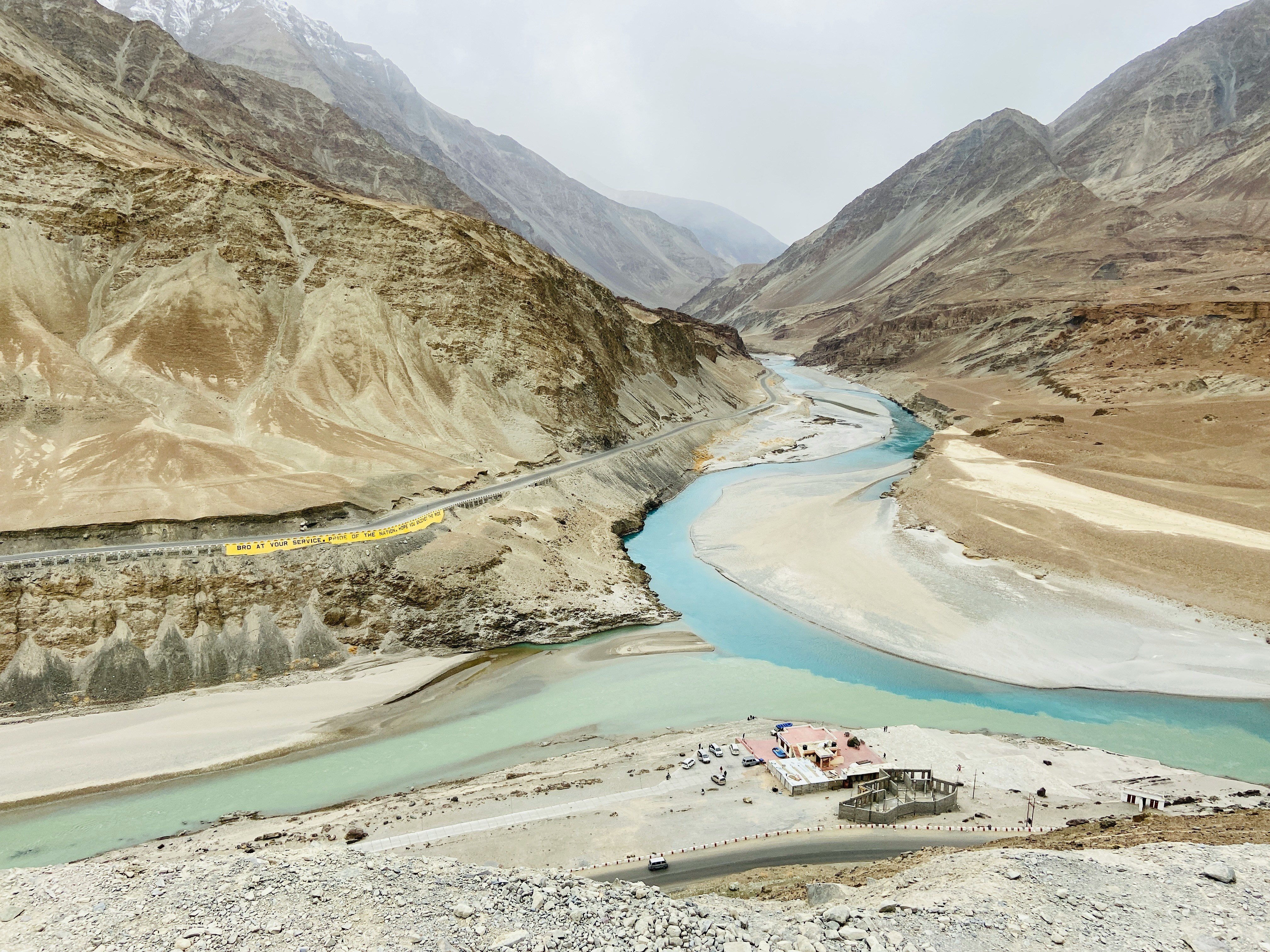
The water in Indus River system comes from the glaciers and their tributaries which drain the high mountains ranges of the Ngari Prefecture in western Tibet, the Himalayas, the Hindu Kush in Afghanistan and the Karakoram. Most of the people of Pakistan live near Indus floodplain and their source of livelihood is agriculture. So, that, 90 per cent of the food production and 65 per cent of jobs in Pakistan are directly connected with agriculture and animal keeping where Indus water flows (Pohl & Schmeier, 2014).
The Indus Water Treaty (IWT) was signed in 1960 as a result of an agreement mediated by the World Bank whereby three rivers located in the east (Ravi, Beas and Sutlej) were given to India and three rivers in the west (Indus, Jhelum and Chenab) to Pakistan (Wolf & Newton, 1948). Although India keeps only 20% of the water whereas Pakistan gets about 80% from the Indus water basin. Despite the frequent geopolitical tensions, the treaty has been able so far withstood external upheavals. In 2016 after the Uri terrorist attack, Indian Prime Minister Narendra Modi stated, “Blood and water cannot flow together” (Times, 2023). So, the geo-political tensions between India and Pakistan represented a change in rhetoric whereby water sharing was placed in the context of national security, which further increased the fears of its possible use as a tool of state coercion.
Climate Crisis and Population Surge: A Brewing Strom
Due to rapid glacier melt and rising variability of rainfall stressed the Indus Basin. At the same time, the high population growth in India and Pakistan is increasing the demand especially on agriculture and energy. India has been faulted of not utilizing its share in the western rivers. Jammu and Kashmir has utilized approximately 3,540.15 MW of hydropower from the Jhelum, Chenab, and Ravi and it accounts for about only 23.82% of the total capacity of 14,867 MW in the region till the year 2024-2025 (Network, 2025). Despite the significant hydropower capacity, a large portion of the hydropower potential remains untapped, and it highlights the need for continued development of hydro infrastructure and investment in the energy sector. However, India is trying to boost the construction of hydropower plants in the Jammu-Kashmir region. Jammu and Kashmir has visionary energy agenda, where the increase in hydropower production is augmented by developing the infrastructure of renewable-energy projects. Pakistan repeatedly challenged the plan of the Kishenganga-Ratle hydropower project in the valley and the two nations have done various rounds of talks up to 2015 (Bhattacherjee, 2025). Pakistan activated the dispute-resolution mechanism of the World Bank in 2016 by filing an application to constitute a Court of Arbitration. India’s position from the start regarding this the Court of Arbitration was that it was a “unilateral action” by Pakistan to approach the World Bank. The Government of India has stated that it has exercised its sovereign rights under the international law after the terror attack in Pahalgam and has suspended the Indus Waters Treaty. This interim step will last the time until the end when Pakistan will unambiguously prevent cross-border terrorism without any reversal. So that way, the region aims to intensify its economic growth pattern and the ability to secure its strategic position on its territories as well as to become a locus of national power supply in India.
Pahalgam Attack: A Wake-Up Call
On April 22, 2025, Terrorists opened fire on tourists, and killed 26 civilians in the name of religion and injured more than 20 others in Baisaran valley near Pahalgam in Anantnag district. The tragic incident has shaken the entire global community. The Government of India responded to the attack with a set of countermeasures which included cancellation of Pakistani visas in the context of the South Asian Association for Regional Cooperation (SAARC), cut the number of Indian diplomatic missions in Pakistan, the deportation of Pakistani military advisors and the bold move called “Operation Sindoor”(IBT, 2025). It was named to honor the lives of innocent women and pilgrims who lost in the Pahalgam attack and many of whom were wearing Sindoor that represents sacredness, dignity, and sacrifice in Indian culture. On 7 May 2020, India launched Operation Sindoor, in which two nuclear powered nations attack each other with drone and missile attacks and India aggressively smashed Pakistan’s entire terror setup. The move is a direct reaction to the Pahalgam terror attack. Pakistan repeatedly threatens India with nuclear weapons. India had attacked the Nur Khan and Mushaf airbases, which are both located close to the nuclear weapons facilities of Pakistan. All these measures amounted to a logical policy that was aimed at holding Pakistan accountable in its actions and to convey India firmness and will. After that the United States stepped in and negotiated a ceasefire between the nations.
Indus Treaty Reform: A way forward.
In January 2023, a letter was officially sent letter to Pakistan for the Permanent Indus Commission by India and wanted a revision of the 64-year-old Indus Waters Treaty. These shifts are an indication of a paradigm shift in India regarding its water-sharing policy with Pakistan. Being driven by strategic, environmental, and geopolitical issues, India aims to have better control over its water resources in the environment of changing climate patterns and increasing domestic demand. India has also boycotted meetings with Pakistan for of the Permanent Indus Commission and demanded that Pakistan consents to bilateral discussions(The Asia Live News Service, 2024). The move by India to suspend all meetings of the Permanent Indus Commission until Pakistan restarts the dialogue is indicative of increasing effort by the latter in efforts to get its way in the reform of Indus Water Treaty (IWT). However, any substantive change in the text of the treaty turns out to be both conceptually and practically complicated. There is no clear-cut exit provision in the treaty and that leaves both state unable to withdraw unilaterally. It is one of the important for sustainable water resources management in South Asia and which is equitable. A permanent lack of political will and trust needs to highlight the necessity of the treaty being modernized as the current environmental situation and developing water needs favor the need thereof. So, there is need to develop collaborative science-based approaches that can turn the Indus Basin into the source of conflict resolution and a model of concerted resource management. However, it is challenging task for both the nations because it does not include an exit clause and requires consent of both parties to do so which does not happen too often in the conditions of bad bilateral relations.
References:
- Bhattacherjee, K. (2025, June 28). India ‘categorically rejects’ Court of Arbitration’s ‘supplemental award’ on Kishenganga, Ratle hydropower projects. The Hindu.
- IBT. (2025, June 30). Blood and water will not flow together": Why Modi govt suspended Indus Water Treaty with Pakistan. IBT News Desk.
- Network, K. N. (2025, March 7). Economic Survey 2025: Jammu Kashmir Expands Power Capacity, Aims to Double Hydropower Generation. KL News Network.
- Pohl, B., & Schmeier, S. (2014, September 22). Hydro-Diplomacy Can Build Peace Over Shared Waters, But Needs More Support.
- The Asia Live News Service. (2024, September 22). India and Pakistan at Loggerheads Over Water: Battle for Indus Waters Treaty. The Asia Live News Service .
- Times, F. (2023). Water or blood: tensions grow over India and Pakistan’s shared rivers. Financial Times. https://doi.org/https://www.ft.com/content/1edf1989-8d31-4c0b-8982-1edefcedf01f
- Wirsing, R. G., & Jasparro, C. (2006). SPOTLIGHT ON INDUS RIVER DIPLOMACY: INDIA, PAKISTAN, AND THE BAGLIHAR DAM DISPUTE. www.apcss.org.
- Wolf, A. T., & Newton, J. T. (1948). Case Study of Transboundary Dispute Resolution: the Indus Water Treaty.
Pic Courtesy- Photo by Veda Nimkhedkar on Unsplash
(The views expressed are those of the author and do not represent the views of CESCUBE.

Dr. Raushan Kumar, has Currently Working as an Assistant Professor in Amity University, Gurugram. He has done his Ph.D. in finance from Mahatma Gandhi Central University, Bihar and completed his Graduation from Sri Aurobindo College, University of Delhi and Post-Graduation from National PG College, University of Lucknow. Dr. Sunil Kumar Rai is an Assistant Professor in the Department of Hindi at the University of Delhi, with over a decade of experience in journalism and academia. His expertise spans Hindi journalism, media studies, and contemporary social discourse, with research focused on media's social role and evolving narratives. Harshit Kumar is a researcher, writer, and communication professional actively involved in academia, journalism, and social development. He holds degrees from the University of Delhi, Jamia Millia Islamia, and Jawaharlal Nehru University, and is currently pursuing a Ph.D. on the Indian diaspora’s socio-cultural dimensions at the University of Delhi.