Nuclear Escalation in a Multi-Polar World: Deterrence Stability after the Ukraine War
The Russian invasion of Ukraine in 2022, has had major humanitarian, environmental, economic, and military consequences. The conflict exacerbated nuclear threats in potentially catastrophic ways, and marked the resurgence of an existential ...
Background
American military strategist and a founding father of nuclear strategy, Bernard Brodie, had referred to the nuclear bomb as “an absolute weapon”, shedding light on its dangers, as early as 1946. However, the significance and lethality of the weapon only gradually dawned upon administrators and the larger public. At the beginning of its invasion of Ukraine, Russia issued nuclear threats aimed at deterring Western countries from providing military support to Ukraine. When announcing the invasion, President Vladimir Putin warned that any outside interference would lead to “consequences never seen in history.” Three days later, he placed Russia’s nuclear forces on high alert.[1] In early autumn 2022, global tensions rose further when senior Russian generals (reportedly without Putin’s direct approval) discussed the possible use of tactical nuclear weapons in Ukraine.[2] By May 2024, Moscow carried out unannounced military exercises near the Ukrainian border, focused on preparing for the deployment of tactical nuclear weapons. The Kremlin justified these drills as a reaction to “provocative statements and threats by certain Western officials.” [3]
Russia’s nuclear threats during the Ukraine war point at a broader weakening of nuclear deterrence in today’s world. Major arms control agreements like the INF Treaty have broken down and Russia has suspended participation in new START inspections.[4] Meanwhile, nuclear proliferation is a growing concern. North Korea continues expanding its arsenal, and Iran’s nuclear program remains a point of tension.[5] More countries with nuclear weapons and fewer arms control rules make deterrence harder to manage. In addition, some states are updating their military doctrines to allow for the use of tactical nuclear weapons in conventional wars. Russia’s recent nuclear drills near Ukraine are one example.[6]
Historical events like the Berlin and Cuban missile crises during the Cold War offer valuable lessons for managing today’s nuclear challenges. These cases show that major breakthroughs in arms control during the 1960s were only possible after active efforts to resolve territorial disputes and reduce tensions. Current policy discussions should examine how these past experiences can help shape effective responses to nuclear threats in today’s ever-changing global order. While Russia and the West may differ in their strategies, both sides can draw on these historical examples to improve nuclear diplomacy and reduce the risks of escalation. This article analyses the future of nuclear deterrence by focusing on instability caused by proliferation, weakened arms control, and changing battlefield doctrines, with the Ukraine war as a case study.
Nuclear Deterrence Amidst Growing Proliferation Risks
The war in Ukraine has brought about certain changes in the international arena regarding security , and has even sparked discussions surrounding the potential use of nuclear weapons in conflicts, reinforcing the perception that nuclear weapons are crucial for human security. The Treaty on the Non-Proliferation of Nuclear Weapons (NPT) has been weakened due to failures by nuclear powers to uphold disarmament commitments. Countries like Iran and North Korea, continue to test nuclear weapons and tread on thresholds of the international laws governing strategy and disarmament.
Ukraine gave up its nuclear arsenal in 1994 under the Budapest Memorandum, which guaranteed its territorial integrity. Russia's violation of that agreement undermines trust in security assurances. Heightened competition among major powers in recent days has sparked concerns about increased pressure for proliferation in regions like Europe, Asia, and the Middle East.
Although there are reasons to expect increasing proliferation risks, historical experience tells us that these challenges can be managed. In the past, concerns about U.S. reliability and shortcomings in disarmament have been addressed through a mix of coercion and reassurance. Likewise, the consequences of conventional conflicts occurring under the shadow of nuclear deterrence have been contained. While certain risk factors such as the decline of the U.S. nuclear industry and the rise of the Treaty on the Prohibition of Nuclear Weapons are new - their ultimate impact remains uncertain.[7]
The Erosion of Arms Control Regimes
Strategic stability has declined in recent years. After the Cold War, the United States and Russia made significant progress in reducing nuclear weapons, but now only the New START treaty remains, and a follow-on agreement looks unlikely. The U.S. withdrawal from the Anti-Ballistic Missile (ABM) Treaty further weakened stability. All nuclear-armed states are now modernizing their arsenals with new systems that could increase risks. U.S.-Russia and U.S.-China relations have worsened, raising the chance of accidental escalation. Since joining the nuclear club in 1998, India and Pakistan have faced multiple crises, adding another source of instability to the global nuclear order.[8]
In 2017, an escalating exchange of statements and tweets between President Trump and North Korean leader Kim Jong-Un showed that neither leader felt restrained from using nuclear threats. In 2018, Russian President Putin announced several proposed new nuclear weapons in a national address, accompanied by a video simulation showing a Russian warhead headed toward what appeared to be President Trump’s Mar-a-Lago estate. Until recently, nonproliferation had seen steady progress. In the 1980s and 1990s, several key countries joined the NPT and gave up nuclear weapons. In 1995, a review conference made the treaty permanent. The NPT became part of a broader nonproliferation framework, which also includes regional nuclear-weapon-free zones, export control regimes, cooperative threat reduction programs after the Soviet Union’s collapse, and various measures to improve nuclear security.
In recent years, that progress has stalled. The 2015 NPT Review Conference ended in unprecedented disagreement among member states. The 2020 conference was postponed until 2022 due to Covid, but the divisions from 2015 remain unresolved. The Trump administration withdrew from the Iran nuclear deal, and while the Biden administration has sought to revive it, prospects remain poor. Efforts to establish new nuclear-weapon-free zones have also stalled, with a long-discussed Middle East zone showing no signs of moving forward.
The Role of Emerging Technologies and Emergence of New Battlefield Doctrines
The collapse of key arms control agreements , including the INF Treaty, the Open Skies Treaty, and potentially New START after 2026 – has left major powers with fewer ways to monitor and limit each other’s nuclear forces.[9] Without these verification tools, mistrust grows, and the possibility of a new arms race increases. At the same time, new military technologies are changing the strategic landscape. Hypersonic missiles can strike targets much faster than traditional systems, cyber tools can disrupt nuclear command-and-control, and autonomous weapons can make decisions without human input. None of these are covered by existing arms control rules, creating gaps that could lead to faster escalation or mistakes in a crisis.[10]
Battlefield doctrines are also shifting. Russia has adopted strategies described as “escalate to de-escalate” or “escalate to win,” which involve using limited nuclear weapons to pressure an opponent into retreat or negotiation.[11] This blurs the line between nuclear and conventional war. China is moving away from its past “minimum deterrence” approach by building more nuclear weapons and improving its second-strike capability. North Korea continues to issue open nuclear threats against perceived enemies. The wider integration of tactical nuclear weapons, smaller, lower-yield bombs intended for battlefield use into standard military planning lowers the threshold for nuclear use. This not only increases the risk of miscalculation but also makes traditional deterrence frameworks less effective.[12]
The Way Forward Amidst Challenges
1. Revive Arms Control: The U.S., Russia, and China must return to negotiating tables to renew arms control mechanisms, beginning with extending or replacing New START. Inclusion of new technologies and TNWs in agreements is essential.
2. Strengthen Multilateral Frameworks: Reinforce the NPT by pushing for concrete disarmament steps. Support complementary treaties like the Treaty on the Prohibition of Nuclear Weapons (TPNW), though with a balanced approach to engage major powers.
3. Promote Regional Stability: Regional dialogues in South Asia and Northeast Asia should be promoted to manage deterrence between India-Pakistan and U.S.-North Korea.
4. Invest in Risk Reduction: Establish robust crisis communication channels and promote military-to-military contacts. Early warning systems and data-sharing can prevent miscalculation.
5. Regulate Emerging Technologies: Global norms on the use of hypersonic weapons, cyber warfare, and AI in nuclear command systems must be developed. Transparency and confidence-building measures are crucial.
6. Support Non-Nuclear Security Assurances: Strengthen political and legal assurances for non-nuclear states to discourage proliferation.
Conclusion
The future of nuclear deterrence in a multipolar world is marked by uncertainty. The erosion of traditional arms control, and the rise of emerging technologies and new battlefield doctrines, urges urgent international action. The Ukraine war has raised questions - not only about the use of nuclear technology in future warfare but also about the effectiveness of deterrence strategies. Thus, to avoid entering a phase of reckless nuclear confrontation, major nations must reaffirm their dedication to maintaining strategic stability, reinstate arms control treaties, and modernize nuclear transparency and oversight to address today’s challenges. Deterrence post the Ukrainian war will remain an effective means of ensuring security, only if it is supported by open, transparent, and collaborative efforts.
References
[1] Al Jazeera. "Putin puts Russia's nuclear deterrent forces on alert." February 27, 2022. https://www.aljazeera.com/news/2022/2/27/putin-puts-russias-nuclear-deterrent-forces-on-alert
[2] CNN. "US officials divided over new intelligence suggesting Russian military discussed scenarios for using nuclear weapons." November 2, 2022.https://www.cnn.com/2022/11/02/politics/us-russia-nuclear-weapon-intelligence/index.html
[3] Radio Free Europe/Radio Liberty. "Russia Begins Drills Of Tactical Nuclear Weapons Near Ukrainian Border." May 21, 2024. https://www.rferl.org/a/russia-tactical-nuclear-exercise-ukraine-putin/32957871.html.
[4] Polianskii, Mikhail A., Matthias Dembinski, and Willi Schrenk. "Nuclear Weapons in Crisis Situations: Present Challenges and Lessons from the Past." Journal of Applied History 7, no. 1 (April 2025): 1–26. https://brill.com/view/journals/joah/7/1/article-p1_1.xml.
[5] Stockholm International Peace Research Institute (SIPRI). "Role of Nuclear Weapons Grows as Geopolitical Relations Deteriorate—New SIPRI Yearbook Out Now." SIPRI, August 2025. https://share.google/hQpbZZk2KEYCNPjuz
[6] Rethinking a Political Approach to Nuclear Abolition | Carnegie Endowment for International Peace. Accessed August 10, 2025. https://share.google/CXKAVwSFmQUzwnw4S
[7] Miller, Nicholas. The Future of Nuclear Proliferation after the War in Ukraine. Proliferation Papers no. 67. Paris: French Institute of International Relations (Ifri), April 2024. https://share.google/mZlaYHJcVs0VALZAY
[8] Knopf, Jeffrey. "The Erosion of the Global Nuclear Order: Some Ideas For Halting It." Global Governance Forum, October 7, 2021. https://globalgovernanceforum.org/erosion-global-nuclear-order-ideas-halting-it/
[9] Amy F. Woolf, Arms Control and Nonproliferation: A Catalog of Treaties and Agreements, Congressional Research Service, July 8, 2024, PDF, https://crsreports.congress.gov/product/pdf/RL/RL33865
[10] James M. Acton, “Escalation Through Entanglement: How the Vulnerability of Command-and-Control Systems Raises the Risks of an Inadvertent Nuclear War,” International Security 43, no. 1 (Summer 2018): 56–99, https://direct.mit.edu/isec/article-abstract/43/1/56/12199
[11] Kristin Ven Bruusgaard, “Russian Nuclear Strategy and Conventional Inferiority,” Journal of Strategic Studies 44, no. 1 (2021): 3–35
[12] Vipin Narang, Nuclear Strategy in the Modern Era: Regional Powers and International Conflict (Princeton: Princeton University Press, 2014).
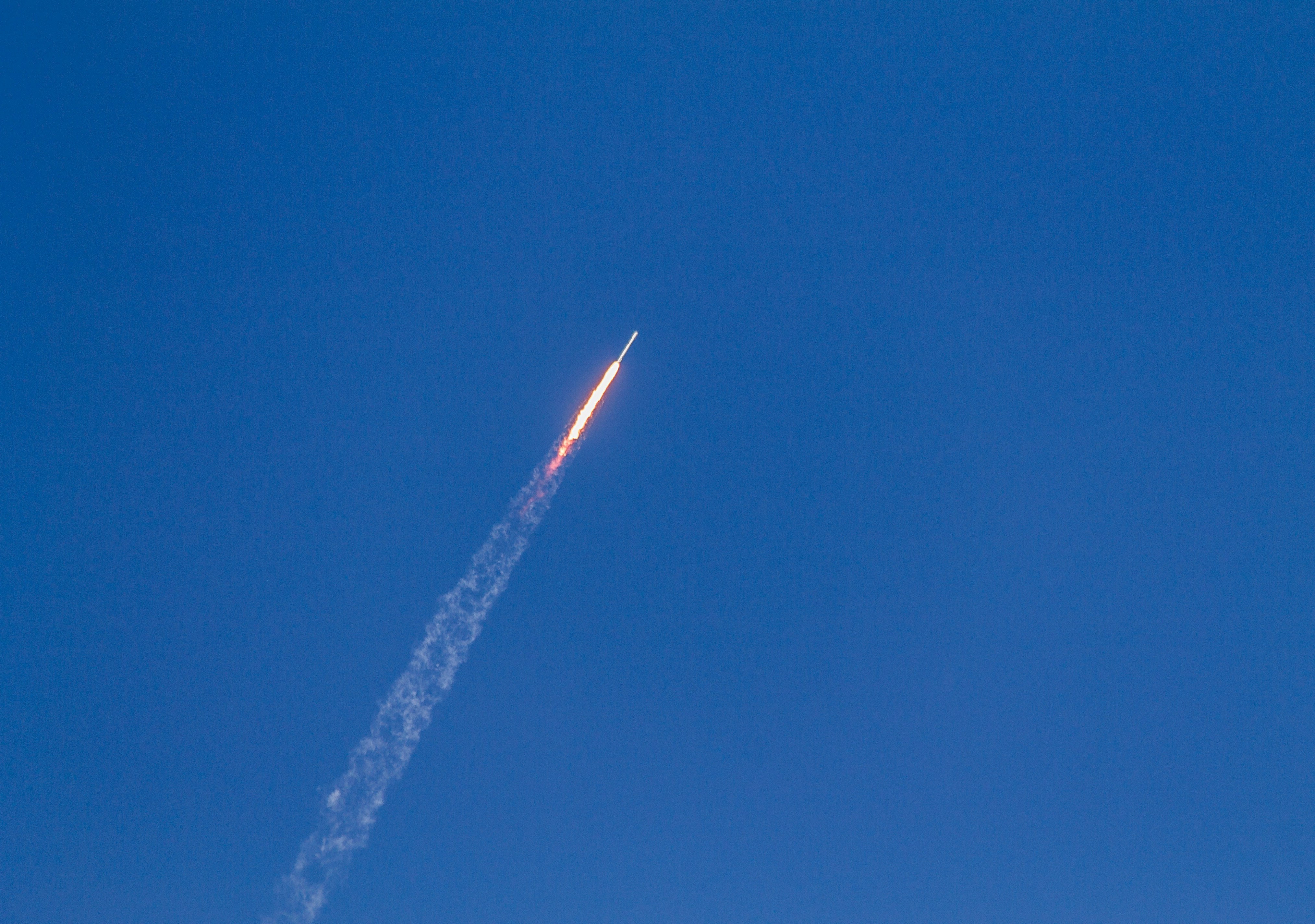
Photo by Maciej Ruminkiewicz on Unsplash
(The views expressed are those of the author and do not represent the views of CESCUBE.

Shreejita Chatterjee is a second-year undergraduate student of Political Science and International Relations at Jadavpur University, Kolkata. Her research interests include peace and conflict studies, migration, displacement, and theology. She has gained professional experience with reputed think tanks and NGOs such as the Jindal Policy Research Lab, The Geostrata, and Pledge a Smile Foundation. She looks forward to contributing meaningfully to CesCube.