Geo-Economics of Retaliation: How States Weaponise Trade in Strategic Competition
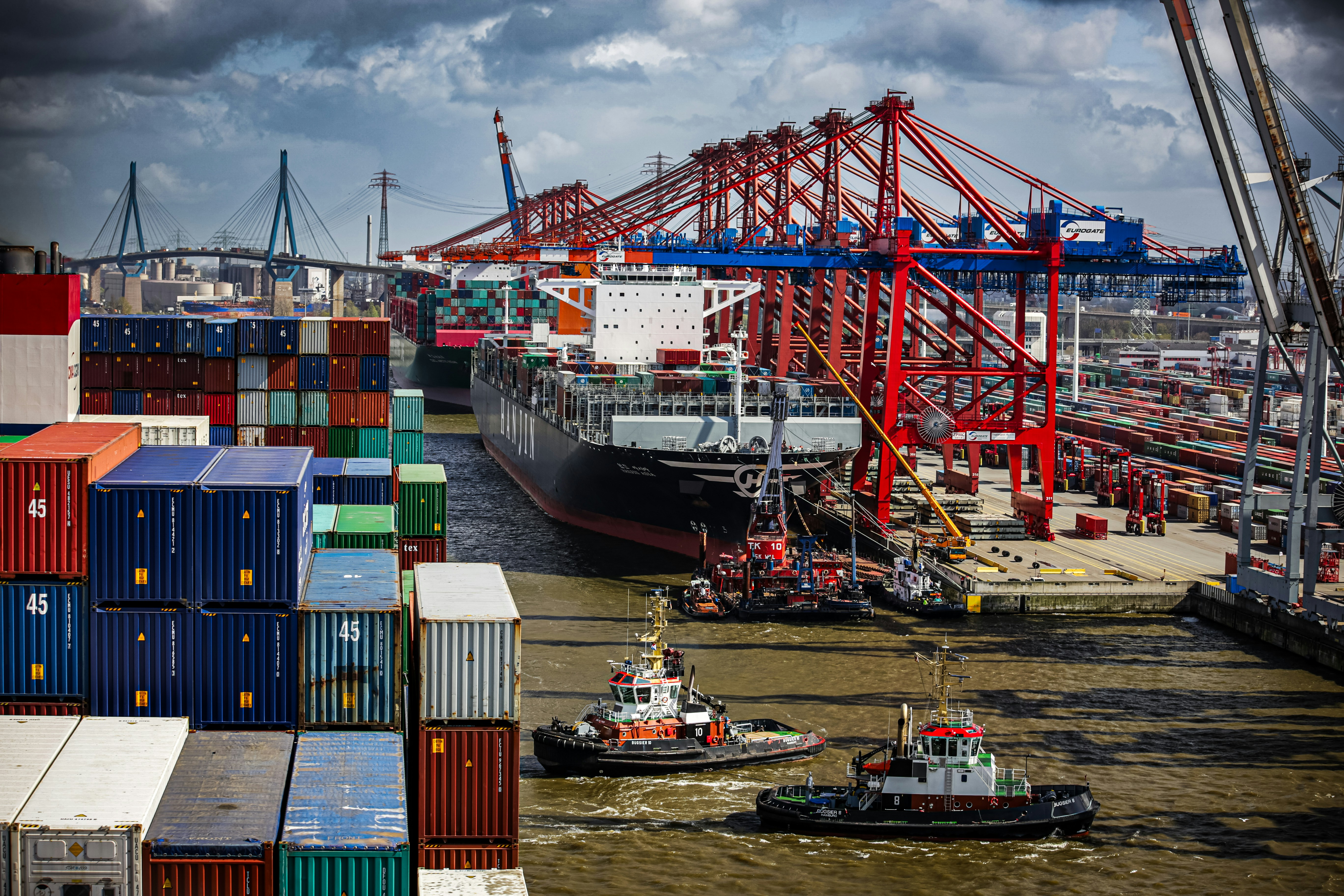
In the 21st century, trade has gone beyond its usual function of generating and protecting financial resources to a great extent. In current world politics, countries always use tariffs, sanctions, export limitations, and regulations not ju...
Historical Foundation of Trade as a Strategic Instrument
The establishment of trade, as a powerful instrument of nationhood, has its roots in history and is in no way a recent invention. Albert O. Hirschman asserted that even before modern-day sanctions, the main purpose of trade policies was to enhance and maintain the wealth and power of a state. The onset of mercantilism gave rise to a somewhat dual aim: to amass domestic resources and to bring down the rival states at the same time.[i] Hirschman’s analysis highlighted two mechanisms of weaponised trade. The creation of asymmetric dependence and the ability to take advantage of trade relations. The country with a better bargaining position can change the economic exchange between the partners into a medium of coercion. Hirschman characterised international trade as a kind of "bloodless invasion", which means that economic penetration would elevate the power of the nation without military action.[ii] Tariffs changed their function over many centuries from one of revenue tools in ancient times to mercantilist protection ones in the 16th-18th centuries and later to industrial and imperial ones in the 19th century.[iii] This indicates the lasting significance of their strategic role. The post-WWII institutions tried to keep politics away from trade through the establishment of the GATT and later the WTO. Yet scholars like Susan Strange remind us that formal regimes never fully capture the exercise of power. Coercive capacity, market dominance, and the ability to shape ideas often operate beyond rules, allowing states to exploit trade instruments strategically even within ostensibly neutral multilateral frameworks.[iv]
Theoretical Framework: Power, Dependence, and Strategic Coercion
Trade Dependence and Asymmetric Leverage
A central pillar of weaponised trade is the exploitation of asymmetric dependence. Hirschman noted that when country A depends heavily on country B, it creates bargaining leverage for B, especially if any substitutes are inaccessible.[5] This dynamic, as described by Hirshman, can be used to understand modern examples of China’s dominance in rare earth minerals or U.S.A.’s control over dollar-based financial systems and the prowess they are able display over nations through this. Trade measures generate influence in two ways: the supply effect, which strengthens a country’s own economic or military capacity and the influence effect, which fosters dependence in other countries, therefore allowing indirect policy shaping in due time.[6] Strategic economic coercion involves exploiting this interdependence, urging rivals to adjust policies or accept concessions without direct confrontation or violent dissent.
Status Quo Bias and Psychological Leverage
Susan Strange highlights the role of status quo bias in global trade.[7] Nations often resist disruptions to the existing order because of the psychological perception that stability is necessary and desirable. Powerful states exploit this bias by coercion through tariffs, sanctions, or other trade restrictions, knowing that the potential upheaval and fear of change will create compliance pressures even before the coercive measures are enacted. The fear of disrupting established and learned trade patterns increases the impact of these threats, transforming economic interdependence into a strategic tool to coerce.
Hidden Agendas and Non-Decisions
Coercive power is not only exercised through action but also through deliberate inaction. Choosing when not to retaliate and the right time to stay silent can signal strategic intent. Strange notes that keeping issues off the agenda or ensuring ineffective responses constitutes a form of power.[8] In the cases of contemporary times, nations often delay responses, decision-making, and official reactions to crucial geopolitical situations, giving them quiet power over the situation.
Contemporary Applications: Case Studies
China: Precision-Guided Economic Munitions
Ever since 2018, the beginning of the USA and China clashes, China has expanded its trade measures beyond traditional tariffs to include regulatory and legal instruments specially designed for strategic geoeconomic retaliation. Measures such as the Unreliable Entity List, Blocking Rules, and the Anti-Foreign Sanctions Law allow Beijing to target specific foreign firms and governments, imposing calculated costs while minimising harm inflicted on itself.[9] During the U.S.A. and China trade war of 2024-25, China’s use of export controls on rare earths, lithium-ion batteries, and other crucial exemplified a precision strategy, where vulnerable American industries faced maximum pressure and sectors relevant to Chinese dependence on American technology, semiconductors, aircraft parts, were largely excluded.[10] China’s calculated approach combined tactical retaliation with long-term industrial policy, promoting self-reliance while using global supply-chain dependence for strategic advantage. Regulatory interventions further illustrate China’s signalling strategy. SAMR’s selective approval or obstruction of high-profile mergers (e.g. Qualcomm-NXP, Intel-Tower) exemplify leverage over foreign technology firms without offsetting broader market shocks and chaos.[11] The combined effort of the measures mentioned above causes an amalgamation of coercion, deterrence, and supply chain control, which is the foundation of contemporary geo-economic statecraft and retaliation.
United States: Tariffs, Sanctions, and Strategic Signalling
The United States is a parallel instance of trade being weaponised. Once a proponent of liberal trade, the U.S. government is now using tariffs, sanctions, and financial restrictions more and more as its main axes of coercion. Sanctioning has turned into a regular action to deal with foreign policy difficulties, such as nuclear arms race and human rights abuses, by taking advantage of the dollar's ubiquity worldwide and the primacy of U.S. banks.[12] The U.S. tariffs on China, which reached record heights during Trump's presidency, show the twofold aim of coercion and signalling. Threats of Section 301 and Section 232 tariffs sent out the message that the U.S. was ready to cause disruption in trade while discussing structural concessions. The back and forth in tariffs led to uncertainty, which had the effect of making investments less attractive and imposing changing policies on both China and the non-Chinese players involved.[13] In any case, the U.S. needs to proceed with caution in the application of economic coercion since it carries risks. The excessive application of these measures could result in the loss of U.S. credibility, the start of a movement towards non-U.S. systems, and the imposition of costs domestically. Therefore, the success of tariffs and sanctions depends not only on the strength of the coercive measures but also on the ability to control the blowback, a point made in the past by Strange through the study of financial crisis and by Hirschman with his focus on trade interdependence.
India: Strategic Autonomy and Geoeconomic Resilience
The case of India shows how middle powers deal with trade that has been weaponised. The U.S.-India tariff affair of 2025, in which Washington levied 50% duties on certain Indian exports, was an example of how even countries that are strategic partners can still use trade measures to push their geopolitical goals.[14] India's response, which focused on self-sufficiency and local consumption, indicates a strategic realisation that aims to reduce weaknesses and highlight strengths. At the same time, India is assembling a geoeconomic toolbox. Among the tools are tighter foreign direct investment (FDI) supervision, technology restrictions in strategic industries, and the Atmanirbhar Bharat initiative that aims to lessen reliance on important inputs.[15] These moves convey the concept of weaponised interdependence: as India advances its domestic industrial and technological capabilities, it not only becomes less vulnerable to coercion but can also apply trade policy as a means of its own signalling practice.
Risks and Unintended Consequences
The use of trade as a weapon entails risks that are unavoidable. Strange emphasises that financial or trade coercion can produce blowback, retaliatory measures, and systemic instability.[16] Modern examples support this: U.S. tariffs disrupted global supply chains, altered investment flows, and eroded credibility with allies.[17] China's selective export restrictions, though precise, might still lead to retaliatory measures or changes in sourcing by the involved countries. Economic coercion, moreover, interacts with status quo bias and institutional constraints. Powerful nations can take advantage of stability perceptions to impose costs on others; nevertheless, prolonged uncertainty may bring about the aforementioned states to come up with new ideas, trade with different parties, and rely less on the coercer, thus gradually reducing the coercive power of the latter. Thus, trade as a weapon is the most powerful only if it is applied as a delicate, short-term measure rather than a crude or lifelong policy.
Implications for Global Governance
The revival of weaponised trade brings a challenge to the liberal trading system, which has been in place since 1945. GATT and WTO regulations aimed to make the trade relationship less political; however, the power imbalance, selective adherence to rules, and regulatory discretion are the reasons why trade still serves as a tool for strategic influence.[xviii] Modern trade conflicts highlight that the existence of formal rules, along with the use of coercive methods, is the reason why states can mix compliance with specific actions aimed at retaliation and signalling. This situation means that economic dependence is not only a source of power but also a weakness. In today's political scenario, the victorious trade tactics are the ones that will be managing the dependencies, predicting the counterstrike, and reinforcing the tools to obtain the desired strategic objectives without causing internal disruptions and chaos. The cases highlighted in this article, of China, the US, and India, showcase diverse approaches, from precision-guided measures to defensive self-reliance, which are strategic approaches fostered by nations to stay buoyant and signal prowess in an age of geoeconomic retaliation.
Conclusion
Trade has transformed over time from being just a method of wealth creation or protectionism to the very art of statecraft; it is now capable of exercising power, strategic signalling, and influence in the realm of geopolitics. Hirschman and Strange revealed the use of trade as a tool of national power, prowess, and economic leverage, giving us a solid theoretical idea of trade and the nuances attached to it. Following this, the present-day scenarios stretching from China’s meticulous export controls up to the US imposition of tariffs and sanctions and then to India’s protective self-reliance show how the weaponised trade is applied in practice under the current geoeconomic order. The strategic use of trade depends on the concepts of asymmetric dependency, the status quo bias, and the careful regulation of coercive measures. At the same time, however, it bears risks ranging from economic blowback and retaliation to a long-term erosion of credibility. The geo-economics of retaliation points out a very important truth: economic weapons have become part of strategic objectives. Tariffs, sanctions, and export controls are not only technical policy instruments but also powerful levers that are able to outline global rivalry, demonstrate determination, and display the very complicated interaction of money, security, and national power in today's world.
References:
[i] Albert O. Hirschman, National Power and the Structure of Foreign Trade, 1st ed. (Berkeley: University of California Press, 1980), https://doi.org/10.2307/jj.15976659.
[ii] Ibid.
[iii] Carter Hoffman, “History of Tariffs: From Ancient Times to the Modern Day,” Trade Treasury Payments, June 2, 2025, https://tradetreasurypayments.com/articles/history-of-tariffs-from-ancient-times-to-the-modern-day
[iv] Susan Strange, States and Markets, 2nd ed. (London: Bloomsbury Academic, 2015).
[5] Hirschman, National Power and the Structure of Foreign Trade.
[6] Ibid.
[7] Susan Strange, States and Markets, 2nd ed. (London: Bloomsbury Academic, 2015).
[8] Ibid.
[9] Evan S. Medeiros and Andrew Polk, “China’s New Economic Weapons,” The Washington Quarterly 48, no. 1 (2025): 99–123, https://doi.org/10.1080/0163660X.2025.2480513
[10] Gerard DiPippo and Benjamin Lenain, “Testing Self-Reliance: What the Trade War Reveals About China’s Vulnerabilities and Power,” RAND, Commentary, 2025, https://www.rand.org/pubs/commentary/2025/06/testing-self-reliance-what-the-trade-war-reveals-about.html
[11] Medeiros and Polk, “China’s New Economic Weapons.”
[12] Daniel W. Drezner, “The United States of Sanctions: The Use and Abuse of Economic Coercion,” Foreign Affairs 100, no. 5 (September/October 2021), https://www.foreignaffairs.com/articles/united-states/2021- 08-24/united-states-sanctions
[13] Philip Luck, “Understanding the Temporary De-Escalation of the U.S.-China Trade War,” Center for Strategic and International Studies (CSIS), May 13, 2025, https://www.csis.org/analysis/understanding- temporary-de-escalation-us-china-trade-war.
[14] Nikhil Inamdar, “Trump’s 50% Tariff on India Kicks in as Modi Urges Self-Reliance,” BBC News, August 27, 2025, updated August 27, 2025, https://www.bbc.com/news/articles/c5ykznn158qo.amp; Ayush Kumar, “Strategic Tariffs and Economic Diplomacy: Understanding India–America Trade Policy Shifts,” International Journal of Progressive Research in Engineering Management and Science (IJPREMS) 5, no. 8 (August 2025): 1561–1570, https://www.doi.org/10.58257/IJPREMS43540.
[15] Ibid.
[16] Strange, States and Markets.
[17] Philip, “Understanding the Temporary De-Escalation of the U.S.-China Trade War”; Drezner, “The United States of Sanctions: The Use and Abuse of Economic Coercion.”
[xviii] Strange, States and Markets; Nicolas Albertoni, “A Historical Overview of 21st-Century Protectionism,” Latin American Journal of Trade Policy 4, no. 5 (2021), https://doi.org/10.5354/0719-9368.2021.64188.
(The views expressed are those of the author and do not represent the views of CESCUBE)
Photo by Bernd Dittrich on Unsplash

Mannya is an interdisciplinary researcher with two postgraduate degrees in International Relations and English, blending academic depth with a sharp analytical edge. She has contributed to research, editorial, and evidence synthesis work at Campbell South Asia, The Research and Evaluation Centre, WWF India, and DRaS, across EGMs, systematic reviews, literature reviews, and qualitative analysis. She is skilled in turning complex global issues into clear, compelling insights. She is known for critical thinking, and delivering rigorous, evidence-based research that informs action.