Climate Change as a National Security Threat: The Indian Defence Sector’s Preparedness and Response
This article discusses how climate change has become a growing security concern for India. While rising temperatures, unpredictable monsoons, cyclones, floods, and heatwaves are often seen as environmental issues, their impact now directly ...
Is Climate Change a Growing Security Threat in India?
Scientific reports prove that India has been intensely exposed to climate shocks. Although it fell from seventh most impacted in 2019 to 49th in 2022, India is still sixth among the world's most climate-exposed nations (Germanwatch, Climate Risk Index 2025).i Within the span of forty years, the nation has experienced more than 400 severe weather events, nearly one every month. This has resulted in over 80,000 fatalities and caused almost $180 billion in damages. ii Some of the prominent disasters, one might recall, are the 1998 Gujarat and 1999 Odisha cyclones, 2013 Uttarakhand flood. In recent times, India has witnessed superstorms such as Hudhud (2014) and Amphan (2020).iii In addition to these, regular and extraordinarily severe heatwaves have brought temperatures nearly up to 50°C in years like 1998, 2002, 2003, and 2015. iv
However, it is imperative to note that India has been seeing acute effects of climate change with 0.6–0.7°C increase over the last century. v This can be evidently seen in various parts of India as well. Storms are turning into destructive cyclones, prolonged droughts, and floods of unprecedented scale, leaving behind catastrophic losses.vi A district-level vulnerability assessment shows that over 80% of India’s population resides in regions highly prone to climate-related hazardsvii, underscoring the sheer scale of the challenge. And these are not only environmental issues but also national. It can destabilise food networks, initiate mass migration, and overtax military and disaster-response capabilities.
How is Climate Change Tied to India’s Security?
Rising sea levels now pose a serious challenge to India’s naval bases, threatening both coastal infrastructure and long-term operational readiness. Sea levels are projected to rise by 0.26– 0.55 meters by 2100 under a low emissions scenario, and by 0.52–0.98 meters under a high emissions scenario as per the Intergovernmental Panel on Climate Change (IPCC) Assessment Report 5. This threatens naval bases in Mumbai, Vishakhapatnam, and Kolkata, all at the same time. Flooding of the military infrastructure may hamper critical activities like Search and Rescue (SAR) and Humanitarian Assistance and Disaster Relief (HADR) operations.
Aside from sea-level rise, Indian coastal naval bases are more at risk from more frequent and intense typhoons, cyclones, and hurricanes. While high-altitude military posts are exposed to flash floods caused by glacial melt, extreme weather conditions such as droughts, heavy rainfall, and heatwaves have the potential to hinder training manoeuvres and restrict operational preparedness in the long run.
India's military infrastructure is not just a hypothetical scenario affected by natural disasters.
One such example is Cyclone Hudhud, which came in October 2014. Vishakhapatnam, which hosts one of the Navy's top-rated bases, was directly in the eye of the storm. Though ships and submarines were safe, the cyclone destroyed infrastructure on a large scale. From trees to communication cables and power cuts, it resulted in an estimated loss of about ?2,000 crore. Other basic services like water, petrol, and electricity were also interrupted.
Along with this, incremental changes such as increased temperature, changed precipitation patterns, and changes in water salinity also impact military sensors and machinery. However, the actual challenge is the unpredictability and abrupt nature of climate events that necessitate flexibility, multi-functional capabilities, and adaptability within the military. Adapting to the uncertain makes it important for the armed forces to continually change, both operationally and strategically, to uphold national security. viii
Another grave consequence of climate change is its effect on agriculture, which is the main source of livelihood for more than three-fourths of rural households. Uncertain monsoon patterns, prolonged droughts, and untimely rains have significantly reduced the yields of staple crops like rice and wheat. This threatens national food security, cuts into farmers’ incomes, and deepens rural poverty. And when resources such as water are scarce, these issues are seen to be aggravated. In areas such as Vidarbha, Maharashtra, farmers have already experienced acute shortages of water, causing crop failure and accelerated distress migration. This sort of migration culminates in overpopulation of cities, placing pressure on infrastructure and social facilities. However, the story doesn’t end here. Climate-related challenges in neighbouring nations have a direct relation to how they impact the security of India. For example, Bangladesh is experiencing rising sea levels and regular flooding, which is causing displacement. This has the potential to strain India's border areas and escalate preexisting tensions.
What is India’s Solution Going Forward?
For the Indian military, climate change has become an everyday operational reality. Military activities need large amounts of resources, and the shortage of clean water or reliable energy quickly affects readiness. Therefore, the military has begun exploring renewable energy sources. Border post solar grids, wind farms at bases, and biofuel-based aviation tests by the Indian Air Force are initial steps to reduce dependence on fragile fuel supplies. These steps are not only sustainable but also improve safety by lowering transport risks and strengthening operational resilience. ix.
But technology alone is not enough to win the battle against climate change. India must realise that climate change is a national security threat at the highest level. The military can then include climate risks in its planning, assess base vulnerabilities, test supply chains for stress, and conduct climate-based training exercises.x.
Climate change as a national threat can be resolved only when one realises that cooperation is the need of the hour. Defence planning needs to coordinate with the National Disaster Management Authority, NDRF, and DRDO, and even ministries like the Ministry of Road Transport and Highways of India (MoRTH), to facilitate shifts to cleaner transportation fleets. Cooperation from others may even mitigate future competition over resources in a climate-stressed area. Indian forces have gone a long way towards reducing climate risks and ensuring environmental sustainability. In conclusion, climate change has to be integrated into India's national security strategic planning. With that being done, infrastructure investment can be planned according, and embracing green technology will enhance preparedness and deterrence. Climate security cannot remain voluntary; it is an operational necessity.
Conclusion
Climate change poses an important unconventional security challenge for India that requires creative efforts in the armed forces. Although the armed forces have already achieved substantial improvement through afforestation, acceptance of renewable energy, waste management, and green technology, the magnitude and urgency of climate threats require the increased integration of climatisation into defence planning. Institutionalising the process of climate risk evaluation, promoting cross-ministerial and foreign cooperation, and pursuing continued leadership by example will enable the Indian Armed Forces to enhance national resilience, minimise operational exposures, and make significant contributions toward India's larger climate goals. By doing so, the military not only ensures its operational preparedness but also enhances its position as a promoter of sustainable growth and environmental protection in the nation. xi
Sources:
i. Germanwatch. Global Climate Risk Index 2025. Bonn: Germanwatch, 2025. https://germanwatch.org/en/cri.
ii. Ministry of Earth Sciences (MoES). Assessment of Climate Change over the Indian Region. Government of India, 2020. https://moes.gov.in/.
iii. National Disaster Management Authority (NDMA). Reports on Previous Cyclones and Floods. Government of India. https://ndma.gov.in/.
iv. Indian Meteorological Department (IMD). Heatwave Analysis in India. Government of India. Accessed 2022. https://mausam.imd.gov.in/
v. Intergovernmental Panel on Climate Change (IPCC). Climate Change 2021: The Physical Science Basis. Sixth Assessment Report (AR6). Geneva: IPCC, 2021. https://www.ipcc.ch/report/ar6/wg1/
vi. World Bank. Climate Change Impacts on India. Washington, DC: World Bank, 2021. https://www.worldbank.org/.
vii. Indian Institute of Technology (IIT) Mandi and Department of Science and Technology (DST). Climate Vulnerability Assessment for India at the District Level. New Delhi: Government of India, 2021. https://dst.gov.in/.
viii. Narula, Kapil. Integrating Risks and Impact of Climate Change in India’s Military Strategy. New Delhi: Institute for Defence Studies and Analyses, 2019. https://idsa.in/.
ix. Menon, Vandana. “Why Is Climate Change Not on Indian Military’s Radar? It’s National Security Threat Multiplier.” The Print, June 4, 2024. https://theprint.in/opinion/why-is-climate-change-not-on-indian-militarys-radar-itsnational-security-threat-multiplier/2310458/
x. Narula, Kapil. Integrating Risks and Impact of Climate Change in India’s Military Strategy. New Delhi: Institute for Defence Studies and Analyses, 2019. https://idsa.in/.
xi. Springer. “‘Climatizing’ Military Strategy? A Case Study of the Indian Armed Forces.” Society, 2021. https://link.springer.com/article/10.1007/s12115-021-00603w.
(The views expressed are those of the author and do not represent the views of CESCUBE)
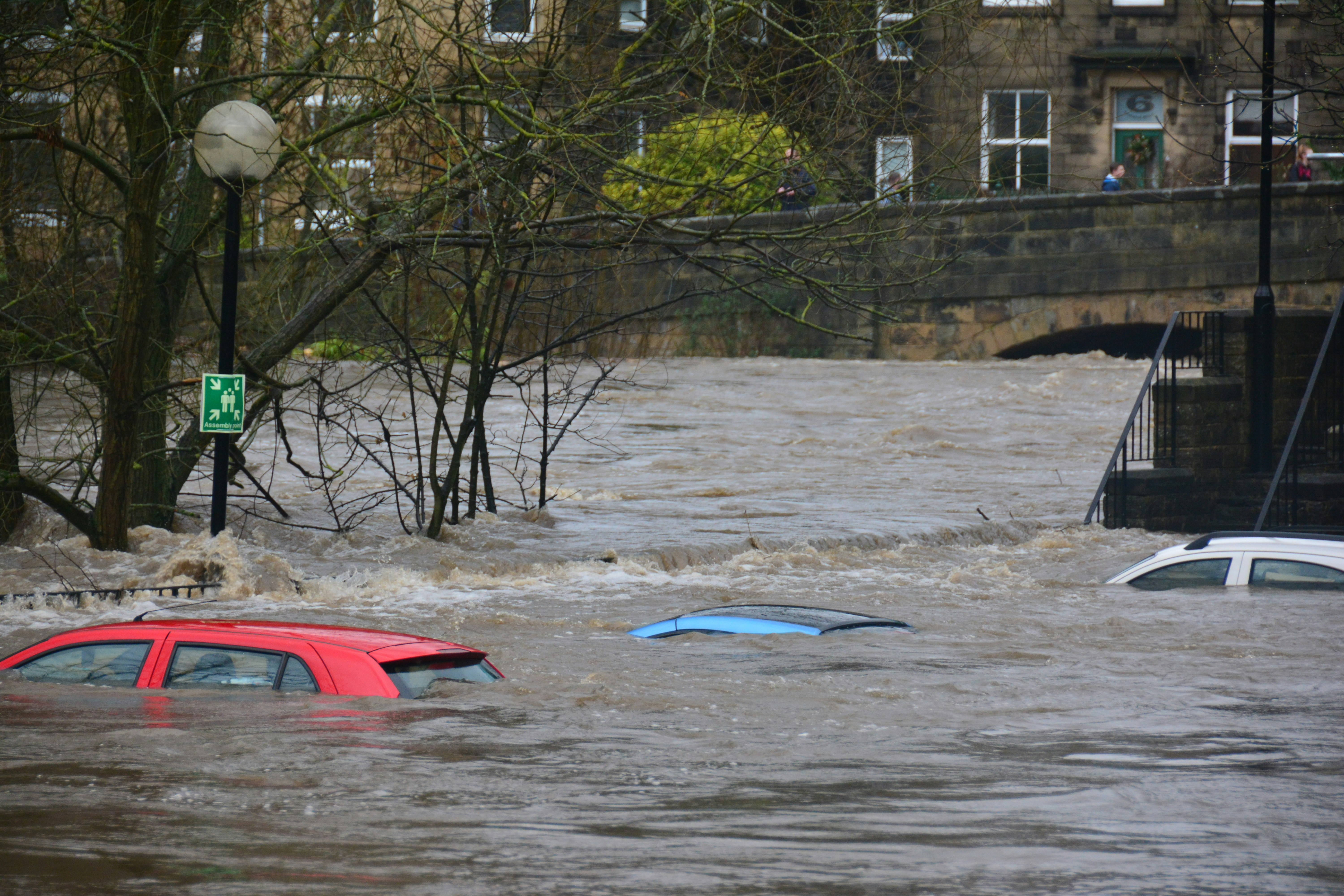
Photo by Chris Gallagher on Unsplash

Jahanavi Sharma is a postgraduate student in Economics with a strong interest in research writing and data analysis. She has worked on projects involving agricultural trends, rural development, and sustainability. At CeSCube, she is interning on the Geo-economics Desk, where she will be exploring global dynamics and decode complex economic developments with an Indian lens.