Beyond the Battlefield: Understanding Unconventional Security Challenges in Contemporary Geopolitics

The nature of security has undergone a profound transformation in the twenty-first century. While traditional security frameworks focused primarily on territorial defence, military power, and state sovereignty, contemporary geopolitical realities have expanded the concept of security to include a broad range of non-traditional and transnational threats. Challenges such as terrorism, cyberattacks, pandemics, environmental degradation, food insecurity, energy vulnerabilities, human trafficking, and economic instability increasingly transcend national borders and require multidimensional responses. These evolving threats highlight the limitations of conventional security approaches and underscore the need for a broader understanding of national and international security.
This article examines the nature of unconventional security challenges in contemporary geopolitics, with particular emphasis on the Indian context. It explores the theoretical foundations of security studies, the growing relevance of human security, and the emergence of issues such as terrorism, maritime insecurity, climate-related risks, and cyber threats as central components of modern security discourse. The article also assesses India's evolving institutional and policy responses, especially in the domain of cybersecurity, while highlighting the need for stronger coordination, technological capacity, and multi-stakeholder cooperation. It argues that addressing contemporary security challenges requires moving beyond state-centric approaches and embracing integrated frameworks capable of responding to increasingly interconnected and complex global threats.
Unconventional or non-traditional security are the kind of security perceptions that have a non-military, transnational, multidimensional nature, and go beyond the conventional threat perception of wars, territorial defence, and military threats. Unlike traditional security, which has always focused upon the protection of the state sovereignty through military means and, unconventional security broadens the horizon to extend threat perception arising from economic imbalance, environmental degradation, health pandemics, multidimensional terrorism, cyber threats, food insecurity, and human rights concerns. The difference between traditional and non-traditional security is undoubtedly central to understanding contemporary security thought. Security cannot be defined through a single universally accepted assumption. Rather from a purely traditional perspective, security has been shaped through the lens of the Westphalian model of the state, where the state is at the centre. In tandem with this model, guaranteeing the security of the state automatically translates to the security of society and its citizens. Thus, security is synonymous with the protection of its territorial integrity, sovereignty, and political independence. In this conventional framework, security can be theoretically incorporated as the absence of threats or challenges to survival and safety of the state. Threat perception and the ability to retaliate back to such threats is at the core of the security discourse. States anticipate to formulate policies and establish political mechanisms that can establish a safety net for civilians and reduce violence against civilians, infrastructure, and broader institutional frameworks. The goal is to thereby, protect government bodies, institutions, and the larger supply chains from both internal and external aggression.
Security can be analysed from multiple levels of aspect. Initially is the state level analysis level, which emphasizes domestic political institutions and state agencies. Second is the regional level analysis, which examines security perception among neighbouring regions. Third is the international analysis or the geopolitical examination of the global power relations and transnational developments. These levels are interconnected and internal developments cannot be isolated from regional or global dynamics. Therefore, according to Barry Buzan, security cannot be placed into rigid, watertight compartments since domestic and international developments continuously influence one another. A major theoretical framework explaining security concerns is Realism. Realist thinkers argue that state affairs are deeply shaped by the competitive and often conflictual nature of politics. Since human beings are believed to possess self-interested tendencies, states being composed of humans also seek power and survival.
The International system is often characterised by the component or condition of anarchy due to the absence of any central authority that would regulate the relations between the states in an international community. This is the underlying philosophy of the Realists thinkers such as Thomas Hobbes who believe that in the absence of a centralized force, states often rely on self-help mechanisms. Regions such as the Middle East and North Africa (MENA) often reflect on how persistent geopolitical rivalry reinforces this self-help behaviour and security competition. This generates the security dilemma. States are usually afraid of the chances of being defeated or over powered by other states, as a result they increasingly attempt to strengthen their existing military, economic, and strategic resources. However, such actions make neighbouring states insecure, inspiring them to expand their own capabilities. This creates a competition between security and competition. Consequently, peaceful coexistence becomes a tiresome process, and the international system is characterised by increasing tension and distrust.
One important dimension lies in the form of terrorism, both in its transnational and national forms. In comparison to conventional warfare, terrorism in the modern century operates through sustained low-intensity networks that can transcend national boundaries and employ unconventional tactics. Consequently, such threats are hard to combat because they do not always emerge from identifiable state actors and can harm the states indirectly. India has faced several important internal security threats from the decade of 1980s onwards, including the Khalistani movement, insurgencies in the Northeast, militancy in Kashmir, and transnational terrorism. Terrorism has emerged as one of India’s most continuous unconventional security challenges because it affects political stability, economic development, citizen safety, and institutional functioning of the state in general and country in particular.
Economic instability, unemployment, and resource scarcity can inadvertently affect the livelihoods. States usually struggle to maintain the economic well-being of any state, and economic instruments such as sanctions, trade restrictions, and embargoes have also become tools of recent security discourse. Food security has assumed the form of an unconventional critical concern where global tariff, market competition, and unequal economic arrangements have threatened food availability and the farmer’s livelihoods. Health security emerged as a particularly after the COVID-19 pandemic, is an emerging security arena which exemplifies how diseases can affect economies, disrupt healthcare infrastructure, and challenge and overwhelm advanced developing states. The unconventional approach further encompasses human rights and human security. Security today is not confined to protecting borders but also includes protecting individuals from trafficking, exploitation, and structural violence. Human trafficking involves illegal migration networks, forced labour, exploitation, and organized criminal activities operating across borders. Protection of human rights therefore increasingly became connected with India’s internal security discourse during both conflict situations and normal conditions. Energy security is also another pertinent issue because India’s economic growth significantly relies upon uninterrupted access to petroleum, electricity, natural gas, and strategic resources.
Geography and environment also shape security concerns. Maritime or “Blue Security” highlights the importance of coastlines, fisheries, marine resources, and sea routes for livelihoods and national prosperity. The 26/11 Mumbai attacks are an example of serious vulnerabilities that India’s maritime security structure faces and shows how non-state actors have the inherent ability to exploit maritime routes for terrorist activities. Environmental pollution, resource depletion, and climate-related disasters upheld important queries about environmental sustainability and associated security. Furthermore, issues such as illegal narcoterrorism and borderland insecurity reflect on how unconventional threats are often seen to transcend territorial borders and calls for coordinated solutions to exercise better response mechanisms.
Cyber security emerged as one of the most important unconventional security challenges confronting India in the contemporary century. Cyber security involves protection against the use of cyber dynamics to harm, manipulate, threaten, or disrupt individuals, institutions, infrastructure, and states. Increasing dependence upon digital technologies, online governance, communication systems, banking infrastructure, defence networks significantly increased India’s vulnerability to cyber-attacks. Cybercrime includes hacking, malware attacks, swarming, digital espionage, identity theft, and Distributed Denial of Service attacks. Cyber actors may include hackers, organized cyber groups, bots, and malicious digital networks capable of penetrating sensitive systems. When cyber activities target larger populations, institutions, or state infrastructure for political purposes or strategic intimidation, they assume the form of cyber terrorism. Cyber terrorism targets critical infrastructure, state institutions, communication systems, and strategic establishments. Such threats increasingly became attractive because cyber operations possess several advantages for hostile actors. Cyber-attacks are comparatively cheap, highly accessible, difficult to trace because of invisibility and anonymity, require only a limited number of technical experts rather than large organizational structures, and transcend territorial boundaries. Cyber threats have become useful instruments for both state and non-state actors.
India gradually developed legal and institutional mechanisms to address cybersecurity threats. The Information Technology Act initially revolved around regulating encryption mechanisms and digital information with the help of the Certifying Authorities Controller. After growing challenges revolving around cybercrime and particularly after the 26/11 Mumbai attack, India introduced various amendments to stricter cyber governance. For instance, the 2006 amendment helped to expand provisions reflecting on electronic governance, electronic commerce, and electronic transactions. The 2008 amendment comprehensively described computer networks, cybercrime, confidential information, and critical governmental institutions. The 2011 amendment strengthened the agencies and expanded their mandates to monitor, and decrypt digital information received through computer systems in situations related to conditions around sovereignty, integrity, or national security. India expanded its cybersecurity architecture through the development of multiple institutions like the Computer Emergency Response Team, National Cyber Coordination Centre, National Security Coordinator, National Critical Information Infrastructure Protection Centre, National Technical Research Organisation, National Institute of Cryptology and Design, and the National Information Centre functioning at the central, state, and district levels.
India’s cyber regime operates through the Prime Minister’s Office, ministries such as Defence, Home Affairs, External Affairs, and Information Technology, as well as scientists, researchers, cyber experts, and technical stakeholders. India also attempted to strengthen cyber cooperation internationally through engagement with United Nations expert groups, bilateral agreements with the United States, and cooperative frameworks with Japan. Despite these developments, India continues to face major challenges regarding unconventional security threats. There remains an absence of comprehensive international cyber jurisdiction, inadequate coordination mechanisms, need of an apex body under the home ministry and ministry of IT, a shortage of specialized expertise, insufficient funding, and limited cyber infrastructure. India underscored the need for a healthy and balanced cooperation between central and state governments, greater contact between governmental and non-governmental institutions, development of cyber warfare and cyber security policies, enhanced funding mechanisms for cyber infrastructure, incorporation of private actors through Public-Private Partnership, and a larger multi-stakeholder approach that would involve experts, governmental infrastructures, technical communities, and civil society.
References:
1. United Nations. (n.d.). New and emerging threats | United Nations. https://www.un.org/en/peaceandsecurity/new-and-emerging-threats
2. Srikanth, D. & Rajaratnam School of International Studies. (2014). Non-traditional Security Threats in the 21st Century: A review. In International Journal of Development and Conflict (Vols. 2014–2014, pp. 60–68). http://www.ijdc.org.in/uploads/1/7/5/7/17570463/2014junearticle4.pdf
3. Malik, S. K. (2021, August 31). India and the Non-traditional Security Threats: Issues and challenges. https://www.asssr.in/index.php/jasssr/article/view/50
4. Kumar, P. (2026, May 21). Non-Traditional Security Threats: International Terrorism and Beyond • PolSci Institute. Political Science Institute. https://polsci.institute/international-relations-world-history/non-traditional-security-threats-terrorism/
5. Joshi, N. (n.d.). Responses to Non-Traditional Threats & Challenges. https://www.silkroadstudies.org/resources/pdf/Monographs/1004Joshi-VI-Responses.pdf
(The views expressed are those of the author and do not represent the views of CESCUBE)
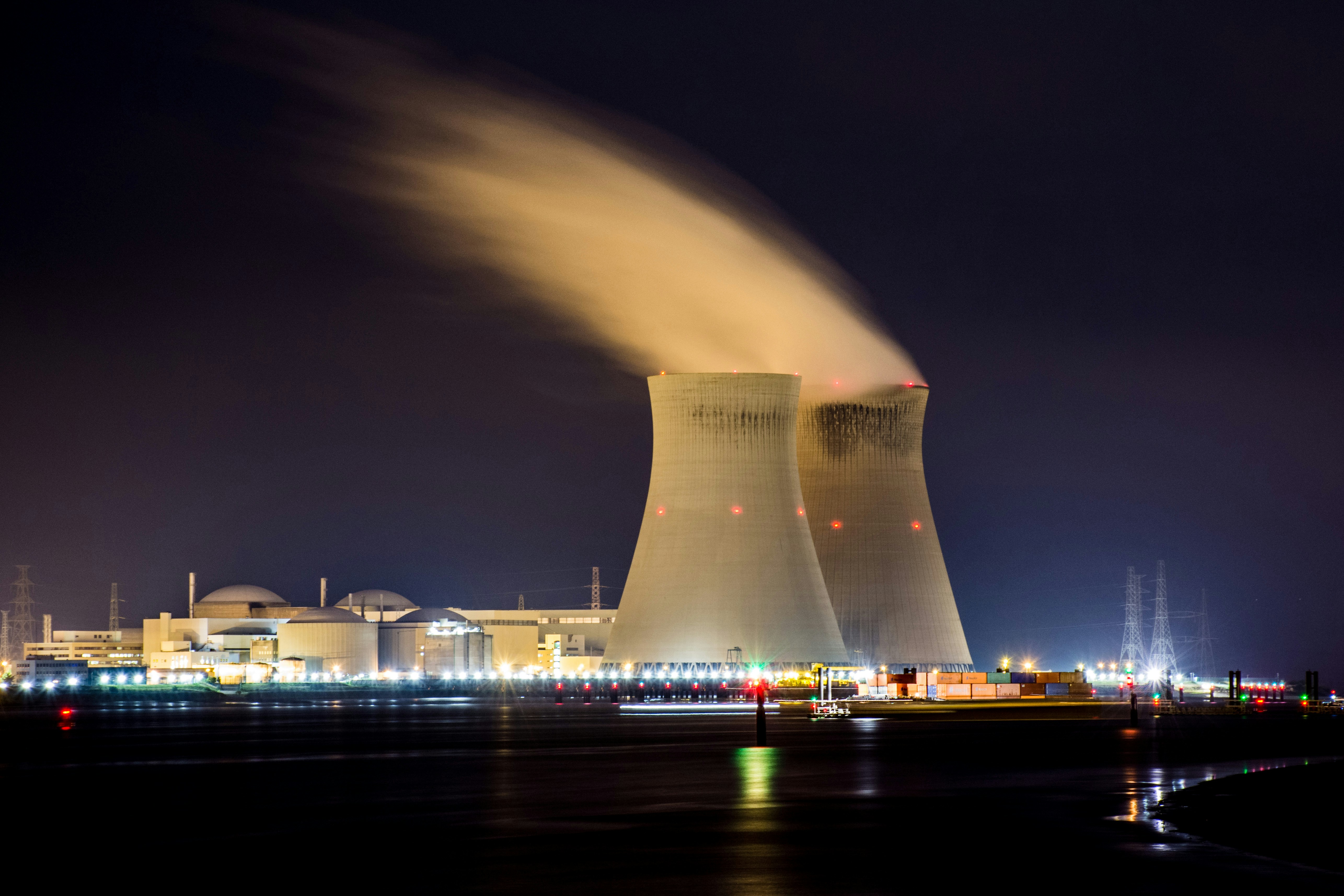
Photo by Stone John on Unsplash

Aakansha Sengupta is currently pursuing her undergraduate degree in Political Science from the Department of International Relations at Jadavpur University. Her academic interests span across Gender and Politics, Peace and Conflict Resolution, International Politics, and Global Diplomacy. She also maintains a strong engagement with Public Policy, Administration, and key debates in Political Theory. In addition, Aakansha has a keen interest in Middle Eastern Politics, reflecting her broader focus on global affairs. Alongside her major in Political Science, she is also pursuing a minor in Sociology at Jadavpur University.