
Trapped in Deterrence: Nuclear Stability and the Persistence of Conflict in South Asia
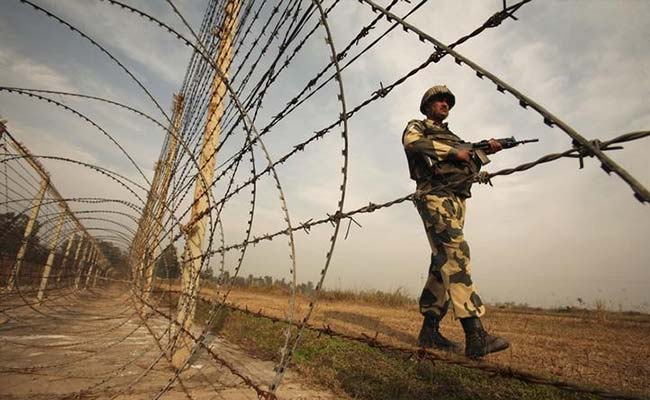
While nuclear deterrence, as a concept, stands widely credited with preventing large-scale interstate war, this study argues that it has instead entrenched a cycle of persistent mistrust and low-intensity conflict. Drawing upon the deterrence theory, concept of the security dilemma and the framework of the Iterated Prisoner’s Dilemma, the paper aims to conceptualise the bilateral interactions as repeated strategic engagements, which stand characterised by mutual suspicion and rational defection, under conditions of uncertainty. Through detailed analysis of key crises including case studies of the Kargil conflict (1999) and post-2016 crises including Balakot (2019), the analysis demonstrates how nuclear deterrence stabilises high-intensity conflict while enabling sub-conventional aggression.
Moreover, the paper also goes ahead to introduce the concept of “stable hostility” to describe this equilibrium, wherein neither side escalates to full-scale war, yet, at the same time, neither transition towards a more meaningful cooperation as well. Lastly, by integrating the two sides of theoretical and empirical insights, the study aims to contribute towards the broader debates of international security, by highlighting the limitations of deterrence in resolving deeply entrenched rivalries and the persistence of the security dilemma under such nuclear conditions.
Introduction
The India–Pakistan relationship remains to be one of the most enduring, structurally complex and volatile rivalries in the realm of international politics. Since their partition and emergence as independent states in 1947, the two states have engaged in multiple wars, crises and ongoing hostilities, that remain to be largely centred around the contested region of Jammu and Kashmir. Moreover, the centrality of Jammu and Kashmir to this rivalry, is what has ensured that tensions remain deeply embedded in both domestic politics and strategic thinking [i].The overt nuclearisation of both states in 1998 marked a critical turning point, introducing nuclear deterrence, as a central mechanism governing interstate interaction, into the strategic equation [ii].
Conventional realist expectations often tend to suggest that nuclear weapons should stabilise such rivalries by raising the costs of war to unacceptable levels, thereby deterring escalation [iii]. However, paradoxically, the decades following nuclearisation (post 1998 period) have not witnessed peace, but rather a transformation in the nature of conflict. While full-scale wars have been avoided, the region has continuously experienced a series of repeated low-intensity crises, cross-border skirmishes and persistent sub-conventional warfare. This contradiction is what raises a fundamental question, which is that why does conflict persist despite the presence of nuclear deterrence and Why has the presence of nuclear weapons not led to a reduction in hostility, but rather a transformation in its form?
This paper argues that nuclear deterrence, rather than resolving tensions, has entrenched an iterated security dilemma between India and Pakistan, wherein both of them engage in repeated cycles of strategic interaction, which is characterised by mistrust, signalling, and limited retaliation.
By conceptualising their interactions through the lens of the Iterated Prisoner’s Dilemma, the study demonstrates how rational strategies of deterrence lead to cycles of mistrust and defection along with predictable instability, which is a situation in which escalation is managed but not eliminated. The result of these is the production of a condition of “stable hostility,” wherein the conflict persists, below the threshold of full-scale war, rather than stable / durable peace.
Literature Review
The intersection of deterrence and the security dilemma has been widely explored in international relations scholarship. The debate on nuclear deterrence can also be said to have been shaped by several contrasting perspectives. Kenneth Waltz iii was seen to famously argue about how nuclear weapons promote stability by making war prohibitively costly, a position often referred to as “nuclear optimism.” In contrast to this, Scott Sagan v challenged this view, by emphasising upon the factors of organisational failures, irrational actors and the risks of accidental escalation.
Thomas Schelling iv also contributed significantly towards the deterrence theory, by framing it as a bargaining process and involving the assessment of factors like credible threats and strategic signalling. However, his framework went ahead to assume a level of rationality and control that may not hold in volatile regional contexts such as South Asia.
Robert Jervis vii introduced the concept of the security dilemma, and provided a foundation understanding of the same by arguing that even defensive measures were capable of provoking insecurity in the adversaries; and he further elaborated this concept by explaining how misperception and signalling failures could lead to the intensification of the prevailing conflict dynamics. Booth and Wheeler viii further developed this concept by emphasising upon the psychological dimensions of insecurity and mistrust.
In the South Asian context, scholars have ever since debated about the applicability of these theories. Devin Hagerty [iv] argued that nuclear deterrence has introduced a degree of stability in India–Pakistan relations, while Ganguly and Kapur [v] have argued that it has enabled risk-taking behaviour under the nuclear umbrella. The prevalence of such ideals is what has highlighted the emergence and centrality of the stability–instability paradox in this debate, wherein nuclear weapons prevent large-scale war but encourage lower-level conflicts [vi] .
Recent scholarships have also gone ahead to incorporate game theory in this equation, wherein it has been used to analyse the strategic interactions taking place in the region (particularly vis-a-vis the relations between India and Pakistan). Scholars argue that repeated interactions under conditions of mistrust resemble an Iterated Prisoner’s
Dilemma, wherein defection tends to remain the dominant strategy ix [vii]. Moreover, the Iterated Prisoner’s Dilemma has also been used to explain why cooperation remains elusive despite repeated engagements. Scholars can also be seen to note that, deep-seated mistrust, asymmetries in power and domestic political pressures, are the aspects which continue to reinforce defection as the dominant strategy, frequently used by both of the states. This paper builds on these very contributions by integrating deterrence theory, the security dilemma and game theory into a unified framework, to further explain the persistence of conflict under the current nuclear conditions.
Historical Context
The historical evolution of the relationship between India and Pakistan provides us the much-needed context, which helps us understand the persistence of the security dilemma, under nuclear conditions, in the current state of their relationship. The primary cause of this deeply entrenched historical enmity can be traced back to the partition of British India in 1947, which not only led to the creation of two separate sovereign states but also a sense of deep-seated mistrust, upsurge in communal violence and unresolved territorial disputes, most notably over the disputed region of Jammu and Kashmir, among both of them i. In addition to this, when we look at the first Indo-Pak war, which took place in 1947- 48, it can be said that although it was successful in establishing the Line of Control (LoC), it failed to resolve the basic underlying dispute, leading to the institutionalisation of a conflict that would persist throughout the passage of time.
Moreover, the subsequent wars in 1965 and 1971 further entrenched these adversarial perceptions, wherein while the 1971 war resulted in a decisive Indian victory and the creation of Bangladesh, it did not find success in eliminating Pakistan’s strategic anxieties vis-à-vis India’s conventional superiority. Instead, it went ahead and reinforced Pakistan’s long-term incentive to seek asymmetric means of balancing India, including the eventual pursuit of nuclear weapons [viii] .
In addition to this, the nuclearisation of South Asia, in 1998, was what marked a decisive shift from conventional warfare to the prevalence of deterrence-based stability in the region. Both India and Pakistan conducted nuclear tests, formally declaring themselves nuclear-armed states, and it was this very development which went ahead to fundamentally alter the strategic calculus, by introducing the risk of catastrophic escalation into any future conflict (x). Thus, it can be said that rather than resolving tensions, the aspect of nuclearisation led to the reconfiguration of the conflict which continues to prevail between the two states.
In continuation to this, the post-1998 period, the nature of conflict shifted towards an approach which emphasised upon limited war, crisis bargaining and sub-conventional engagement. This transformation was what reflected the dual impact of nuclear weapons, wherein while they imposed constraints on escalation, they also led to the creation of a strategic space for lower-intensity conflict. As a result, the historical trajectory of India–Pakistan relations illustrate not a transition from war to peace, but from conventional war to manages instability.
Case Studies: Iterations of the Dilemma
Kargil Conflict (1999)
The Kargil conflict, which took place in 1999, represents a defining moment, in the study of nuclear deterrence, in the South Asian region. Occurring just one year after the nuclear tests of 1998, the conflict involved the infiltration of Pakistani forces and militants, across the Line of Control, into Indian-administered territory. The operation was premised on the assumption that India’s response would be one which is constrained by the presence of nuclear weapons, thereby limiting the degree of escalation i.
It can be said that India’s military response was indeed calibrated as, rather than expanding the conflict across the international border, India chose to confine its operations just to the Kargil sector; and this restraint was driven by concerns about escalation and the potential for nuclear confrontation. The conflict, thus, remained limited in scope, despite the intense amount of fighting and significant number of casualties.
From a theoretical perspective, the Kargil war exemplifies the stability–instability paradox, as even though nuclear weapons successfully deterred a full-scale war, yet they failed to prevent the limited aggression which took place. On the other hand, Pakistan’s actions can be interpreted as an attempt to exploit the perceived stability, provided by nuclear deterrence, while India’s response reflects an effort to balance retaliation with escalation control xiv.
Moreover, the conflict also highlights the role of misperception and signalling failures, with respect to the security dilemma. This can be said as Pakistan had seemingly underestimated India’s willingness to respond, while India initially had misread the scale and intent of the incursion done by Pakistan. It were these miscalculations that acted as key aspects which underscored the fragility of deterrence in practice, particularly in environments that were characterised by limited information and high levels of mistrust.
Post-Uri and Balakot Crisis (2016–2019)
The crises, which followed the Uri attack in 2016 and the Balakot airstrikes in 2019, goes ahead to represent a significant evolution in the strategic interaction between India and Pakistan. In response to the militant attacks, attributed to Pakistan-based terror groups, India conducted cross-border “surgical strikes” in 2016 and later carried out airstrikes in Balakot in 2019. These were the actions that signalled towards a shift in India’s strategic doctrine towards a more proactive retaliation, while staying below the nuclear threshold [ix] .
Pakistan’s responses were also similarly calibrated like India, wherein following the Balakot strikes, Pakistan conducted several retaliatory air operations, but at the same time avoided escalation beyond a certain threshold. This was what depicted how both the sides engaged in strategic signalling, including public statements and military posturing, while simultaneously demonstrating restraint.
These interactions can be understood as iterative rounds of the Prisoner’s Dilemma, as each side chose to “defect” by engaging in limited military action, yet both were successfully able to avoid a full-scaled escalation. The repeated nature of these crises, is what reinforces patterns of behaviour, making defection the expected and rational choice in future interactions.
Importantly, these episodes also go ahead to illustrate the increasing complexity of deterrence in the contemporary era, wherein the use of airpower, precision strikes and rapid escalation introduces several newer risks, which also include the potential for miscalculations. As Tellis xv notes, the margin for error in such crises often tends to get narrower, leading to an increase in concerns about unintended escalation.
While specific incidents continue to emerge in the contemporary period, not all stand formally documented, within the prevailing academic or policy literature. Thus, it can be said that all these episodes, whether publicly acknowledged military actions, covert operations or politically framed responses, follow the same structural logic of calibrated escalation and controlled retaliation. Their significance lies less in their individual details and more in their repetition, which reinforces the argument that India–Pakistan interactions operate as an iterated strategic cycle rather than isolated crises. Thus, we can say that it's this continuity which underscores the persistence of the security dilemma under nuclear conditions, irrespective of the specific nomenclature or visibility of individual operations.
Sub-Conventional Conflict and Proxy Warfare
The sub-conventional conflict continues to be a central pillar of the India–Pakistan rivalry. However, its nature is something which has significantly evolved in recent years. Moreover, while the traditional forms of proxy warfare and cross-border militancy continue to prevail, they are increasingly complemented by grey-zone strategies including cyber operations, information warfare and the use of emerging technologies such as drones.
These methods allow the states to pursue strategic objectives, while remaining below the threshold of conventional war; and when we look at this from a deterrence perspective, this reflects a critical gap, which is that even though nuclear weapons are effective at deterring large-scale military aggression, they are increasingly becoming irrelevant in addressing the ambiguous, deniable, and decentralised forms of conflict xiv.
Moreover, the introduction of unmanned aerial systems, in particular, has added a new dimension to the security dilemma. In today’s time, drones enable surveillance, precision targeting and cross-border operations, with relatively low risk and high deniability; and moving ahead, this lowers the cost of defection in the strategic game, making it more attractive for states to engage in limited provocations.
Similarly, cyber operations and information warfare can be considered as aspects that complicate deterrence, by blurring the lines between peace and conflict. The challenges pertaining to attribution and the absence of clear escalation thresholds make it difficult to establish credible deterrent responses. As a result of this, these domains continue to become the fertile ground for continued strategic competition between the two nations. The expansion of conflict into grey-zone domains is what reinforces the argument that deterrence does not resolve the security dilemma, but instead shifts it into new arenas, wherein the traditional frameworks of stability are less effective.
Post-2020 Developments: Deterrence in an Evolving Conflict Landscape
The post-2020 phase of India–Pakistan relations continue to reflect both the aspects of continuity and transformation in the dynamics of deterrence and the security dilemma. While the structural logic of “stable hostility” continues to prevail, the more recent developments go ahead to highlight how emerging technologies, episodic crises and politically framed operations continue to reshape the contours of strategic interaction between the two states.
A key antecedent to this phase remains to be the Pulwama attack and the subsequent Balakot airstrikes, which marked a shift towards an overt, cross-border conventional response under the nuclear threshold. These events have repeatedly gone ahead and demonstrated that deterrence in South Asia has evolved to accommodate the limited conventional retaliation, thereby redefining the escalation boundaries themselves xv. Importantly, they also went ahead and established a precedent for calibrated escalation, which continues to inform the post-2020 crisis behaviour.
In the years that followed, tensions have been periodically shaped by localised incidents and reported militant activity, including episodes such as the Pahalgam attack, which, regardless of scale, feed into the broader cycle of provocation and response. Such incidents reinforce the structural conditions of the security dilemma, wherein attribution, intent and response remain to be contested and politically mediated, with their importance lying less in their individual magnitude, and more in their role as triggers within an ongoing iterative conflict dynamic.
Alongside these developments, references to Operation Sindoor have emerged within political and strategic discourse as part of claimed or signalled responses to cross-border threats. Such operations reflect the increasing importance of strategic signalling and narrative construction in contemporary deterrence and it’s in this sense that deterrence operates not only through material capabilities, but also through the communication of intent, resolve and retaliation potential.
A notable stabilising moment, in this otherwise volatile environment, was the reaffirmation of the LoC ceasefire agreement, which was undertaken in 2021. While this led to the temporary reduction in cross-border firing, the stabilisation remained more tactical than structural in nature. Furthermore, the underlying drivers of conflict, which included territorial disputes, asymmetric strategies and entrenched mistrust, continued to help in the sustenance of the security dilemma, despite the period attempts at de-escalation.
Simultaneously, when we look at the post-2020 period specifically, it has witnessed the growing prominence of grey-zone warfare, wherein particularly through the use of drones, cyber operations and information campaigns several incursions across the Line of Control and international border have been made to happen; and it is this very technique which has also led to the introduction of a new dimension of low-cost and deniable engagement, wherein these technologies enable states and non-state actors to operate below the traditionally set thresholds of conflict, further complicating the aspects of attribution and response.
From a game-theoretic perspective, these developments significantly alter the payoff structure of the Iterated Prisoner’s Dilemma as the availability of low-risk, high-impact tools tends to lower the cost of defection, making limited aggression more attractive; and additionally at the same time, the ambiguity surrounding the attribution also tends to reduce the likelihood of decisive retaliation, thereby reinforcing cycles of strategic probing and response.
Furthermore, the increasing role of media and domestic political narratives, in the recent times, has also intensified the performative dimension of this very conflict. Governments, in addition to this, are also often found at compelled place to demonstrate resolve publicly, which can often reduce the space for quiet diplomacy to take place and increase the risk of escalation. This dynamic further entrenches the logic of stable hostility, as reputational considerations discourage cooperative behaviour.
Ultimately, the post-2020 phase also goes ahead to underscore the fact that deterrence in South Asia, is not static but adaptive. Moreover, while the nuclear weapons continue to prevent large-scale war, they also simultaneously coexist with an expanding spectrum of conflict which increasingly goes ahead to include grey-zone tactics, symbolic operations and iterative crises. Additionally, these developments do not resolve the security dilemma and rather, they reproduce it in new and evolving forms, ensuring its persistence in the contemporary strategic landscape.
Deterrence and the Stability-Instability Paradox
The stability–instability paradox, which was first articulated by Snyder xii provides us with an important framework for understanding the dynamics that prevail between the factors of deterrence and the security dilemma. This paradox tends to suggest that while nuclear weapons often tend to enhance stability at the strategic level; by deterring large-scale war, they simultaneously also lead to the creation of instability at lower levels of conflict.
In South Asia, this paradox tends to manifest itself in the form of frequent crises and limited military engagements. Both India and Pakistan seek to maintain deterrence while avoiding escalation, leading them towards a delicate and unstable equilibrium, wherein they start operating under the assumption that nuclear deterrence will prevent escalation from either side, further enabling them to adopt a risk-taking behaviour, that perpetuates the security dilemma xiv .
When we particularly look at the India–Pakistan context, this paradox is evident through the pattern of repeated crises and limited conflicts; wherein nuclear deterrence tends to impose a ceiling on escalation, but simultaneously, also lowers the perceived risks of engaging in sub-conventional or limited military actions. This is what leads to the creation of a strategic environment, in which both states are incentivised to test each other's boundaries without crossing them.
However, this paradox is not one that comes without its own limitations. Firstly, it goes ahead to presume a degree of rationality and control, which may not be upheld in practice. Moreover, misperceptions, domestic political pressures and technological uncertainties, are all aspects that can disrupt the delicate balance of deterrence. It’s therefore that the stability provided by nuclear weapons, may be way more fragile in actuality, than it appears to be otherwise.
In the contemporary strategic environment, the stability–instability paradox stands further complicated by the technological change and the diversification of conflict domains. The rise of cyber capabilities, autonomous systems and real-time surveillance, has compressed decision-making timelines and increased the risk of misinterpretation. These developments, thus, challenge the traditional assumptions of deterrence, as per which the idea of escalation can be carefully controlled. Lastly, it is because of such changes that the paradox is no longer confined to conventional versus sub-conventional conflict, but extends into a broader spectrum of hybrid and grey-zone interactions.
Game Theory Application: The Logic of Stable Hostility
Modelling the relations between India and Pakistan, as an Iterated Prisoner’s Dilemma, reveals the reason as to why cooperation between the two countries continues to remain elusive. Each crisis (be it Kargil, Uri or Balakot) represents a new iteration, wherein both states must choose between cooperation (restraint / de-escalate) and defection (retaliation). The choices available to each state are shaped by expectations of the other’s behaviour. The history of past interactions is what shapes these expectations, reinforcing the belief that the other side is likely to defect. This leads to the creation of a self-reinforcing cycle in which defection becomes the dominant strategy.
Given the extensive history of conflict and mistrust between the two nations, defection emerges as the dominant strategy. Even when cooperation could yield better long-term outcomes, the fear of exploitation becomes an aspect that often tends to discourage the factor of restraint. This can be further explained by Axelrod ix, who demonstrated that cooperation could emerge in repeated games under certain conditions, such as trust, reciprocity and credible commitment. However, these conditions are largely absent in the India–Pakistan context as deep-seated mistrust, combined with domestic political incentives for hardline positions, often become the aspects that undermine the very possibility of sustained cooperation.
As a result, the equilibrium that emerges can be described as “stable hostility,” which is a state in which conflict persists in a controlled manner, without escalation to full-scale war but without any meaningful progress toward peace as well. This sort of an equilibrium can be characterised by recurring crises and cycles of limited conflict and escalation.
Implications for Regional Security
The persistence of "stable hostility" in the region has significant implications on the aspect of regional security. One such concern is the risk of miscalculation, particularly in the situations of a fast-moving crisis. These are crises which particularly involve the use of newer technologies such as drones and cyber capabilities, making the potential for unintended escalation and miscalculation become considerably higher.
Domestic political dynamics can also be considered as an aspect which further complicates this picture. This can be said as leaders, on both sides, often face pressures from their citizens, to demonstrate resolve, particularly in response to perceived aggression. This is what often leads to the state adopting risk-taking behaviour, which further undermines the deterrence stability and increases the likelihood of escalation xv.
Additionally, the increasing complexity of warfare, which progressively encompasses cyber operations, information warfare and unmanned systems, further raises the question about adequacy of traditional deterrence frameworks. These developments also go on to suggest that the security dilemma in South Asia is not one that is merely persistent, but also constantly evolving.
The limitations of deterrence, in addressing such challenges, highlights the need for the presence of alternative approaches, including confidence-building measures and institutional mechanisms for better crisis management. Looking ahead, the persistence of stable hostility also suggests that the India–Pakistan rivalry is unlikely to be resolved through deterrence alone and instead, the future of regional security will be shaped by the interaction of traditional deterrence dynamics with emerging domains of conflict.
Conclusion
This paper has argued that nuclear deterrence, in South Asia, has been unable to resolve the underlying security dilemma between India and Pakistan, but rather entrenched it in an iterated form. Through preventing large-scale war, while enabling sub-conventional conflict, deterrence often tends to produce a condition of "stable hostility" which stands characterised by cycles of recurring crises and persistent mistrust.
Moreover, the integration of the deterrence theory, security dilemma, and the Iterated Prisoner’s Dilemma provides a comprehensive framework for understanding this very dynamic; With the findings challenging the optimistic view of nuclear deterrence as a stabilising force, and highlighting its limitations in resolving deeply rooted rivalries.
Ultimately, it can be said that while deterrence may help in managing a prevailing conflict, it cannot eliminate / resolve the deeper structural and psychological factors that often lead to the sustenance of this rivalry. Thus, to conclude, it can be said that addressing the India-Pakistan rivalry will require not just strategic restraint, but also efforts to reduce mistrust and build mechanisms for cooperation, which is an outcome that remains elusive but essential for long-term stability.
Way Forward: Beyond Hostile Stability
The persistence of “stable hostility” in India–Pakistan relations suggests that the traditional deterrence frameworks, while effective in preventing large-scale war, are insufficient for addressing the currently prevailing deeper structural and psychological drivers of conflict. Moving beyond this equilibrium requires a multidimensional approach which combines the aspect of strategic restraint with the factors of institutional innovation and normative shifts.
Firstly, there is a pressing need to strengthen the prevailing crisis management mechanisms. This can be said as the repeated pattern of escalation and de-escalation demonstrates that both states operate with a tacit understanding of thresholds, yet lack the robust institutionalised channels to manage such crises effectively. Expanding upon the existing communication frameworks, such as military hotlines and diplomatic backchannels, into more formalised and regularly utilised mechanisms could also lead to the reduction of the risks of misperception and unintended escalation. Moreover, in the situations of fast-moving crises, particularly those involving emerging technologies, the availability of methods for reliable communication, often tend to become a critical aspect in maintaining strategic stability.
Secondly, both states must also try to engage in targeted confidence-building measures (CBMs) that are adapted / in tandem with the contemporary security environment. Traditional CBMs, often focused on conventional military transparency, are no longer sufficient and instead, there is a need for agreements addressing the grey-zone domains, which often include protocols on drone usage, cyber operations and information warfare. Establishing norms in these areas, even if initially informal, can help in the creation of boundaries within which competition remains controlled.
Moreover, the role of domestic political narratives should also stand addressed. The nationalist rhetoric and media amplification often tend to exacerbate the prevailing crises by constraining leadership choices and incentivising hardline responses. Thus, an increased focus on encouraging measured public discourse, alongside Track-II diplomacy involving academics, former officials and civil society can help in creating alternative channels for dialogue and reduce the intensity of public pressure during crises.
Lastly, there is a prevalent need to reconceptualise deterrence for emerging domains, as conflicts are increasingly expanding into cyber, space and unmanned systems, wherein traditional deterrence models, which are rooted in nuclear and conventional capabilities, increasingly become ineffective. Thus, both states must aim towards developing clearer doctrines and signalling mechanisms for these domains, in order to reduce the factor of ambiguity and enhance predictability.
In totality, moving beyond the state of "stable hostility" does not merely require the immediate resolution of core disputes, which is an outcome that remains unlikely in the near term, but rather the gradual construction of mechanisms that manage the factor of competition more safely and predictably. The primary challenge is thus, not to eliminate the security dilemma entirely, but to mitigate most of its destabilising effects, thereby reducing the frequency and intensity of crises in South Asia.
References:
[i] Ganguly, S. (2001). Conflict unending: India–Pakistan tensions since 1947. Columbia University Press.
[ii] Hagerty, D. T. (1998). The consequences of nuclear proliferation: Lessons from South Asia. MIT Press.
[iii] Waltz, K. N. (1981). The spread of nuclear weapons: More may be better. Adelphi Papers, 21(171), 1–32.
[iv] Hagerty, D. T. (1998). The consequences of nuclear proliferation: Lessons from South Asia. MIT Press.
[v] Ganguly, S., & Kapur, S. P. (2010). The sorcerer’s apprentice: Islamist militancy in South Asia. The Washington Quarterly, 33(1), 47–59.
[vi] Snyder, G. H. (1965). The balance of power and the balance of terror. In The balance of power.
[vii] Powell, R. (1990). Nuclear deterrence theory: The search for credibility. Cambridge University Press.
[viii] Kapur, S. P. (2007). Dangerous deterrent: Nuclear weapons proliferation and conflict in South Asia. Stanford University Press.
[ix] Tellis, A. J. (2019). India’s evolving response to terrorism. Carnegie Endowment for International Peace.
(The views expressed are those of the author and do not represent the views of CESCUBE)
Image Source: NDTV, https://www.ndtv.com/india-news/searches-near-international-border-in-jammu-and-kashmirs-samba-after-suspected-movement-of-armed-per-1988563

Devrat Sai Narang is a second-year student of Diplomacy and Foreign Policy at the Jindal School of International Affairs. With experience at the United Nations Institute for Training and Research in Geneva and policy research think tank in India, he has worked on projects that cultivated his expertise in international diplomacy, global governance, negotiation and policy evaluation/research. Passionate about linking global affairs with culture and society, he enjoys exploring how ideas and narratives shape diplomacy. His research interests lie at the intersection of policy, culture, and global affairs, with a particular emphasis on negotiation, soft power and institutional reform. Skilled in research, writing, and analysis, he seeks to bridge policy, diplomacy and culture through meaningful contributions.