India and the QUAD: Strategic Balancing or Containment of China?
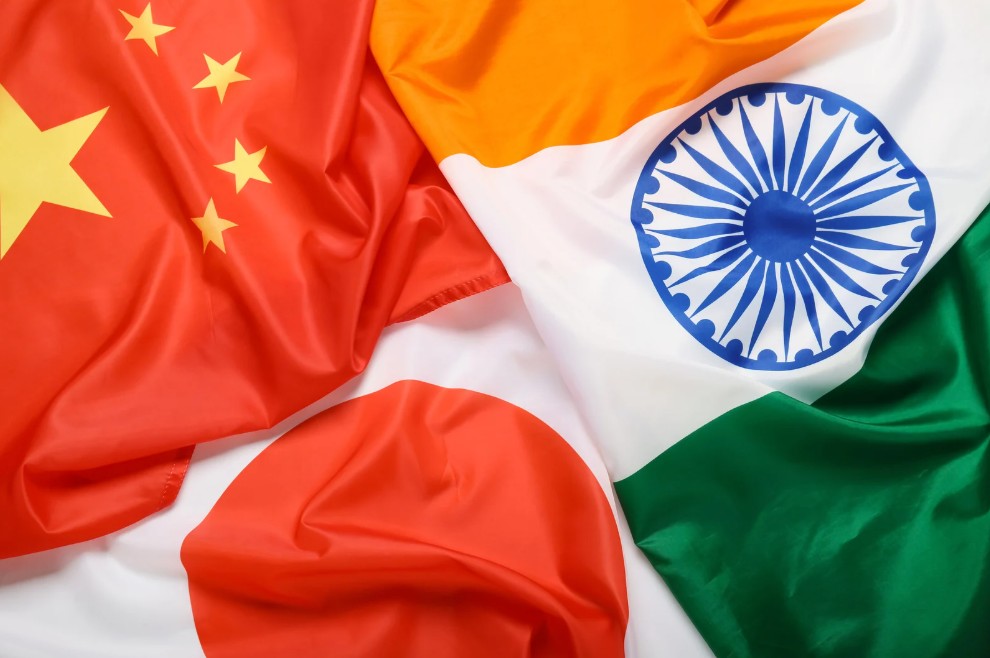
The Quadrilateral Security Dialogue (QUAD), composed of India, the United States, Japan, and Australia, has emerged as a key forum in the Indo-Pacific’s evolving strategic architecture. Initially a loose coalition responding to humanitarian crises, the QUAD has transformed into a platform for regional resilience and cooperation. Two frameworks are often invoked to interpret this transformation: strategic balancing and containment. Strategic balancing involves calibrating alignments to shape the regional order without necessarily provoking direct confrontation, while containment refers to a deliberate strategy to counter and limit a rival power’s influence, in this case, China.
India’s growing role in the QUAD has raised a central question: is New Delhi engaged in strategic balancing to preserve regional multipolarity and autonomy, or is it participating in a broader containment agenda led by the United States and its allies? India’s involvement in the QUAD is best understood not as an act of military containment but as a form of zone balancing, a concept articulated by Arzan Tarapore (2023), in which India strengthens its position and shapes the regional environment without provoking or directly confronting China (Tarapore 2023, 239–240). Drawing on the works of Pant, Gupta, Tarapore, and others, this article aims to situate India’s QUAD strategy within the broader Indo-Pacific dynamics and highlights its implications for regional stability.
India’s Strategic Calculus in the Indo-Pacific
India’s foreign policy has gradually evolved from the principles of non-alignment toward a pragmatic framework of multi-alignment. The rise of China as a revisionist power, particularly in maritime Asia and along the disputed Himalayan border, has prompted India to reassess its strategic posture. The 2020 Galwan Valley clashes were a watershed moment that forced India to abandon its earlier stance of “evasive balancing” and consider more overt alignments (Tarapore 2023, 240–241). The Line of Actual Control (LAC) disengagements in 2022 and 2023, while reducing immediate conflict risk, have not resolved the structural tensions in the bilateral relationship (Gupta 2024, 2).
India's response has centered on shaping a resilient and multipolar Indo-Pacific, grounded in rule-based norms and cooperative security. Initiatives like SAGAR (Security and Growth for All in the Region) and the Indo-Pacific Oceans Initiative (IPOI) reflect this approach (Gupta 2024, 3). India's growing maritime emphasis is also driven by recognition of its vulnerabilities: as the only QUAD country sharing a direct land border with China, India seeks to secure the Indian Ocean Region (IOR) as a sphere of strategic influence, even as it contributes to Indo-Pacific stability more broadly (Gupta 2024, 3).
The IMPRI 2024 report notes that India views the Indo-Pacific not through the prism of bloc politics but as a region requiring inclusive governance frameworks. This is evident in India’s efforts to promote cooperative initiatives like the MAITRI disaster relief platform and the Cancer Moonshot health collaboration, which reflect India’s preference for issue-based cooperation over military alignment (IMPRI 2024, 2). India's Indo-Pacific vision seeks to avoid direct provocation while gradually countering Chinese assertiveness through diversified partnerships and regional engagement.
The Role and Evolution of the QUAD
The QUAD was first convened in 2004 to coordinate disaster relief after the Indian Ocean tsunami but remained dormant for nearly a decade. It was revived in 2017 amidst growing concerns about China’s aggressive posture in the South China Sea and beyond (Manhas 2022, 1). This revival marked a transition from informal consultations to a more structured dialogue. However, the QUAD remains deliberately flexible and informal, there are no formal treaties or obligations, allowing member states to define their level of engagement.
The scope of QUAD initiatives has expanded significantly. Maritime cooperation, especially through the Malabar naval exercises, has increased interoperability among the four navies (Manhas 2022, 2). Beyond military cooperation, the QUAD has launched initiatives on critical technologies, climate change, health security, and resilient infrastructure. The 2024 QUAD Summit unveiled the “Ports of the Future” initiative to counterbalance China’s Belt and Road Initiative (BRI), with India hosting the inaugural regional conference in Mumbai (Gupta 2024, 2). The Quad-at-Sea Ship Observer Mission, involving Coast Guards of the four nations, marks a new form of joint maritime capability building without the overt militarization of the grouping (Gupta 2024, 2).
India’s participation in these projects reflects a strategic logic that is more aligned with balancing than confrontation. As Tarapore emphasizes, India is not engaging in external balancing, that is, bandwagoning with major powers against a rival, but in zone balancing, which aims to build capacities, reinforce norms, and shape the operational environment in the Indo-Pacific (Tarapore 2023, 242–243). This approach allows India to project influence, signal deterrence, and strengthen regional partnerships without entering into binding alliances or direct antagonism.
India’s Position on China: Strategic Hedging or Confrontation?
Despite China being the implicit reference point for the QUAD’s resurgence, India’s position within the grouping remains cautious and calibrated. India avoids naming China in joint statements and emphasizes the need for a “free, open, and inclusive Indo-Pacific” (Panda 2021, 3). This linguistic restraint is emblematic of India’s hedging strategy, designed to preserve room for bilateral engagement with China while supporting collective resistance to coercive behavior.
India’s parallel participation in platforms like BRICS and the Shanghai Cooperation Organisation (SCO), where China plays a leading role, demonstrates its preference for strategic autonomy and issue-based alignment (Panda 2021, 5). While the U.S. and Japan may see the QUAD as a deterrence mechanism against China, India views it as one of many platforms to promote regional resilience and uphold sovereignty norms.
India’s security challenges are distinct. As the only QUAD country facing China on a live land frontier, India must manage the risks of escalation in ways that the others do not. Gupta (2024) notes that maintaining a peaceful border remains a priority, not least because military entanglement with China would stretch India's resources and dilute its maritime focus. Hence, India’s participation in undersea cable initiatives, 5G security networks, and digital infrastructure projects with the QUAD reflects an effort to indirectly limit Chinese influence in non-military domains (Gupta 2024, 2–3).
As Tarapore elaborates, India’s zone balancing is a form of strategic hedging: it helps foster a regional environment where China’s coercive tools are blunted by stronger institutions, diversified connectivity, and empowered smaller states (Tarapore 2023, 244). This is not a strategy of containment in the Cold War sense, but a subtle contest for influence that avoids binary alignment.
Implications for Regional Stability
India’s cautious yet engaged stance contributes to regional stability, even if it introduces strategic ambiguity. By focusing on capacity building, maritime safety, and economic resilience, India provides regional states with alternatives to China’s economic and security enticements (IMPRI 2024, 3). This enhances their autonomy and, by extension, the resilience of the regional order.
However, the absence of formal commitments within the QUAD limits its ability to deter aggressive moves, particularly in flashpoints such as the Taiwan Strait or the South China Sea. Moreover, ASEAN remains ambivalent about the QUAD’s potential to undermine its centrality, even as many Southeast Asian states quietly welcome India's activism (Panda 2021, 6).
China’s perception of India is complex. While Beijing criticizes the QUAD as an “Asian NATO,” it views India as less aggressive than the U.S. or Japan (Beyaz 2025, 4). This perception may reduce the risk of direct confrontation but also reflects India’s limited leverage in shaping Chinese behavior. Still, India's hedging posture, zone balancing strategy, and refusal to be drawn into hard alignments offer a uniquely stabilizing role, at once assertive and restrained.
Conclusion
India’s engagement with the QUAD represents a deliberate strategy of strategic balancing rather than an aggressive move to contain China. Through infrastructure development, digital security, maritime cooperation, and regional diplomacy, India contributes to shaping a stable and multipolar Indo-Pacific order. Its approach, defined by the logic of zone balancing, allows it to resist Chinese assertiveness without forsaking its strategic autonomy or provoking outright confrontation.
As QUAD initiatives deepen and the Indo-Pacific becomes increasingly contested, India’s calibrated posture will remain central to maintaining both regional stability and its own great power aspirations. Rather than aligning fully with any bloc, India is crafting a distinctive role: a balancer, a norm-shaper, and a resilient pole in an emerging multipolar Asia.
Bibliography
- Beyaz, Fatih. Threat Perception, Competition and the Quest for Hegemony in China-India Relations. E-International Relations, May 19, 2025.
- Gupta, Aagya. India’s QUAD Strategy. E-International Relations, October 22, 2024.
- IMPRI. Quad Meet 2024: India’s Balancing Act in the Indo-Pacific. IMPRI Impact and Policy Research Institute, 2024.
- Manhas, Neeraj Singh. China’s Rise in the Indo-Pacific: A Quad Countries’ Perspective. Issue Brief, November 3, 2022.
- Panda, Jagannath. India’s Quad Calculus and China. The Asan Forum, 2021.
- Pant, Harsh V. India and the Quad: Chinese Belligerence and Indian Resilience. Observer Research Foundation, 2022.
- Tarapore, Arzan. Zone Balancing: India and the Quad’s New Strategic Logic. International Affairs 99, no. 1 (2023): 239–257.
Pic Courtesy- Canva
(The views expressed are those of the author and do not represent the views of CESCUBE.)
Devasmita Dutta is recently completed her Bachelor of Arts (Hons) in Political Science at the Department of International Relations at Jadavpur University, Kolkata and also a Gandhi Fellow. She is a published author under the banner of Oxford. Along with having authored multiple books, her areas of interest include IPE, Political Sociology, IR Theory and Strategic Studies and Subaltern & Gender Studies from both political and psychoanalytic perspectives. Devasmita also runs her own blog and occasionally enjoys clicking pictures.