India's Defence Drive Towards Self-Reliance
?India’s defence sector is experiencing a decisive shift from reliance on imports to building indigenous capacity, driven by the Atmanirbhar Bharat initiative and reinforced by policy reforms such as the Defence Acquisition Procedure (DAP) ...
India's defence industry has experienced a tremendous change over the last ten years. Defence expenditure has increased steadily, and a definite trend has emerged towards manufacturing weapons and equipment in India. This emphasis on indigenous production at home has driven record-level defence manufacturing and seen a discernible boost in exports. Initiatives such as Make in India and policy reforms in acquisition have prompted the private sector to enter the industry, building a more robust and diverse domestic defence ecosystem. At the center of this revolution lies the concept of Atmanirbhartat, or self-reliance. By limiting its reliance on foreign vendors, India seeks to ensure its military preparedness even in the midst of international crises or supply chain falloffs. Defense production has increased from Rs. 46,429 crore in 2014–15 to Rs. 1.27 lakh crore in 2023–24, a growth of 174% in less than a decade. This momentum is testimony to India's commitment to modernising its military and achieving strategic autonomy, even as huge challenges persist.
India's Procurement Strategy: Make in India, DAP, and iDEX
India's transition to self-reliance started with the Atmanirbharat Bharat initiative, which acknowledged a harsh reality: the nation had remained over-reliant on foreign arms for decades. Not only did this drain the nation's foreign reserves, but also made India vulnerable in times of geopolitical tension when imports might be stalled or curbed.
To reverse this, the government revamped defence purchases. In 2020, the Defence Acquisition Procedure (DAP) substituted the previous 2016 Defence Procurement Procedure (DPP). DAP 2020 is all about transparency, streamlining, and local design and production as priorities. Its "Buy (Indian-IDDM)" category, for example, places highest priority on equipment that is Indian-designed and Indian-produced with a minimum of 50% indigenous content. Make in India supports this by persuading Indian companies to work on prototypes of advanced defence technology, lessening long-term dependence on imports. The Strategic Partnership Model additionally makes it possible for Indian companies to partner with overseas producers for advanced projects such as fighter aircraft, submarine, and helicopters, providing a formal mechanism for technology transfer to indigenous industry.
Smaller players too have now found a place at the table. The DAP offers MSMEs a chance to play their part in domains such as component manufacturing and niche innovation, which used to be the preserve of big public-sector endeavors.
To nurture innovation further, the iDEX (Innovations for Defence Excellence) program was launched in 2018. Managed by the Defence Innovation Organisation (DIO); a not-for-profit body set up by HAL and BEL, iDEX offers startups and MSMEs grants of up to Rs. 1.5 crore. By early 2025, 430 contracts had been signed to tackle 549 specific defence challenges. Combined, DAP 2020, Make in India, and iDEX make a visible roadmap: decrease import dependence, foster indigenous design, and develop a healthy, innovation-led defence ecosystem.
Achievements So Far
The success of this initiative is beginning to materialize. India's defence output reached Rs. 1,27,434 crore in 2023–24, a new high, aggregating production from public-sector undertakings, private companies, and defence establishments.
A number of indigenously built platforms have been instrumental:
• Dhanush and ATAGS artillery guns have bolstered the firepower of India.
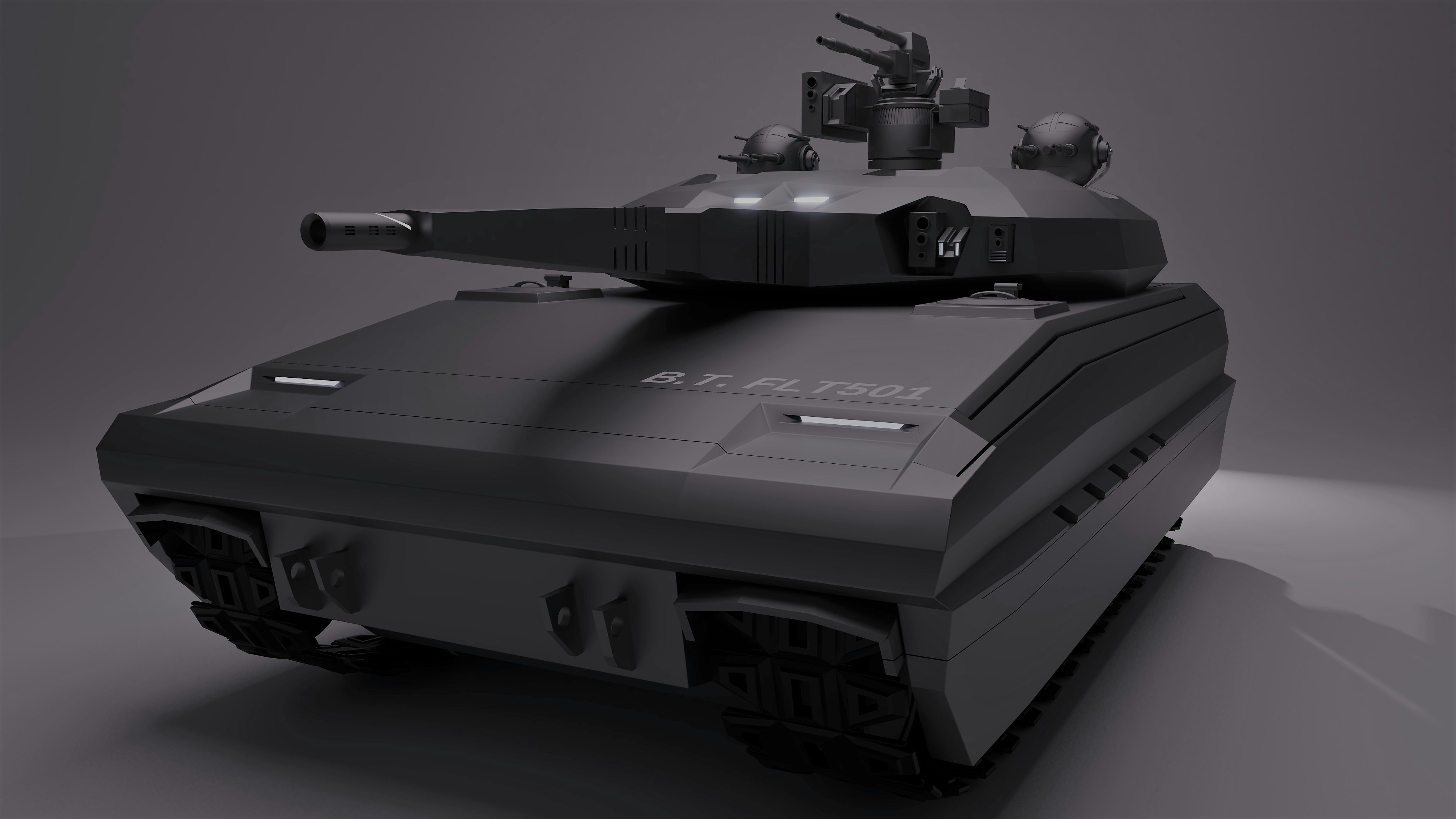
• MBT Arjun tanks provide the Army with locally produced brawn.
• Arjun tanks provide the Army with locally produced brawn.
•Tejas fighter aircraft, the pride of India's aerospace industry, are a giant leap in indigenous flight.
• ALH Dhruv helicopters and Akash missiles reflect the growing capabilities of locally developed technology.
Even an aircraft carrier has been constructed in India, a feat previously unimaginable. Only a few years ago, India was even importing simple goods such as bulletproof vests and combat boots; now they are manufactured locally. India's transformation from consumer to exporter is no less dramatic. Defence exports now go to more than 92 nations, announcing the entry of India as a serious defence partner in the world market.
Challenges in Reducing Import Dependency
Despite all these success stories, India continues to have structural challenges.
• Increased production is yet to be achieved. The goal of $26 billion worth of defence production in 2025 remains aspirational, and current production is still short of the mark.
• Export performance has improved but remains unbalanced. DPSUs, even after years of experience, continue to lose overseas tenders such as HAL's loss in Malaysia and GRSE's in the Philippines.
• Technology gaps continue. India does not have indigenous expertise in jet engines, semiconductor electronics, and radar technology, necessitating dependence on licensed manufacturing, which still constitutes about 58% of procurement.
• R&D and scientific manpower are trouble areas. Absent continuity of research and expertise investment, actual indigenisation will be restricted to low and mid-level technologies.
• Implementation bottlenecks such as bureaucratic delays can delay otherwise viable projects.
These difficulties indicate that reforms in policies alone do not suffice; sustained implementation, R&D expenditure, and international cooperation are necessary.
Way Forward
India has a vision clear: double defence exports to $6 billion by 2029 and become part of the league of countries that export sophisticated defence systems, not small weapons. Although India fell short of its recent $3.5 billion mark, hitting two-thirds of that is an impressive rate compared to the $230 million mark a decade ago. Cost competitiveness is India's best bargaining chip.
• A 155 mm shell produced in India costs approximately $300–$400 compared to more than $3,000 in Europe.
• Indian howitzers range from approximately $3 million each, approximately half the cost of their European equivalents.
This is partly because India’s production lines never went cold after the Cold War, unlike in the West. Continuous tensions with Pakistan and China meant domestic factories stayed active. Private companies like Adani Defence and SMPP are expanding to meet foreign demand. “We’re seeing massive demand for artillery ammunition,” SMPP CEO Ashish Kansal said, as his firm builds a new facility for large-calibre shells. In order to increase exports, India is also utilizing the EXIM Bank, with a loan portfolio of $18.32 billion during 2023–24, to extend soft financing facilities to foreign buyers. This tactic is similar to major global exporters such as Turkey, France, and China.
New markets are emerging:
• Brazil is negotiating the purchase of Akash missiles and warships.
• Bharat Electronics established a marketing office in São Paulo in 2024.
• Defence attachés are being posted in 20 countries, ranging from Algeria to Cambodia to push exports and discern local needs.
A shining success is Armenia. India appointed a defence attaché for the first time in 2023, and since then, it has been supplying 43% of Armenia's arms imports, a jump from almost zero. In the future, collaborative R&D and co-production with reliable partners could speed up the transition to high-tech self-reliance while enhancing India's export image.
Conclusion
India's defence saga is one of consistent change and increased confidence. From importing even the simplest equipment to exporting to almost a score of countries, the path to 'Atmanirbharta' is well on the way. The path forward demands steady policy implementation, heavy investments in R&D, and international collaborations to bridge technology gaps. If India can keep this pace going, it is likely to not only become a self-reliant military force but also a centre for affordable, dependable defence production for much of the Global South. Through a combination of innovation, cost leadership, and strategic diplomacy, India is building the foundation for a defence ecosystem that can stand alone and ultimately, compete with the world's best.
Endnotes
- Economic Times, "India's Defence Sector Transformation and Budget Increases," accessed July 2025, https://economictimes.indiatimes.com
- Press Information Bureau, "Inauguration of Tata Aircraft Complex for C-295 Production," October 2024, https://pib.gov.in
- Ministry of Defence, "Defence Production Value 2023–24," accessed July 2025, https://mod.gov.in
- Centre for Joint Warfare Studies (CENJOWS), "Atmanirbharat Bharat and Indigenisation in Defence," accessed July 2025, https://cenjows.in
- The Legal 500, "Analysis of Defence Acquisition Procedure 2020," accessed July 2025, https://legal500.com
- Department of Defence Production, Government of India, "iDEX Scheme and Innovations," accessed July 2025, https://ddpmod.gov.in
- Observer Research Foundation (ORF), "Challenges in India's Defence Manufacturing," accessed July 2025, https://orfonline.org
- Reuters, "India's Defence Exports and Loans for Arms Sales," April 2025, https://reuters.com
- Press Information Bureau, "India's Defence Export Reach and Strategy," accessed July 2025, https://pib.gov.in
- Economic Times, "India's Indigenous Defence Platforms and Export Growth," May 2025, https://economictimes.indiatimes.com
Pic Courtesy- Photo by Sufyan on Unsplash
(The views expressed are those of the author and do not represent the views of CESCUBE.)

Jahanavi Sharma is a postgraduate student in Economics with a strong interest in research writing and data analysis. She has worked on projects involving agricultural trends, rural development, and sustainability. At CeSCube, she is interning on the Geo-economics Desk, where she will be exploring global dynamics and decode complex economic developments with an Indian lens.