India’s Defence Diplomacy: Projecting Power through Military Engagements and Training Initiatives
India’s defence diplomacy has become a key pillar of its contemporary foreign policy, enabling New Delhi to project influence while maintaining strategic autonomy. This article examines how India employs military-to-military engagements, tr...
In the 21st century, India’s defence diplomacy has emerged as one of the key pillars of its foreign policy, complementing the various traditional instruments of statecraft such as political dialogue, economic outreach, and cultural diplomacy. Unlike the Cold War era, wherein India had maintained a more restrained posture in terms of its military engagements, the contemporary security landscape in the Indo-Pacific is something which has compelled India to harness the factors of its military-to-military cooperation, training programs, and naval exercises as strategic tools to express its military might. Therefore, we can say that these engagements not only continue to strengthen India's multilateral/bilateral relations, but also enhance its ability to reshape the regional security norms, project influence beyond its borders and assert its role as a net security provider across the world.
At the very core of this strategy lies the recognition of the fact that, in this era, the aspect of military diplomacy is not something which remains limited to just hard power projection and instead, it blends the aspects of operational readiness with confidence-building, interoperability and strategic signaling. Moreover, through several operations like joint exercises, training of foreign forces and humanitarian missions, India continues to reinforce its commitment to the aspect of stability, especially in the region of Indo-Pacific and beyond, while simultaneously countering its rival powers’ influence, particularly that of China.
Thus, it can be said that this article examines how India’s defence diplomacy, which stands anchored in military engagements, training initiatives and naval exercises, continues to expand its strategic footprint, strengthens partnerships and underscore its aspirations as a rising global power by acting as both a bridge which fosters trust and interoperability with partners and a lever that continuously goes ahead to reinforce its geopolitical weight.
Defence Diplomacy in Indian Strategic Thinking
When talking about the factor of defence diplomacy, it is not one which is to be viewed as a new concept in the context of Indian statecraft, however its systematic integration into India's foreign policy is something that can be considered to be a relatively recent change. Historically, India has relied heavily on its non-aligned identity, emphasising upon its soft power through the aspects of culture, development partnerships and moral leadership in multilateral forums. However with time, as the Indo-Pacific continues to become a theatre of strategic competition, with factors like China’s recent naval expansion, U.S. rebalancing and the middle powers recalibrating their roles, India has increasingly recognised the utility of the concept of defence diplomacy.
In 2015, India’s Ministry of Defence formally acknowledged the concept of defence diplomacy as an instrument of statecraft, identifying defence cooperation agreements, strategic dialogues, training exchanges and coordinated humanitarian assistance, as its key pillars [1] . This formal recognition was something which coincided with India’s broader Act East and Indo-Pacific policies, signifying a pivot from its usual reactive posture to a proactive one, in the realm of security. It was from that point of time, the aspect of defence diplomacy became an essential complement to India’s strategic autonomy, allowing it to expand its influence without binding alliances.
Military-to-Military Engagements: A Tool for Strategic Trust
Military-to-military engagements can be considered as the backbone of India’s defence diplomacy. These interactions occur through structured dialogues, bilateral visits, staff talks, operational cooperation and coordinated operations with partner nations. For instance, the annual Defence Policy Dialogues with countries such as the United States, Japan, Vietnam, and Australia are ones which continuously serve as platforms to align defence priorities. Similarly, high-level visits by Chiefs of Staff, joint working groups and defence technology discussions contribute to institutional trust-building. Such mechanisms help establish strategic trust and allow India to develop interoperability with friendly armed forces.
One of the most prominent examples is the prevailing defence relationship between India and the United States, which over the years, through engagements such as the 2+2 Dialogue, has institutionalised defence cooperation through strategic discussions between foreign and defence ministers. Additionally, agreements like the Logistics Exchange Memorandum of Agreement (LEMOA) and information-sharing frameworks like COMCASA have led to the creation of a robust foundation of the military cooperation between the two states [2] . These agreements not only tend to facilitate the aspect of interoperability with other nations, but also allow India to access advanced technologies and strengthen its deterrence capabilities. The 2+2 format, specifically, is one which enables India and the U.S. to align upon several regional security issues, which range from maritime domain awareness to counterterrorism [3] . Similarly, the India-Russia Inter-Governmental Commission on Military-Technical Cooperation also reflects the long-standing collaboration, particularly in defence technology and co-production.
Beyond great powers, India has invested heavily in military partnerships with Southeast Asia, Africa and West Asia. Through the aspects of high-level visits, defence attaché networks and joint exercises, India continues to provide alternatives to smaller states wary of dependency on any single great power. This diversification goes on to reflect India’s recognition of the fact that military diplomacy is not only about countering threats but also about building durable global partnerships. Moreover, initiatives such as the Defence Cooperation Agreements with Oman, Vietnam and Indonesia not only enhance India's access to several bases and logistical facilities but also signal its readiness to support regional stability [4] .
Beyond great powers, India has invested heavily in military partnerships with Southeast Asia, Africa and West Asia. Through the aspects of high-level visits, defence attaché networks and joint exercises, India continues to provide alternatives to smaller states wary of dependency on any single great power. This diversification goes on to reflect India’s recognition of the fact that military diplomacy is not only about countering threats but also about building durable global partnerships. Moreover, initiatives such as the Defence Cooperation Agreements with Oman, Vietnam and Indonesia not only tend to enhance access to bases and logistical facilities but also signal India’s readiness to support regional stability [5] .
More importantly, the aspect of military diplomacy, is one which helps India counterbalance China’s growing assertiveness. While China has expanded its influence through several bases across the territories of Djibouti and Gwadar, India has continuously cultivated military relations with countries like Mauritius, Seychelles and Madagascar by providing patrol vessels, training and coastal security assistance [6] . Such partnerships continue to demonstrate how India's defence diplomacy is not just limited to a bilateral level but also helps India in broadening its strategic response to the regional power dynamics.
Training of Foreign Forces: Building Capacity and Influence
Training foreign military personnel has long been one of India’s most effective yet understated defence diplomacy tools. Since the 1960s, India has long invested in training programmes that bring officers from Asia, Africa, Latin America and the Middle East into Indian institutions such as the National Defence College, Defence Services Staff College and the Indian Military Academy to deepen goodwill, build long-term networks, and project soft power through military expertise
These initiatives are largely channeled through the Indian Technical and Economic Cooperation (ITEC) programme and the training quotas provided by the Ministry of Defence [7] . According to the Ministry of External Affairs, as of the year 2021, India continues to train approximately 10,000 foreign officers annually, covering areas from counterinsurgency and peacekeeping to maritime security and cyber defence. The alumni of these programmes often rise to senior ranks in their respective militaries, creating enduring bonds and networks favourable to Indian interests within foreign militaries. Several African Chiefs of Defence Staff and Ministers of Defence, for instance, are alumnus of the several Indian training institutions. These personal linkages continue to serve as strategic capital, enabling India to cultivate goodwill and ensure diplomatic leverage. Moreover, India’s role in United Nations Peacekeeping Operations (UNPKO) is also something which tends to enhance the credibility of its training programmes, as one of the largest troop contributors to UN missions, India’s practical experience goes ahead to enrich the training it offers, making it both relevant and respected [8] .
Additionally, training initiatives also extend to specialised domains such as counterinsurgency and jungle warfare. The Counter Insurgency and Jungle Warfare School (CIJWS) in Mizoram, for instance, has trained personnel from the U.S., UK, France, and ASEAN countries, giving India credibility as a leader in asymmetric warfare training [9] . Similarly, the Indian Navy’s training of coast guards and naval officers from Indian Ocean littoral states enhances maritime security cooperation.
Thus, by providing such training, India achieves the dual objectives of capacity-building in partner states and the cultivation of an international constituency that views India as a provider of public security goods. Moreover, what sets India apart is its ability to provide cost-effective training rooted in operational experience. Unlike Western programs, which may be technologically advanced but expensive, India continues to offer practical, field-tested training that tends to resonate with the developing countries. This model, thus, strengthens India’s strategic narrative as an inclusive partner committed to capacity-building rather than dependency-creation.
Naval Exercises: Signalling Power and Anchoring India’s Indo-Pacific Strategy
Naval exercises represent the most visible dimension of India’s defence diplomacy, serving both the operational and symbolic functions. Having the Indo-Pacific at the heart of global geopolitics, India has leveraged naval exercises to project power, build partnerships and convey strategic intent in contested waters, by reinforcing the principle of a free and open Indo-Pacific.
The Malabar Exercise stands out to be the flagship one, when looking at these intiatives. Originating as a bilateral exercise with the United States, in 1992, Malabar has evolved into a multilateral framework, now including Japan and Australia, and effectively institutionalising itself as a de facto Quad naval exercise [10] . These exercises focus upon the aspect of high-end warfare domains, including anti-submarine operations, carrier strike coordination and maritime interdiction, enhancing interoperability among like-minded navies and aiming for the shared goal of countering China’s assertiveness in the Indo-Pacific.
India also conducts bilateral exercises with regional navies, such as Varuna with France, Indo-Pacific Endeavour with Australia, JIMEX (with Japan), INDRA (with Russia) and SIMBEX with Singapore. These engagements continue to underscore India’s role as a hub of maritime security cooperation and more importantly, such exercises are not just limited to high-profile partners, with India regularly conducting CORPAT (Coordinated Patrols) exercises with countries like Thailand, Myanmar and Indonesia, ensuring maritime order in the Bay of Bengal and the Andaman Sea iii . Thus, we can say that such engagements also serve different strategic purposes, be it reinforcing partnerships with major powers, building operational trust with smaller navies or signalling to adversaries that India has multiple collaborative options.
Beyond interoperability, naval diplomacy also has a humanitarian and disaster-relief dimension (HADR) [11]. Operations such as “Sahyog” in the aftermath of natural disasters in the Indian Ocean have showcased India’s ability to mobilise quickly and provide aid. Additionally, The Indian Navy’s response during the 2004 tsunami, Cyclone Idai in Mozambique (2019) and COVID-19 pandemic have further cemented its role as a first responder. Thus, we can say that such missions continue to highlight and reinforce India’s growing capacity to translate its naval prowess into an instrument of humanitarian assistance, further strengthening its claim as a net security provider in the Indo-Pacific [12] .
Strategic Impact: India’s Expanding Footprint
The military aspect of India's diplomacy is most prominently visible in the region of the Indo-Pacific, however its impact is such that it tends to extend globally. By investing in regional partnerships, India not only secures its immediate periphery but also builds upon its prevailing reputation as a responsible stakeholder in the realm of global security.
In the Indian Ocean Region (IOR), India has developed a network of coastal radar stations, information-sharing agreements and logistical access arrangements. The signing of the Logistics Exchange Memorandum of Agreement (LEMOA) with the U.S. and similar agreements with France, Singapore and Australia allow reciprocal access to military bases, extending India’s operational reach from the Western Pacific to the Horn of Africa [13] .
In Africa, India has used the aspect of defence diplomacy to complement its developmental initiatives. Training African militaries, supplying patrol vessels and engaging in UN peacekeeping operations are factors that tend to reinforce India’s credibility as a partner in capacity-building. Furthermore, in West Asia, defence cooperation agreements with the Gulf states such as the UAE and Saudi Arabia not only secures energy lifelines for India, but also addresses the prevailing counterterrorism challenges.
Such initiatives continue to expand India’s influence beyond its immediate neighbourhoods, creating a web of partnerships that collectively enhance its bargaining power in the several multilateral forums and they additionally also strengthen India’s voice in shaping regional architectures, from the Indian Ocean Rim Association (IORA) to the ASEAN Defence Ministers’ Meeting Plus (ADMM-Plus). Thus, we can say that by embedding itself in multiple networks, India also reduces its vulnerability to great power rivalry and expands its room for manoeuvring.
Challenges and Limitations
While India’s defence diplomacy has expanded impressively, it faces several challenges that constraint it from achieving its full potential. Firstly, when we talk about the aspect of resource constraints, which can be both financial and material, they are the ones that act as a limiter towards the scale and sustainability of India’s military engagements and this is also what makes India’s capacity-building efforts to continuously remain modest when compared to China’s expansive Belt and Road-driven defence outreach [14] .
Secondly, bureaucratic hurdles, procurement delays and Institutional coordination are issues that continue to undermine India’s ability to deliver timely assistance. Defence diplomacy straddles the Ministry of Defence, Ministry of External Affairs and armed forces, often leading to increased mismanagement and fragmented implementation. Furthermore, political sensitivities around alliance-like arrangements are also an issue that limit India’s willingness to institutionalise partnerships beyond a point as balancing partnerships with such competing powers is something that also requires constant diplomatic finesse.
Finally, India’s defence diplomacy must also contend with the rapidly shifting strategic environment prevailling in the current world order. The intensification of U.S.–China rivalry, uncertainty in global economic recovery and the rise of non-traditional threats such as cyber and space challenges require India to adapt its tools and strategies continuously. Moreover, India must also ensure that its military diplomacy does not appear coercive or hegemonic to smaller states as with an increased emphasis upon the aspect of inclusivity and capacity-building would help India in maintaining the aspect of credibility, especially among developing nations wary of great power politics.
Conclusion
India’s defence diplomacy, is an aspect of the Indian foreign policy, which continues to illustrate how a rising power can project its influence without resorting to traditional factors like that of coercion or forming formal alliances. Through implementing the factors of sustained military-to-military engagements, training programmes for foreign forces and extensive naval exercises, India has continuously gone ahead to expand its strategic footprint in both the region of Indo-Pacific and beyond. Thus, through cultivating trust, building partnership capacities and ensuring maritime order, India not only enhances and strengthens its strategic footprint but also goes ahead to expand its foreign policy, while simultaneously projecting itself as a responsible and responsive power to the rest of the world. Moreover, these initiatives are also the ones which enable India to enhance its interoperability, build durable networks of influence and go on to reinforce its role as a leader in shaping the various regional security norms.
While there remain several challenges which continue to prevail in terms of resources, institutional coordination, bureaucratic efficiency, and the fluidity of global geopolitics. The addressal of these gaps, is also something that continues to be extremely critical, as if India is to consolidate its role as a net security provider and balance its dual imperatives of strategic autonomy and proactive engagement, while cementing its position in the regional and global security architectures, it has to fulfil the gaps these challenges continue to widen.
Lastly, India’s defence diplomacy is an aspect which underscores a pragmatic understanding in an era of complex interdependence, wherein more than just an instrument of hard power, it goes ahead to embody a blend of strategic pragmatism, cooperative security and soft power influence, while simultaneously projecting its presence in the regional and global security realms. Thus, we can say that as the Indo-Pacific becomes the fulcrum of global geopolitics, wherein India's ability to leverage its military diplomacy will be central to shaping a multipolar and rules-based order.
References
[1] Ministry of Defence. (2015). Annual report 2014–15. Government of India. https://mod.gov.in/documents/annual-report
[2] Pant, H. V., & Saha, P. (2021). India–U.S. defence partnership: Convergence and constraints. Observer Research Foundation Issue Brief, 456. https://www.orfonline.org/research/india-us-defence-partnership
[3] Pant, H. V., & Rej, A. (2019). India-U.S. defence cooperation: The “2+2” and beyond. Observer Research Foundation Issue Briefs. Observer Research Foundation.
[4] Ministry of Defence. (2022). Annual report 2021–22. Government of India. Retrieved from https://mod.gov.in
[5] Ministry of External Affairs (MEA). (2022). India–Vietnam joint statement on defence cooperation. Government of India. https://mea.gov.in
[6] Ministry of External Affairs (MEA). (2021). Annual report 2020–21. Government of India. https://mea.gov.in
[7] Ministry of External Affairs. (2020). ITEC programme: 55 years of capacity building partnership. Government of India. Retrieved from https://www.itecgoi.in
[8] United Nations. (2020). UN peacekeeping: India’s contribution. United Nations Peacekeeping. https://peacekeeping.un.org/en/india
[9] Singh, A. (2019). India’s military training diplomacy: Building capacity, goodwill and influence. Carnegie India Working Paper. Carnegie Endowment for International Peace.
[10] Scott, D. (2021). The Quad and the Indo-Pacific: Going naval, Journal of Indo-Pacific Affairs, 4(3), 72–95.
[11] Ministry of External Affairs (MEA). (2019). India’s humanitarian assistance and disaster relief (HADR) operations. Government of India. https://mea.gov.in
[12] Ministry of External Affairs. (2021). India’s role as a net security provider. Government of India. Retrieved from https://mea.gov.in
[13] Pant, H. V., & Saha, P. (2019). India’s quest for military logistics agreements: A new turn in defence diplomacy. Observer Research Foundation Occasional Paper. Observer Research Foundation.
[14] Brewster, D. (2018). India’s defence diplomacy in the Indian Ocean. Journal of the Indian Ocean Region, 14(2), 237–254. https://doi.org/10.1080/19480881.2018.1471127
(The views expressed are those of the author and do not represent the views of CESCUBE)
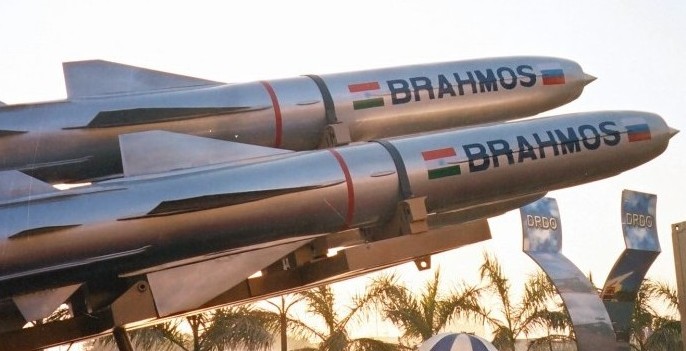
Image Source: BrahMos Aerospace

Devrat Sai Narang is a second-year student of Diplomacy and Foreign Policy at the Jindal School of International Affairs. With experience at the United Nations Institute for Training and Research in Geneva and policy research think tank in India, he has worked on projects that cultivated his expertise in international diplomacy, global governance, negotiation and policy evaluation/research. Passionate about linking global affairs with culture and society, he enjoys exploring how ideas and narratives shape diplomacy. His research interests lie at the intersection of policy, culture, and global affairs, with a particular emphasis on negotiation, soft power and institutional reform. Skilled in research, writing, and analysis, he seeks to bridge policy, diplomacy and culture through meaningful contributions.