Jellyfish Population Explosions as an Alarm for the Global Marine Crisis
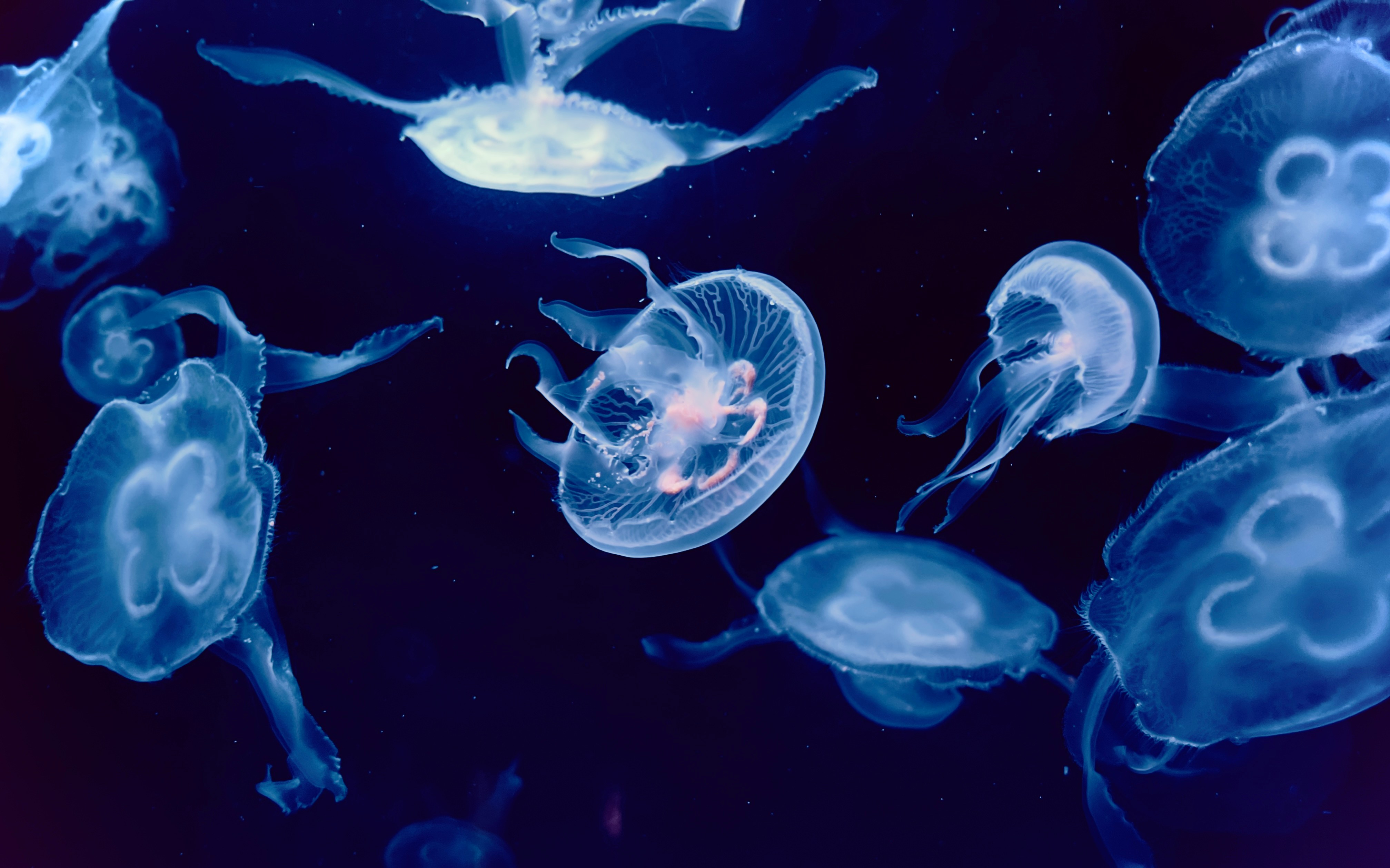
Jellyfish population explosions are increasingly emerging as indicators of deeper structural stress within marine ecosystems rather than isolated biological events. Their growing frequency across diverse geographies highlights the cumulativ...
What Is Actualy Happening?
Jelyfish population explosions can no longer be dismissed as ordinary seasonal disturbances. In many parts of the world, the mass appearance of jellyfish is increasingly becoming a sign that marine ecosystems are under serious pressure. In August 2025, for example, four reactors at the Gravelines Nuclear Power Plant in France were temporarily shut down after swarms of jellyfish clogged the facility’s cooling system. The incident did not pose a direct safety threat, but it was enough to show that organisms often regarded as trivial are now capable of disrupting modern energy infrastructure. Reuters also noted that similar incidents had occurred before, and scientists have linked the growing frequency of such disruptions to warmer waters, invasive species, and changes in coastal ecosystems1.
This phenomenon is not limited to Europe. Indonesian has also shown warning signs that deserve closer attention. In Jakarta Bay, mass jellyfish occurrences were recorded in 2018 and 2019, and a recent study reconstructing the area’s environmental conditions confirmed that major blooms did indeed occur in those two years, rather than being merely fleeting impressions amplified by social media or anecdotal reports. The study also found that certain oceanographic conditions can create windows of opportunity for jellyfish outbreaks in already stressed coastal waters2.
Even in Indonesian, the warning signs have already appeared quite clearly. In April 2020, thousands of jellyfish filled the waters around the Paiton Steam Power Plant in Probolinggo, East Java. Although electricity supply was reportedly maintained at the time, the incident was not the first of its kind. Earlier reports showed that in 2016, jellyfish entering the Paiton power plant system forced operations to stop for 20 days and caused major economic losses. In this context, jellyfish can no longer be seen as ordinary marine disturbances. They have become a real threat to the coastal infrastructure that supports modern life 3.
To be fair, not every appearance of jellyfish means the world is collapsing. Jellyfish blooms are natural phenomena that have long been recognized in marine ecology. But when these events repeatedly take the form of disruptions to power plants, pressures on tourism areas, and population explosions in coastal waters heavily shaped by human activity, the world should stop treating them as merely biological surprises.
Structural Causes: Why Are Jellyfish “Win”?
Jellyfish population explosions do not result from a single cause. A growing body of research shows that jellyfish blooms usually emerge from a combination of ecological pressures that reinforce one another, including ocean warming, overfishing, eutrophication, species translocation, and the modification of coastal habitats 4,5. One important factor is rising sea temperature. Higher temperatures can accelerate asexual reproduction. In some cases, warmer winters and high food availability can increase the likelihood of boom-and-bust population cycles in jellyfish. In addition, overfishing reduces the number of jellyfish predators and competitors, thereby disrupting the balance of marine food webs and increasing the opportunity for jellyfish to dominate. At the same time, nutrient pollution, eutrophication, and the expansion of coastal infrastructure also create conditions that increasingly favor jellyfish growth.
Even so, the relationship between human pressures and jellyfish outbreaks should not be oversimplified. Systematic reviews suggest that many claims about the role of anthropogenic stressors are plausible, but strong evidence is not always available for every species or every region. For that reason, jellyfish outbreaks are better understood as an important signal of marine ecosystem imbalance rather than as a single piece of evidence that automatically explains the entire global marine crisis6.
Jellyfish Outbreaks: A Threat to Marine Ecosystem Sustainabillity and Human Life


The Portuguese man o’ war (Physalia physalis) found along the coast of West Java.
Source: Personal documentation.
The issue becomes even more serious when dangerous species begin to appear in coastal areas. According to researcher Mochamad Ramdhan Firdaus7 , the Portuguese man o’ war (Physalia physalis) is one of the most dangerous marine cnidarians because its sting can cause cardiotoxic, neurotoxic, dermatotoxic, and hemolytic effects in humans. This shows that the presence of this species in coastal waters cannot be treated as an ordinary disturbance, especially because the risks directly affect public safety.
Firdaus7 also explains that Physalia physalis is not a single organism, but a colony composed of several parts with different functions. It floats on the ocean surface, making it easy for currents to carry it toward coastal areas and increasing the likelihood of contact with humans. In this context, the appearance of the Portuguese man o’ war in coastal waters demonstrates that jellyfish outbreaks are no longer merely an ecological issue, but have become a real threat to coastal communities, tourists, and fishing activities. In addition, Firdaus7 emphasizes that rising sea temperatures are believed to favor jellyfish populations, including Physalia physalis. If this trend continues, the presence of the Portuguese man o’ war in coastal areas may become increasingly frequent, further intensifying the threat to marine ecosystem sustainability and fish stocks, particularly because this species is also known to prey on fish larvae.
An Alarm That Must Not Be Ignored
Jellyfish blooms can no longer be seen as occasional seasonal disturbances that simply come and go. Studies show that their impacts directly affect public health, food security, energy systems, and coastal economies. In fisheries, intense blooms can reduce coastal fish production, while more broadly their increasing presence signals that marine ecosystems are under growing pressure. In other words, what is being disrupted is not only the coast, but also the relationship between the sea and human life.
For this reason, responses to this phenomenon cannot stop at emergency measures alone. Jellyfish management needs to shift from a reactive approach toward a more anticipatory and ecosystem-based one, through consistent monitoring, the establishment of ecosystem change indicators, the development of early warning systems based on environmental data, and public education in coastal and tourism areas8. Ultimately, the core problem is not the jellyfish themselves, but our failure to understand and maintain the balance of the sea9.
Relevance to Climate Change, the SDGs, and the Role of Marine Science
Jellyfish blooms need to be understood within a broader framework, particularly that of climate change and sustainable development. Warming seas, shifting currents, and increasing coastal pressures have created more unstable conditions for many marine organisms, while at the same time favoring certain species such as jellyfish. For that reason, jellyfish blooms are not merely a local issue, but part of a larger pattern of change in the ocean. Within the framework of the Sustainable Development Goals (SDGs), this phenomenon is directly linked to SDG 14 on the protection of marine ecosystems and SDG 13 on climate change adaptation. Its impacts on fisheries, energy systems, and resource management also show that the marine ecological crisis is closely connected to broader global development challenges.
For institutions such as the Faculty of Fisheries and Marine Sciences, Universitas Padjadjaran (FPIK UNPAD), this issue underscores that regional marine research carries significance beyond local interests. Findings from Indonesia’s coastal waters can enrich discussions on marine ecosystem adaptation, coastal management, and science-based early warning systems. In this context, marine science institutions are important not only for producing publications, but also for bridging scientific knowledge, community needs, and policies that are more responsive to ecological change.
References:
1. Reuters. (2025). Jellyfish hit French nuclear plant, facing delayed restart. [online] 12 August. Available at: https://www.reuters.com/business/energy/jellyfish-hit-french-nuclear-plant-facing-delayed-restart-2025-08-12/ [Accessed 18 March 2026]
2. Lumban-Gaol, A. A., Firdaus, M. R., Saiman, D. A., Merry, D. C., Togatorop, C., Wijayanti, L. A. S., & Handoko, U. (2025). Environmental reconstruction and projection of Jakarta Bay based on the 2018 and 2019 jellyfish bloom events. BAWAL: Widyariset Perikanan Tangkap, 17(3), 179–197. https://doi.org/10.15578/bawal.17.3.2025.179-197 .
3. Antara News. (2020). Jellyfish swarm waters near Paiton power plant in East Java. [online] 30 April. Available at: https://en.antaranews.com/news/147224/jellyfish-swarm-waters-near-paiton-power-plant-in-east-java [Accessed 18 March 2026].
4. Richardson, A. J., Bakun, A., Hays, G. C., & Gibbons, M. J. (2009). The jellyfish joyride: Causes, consequences and management responses to a more gelatinous future. Trends in Ecology & Evolution, 24(6), 312–322. https://doi.org/10.1016/j.tree.2009.01.010.
5. Goldstein J, Steiner UK. Ecological drivers of jellyfish blooms – The complex life history of a ‘well-known’ medusa (Aurelia aurita). J Anim Ecol. 2020; 89: 910–920. https://doi.org/10.1111/1365-2656.13147 .
6. Pitt, K. A., Lucas, C. H., Condon, R. H., Duarte, C. M., & Stewart-Koster, B. (2018). Claims that anthropogenic stressors facilitate jellyfish blooms have been amplified beyond the available evidence: A systematic review. Frontiers in Marine Science, 5, 451. https://doi.org/10.3389/fmars.2018.00451
7. Firdaus, M. R. (2020). Aspek biologi ubur-ubur api, Physalia physalis (Linnaeus, 1758). Oseana, 45(2), 50–68. (In Indonesia).
8. Graham, W. M., Gelcich, S., Robinson, K. L., Duarte, C. M., Brotz, L., Purcell, J. E., Madin, E. M., Mianzan, H., Sutherland, K. R., Uye, S., Pitt, K. A., Lucas, C. H., Bøgeberg, M., & Condon, R. H. (2014). Linking human well-being and jellyfish: Ecosystem services, impacts, and societal responses. Frontiers in Ecology and the Environment, 12(9), 515–523. https://doi.org/10.1890/130298
9. Richardson, A. J., Bakun, A., Hays, G. C., & Gibbons, M. J. (2009). The jellyfish joyride: Causes, consequences and management responses to a more gelatinous future. Trends in Ecology & Evolution, 24(6), 312–322. https://doi.org/10.1016/j.tree.2009.01.010
(The views expressed are those of the author and do not represent the views of CESCUBE)

Lady Ayu Sri Wijayanti is an Assistant Professor and a Lecturer at the Faculty of Fisheries and Marine Sciences, Universitas Padjadjaran (FPIK UNPAD), Indonesia. Her research expertise lies in marine science, aquatic conservation, planktonology, deep-sea ecology, and aquatic resources management. Her work focuses on marine ecosystem dynamics, especially plankton communities and the interaction between oceanographic conditions and aquatic ecological processes. Her research explores marine biodiversity, ecosystem change, and the sustainable management of aquatic environments through an interdisciplinary approach combining marine ecology, conservation science, and aquatic resource management.