Maritime India: Security, Trade, and Great Power Competition
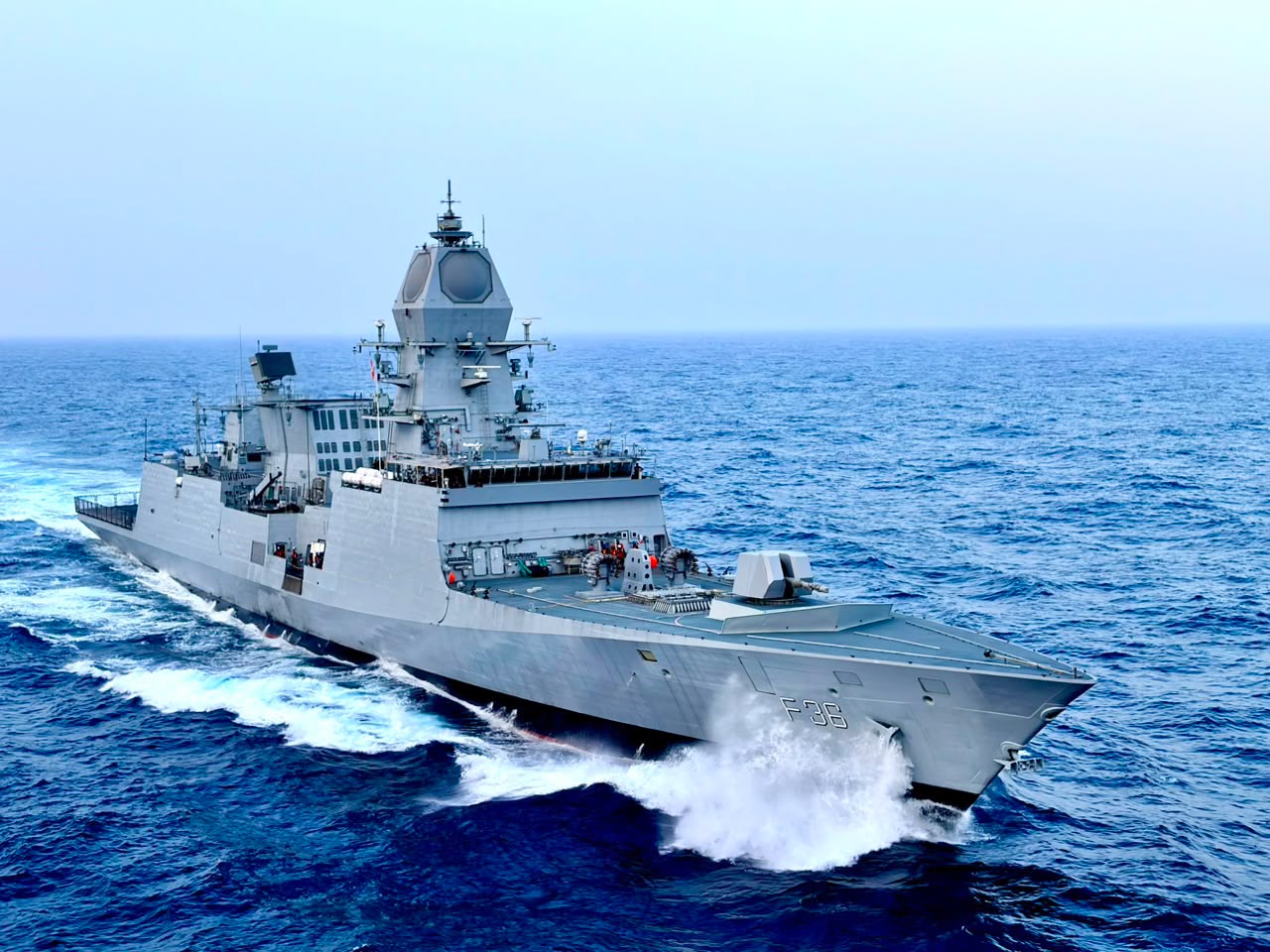
For much of its modern strategic history, India has viewed security through a predominantly continental lens, focusing on land borders and territorial challenges. Yet India's geography tells a different story. With more than 7,500 kilometre...
India needs to accept its geographic reality, which is being a peninsula with over 7500 km of coastline and a firm position in the Indian Ocean. This maritime identity of India has significantly impacted its history since the commencement of world trade. However, India's strategic outlook for a major part of contemporary times is predominantly continental.
The narrative of needing a maritime consciousness which is awareness at a widespread level about the stake of its position and the sea in the domains of security, trade and global influence. The idea of developing this consciousness is pivotal for navigating through the evolving global multipolar order, tackling the influence of superior players and enforcing India's ambition of becoming a superpower.
Theoretical Foundation: Sovereignty and Nation State
The idea of the consciousness develops from the basics of the concept of the nation state and the evolution, the resilience of the nation state through the Westphalian times which creates a strong foundation for the idea. Scholars like Jason Farr in The Westphalian Legacy and the Modern Nation State, and Richard Falk's Revisiting Westphalia, Discovering Post Westphalia, showcases how even modern nation states are driven by the logic of sovereignty and territory.1 India, which significantly depends on The Indian Ocean for trade routes, diaspora connectivity and economic resilience, not focusing on maritime sovereignty will compromise its sovereignty. Stephen D. Krasner also talks about how sovereignty also depends on the power realities, which makes a maritime focus even more significant as India might risk its sovereignty being under threat from actors in its backyard.2
Great Power Competition
Odd Arne Westad in her analysis of the Cold War and the Post Cold War situation, coupled with S. Lahiry's work on the review of US Hegemony and the Post Second World War Order, have showcased how the power competition has gradually shifted to the waters.3 Moreover, the rise of China, an adversary which shares borders with India and holds superior capabilities in multiple domains, makes it all the more important for India to work towards creating a maritime consciousness. Beijing has been working on creating a maritime consciousness, which has been considered threatening, through ideologies like the String of Pearls and the 9-Dash Line, which is based on Chinese history.
China has started to gain access to the Bay of Bengal, as it tries to support its China Dream of becoming The Middle Kingdom, and secure waters to facilitate trade. The threat has aggravated in the past few years as China has gained port access and infrastructure in Myanmar (Kyaukpyu), Sri Lanka (Hambantota) and Bangladesh. The mere presence of Chinese elements near the Bay of Bengal poses a threat of the use of Dual-use Technologies, intelligence gathering, and related activities that can afflict India's depth in its maritime domain.
Steps Taken by India
However, India has taken steps in order to strengthen its maritime domain and create a consciousness, both through infrastructural development and engagement in discourse and diplomacy. An example of the following can be the Great Nicobar Project, which encompasses the creation of a transshipment port, airport and other strategic infrastructure on Great Nicobar Island. As it is located near the Strait of Malacca, which commands the transit of a significant chunk of the world trade, crucial especially for China. This provides a method of tackling the Chinese advancements, watch over the pivotal Sea Lines of Communication, reduce foreign dependence, and strengthen its naval reach. The development stands as a testament of India's forward presence and deterrence powered by Infrastructural development, creating a dominant posture in the Indo-Pacific region.
India also looks towards building momentum through discourse and diplomacy, as it has announced the 2026 ASEAN-India Year of Maritime Cooperation. The initiative was announced by Prime Minister Narendra Modi during the recent ASEAN-India summit, emphasising on emboldening the collaboration between the two entities,to work upon topics like maritime security, disaster relief, humanitarian assistance and move towards building principles that helps in sustainable ocean governance. It tries to work on the existing frameworks and highlights India's intent in strengthening the partnership in order to create a rule-based maritime order and counter the Chinese advancement.
These steps and the surrounding circumstances highlight why this idea of a maritime consciousness has to expand its horizons moving from the spheres of elite policymaking to economic planning, education and common discussions. Scholars such as Parag Khanna who talk about connectivity, and city-states like Singapore elucidate the significance of connectivity, geopolitical and geoeconomic position, trade hubs etc.4 India, which has a long coastline and a significant location in the Indo-Pacific region possess advantages that have been underutilised for ages. Working towards a bold maritime consciousness can incorporate the modernisation of India Navy, marine research, shipbuilding, infrastructure on the ports, etc, with an aligning towards the needs of survival in this evolving multipolar world order.5
While the critics will argue that continental threats along the borders on the North, require more attention, and that creating a maritime consciousness might be comparatively less significant, the recent conflicts have shown the importance of maritime preparedness. As written by George Steinmetz in his work on Geopolitical inventiveness, nations that fail to adapt to the new areas and types of threats often fall prey to strategic marginalisation.6
Conclusion
To conclude, India requires urgent attention towards creating a comprehensive maritime consciousness, as it aims at satisfying its national interest through trade and security, while eyeing its major aim of becoming a significant power in the global geopolitical scenario. The examples of the Great Nicobar Project and the 2026 ASEAN India Maritime Cooperation showcase India's efforts, which now have to be spread to the masses. The civilisational history and influence of the seas is evidence of how an evolved maritime consciousness in contemporary times can enhance India's current standing in the world order.
Endnotes
1. Farr, “Point: The Westphalia Legacy,” 156–159; Falk, “Revisiting Westphalia,” 311–352.
2. Krasner, “Compromising Westphalia,” 115–151.
3. Westad, The Cold War; Lahiry, “Theorising Hegemony,” 176–182.
4. Khanna, Connectography.
5. Yergin, The Prize; Yergin, The Quest.
6. Steinmetz, “Explaining Geopolitical Inventiveness.”
References
1. Falk, Richard. “Revisiting Westphalia, Discovering Post-Westphalia.” The Journal of Ethics 6, no. 4 (2002): 311–352.
2. Farr, Jason. “Point: The Westphalia Legacy and the Modern Nation-State.” International Social Science Review 80, no. 3/4 (2005): 156–159.
3. Khanna, Parag. Connectography: Mapping the Future of Global Civilization. New York: Random House, 2016.
4. Krasner, Stephen D. “Compromising Westphalia.” International Security 20, no. 3 (1995–96): 115–151.
5. Lahiry, S. “Theorising Hegemony, US Hegemony and the Post-Second World War Order.” World Affairs: The Journal of International Issues 17, no. 2 (2013): 176–182.
6. Steinmetz, George. “Explaining Geopolitical Inventiveness: Late Colonialism, Decolonization, and the Cold War.” Social Science History 45, no. 3 (2021): 415–442.
7. Westad, Odd Arne. The Cold War: A World History. New York: Basic Books, 2017.
8. Yergin, Daniel. The Prize: The Epic Quest for Oil, Money, and Power. New York: Free Press, 1991.
9. Yergin, Daniel. The Quest: Energy, Security, and the Remaking of the Modern World. New York: Penguin Press, 2011.
(The views expressed are those of the author and do not represent the views of CESCUBE)
Image Source: PIB https://www.pib.gov.in/PressReleasePage.aspx?PRID=2275247®=3&lang=1
Bhaskar Jha is a master's student in OP Jindal Global University. He is a budding researcher who has prior research experience gained at research centres and think tanks like the The Indian Netizens Co. And Center For Land Warfare Studies. He is a Political Science Gold Medalist and takes keen interest in Geopolitical hedging and Security Studies.