Beyond Ukraine: Understanding Putin's Vision of Russian Power
More than three decades after the collapse of the Soviet Union, questions surrounding Russia's role in the post-Soviet space continue to shape global geopolitics. Under Vladimir Putin's leadership, Moscow has consistently challenged aspects of the post-Cold War European security architecture while seeking to maintain influence over neighbouring states through a combination of military intervention, economic leverage, political pressure, and strategic partnerships. The annexation of Ukrainian territory, Russia's involvement in Georgia, and its complex relationships with states such as Armenia, Belarus, Moldova, and Kazakhstan have reignited debates about whether contemporary Russian foreign policy reflects traditional great-power behaviour or a broader ambition to restore influence across former Soviet territories.This article examines the ideological, historical, and strategic foundations of Vladimir Putin's worldview, exploring how narratives of Russian identity, historical grievance, and geopolitical insecurity continue to shape Moscow's foreign policy. It analyses Russia's methods of influence across the post-Soviet region, the role of symbolism and historical memory in Kremlin discourse, and the broader implications of Russian actions for European security and international order. The article argues that while the restoration of the Soviet Union may not be Moscow's explicit objective, Russia's pursuit of influence, control, and strategic depth across its neighbourhood increasingly reflects an effort to revive elements of its former geopolitical sphere in both practice and ethos.
To activate expansionary motives and engage in direct or diplomatic annexation of territories as Russia is in Ukraine or Georgia, one has to believe that they hold a legitimate and justifiable claim to the concerned territories. Does Putin feel entitled to the ‘Russian Lands’?
Addressing the Parliament in 2005, Vladimir Putin spoke of a ‘genuine tragedy’ - the collapse of the Soviet Union being “the greatest catastrophe of the [20th] century”. This is a peek into the psyche of Russia’s top leader who has been in power for 25+ years now. Over the years, Putin’s direct and indirect interference in Russia’s neighbouring sovereign states (some of which happen to be seeking NATO membership) has globally triggered inquisitiveness to pursue understanding Putin's deeper foreign policy aims.
At the dusk of the Cold War, with Russia considered ‘defeated’, Putin assumed office, explicitly rejecting the post cold-war structure of Europe. His imperialist dream of building the Russian empire began to take form as early as 2001, when he expressed to George W. Bush his discontent over the giving away of Ukraine, Kazakhstan, Caucasus by the then Party Leaders.1
Putin’s Vision for Russia
V. Putin came of age in the golden days of the Soviet’s Leningrad, and started off as a former secret intelligence officer at the KGB before assuming political office. With the disintegration of the Soviet Union, end of the Cold War and Yeltsin’s Russia collapsing and plunging the economy and millions into poverty, Putin witnessed an excessively turbulent time, watching the once-mighty Russia fall from power. Therefore, his ardent desire to rebuild a strong and resilient Russia has been innate.
What is striking, however, are his attempts to achieve his vision of a powerful Russia by resurrecting the Soviet Union, which he considers to be the penultimate position of global power that Russia once held. Literally restoring the Union would demand a radical move - the re-integration of the independent sovereign states that broke away in the 1990s. Modern-day soviet nations (e.g. baltic, eastern european and caucasus states etc.) operate independently, possess personal state military, have international presence and recognition through bilateral, multilateral ties with other global players and through membership of international organisations and conventions. For example, the state of Armenia fought for its independence to secede from the Soviet Union and gained the same in September 1991. It is unlikely for these nations to be willing to merge back into the Russian Federation. And under modern international law, forceful annexation of any country through threat, or violent disrespect of territory is prohibited and considered illegitimate.
While the Kremlin and the 73 year old leader himself has explicitly denied intentions to revive the Soviet Union, Russian foreign policy in action speaks louder and in contradiction to Kremlin’s claims. The 2022 direct annexation of Ukraine is a testament to Russia’s hegemonic pursuit at least regionally in the pre-soviet arena. However, it has been argued that the annexation of Ukraine cannot be deemed the revival of the soviet union because the strategic goals were different and that Russia has not attempted to conquer any other pre-soviet states. But Russia has interfered, and this interference has been of a different nature with other neighbouring states. Let us look at the contemporary dynamics of some of these with Russia.
Volatile dynamics - Subjugation without annexation
Armenia
Armenia - a part of Russia’s regional orbit - sits at the heart of the south caucasus and until mid-May 2026, was a close ally to Russia, even host to Russia's military base in barter of Russian security of Armenian territory. When Russia failed to combat Azerbaijan’s offence to Armenian territory due to its preoccupation and engagements in Ukraine, Armenia turned towards Europe pursuing Europe integration and eventually membership of the EU.
The leverage that Russia has here is that it is Armenia’s most important economic partner.
(In a recent warning issued by Russia, it threatens that if Armenia continues, “the process of accession to the EU continues, the Russian side will suspend or unilaterally terminate the Agreement ?on Cooperation in the Supply of Natural Gas, Petroleum Products and Rough Diamonds..” Maria Zakharova, Russian Foreign Ministry spokesperson, tells ?the RIA news agency.)
Geographically small and laced with pro Russia elements, Armenia could succumb to Russian subjugation. Moscow has repeatedly passed furious comments on Armenian hosting of Ukraine’s Zelenskyy and its fast-growing reliance on dependence on the US and EU. Russia has already been accused of meddling with the upcoming elections of Armenia as it sees an unfriendly ally in Nikol Pashinyan; current Armenian Prime Minister (likely to be re-elected).
Moldova
The Kremlin is growing frantically insecure of NATO and EU closing in on it through strong allyship with Russia’s neighbours. It has been long accused of election manipulation of the Hungarian elections of 2026, as well as the elections in Moldova which was recently granted candidate membership in the EU. Moldova has been vulnerable to Russian subjugation through prices of gas or its supply manipulation. Gazprom has threatened time and again to cut oil supply to Moldova, claiming it to be a consequence of Ukrainian action (Ukraine acts as an intermediary of the oil flow from Russia to Moldova). Having an independent contract with Gazprom, Moldova too threatened to impose penalties if it failed to uphold the terms of the contract. While Moldova in 2022, finally broke out of Russian political chokehold, by resorting to alternate sources of gas and by having a Pro-EU and democratic party beating Russian-backed parties in its 2025 elections, it still continues to depend on Transnistria (a Russian breakaway region) for energy. Until Moldova becomes self-sufficient in this sector, its independence from Russia cannot be complete and it will be prone to Russian manipulation and control.
Georgia
The Russo-Georgian war in 2008 rendered Georgia intensely submissive to Russia, as Russia occupied and recognised the independence of Georgia’s breakaway areas - Abkhazia and South Ossetia (continues to be backed by Russia till date). This event steered Georgia’s foreign policy goals at the time, aggressively toward alignment and partnership with the west. However, the Georgian Dream - current ruling party of Georgia (extensively pro-Russian) - flipflopped to the regional hegemon and is heavily dependent on Russia for energy, agriculture and overall trade. In 2024, Russia was accused yet again of meddling with Georgian elections; the Kremlin denies all allegations.
Belarus
The status of Belarus, is yet another instance of complete absorption to Russia. After Belarusian crackdown on protestors in 2020-21, western criticism pushed the country to Russian subservience. Since then, Russia practices heavy control over the state's economy - virtually handling most of Belarusian trade, credit and industry - and even spins pro-Russian rhetoric on media and in educational institutions. Minsk’s media and curricula are heavily infused with Russian propaganda and seeks to redefine Belarusian identity - promoting the parenthood of Russia over Belarus. A key factor to be noted is also that Russia was able to create in Belarus a launchpad of missiles, which was used to attack Ukraine. The country even hosts Russia’s tactile nuclear weapons. This is nothing short of a hostile yet quiet takeover of a country's lifecycle. The overall Military doctrine of Belarus reflects deeper integration with Russia’s armed forces. On the note of integration, it is important that we make mention of the 28 union states programme, which is quietly attempting to unify laws and markets of both countries and is slowly stripping Belarus of its sovereignty. Moscow is embedding itself deep into Belarus through these no-time-bound, in-progression integration plans.
Others;
On the Russian expansionary nature and threat to other neighbours, Professor Martin Hårdstedt from Sweden comments saying “...we may see aggression against one of the Baltic States. There are many ethnic Russians and Russian minorities there, so Russia might make claims on that area. The risk exists.”
Kazakhstan - an agriculturally rich state - is home to vast natural resources ranging from fossil fuels, uranium and holds the third largest proven reserves of rare earths in the world. the third largest proven reserves of rare earth. It is not difficult to understand Russian interest in the pre Soviet state. Currently, Russia exercises an overwhelming control of the Kazakh Transportation system - especially the pipelines responsible for 80% of oil export to the outside world. Kazakh-China relations however, act as buffer to Russia’s potential invasionary schemes against Kazakhstan, as China has been a quiet helper to Russia in its military campaign against Ukraine.
Central Asia has however been gearing up to face Russia’s possible invasionary attempts, following the Russian narrative and justification of annexing Ukraine. Member of the ‘A Just Russia party’, Zakhar Prilepin has called publicly for annexation of pre-soviet states and since the invasion of Ukraine, the threat felt by Central Asia has surpassed from being a narrative to a tangible and physically achievable mission.
Politics of symbols and feelings
Putin made intricately clear his fondness for the soviet philosophy and era since the time he assumed office. At the time he did so by backing the re-adoption of the Soviet anthem amongst other symbols, and today these symbols appear beyond the legitimate borders of Russia - in Ukraine. Military vehicles decorated with red flags, buildings in captured territories covered in soviet banners of victory, restoration of statues of Lenin in Russian-occupied areas of Ukraine is widespread.
While the bureaucracy has to an extent, adopted soviet-style ruling, here is what Nikolai Patrushev, the secretary of Russia’s Security Council and a man of high influence in the Kremlin, had to say about the education system of Russia -
“I am still convinced that the Soviet approach to education has historically been the most advanced and most progressive in the world, and steps forward must be made with this in mind.”
When in 2022, Russia was banned from EuroVision song contest, Putin ordered reinstating the InterVision contest - which used to be a soviet era event - as an alternative. He also in 2025, renamed a regional Russian airport Stalingrad (from Volgograd) - as the city was called when the Nazi German forces were defeated by the Soviets in the biggest battle of the second world war. This could also be a symbolic jibe at Germany that has sided with Ukraine in the Russia-Ukraine war going on since 2022.
The politics of manufacturing nationalism is best seen in the linguistic ploy of the Kremlin when Putin in 2014 (following Russian annexation of Crimea) himself resurrected the term Novrossiyya - a Tsarist-era term used by imperialists to illustrate the ambitions of integrating southern and eastern Ukraine under the then Russian Tzar rule. The term literally means New Russia. While Putin may deny his claims to restructure Europe as per Kremlin’s interests, his imperialist ambitions could not be more lucid. There has been constant negation of the legitimate statehood of Ukraine and the idea of Kyiv being sacred; mother to Russian cities and birthplace of Russian orthodoxy has been promoted heavily. Many Russians even claim that Ukrainian language is only a regional dialect of Russian with poor grammar and pronunciation. Putin has further compared the Russian invasion of Ukraine directly to the conquests of the Russian Tzar - Peter the Great’s 18th century imperial wars of annexation. Putin’s essay On the Historical unity of Russians and Ukrainians as his justification for Russia’s invasionary move is only stronger evidence of Putin attempting to convert to reality the phenomenon of ‘gathering the Russian lands’ as it has come to be known. Russian Railways Company President Vladimir Yakunin in an interview said that Russia is not a bridge between Europe and Asia but “… a separate civilisational space, where Russia unites the civilisational communities of East and West." He is one of the many influential figures and people in and of power in Russia, who have openly defended and vouched for the imperialist nature of Putin’s foreign policy agendas.
Ground check
Russian direct and indirect attempts of invasion or subjugation of neighbouring states has been taxing. It has had continual impact on the Russian economy which is seeing a visible dip of late. Alexander Kolyandr, senior research fellow, states in his report for the Centre for European Policy Analysis that;
“What is unfolding in Russia is not a cyclical fluctuation, but a deliberate, state-directed redirection of the economy toward war production. The longer this continues, the harder it becomes to reverse. Skills and capital locked into defense production do not easily migrate back to civilian manufacturing. Supply chains rebuilt around military requirements are not readily repurposed. Labor attracted to the defense sector at premium wages creates wage pressures that civilian firms cannot absorb.”
Hence, while the state-subsidised military industry is expanding with heavy demand at a fast pace, the civil economy is starved of capital, labor and credit; Elvira Nabiullina, Governor, has openly exclaimed that she is “less confident than before” in the disinflationary impact of the budget. Putin has defended the Russian economy in a recent press conference held in the first week of June, with foreign reporters.
Meanwhile, Putin’s popularity and approval ratings have fallen due to a war-fatigued slowing economy. The claim that it is NATO’s expansion that pushed Russia to invade Ukraine, is also perceived by many as a shallow argument meant to justify the act. Russia however, officially views NATO’s expansion toward the global east as a major security threat, and fears that it can challenge Russian geopolitical influence in the region and its overall power-identity. NATO has always been viewed by the Kremlin as an offensive military bloc and installing military infrastructure within the neighbouring states of Russia, directly posing a threat to Russia's political, military and territorial sovereignty. It is this fear that has caused Russia to hold countries like Ukraine and Georgia back from being members of western institutions. In 2007, at the Munich Security Council, Putin accused the west, particularly the US, of pursuing a ‘unipolar world’ and that Washington broke its promise to take into account Russia’s valid security concerns when it comes to building a world order. This speech revoked animosity and signalled Russia adopting strategies against NATO expansion. As per experts, this went on to become a core justification for Moscow's aggressive and invasionary posture.
Less than a week in June 2026, Putin plainly rejected Zelenskyy’s offer to meet one and one to devise a solution to end the war. Russia even stated that it will continue until it achieves its war goals of seizing all regions of eastern Donbas. Hence the question - is this a quest to combat NATO expansion or avoid losing grip of the post-soviet states?
The Bolshevik Party leaders' historic ‘giving away’ of Russian lands, was a tragic decision that did not sit right or align well with Vladimir Putin’s views. He has sought to correct the mistake, and is possibly pursuing the redoing of the original structure. Russia under Putin might be seeking to restore the Soviet Union, if not in structure, certainly in ethos.
Endnotes;
1. recorded in verbatim transcripts in the declassified NSA documents released by the US
2. Berdiqulov, Aziz. 2024. "Existential Questions: How Russian Narratives Question Central Asian Sovereignty." The Diplomat, October 30, 2024. https://thediplomat.com/2024/10/existential-questions-how-russian-narratives-question-central-asian-sovereignty/
3. Boffey, Daniel. 2024. "'Georgia Is Now Governed by Russia': How the Dream of Freedom Unravelled." The Guardian, May 17, 2024. https://www.theguardian.com/world/article/2024/may/17/georgia-russia-how-dream-of-freedom-unravelled-foreign-agents-law
4. Dixon, Adam. 2026. "Why Kazakhstan May Be Vladimir Putin's Next Target." The National Interest, January 8, 2026. https://nationalinterest.org/blog/silk-road-rivalries/why-kazakhstan-may-be-vladimir-putins-next-target
5. India Today World Desk. 2025. "Artificial State: What Putin Told George Bush About Ukraine Long Before the War." India Today, December 26, 2025. https://www.indiatoday.in/world/story/artificial-state-what-putin-told-george-bush-about-ukraine-long-before-the-war-glbs-2841872-2025-12-26
6. Menabde, Giorgi. 2026. "Moscow Makes a New Step for Annexation of Georgian Territories." Eurasia Daily Monitor 23, no. 101. Jamestown Foundation, May 27, 2026. https://jamestown.org/moscow-makes-a-new-step-for-annexation-of-georgian-territories/
7. Person, Robert, and Michael McFaul. 2022. "What Putin Fears Most." Journal of Democracy 33, no. 2 (April): 18–27. https://www.journalofdemocracy.org/articles/what-putin-fears-most/
8. Reuters. 2025. "Putin Does Not Want to Restore USSR or Attack NATO, Kremlin Says." Reuters, December 9, 2025.
9. Smith, Douglas. 2022. "Did Vladimir Putin Blame Vladimir Lenin for Ukraine's Independence?" HistoryExtra, February 23, 2022.
https://www.historyextra.com/period/20th-century/putin-blame-lenin-for-ukraine-independence/
10. Zakharov, Aleksei, and Nitish Kumar. 2026. "The Drivers of Georgia’s Pragmatism Towards Russia." Observer Research Foundation, April 3, 2026. https://www.orfonline.org/expert-speak/the-drivers-of-georgia-s-pragmatism-towards-russia
(The views expressed are those of the author and do not represent the views of CESCUBE)
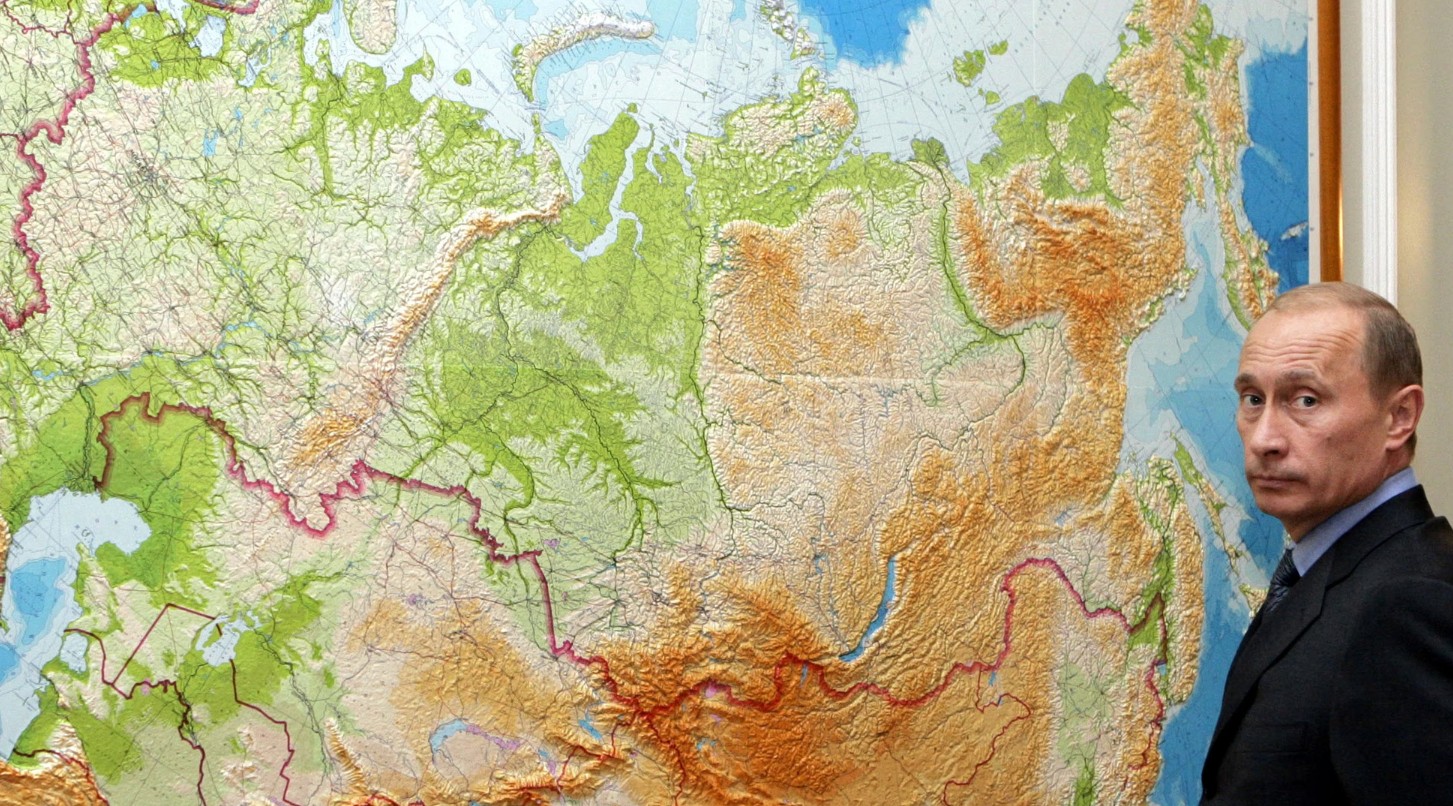
Image Source: Reuters