Middle Powers in Flux- The strategic autonomy dilemma of Turkey, Brazil, and South Africa
The post-Cold War era has been marked by rapid change in global geopolitics, with a steady transition from the USA’s unipolar moment to a multipolar world and the creation of new alliances for trade as well as military purposes. In such a g...
Understanding Strategic Autonomy
Despite the growing popularity of this term, the concept remains under-theorised. Given its multiple interpretations, it becomes difficult to identify whether a particular action of a State yielded positive or negative benefits. In simpler words, whether strategic autonomy helped the State grow or not. The earliest origin of the term strategic autonomy can be seen in French foreign policy after the Second World War, under Charles de Gaulle in the 1960s.[1] This was designed to reduce Europe’s dependence on the US in the post-war era. The next phase of strategic autonomy was carried out under the banner of the Non-Aligned Movement (NAM) by newly decolonised countries. The main purpose of NAM was to avoid joining any of the then superpowers, i.e. the USA and USSR, and giving up on the newly realised freedom.
Presently, strategic autonomy refers to the ability to shape and execute preferred policies despite external pressures, especially from dominant powers, and the capacity to choose such a path lies in the self-reliance capabilities of a nation[2]. While there is no fixed definition of strategic autonomy, this paper will use the above-mentioned explanation as a yardstick to understand the performance of Turkey, Brazil and South Africa, the emerging middle powers of the world.
Understanding Middle Powers
With the rise of new economies and changes brought by globalisation, the Bretton Woods System, i.e. organisations like the World Bank, International Monetary Fund and World Trade Organisation, have been unable to maintain their original mandates[3]. These organisations continue to be heavily dominated by the Global North countries while much of the current growth and population is in the Global South. Due to the archaic model on which these organisations were created, it is unable to deal with newer challenges. It is at this junction that middle powers come into play.
While middle powers are a contested term, it broadly refers to nations with considerable regional influence, with a well-established presence in international diplomacy, but lacking the contemporary force projection capabilities of superpowers[4]. Middle powers tend to carry out autonomous foreign policy, which mainly serves their national interests. One can refer to Daniell Fiot for his unique definition of autonomy in terms of responsibility, hedging and emancipation[5].
Middle Powers have always existed in differing contexts. But the pace of growth for middle powers depends on the geopolitical situation of the day. Only if the international architecture is designed in a manner that at least tolerates the activities of middle powers, then those nations have a better chance of growing and developing[6]. Given the autonomous stand middle powers prefer to take, they are good mediators to resolve conflicts and pave the way for multilateral cooperation. This paper will assess how Turkey, Brazil and South Africa have fared as emerging middle powers in a polarising world.
Deeper look into Turkey
Turkish foreign policy has been based on strategic autonomy in a post-Western world wherein it pursues its national interests and acts as an independent nation-state with regional/global engagements and aspirations. Turkey aims to use its strategic autonomy approach to be a ‘balancer, broker, mediator’ in geopolitical conflicts[7]. This approach has helped Turkey maintain a long-standing relationship with organisations like the European Union, NATO, and the Organisation of Islamic Countries. Since 2018, it has also shown interest in BRICS. Turkey’s foreign policy approach has proved to be both advantageous and disadvantageous, making it a thin rope to tread on.
Given the history between the Ottoman Empire and the Soviet Union, Turkey has always been cautious of Russia’s expansionist tendencies[8]. But given Turkey’s geographical position as well as economic needs, even the most pro-Western leaders have moved to maintain a functional relationship with Russia. The reason being that Turkey imports almost 50% of its natural gas from Russia[9]. But a large part of Turkey’s strategic autonomy is based on power plays within domestic politics. Turkey has developed close ties with Russia for the purpose of regime security, i.e., Moscow has actively lent its support to Erdogan’s presidential and parliamentary election bid in June 2023[10]. But such moves come at a price- alienation from NATO, which is a big security provider for Turkey, and its membership allows it to have an upper hand in its regional relations.
Turkey’s balancing act is not a result of choice, but rather necessity, due to its rising internal economic crisis. Hedging is the only viable solution to maintain its national interests. Turkey’s anti-Western attitude started in 2016 because of discontent. But such an attitude is selective and policy-focused. A grave mistake in this balancing act was the purchase of S-400 missiles from Russia, a direct breach of NATO policies[11]. This led to Turkey coming under the purview of CAATSA, an absolutely unfavourable position to be in. Currently, with the ongoing Ukraine-Russia war, Turkey’s balancing act has come into the limelight, as any misstep with Russia would mean going against NATO directly.
Deeper look into Brazil
Brazil, a major voice for Latin America and a founding member of BRICS, is an important middle power of the present day. Its foreign policy, especially under Lula de Silva and Dilma Rousseff, has been characterised by dualities like Monetarism v. Structuralism, Americanism v. Globalism, Acquiescence v. Autonomy[12]. These dualities point to Brazil’s long-standing ties with America and American values, but also with alternative powers like Russia and China. In 2024, Brazil celebrated bicentennial relations with the US and 50 years of ties with China[13]. Brazil has tried to move away from the Western-centric world and proposed the de-dollarisation of trade with China[14].
At the same time, Brazil was not very welcoming of the BRICS expansion with the addition of countries like Egypt, Ethiopia, Indonesia, Iran, and the UAE in 2024-25. For Brazil, such an expansion may reduce its influence in the group and tilt it more towards Russia and China. Keeping up with its strategic autonomy, Brazil was the only other country besides India to reject joining China’s Belt and Road Initiative. Brazilian foreign policy makers aim to expand external connections and ties while reducing their dependence on China’s influence in BRICS.
In short, reduce dependence on just one global superpower. Such an approach was demonstrated earlier in 2025, when Brazil, in a week, sent a delegation to the China-Latin America Summit in Beijing, where Lula de Silva was the guest of honour, as well as sent another delegation to Wall Street to strike new deals with investors[15]. Brazil is also one of the largest producers and exporters of agricultural products on the planet and has a rare case of a trade surplus with China, which is heavily dependent on Brazil for its agricultural produce[16]. This has been a good insulation against Trump’s erratic tariff policies. Given Brazil’s economy and position in global affairs, such a dual-track policy, which favours China politically but signs commercial deals with the US, serves it best.
Deeper look into South Africa
Like both Turkey and Brazil, South Africa also yearns to be a major influence in the African continent as an intermediary between the North and the South. As a decolonised country, South Africa’s foreign policy under Mandela and Mbeki was likened to a more expansive approach, like the concept of ‘manifest destiny’[17]. Its foreign policy is based on a ‘finely calibrated multi-alignment’ approach with bilateral ties with the US and EU as well as historical allies like Russia, China and Cuba[18].
South Africa has a clear policy of hedging by conducting military exercises with Germany, the US and France on one hand, as well as China, Russia, and Brazil on the other hand. Nevertheless, the Ukraine-Russia war has brought Pretoria under a newfound scrutiny as it abstained from the UN vote in 2022, providing a reason of friendship with both the nations, territorial sovereignty and commitment to a peaceful solution. This was negatively received by the world community and was amplified by the fact that South Africa hosted a joint military drill with Russia and China on the eve of the anniversary of the Ukraine-Russia war.
The 2022 abstention from the UN vote did not mirror South Africa’s trade policy, i.e. its major trading partners are the US and EU, and it has rather low trade with Russia. South Africa also benefits from preferential access to US markets for some of its export products under the African Growth and Opportunity Act (AGOA)[19]. But this is not tantamount to not cultivating relations with the non-Western world and BRICS nations.
Conclusion
This paper has assessed the role of middle powers like Turkey, Brazil and South Africa in flux and how they are faring in the balancing game. As mentioned in the beginning, strategic autonomy is used to make independent decisions and avoid external pressures, as it is based on the internal capacity and self-reliance capabilities of the State. It is evident from the above assessment that while strategic autonomy helps the countries make issue-based alliances, it is not a result of self-reliance, but rather the lack of it. All three countries have acute internal issues, be it political or economic and strategic autonomy provides a simple pathway to straddle through them and serve their national interests.
Endnotes
[1] Vu, Hoang Le Thai, Lan Di Ngo, and Thanh Tien Nguyen. ‘A Spectrum of Autonomy: Towards a Theoretical Framework of Strategic Autonomy’. International Journal, ahead of print, SAGE PublicationsSage UK: London, England, 15 May 2024. Sage UK: London, England. https://doi.org/10.1177/00207020241256000.
[2] Ibid
[3] Samson, Paul. ‘What Influence in a Multipolar World?’ Global Affairs, no. 1 (2024).
[4] Batool, Fareeha. ‘The Role of Middle Powers in Shaping a Multipolar World Order’. Modern Diplomacy, 17 September 2024. https://moderndiplomacy.eu/2024/09/17/the-role-of-middle-powers-in-shaping-a-multipolar-world-order/.
[5] Vu, Hoang Le Thai, Lan Di Ngo, and Thanh Tien Nguyen. ‘A Spectrum of Autonomy: Towards a Theoretical Framework of Strategic Autonomy’. International Journal, ahead of print, SAGE PublicationsSage UK: London, England, 15 May 2024. Sage UK: London, England. https://doi.org/10.1177/00207020241256000.
[6] Samson, Paul. ‘What Influence in a Multipolar World?’ Global Affairs, no. 1 (2024).
[7] Ayd?n-Düzgit, Senem, Mustafa Kutlay, and E. Fuat Keyman. “Strategic Autonomy in Turkish Foreign Policy in an Age of Multipolarity: Lineages and Contradictions of an Idea.” International Politics, published online November 1, 2024. https://doi.org/10.1057/s41311-024-00638-w
[8] Dalay, Galip. ‘Deciphering Turkey’s Geopolitical Balancing and Anti-Westernism in Its Relations with Russia’. Stiftung Wissenschaft und Politik (SWP). Accessed 23 August 2025. https://www.swp-berlin.org/publikation/deciphering-turkeys-geopolitical-balancing-and-anti-westernism-in-its-relations-with-russia.
[9] ‘Turkey’s Balancing Act: Navigating NATO, BRICS, and Other Global Partnerships | Wilson Center’. Accessed 23 August 2025. https://www.wilsoncenter.org/article/turkeys-balancing-act-navigating-nato-brics-and-other-global-partnerships.
[10] Ayd?n-Düzgit, Senem, Mustafa Kutlay, and E. Fuat Keyman. “Strategic Autonomy in Turkish Foreign Policy in an Age of Multipolarity: Lineages and Contradictions of an Idea.” International Politics, published online November 1, 2024. https://doi.org/10.1057/s41311-024-00638-w
[11] ‘Turkey’s Balancing Act: Navigating NATO, BRICS, and Other Global Partnerships | Wilson Center’. Accessed 23 August 2025. https://www.wilsoncenter.org/article/turkeys-balancing-act-navigating-nato-brics-and-other-global-partnerships.
[12] Milani, Carlos R. S., Leticia Pinheiro, and Maria Regina Soares De Lima. ‘Brazil’s Foreign Policy and the “Graduation Dilemma”’. International Affairs 93, no. 3 (2017): 585–605. https://doi.org/10.1093/ia/iix078.
[13] February 5, Fernanda Magnotta | and 2024. ‘A Balancing Act for Brazil’s Foreign Policy’. Americas Quarterly, n.d. Accessed 23 August 2025. https://www.americasquarterly.org/article/a-balancing-act-for-brazils-foreign-policy/.
[14] Giusto, Hedwig. ‘BRICS 2025: Brazil’s Balancing Act’. Foundation for European Progressive Studies, 26 June 2025. https://feps-europe.eu/brics-2025-brazils-balancing-act/.
[15] Global Financial Market Review. ‘Brazils Balancing Act Between US & China’. 22 May 2025. https://www.gfmreview.com/brazil-s-balancing-act-between-us-china.
[16] February 5, Fernanda Magnotta | and 2024. ‘A Balancing Act for Brazil’s Foreign Policy’. Americas Quarterly, n.d. Accessed 23 August 2025. https://www.americasquarterly.org/article/a-balancing-act-for-brazils-foreign-policy/.
[17] Ishmael, Len. "The New South in a Multipolar World: Multi-Alignment or Fence Sitting? Lessons from South Africa, India, and others." Policy Center for the New South, Policy Paper No. 16/23, October 2023. https://www.policycenter.ma/sites/default/files/2023-10/PP_16-23_Len%20Ishmael%20VF.pdf
[18] Ishmael, Len. "The New South in a Multipolar World: Multi-Alignment or Fence Sitting? Lessons from South Africa, India, and others." Policy Center for the New South, Policy Paper No. 16/23, October 2023. https://www.policycenter.ma/sites/default/files/2023-10/PP_16-23_Len%20Ishmael%20VF.pdf
[19] Fabricius, Peter. “South Africa Walks a Tightrope of International Alliances: It Needs Russia, China and the West.” The Conversation, May 22, 2023. https://theconversation.com/south-africa-walks-a-tightrope-of-international-alliances-it-needs-russia-china-and-the-west-204052
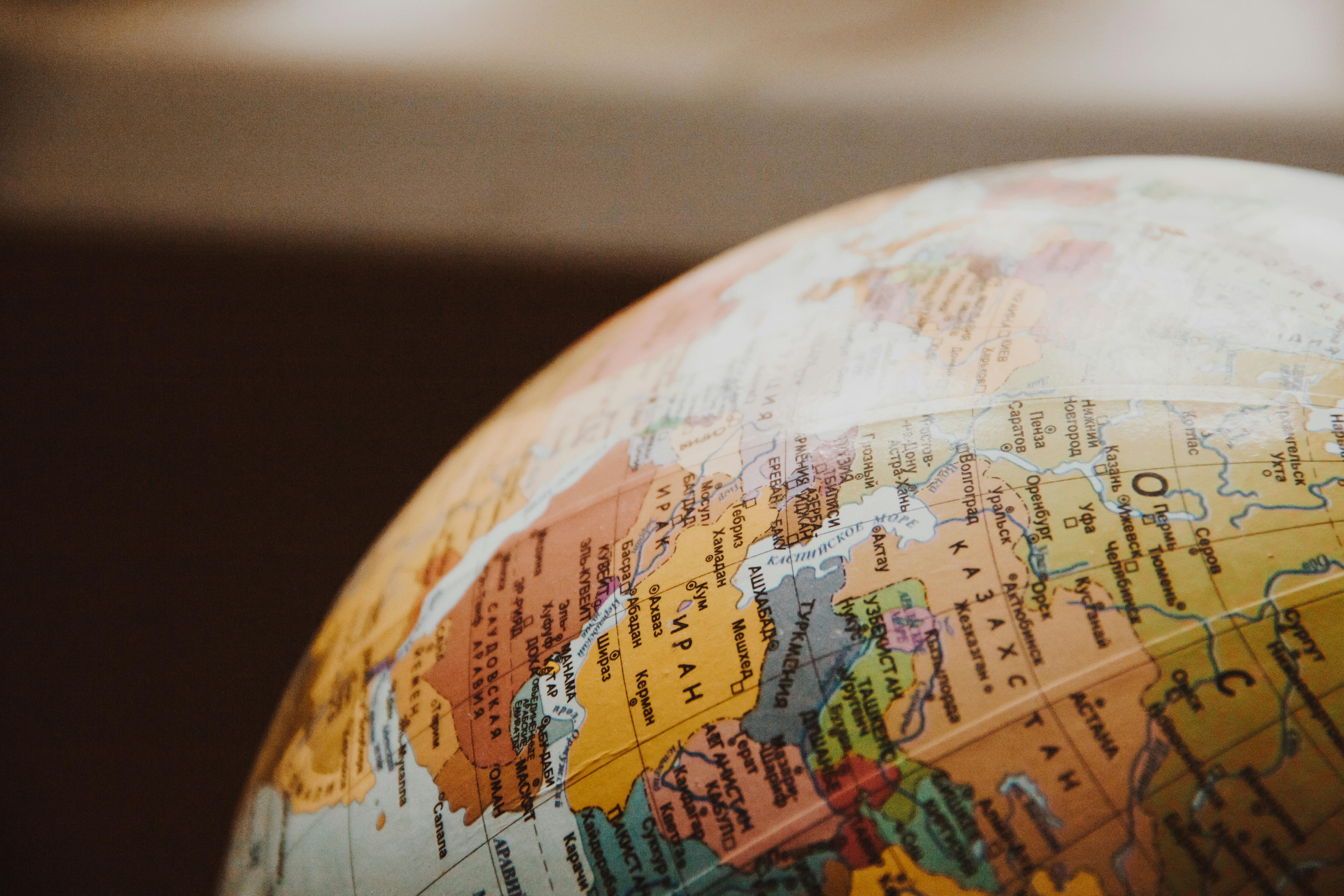
Photo by NastyaSensei: https://www.pexels.com/photo/close-up-of-globe-335393/
(The views expressed are those of the author and do not represent the views of CESCUBE.

Kinnori Mukherjee is currently pursuing a Master’s degree in International Studies at Christ University, Bangalore. She has completed her Bachelor’s from Fergusson College with a Major in German Language and Minors in Political Science and Economics. Her core interests lie in diplomacy, consulting, and socially impactful research. She also aspires to contribute towards strengthening the Indo-German partnership and, in the long term, advancing Indo-European relations.