The Future of Nuclear Deterrence in Multipolar World: India’s Strategic Posture among Emerging Technologies
This article examines the evolving dynamics of nuclear deterrence in an increasingly multipolar international system, where emerging technologies and shifting geopolitical alignments are reshaping strategic stability. Focusing on India’s po...
Historical concepts of nuclear deterrence and strategic stability has been raised into question by the emergence of new strategic technologies and the increasing multipolarity in international security.[1] The introduction of nuclear weapons and the military deterrence concept has simultaneously given rise to the idea of nuclear deterrence.[2] Limited nuclear use has become more likely, as nuclear weapon states have grown and bipolarity has ended. While the US and the Soviet Union both contemplated limited nuclear war options during the cold war, the emergence of multiple regional nuclear powers with justifications of first use has increased the likelihood of conflict.[3]
Military strategists and policymakers may aim for strategic security in areas where nuclear weapons are present and unlikely to be eliminated. When there is an underlying political issue between states that they have failed to resolved, maintaining strategic security may be more difficult. In context of South Asia, the risk of deterrence failure is higher than one might anticipate, due to the clashes between India and Pakistan since 1947.[4] The situation is extremely complex given the increasing number of actors and their divergent ideas of how to establish nuclear deterrence. [5]
India’s Nuclear Deterrence Strategy
Three rivalries including India, China and Pakistan that overlap and create an intricate dynamic that surrounds India’s nuclear deterrence. India has a stake in maintaining peace, stability and tranquillity on the subcontinent, because it is a status quo power.[6] The 1999 draft nuclear doctrine and its implementation in 2003, mandated that India establish a credible minimum deterrence and refrain from using nuclear weapons first.[7] In order to guarantee reprisal for any attacks against its vital interests, India maintains a posture of deterrence with consequences, in addition to an assured retaliatory capacity. A significant geostrategic concern is comprehending how New Delhi views its own strategic environment in relation to China and Pakistan. The policymakers need to change their perspective to safeguard its critical interests.[8]
Nuclear Deterrence in Multipolar World
Power disparities between states, the growing proportions of arms and the lack of moderating influences have revealed underlying tensions in the global systems, and raised the risk of conflict. Presently, nuclear deterrence can only be effective when partnered with agreements, restrictions and accountability.[9] More states with a range of nuclear capabilities acquired nuclear weapons after the end of cold war. Since nations must manage intricate political relations while analysing their nuclear capabilities with their rivals, the multipolar imbalance made deterrence operations more difficult.[10] Regardless the framework of international system, states interaction with one another will determine how it directly affects the advancement in nuclear power sector. It is nearly impossible to predict how the international system will develop in the future, where patterns in multipolar nuclear world would go or influence other.[11]
How India nuclear deterrence is evolving with emerging Technologies?
Improving the technological complexity of nuclear delivery system and enhancing their survivability, India has consistently worked to establish a strong nuclear deterrence. It has developed a limited ballistic missile defence program, Multiple Re-entry Launch Vehicles (MIRV), a sea-based nuclear trajectory, long range ballistic missiles and control system.[12] Cyber weapons and electronic warfare systems will be added to these systems, resulting in the use of GPS-denied settings. Future weapons platform will be autonomous system that can recognize, choose and eliminate targets on their own without human assistance.[13] India demonstrated its aggressive use of swarm drones in January, 2021. A total of 75 drones are used, including armed and surveillance drones.[14] India’s AI Task Force is developing autonomous underwater vehicles like Matsya and surveillance system Multi-Agent Robotics Framework (MARF), which can function with little assistance from humans, increasing the possibility of unintentional encounters and escalation. By offering safe communication and offensive options to target enemy assets, these developments increase India’s operational effectiveness and strengthen its cyberwarfare capabilities.[15]
South Asian Security Architecture
Traditional and non-traditional dangers are part of the complex security architecture of South Asia. One such frontier is Indian Ocean, which is emerging as the next target of the South Asia competition that has exited for a decade. With the assistance of various allies or by deploying naval forces, major powers are exploiting the Indian Ocean to demonstrate their supremacy.[16] The two nuclear armed adversaries with the history of hostility India and Pakistan is due to the long-running territorial conflicts, and India’s hostility towards China has created a new front in the conflict. In the future years, both countries will place a greater emphasis on developing their military capabilities, with particular focus on areas like semiconductors, drones and AI powered combat robots.[17] Nevertheless, there are not many successful bilateral or regional framework that can regulate how the states handle nuclear security in the South Asian region. From the perspective of South Asia, the nuclear deterrence approach increases broader insecurity.[18]
Conclusion
Many common interests and the current restraints on nuclear non-proliferation mechanisms are expected to vanish along with the new global social structure. Technological restraints are vanishing due to unstoppable scientific advancement, which also encourage the creation of nuclear weapons, even by medium technology governments.[19] The number of nuclear armed states is still small and the nuclear deterrence is still in place despite rising tensions and unsettling tendencies. Ironically, it seems that the more we live in a technically advanced society, the less trustworthy information remains. However, lowering the possibility of nuclear escalation brought on by AI-enabled weapons is still a real issue.[20] In order to enhance national security in the future decades, India has indicated a strategic shift towards integrated deterrence by merging nuclear resilience, electronic warfare and unmanned attacks platforms in its Technology Perspective and Capability Roadmap (TPCR)-2025. By reducing reliance on imports, these measures are keeping with government’s goal for self-sufficiency in defense production.[21]
Endnotes
[1] Dr John Borrie, “Human Rationality and Nuclear Deterrence”, Chatham House, April 20, 2020. https://www.chathamhouse.org/2020/04/perspectives-nuclear-deterrence-21st-century-0/human-rationality-and-nuclear-deterrence.
[2] Alexey Arbatov, “Nuclear Deterrence: A Guarantee or Threat to Strategic Stability?”, Carnegie Endowment for International Peace, March 22, 2019.https://carnegieendowment.org/research/2019/01/nuclear-deterrence-a-guarantee-or-threat-to-strategic-stability?lang=en.
[3] Dr Maria Rost Rublee, “Nuclear Deterrence Destabilized”, Chatham House, April 20, 2020. https://www.chathamhouse.org/2020/04/perspectives-nuclear-deterrence-21st-century-0/nuclear-deterrence-destabilized.
[4] Antoine Levesques, Desmond Bowen and John H. Gill, “Nuclear Deterrence and Stability in South Asia: Perceptions and Realities”, The International Institute for Strategic Studies, May, 2021. https://www.iiss.org/globalassets/media-library---content--migration/files/research-papers/nuclear-deterrence-and-stability-in-south-asia---perceptions-and-realities.pdf.
[5] Manpreet Sethi, “Understanding the Nuclear Landscape in Southern Asia: Complexities and Possibilities”, Journal for Peace and Nuclear Disarmament, December 11, 2022. https://www.tandfonline.com/doi/epdf/10.1080/25751654.2022.2156253?needAccess=true.
[6] Arun Prakash, “India’s Nuclear Deterrence: The More Things Change”, S. Rajaratnam School of International Studies, March 2014. https://www.jstor.org/stable/pdf/resrep05863.pdf.
[7] Shahid Iqbal, “Locating Shifting Trends in India’s Nuclear Doctrine”, Indian Journal of Asian Affairs, 2023. https://www.jstor.org/stable/27307176.
[8] Alex Alfirraz Scheers, “Understanding India’s Approach to Nuclear Strategy”, The Diplomat, November 6, 2024. https://thediplomat.com/2024/11/understanding-indias-approach-to-nuclear-strategy/.
[9][9] Vice Admiral Vijay Shankar, “The Challenge of a Multi-Polar Nuclear Age”, Institute of Peace and Conflict Studies, June, 2022. https://www.ipcs.org/comm_select.php?articleNo=5819.
[10] Dr. Vipin Narang, “The Challenges of Multipolar Deterrence: Theory and Evidence”, NSI, September, 2021. https://nsiteam.com/social/the-challenges-of-multipolar-deterrence-theory-and-evidence/.
[11] Robert Legvold, “The Challenges of a Multipolar Nuclear World in a Shifting International Context”, American Academy of Arts & Sciences. https://www.amacad.org/publication/nuclear-weapons-changing-global-order/section/3.
[12] Harsh V. Pant, Yogesh Joshi, “Emerging technologies and India’s nuclear deterrence”, ORF, February 5, 2019. https://www.orfonline.org/expert-speak/emerging-technologies-india-nuclear-deterrence-47812.
[13] Akshat Upadhyay, “Likely impact of emerging technologies on India’s nuclear arsenal”, ORF, May 10, 2023. https://www.orfonline.org/expert-speak/likely-impact-of-emerging-technologies-on-indias-nuclear-arsenal.
[14] Abdul Moiz Khan, “Emerging Technologies and The Nuclear Responsibilities Approach”, BASIC, February 14, 2022. https://basicint.org/emerging-technologies-and-the-nuclear-responsibilities-approach/.
[15] Zamzam Channa, “Indian Acquisition of Emerging Technologies: Exploring Response Options for Pakistan”, The Defence Horizon General, March 8, 2025. https://tdhj.org/blog/post/india-pakistan-edt/.
[16] Ahyousha Khan, Nuclear Deterrence and Action-Reaction Paradigm in the Indian Ocean”, Modern Diplomacy, June 25, 2018. https://moderndiplomacy.eu/2018/06/25/nuclear-deterrence-and-action-reaction-paradigm-in-the-indian-ocean/.
[17] Sarmad Ali Khan, Desiree Di Marco, Marta Nuevo Falguera , Noor-ul-Huda Atif, Bakhtawar Pervaiz “Deterrence Stability in South Asia and Beyond”, International Institute for Global Strategic Analysis, September, 2022. https://www.researchgate.net/publication/363640306_Deterrence_Stability_in_South_Asia_and_Beyond.
[18] Venkkat G., “Nuclear Deterrence in South Asia: Enhancing Security or Insecurity?”, South Asia Journal, September 12, 2021. https://southasiajournal.net/nuclear-deterrence-in-south-asia-enhancing-security-or-insecurity/.
[19] Carlos J. Frías Sánchez, “The future of nuclear deterrence: an analysis of the strategies of major nuclear powers”, Instituto Espanol de Estudios Estrategicos, 2025. https://www.defensa.gob.es/documents/2073105/2907072/el_futuro_de_la_disuasion_nuclear_2025_dieeea61_eng.pdf/6b672d21-9f07-e95d-8c16-375ff30dfa91?t=1759225732292.
[20] Patrick M. Cronin, “The Future of Nuclear Deterrence in the Indo-Pacific”, Perry World House, May 19, 2025. https://perryworldhouse.upenn.edu/news-and-insight/the-future-of-nuclear-deterrence-in-the-indo-pacific/.
[21] Saurabh Trivedi, “India unveils roadmap to strengthen nuclear deterrence, drone warfare capabilities”, The Hindu, September 5, 2025. https://www.thehindu.com/news/national/india-unveils-roadmap-to-strengthen-nuclear-deterrence-drone-warfare-capabilities/article70016263.ece.
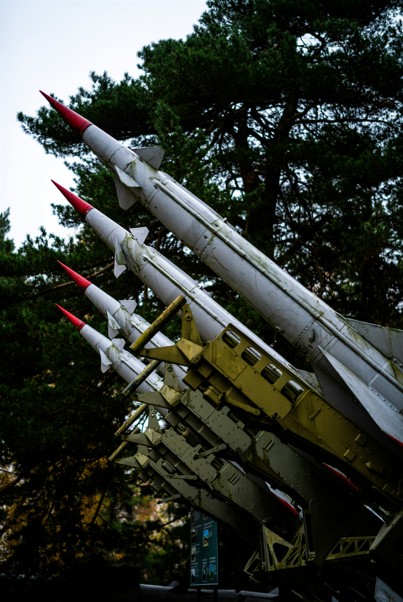
Photo by German Krupenin on Unsplash
(The views expressed are those of the author and do not represent the views of CESCUBE)

Kushmita Kapoor is a postgraduate in Politics and International Relations with a particular interest in international security, geopolitics, and strategic policy frameworks. She has previously interned at the Future of India Foundation, where she engaged in policy-oriented research and gained hands-on experience in data analysis and policy research. Skilled in OSINT, GIS tools, and multilingual research, she brings a strong analytical lens to the study of strategic policy.