The Politics of Ali Khamenei's Funeral
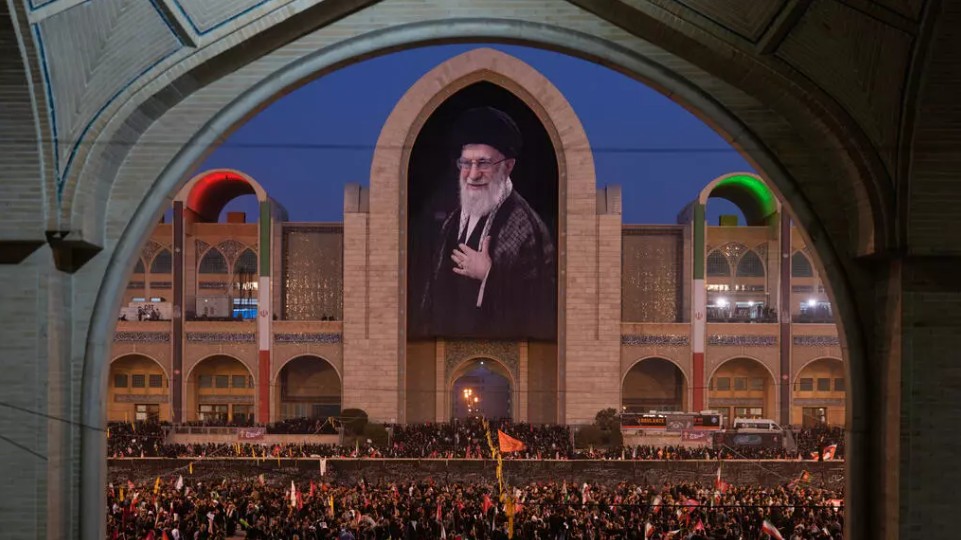
On July 4, Tehran's Grand Mosalla Mosque saw millions gather ahead of the multi-day state funeral procession of Supreme Leader Ali Khamenei. However, in a crucial game of optics, the funeral also revealed Iran's current political standing in power and allyship, uncovering critical alliances of the region. While the presence of the participating world leaders was telling of their degree of support for the Islamic state, the absences were loud.
Amid the trade of strikes between the US and Iran - after the ceasefire fell apart, the revered Ayatollah Ali Khamenei was buried in his hometown, Mashhad. The funeral programme was nothing short of a grandly choreographed, well-planned event that carried important diplomatic connotations from Iran to the world.
Striking the supreme leader of a country was perhaps not the best step of strategic strength as was viewed when he was assassinated through a joint targeted operation by US-Israel against Iran on February 28th, 2026. But the action was undertaken expecting that the goal of regime change may not be a far-fetched idea since the Iranians in January 2026 were engaged in severe protests against the theocratic leaders.
However, as per predicted analysis by political and behavioural theorists, instead of the expected widespread hopelessness across Iran or a desire for regime change, this move built robust unity on a common front of martyrdom and anger against ‘Shaitaan’ - the US, as was branded by the late Ayatollah himself.
“It was just a remarkable show of unity and cooperation, centered around this funeral services.” (Reza Sayah, Democracy Now).
Khamenei’s funeral began with his coffin laid for display alongside coffins of his eldest daughter, son-in-law, daughter-in-law and his 14-month-old granddaughter. The sheer volume of masses that have gathered for mourning is evidence of this unity, the well sustained and pent-up resentment against the joint military-campaigners, even after 100+ days of Khamenei’s demise. It is to be noted that these crowds entailed not just the religious followers of the spiritual leader that he was, but also consisted of a secular section of people - those who appeared in solidarity with the mourners as voices of anti-imperialism, anti-war and anti-colonialism. Amidst all this, Khamenei hence emerged as a leader of not just the Shia-scholarship but of political resistance to hegemons in the West or aspiring hegemons in the Middle East. As is believed by many, this war has been a powerful portrayal of the tenacious energy of the body of Iran that has been able to survive and counter-attack without its head. However, while millions did pour into the streets for the funeral, it should be noted that this number cannot be taken as a unanimous voice of all Iranians, since it is a country of 93 million people. Iran also strategically opened itself up for international media houses and influencers, and ensured extensive coverage of the multi-day programme, turning the funeral into a media event. As the NY Times mentions, they were invited to cover the event.
When the Optics Matter
The funeral has been a strong insight of Iran’s friends, foes and those on the fence. Some nations were represented by their highest officials attending the service, while others chose to send a delegation on behalf of their leader. It can be deemed nothing short of a loyalty test and a diplomatic audit. Let us look at some of those who attended and why it matters;
Pakistan
Pakistan is home to the world’s second largest Shia population after Iran, and both share a substantial stretch of border. Iran’s state-owned media, IRNA, reported that Pakistan was among the few countries that expressed solid support by sending a very high-level delegation, i.e. Pakistan’s Prime Minister Shehbaz Sharif and Chief of Defense Forces Field Marshal Asim Munir. Pakistan’s choice of complete visibility was a show of unity with Iran, apart from Pakistan’s national interests around energy trade, border security and security from a hostile Afghanistan.
Iraq
Iraq sending its highest-level representation is a testament to the deep political, economic and religious ties they share with each other, despite a turbulent past. The slain leader’s body has been taken through the holy cities of Najaf and Karbala - major pilgrimage sites for Shia Muslims - as part of the multi-day state funeral services. President Nizar Amidi was present to pay his respects to the Ayatollah in Tehran. Soon after, in mid-July, Prime Minister of Iraq - Ali Al-Zaidi - met with the President of the United States to crack bilateral deals on energy.
Tajikistan
Iran and Tajikistan - the poorest country in Central Asia - share closely bonded cultural and ideological ties. Iran was the first to open its embassy in the newly independent post soviet nation. It was also a significant mediator in Tajikistan’s civil war. President of Tajikistan Emomali Rahmon personally attended the Tehran service for Khamenei.
Armenia
Prime Minister of Armenia Nikol Pashinyan represented his country at the commemoration. Armenia is a vital strategic buffer, especially in times when Turkiye and Israel are aspiring for a dominant position in the Middle East as well as Azerbaijan's growing influence. They also have an important energy trade rapport -natural gas in exchange for electricity.
Georgia
Georgian President Mikheil Kavelashvili attended the commemoration as well. With Georgia distancing itself from the West under its current regime, room for relations with Russia and West Asia has widened. The two countries share economic, cultural and educational ties amidst other trade and transit (including construction material, petroleum); Iran also depends heavily on the financial sector of Georgia to bypass international restrictions.
Saudi Arabia
In a surprise visit, the foreign minister-led delegation of Saudi Arabia attended the funeral, despite tensions and fragile trust. Condemning Iranian attacks on Jordan, Kuwait and Bahrain, the Saudi Foreign Ministry said that this was violence against the sovereignty of “brotherly countries”, calling for an immediate halt to all Iranian attacks on countries in the GCC region. Riyadh’s presence at the funeral was indicative of the firm support for de-escalation of war, as it resists west approaches like a proposed US-led maritime security operation in the Strait of Hormuz while also not fully stepping in as a mediator. This seems symbolic of Riyadh’s eager future aspirations of brotherly peace in West Asia with lesser interference from the West.
Russia, China and India
Russian Security Council Deputy Chairman and former Russian President Dmitry Medvedev led the Russian delegation at the funeral. Vice Chairman of China's National People's Congress Standing Committee He Wei visited Tehran on behalf of China. Both Russia and China chose high-level officials to represent their respective countries. Their attendance as two powerful Asian countries of Asia and a somewhat-counter-bloc to the US in their own capacities made a significant difference. Apart from their relationship and diplomatic commitments to Iran, their presence speaks of defiance when it comes to Western influence or interference. India chose to send a high-level delegation of officials that entailed the Union Minister of State for External Affairs- Pabitra Margherita and the Governor of Bihar- Syed Ata Hasnain. Mehbooba Mufti, PDP Chief, also travelled to Tehran as part of a multi-faith delegation, and was officially invited by Iran along with five Shia clerics from Jammu & Kashmir.
Amongst others who sent senior officials were Turkey, Afghanistan and Bangladesh. Also present were representatives of the anti-Israel ‘axis of resistance’ backed by Iran - Lebanon’s Hezbollah, Palestinian Hamas and Yemen’s Houthis as well.
The Presence of Absence
As per Iranian media, 13 countries withdrew their attendance from the funeral service for foreign officials due to pressure and diplomatic warnings issued by the US. Tasnim news agency claimed that two Arab diplomats among five confirmed that they were contacted by Secretary Marco Rubio, who dissuaded them from attending the funeral lest it have a grave impact on their bilateral relations with the US.
“The report said at least 13 countries either backed out or withdrew their representation from the funeral in Tehran, including three Eastern European nations, five African states, two Persian Gulf Arab countries, and two major East Asian nations.”
(Indian Express, July 7th, 2026)
US, Israel, the UK, Canada, and Australia chose absolute absence from the services in Tehran. Almost a year ago, and for the first time, Australia expelled the Iranian Ambassador in the country, stating that Iran most likely is involved in funding antisemitic attacks in Australia. UK has explicitly stated its stance on Iran’s possession of nuclear possessions and stands with the US while supporting a de-escalation of violence and negotiations. British typhoons and jets have been used in the war to target coalition bases, intercept drones and missiles to ensure ‘collective defence’ of regional allies, not necessarily to back the US or Israel, as stated by Keir Starmer. Canada has called Iran the “principal source of instability and terror throughout the middle east..” and while calling for negotiations and a ceasefire, firmly states that it must never be allowed to have a nuclear programme, affirming Israel's right to defend itself and expressing support for the US in its pursuit of peace.
The Loudest Silence - Mojtaba
Mojtaba Khamenei’s absence is the most striking and mysterious factor in the funeral services. Hopes of finally seeing the new supreme leader were quashed, with his total absence (not just physical but even through a recorded, digital or written message). This comes with Ali Khamenei’s three other sons being present and actively participating in the services. Only the late Ali Khamenei’s grandson spoke on behalf of Mojtaba. The last word on him had come from the President of Iran in May, who said Mojtaba had been recovering from the injuries he sustained from the strikes that killed his father. By his position, he is to be the political, religious, strategic and revolutionary head of Iran, especially in the turbulent times of war, but his whereabouts have sparked debates and rumours on whether he really is around. There is widespread discontent, frustration and rising insecurity in the public regarding the power vacuum. Those offering explanations have vouched for Mojtaba, saying his absence stands justified due to the high security threat he faces from the adversaries. This was all, however, a schism in the mirror, because while this humongous origami projected Iran’s strength and stability, it also was a peek into its shrinking regime and internal weakness.
Symbolism in the Processions
The funeral processions carried heavy symbolism, such as direct death threats to President Trump via chants and banners, and disfiguration of his posters. The delegations were met with Qur’anic verses each, believed to be political messages. Backpacks with the number 168 painted on them were carried by many, denoting the 168 children who died when an Iranian school was struck in one of the first attacks. Closed fists in pictures, sculptures and action were seen throughout, denoting defiance to the offenders. Safe to say that the funeral was a political event.
Conclusion:
What the funeral showed beyond the friendships and alliances was the state of the Islamic Republic. It projected Iran’s ability to have been able to continue surviving and endure the offences against it. The mission looks accomplished with wide media coverage, outpour of immense grief and Iran’s message to the world on its international relations with states across the world. However, one cannot unsee the cracks in the mass strength of the multitudes that followed the Ayatollah’s coffin, which show a deeply polarised society in Iran, alongside which, the strangest issue is that of the new leader’s absence. Amidst fresh strikes and Trump stating the ceasefire is ‘over’ and calling Iranians derogatory names, a predictable and robust future remains a far-sighted possibility.
(The views expressed are those of the author and do not represent the views of CESCUBE)
Image Source: France24, https://www.france24.com/en/middle-east/20260704-hezbollah-hamas-and-houthi-officials-attend-funeral-ceremonies-for-iran-s-khamenei