The Role of Non-State Actors in Sustaining Low-Intensity Conflict in South Asia
Low-intensity conflicts (LICs) have become a persistent feature of South Asia’s security landscape, operating below the threshold of conventional warfare while sustaining long-term instability across the region. This article examines the role of non-state actors (NSAs), including terrorist organisations, insurgent groups, extremist networks, and criminal–terror nexuses in perpetuating these conflicts. It argues that NSAs function not merely as independent security threats but as instruments embedded within broader interstate rivalries and regional power politics. By analysing cases from across South Asia, including Afghanistan, Pakistan, India, Bangladesh, Sri Lanka, Nepal, and the Maldives, the study highlights how ideological mobilization, identity politics, and proxy warfare dynamics enable states to pursue strategic objectives while maintaining plausible deniability and avoiding direct military confrontation. The article further explores how the continued reliance on such actors complicates regional stability, undermines institutional cooperation frameworks such as SAARC, and contributes to transnational networks of terrorism and illicit financing. Ultimately, the paper contends that unless South Asian states move beyond proxy strategies and address the structural political, economic, and ideological drivers of recruitment into these networks, low-intensity conflicts will remain a defining feature of the region’s geopolitical order.
The South Asian region is an immensely strategic and important zone for the entire world, primarily owing to the innumerable communication and trading routes from West Asia to the Far East passing through this region. Also, two of the more popular nations in South Asia are nuclear states. Yet, strangely enough, it continues to remain in a state of profound political flux. Once characterised by a stable, even if fragile, regional order, anchored in a form of leadership with predictable alignments and managed rivalries, the region is now defined by uncertainty and overlapping crises. At the core of this transformation lies the primary link between labile domestic political state and the regional geopolitical competition, which only lead to several sustained low-intensity conflicts across the region. Unlike traditional warfare, low-intensity conflicts continue to operate below the threshold of direct standard warfare, existing as a prolonged second layer of a politically calculated society, its existence often serving as a means for asymmetric engagement through indirect means, involving not only the states but a certain number of third-party actors who are not a part of the State or the conflict, at times.
These third-party actors, known as ‘non-state actors’ are more often than not at the centre of this security environment, functioning not only as rogue entities of the political system, but also as more deeply embedded components of the regional stability block. Today, South Asia evokes the image of an area plagued by terrorist organisations, insurgency groups, non-state militias and even transnational extremist networks, who continue to sustain cycles of violence through a pattern of cross-border terrorism, inciting internal insurgencies and even fuelling proxy warfare dynamics. The role of such non-state actors are not isolated security threats, rather they operate within or often instrumentalised by the numerous interstate rivalries in South Asia, a conventional characteristic of low-intensity conflicts. Their existence often allows the states to pursue their strategic political agendas while avoiding the costs of full-scale war, setting up a scene of rigorous low scale conflict continuing to exist throughout the region.
South Asia has been in political highlight in the recent decades due to the increased activities of extremist groups such as the Taliban, Al-Qaeda, and Lashkar-e-Toiba, even Maoist groups and groups such as the LTTE running riots in large parts of the territory, pursuing their own separatist agendas across the region. This environment of terror has completely overshadowed the fact that almost all the South Asian economies have been developing at a fast pace and even have the potential to grow faster if they were not in a constant state of political disturbance by frequent acts of insurgencies.
Though terrorism has plagued the region for the last several decades, the global conception of counter-terrorism has not exactly been such a phenomenon of success in the South Asian context, a region which probably needs such counter measures the most. Most South Asian nations are still facing the problems of terrorism in recent decades and if anything, the problem has only intensified in the post-COVID era.
While the causes of existence of such Non-State Actors (NSAs) vary from country to country, in the South Asian context, such groups and networks can be placed in categories such as —
A) Terrorism arising out of religious fundamentalism
B) Left-wing extremism
C) Insurgency networks resulting from demands for secession
D) Criminal-Terror nexuses involved in arms and narcotics trafficking
Now, from a real-world perspective, in the context of low-intensity conflicts in South Asia, it has been seen that states tend to make use of such NSAs as strategic tools to offset conventional disadvantages. Proxy warfare sourced and often manipulated by such third-party actors allows the governments to influence their political or regional adversaries without direct confrontation, such as the Islamist Jihadi movements backed by external actors keep the state of Jammu and Kashmir in a constant state of turmoil. As observed by Andrew Mumford in Proxy Warfare (2013), “indirect engagement reduces attribution and escalatory risk”, simply, deploying indirect roles of the NSAs in such low intensity conflicts, takes the weight of accountability of escalation off the States who get the edge to focus more on their strategic developments in the region next.
On the other hand, identity politics and ideological mobilization play a huge role as well since factors such as religious extremism, ethno-nationalism and historical grudges continue to act as drivers of political legitimacy across the region. Hence, in South Asia, both logics intersect in a way that allows NSAs to act simultaneously as both ideological propounds as well as political instruments within broader strategic calculations.
While discussing such NSA roles in sustained LICs across South Asia, we need to keep in mind the geopolitical dynamics and structural factors that the region continues to experience, playing an important role in the overall situation. Because this structural ambiguity with conflicts existing in the South Asian region is primarily a pattern that has been seen to affect the region in an interconnected mass network of terrorism and insurgency. Almost every country in South Asia is faced with the problem of terrorism and insurgencies, in one way or the other. Sri Lanka has had its share of dealing with insurgency networks such as the ‘Liberation Tigers of Tamil Eelam’ (LTTE), which it fortunately has been able to eliminate as a threat but continues to remain under the observation of military and governmental management as of 2025 with Sri Lanka having made notable strides in counterterrorism. The situation in Nepal has also had a rather interesting turn over the years when the Maoists, who were waging a war against the previous monarchical administration, and had also rebelled against the democratic structure that overtook the nation following the fall of the monarchy, had later well-integrated to be a part of the democratic process yet continued to practise terrorism as a form of violence, not as active anymore as of late. Terror history has managed to mark its initials in the Maldives as well, the country having seen a significant tide of Islamic extremism, primarily remaining as a hub of Islamic State (IS) operatives and Pakistan-based terrorist organisations, including narcotics smugglers with international linkages, sources even suggesting the possibility of a ‘Lashkar-e-Toiba’ (LeT) base in the region. Bhutan had been quite successful in dealing with insurgency networks in the decade of 2000s, having particularly dealt with groups such as the ‘United Liberation Front of Asom’ (ULFA) and few other such Indian North-Eastern secessionist groups, which later even tried to regroup in Bhutanese territories. Bhutan even faced significant threats from Maoist terror groups active in both India and Nepal.
Moving towards the more bigger regions, India has been long affected by sponsored terrorism from across the border, with Jihadi terror outfits and their frontal organisations executing well-coordinated terror attacks across the region. In fact, this is one country where terrorist outfits of all hues have been operating and as a result has also suffered the most. India as a country has been a priority target of global terrorist groups such as Al-Qaeda and the ‘Islamic State of Iraq and Syria’ (ISIS) for quite some time, who have continued to play extensive roles in inciting violence in the country on multiple occasions across the recent decade.
In Bangladesh, the government, while facing severe political instability across the last year following PM Hasina’s abdication, has tried acting against the Islamist radicals but groups like ‘Jamaat-ul-Mujahidden Bangladesh’ (JMB) and ‘Harkat-ul-Jihad-al-Islami’ (Huji) continue to remain active. Bangladesh also faces the problem of left-wing extremism in certain regions across the nation, but their influence seems to be receding since 2024 following the mass arrests of several terrorists and radicals belonging to groups like the Ansar al-Islam, ‘Jama’atul Ansar fil Hindal Sharqiya’ (JAFHS) and ‘Hizb-ut-Tahrir’ (HuT). Under the ongoing political mayhem in the country till before the recent elections, the caretaker government led by Mohammed Yunus and its radical cohorts were also trying to carve their own areas of influence, propagating their agenda for a totalitarian regime under the garb of a ‘welfare Islamic state’, which only pushed the country more at the mercy of extremist elements, a loop well-exploited as it seemed.
The most serious terror threat of all these countries however, continues to exist in Pakistan and Afghanistan. While the Taliban are active in both these countries, calling themselves the ‘Tehariq-e-Taliban’ in Pakistan, there are several other Islamist radicals existing across both regions, primarily in Pakistan. Pakistan has become one of the world’s centres of radical Islamic ideology and its terrorist adherent, with some of the main elements of Al-Qaeda and militant Islamic organizations using it as a base, along with groups such as ‘Lashkar-e-Taiba’ and ‘Jaish-e-Mohammed’ being accused of operating with varying degrees of violent tolerances, including the Baloch insurgency reflecting tensions over political autonomy across the neighbouring regions. In Afghanistan, the return of the Taliban to power has not only reshaped militant dynamics in the region, it has also strengthened the role of other such groups which weren't previously that active, such as the ‘Haqqani Network’ (HN) and the ‘Islamic State Khorasan Province’ (ISKP). Rightly predicted by scholar Rohan Gunaratna, we also currently see attacks by the ‘Tehariq-e-Taliban Pakistan’ (TTP) targeting Pakistan has surpassed the attacks by the ISKP, with the TTP attacks mounted from Afghanistan prompting a severe conflict between Afghanistan and Pakistan just a few days ago in March, 2026.
Incidents as such reflect how terrorism can function as a strategic signalling, by destabilizing adversaries and internationalising disputes, without formal declaration of open hostilities. This direct denial of state responsibility only complicates retaliation as the ambiguity of it all sustains low-intensity conflicts by preventing any decisive resolution. In this way, what happens is that NSAs become both foreign strategic instruments as well as domestic liability, because its strategic utility ensures its continuance.
The persistence of LICs, more so aided by the continuous presence of such NSAs carries serious consequences for the political stability and the geopolitical future of the region, because standing at the threshold of what might be the next World War, it is clear that these low-intensity conflicts are not only evolving and spreading out more, but these might soon be developing into full scale warfare which might not be the best scenario for a region barely stable in the first place. There is always the persistent threat of escalation between the nuclear-armed states of India and Pakistan, primarily owing to their cross-border proxy dynamics, while crisis instability following any form of terrorist or insurgency-based violence remains a recurring danger. It also undermines any regional cooperation frameworks such as the SAARC, which continues to remain largely ineffective in its plans owing to the political tensions of the region. Moreover, South Asia’s LIC environment also has a potent global effect, contributing to various transnational terrorism networks and illicit economies, such as informal ‘hawala’ networks complicating international counterterror financing opportunities and efforts.
What is most important in such a scenario is a disruption of this cycle of looping in NSAs as perpetual factors in aiding the persistence of LICs across the region, starting with the regional actors realising that they need to shift from reactive counter-terrorism to structural reforms now. A major step towards this has been the recognition of insurgents as so-called “freedom fighters” or terrorist organisations as forces that could serve the State even indirectly in any way by a large part of South Asia, which has led to clear-cut action against them. There needs to be better monitoring mechanisms accessible and usable by all countries of the region, starting with the SAARC Terrorism Monitoring Desk being finally upgraded into a full functional Regional Counter-Terrorism Centre, with the potential to serve as an open-source data bank for all the countries. Another very relevant need of the moment must be exploring people-centric counter-terrorism strategies since most such strategies continue to be state-centric that rely heavily on the usage of force, focusing more on the State’s ability to deal with such terrorist threats over incorporating an element of human security. Finally, there needs to be collective work by all the countries concerned on the agendas first because there are still great differences between member states in the region over various issues related to terrorism.
Modern day Low-intensity conflicts in South Asia and the involvement of Non-State Actors in it have a more complex and multidimensional character than realised. It is neither accidental or even episodic. It transcends borders and is more structurally devised that one might understand. It naturally sustains in a region such as this mainly because of the interactions between these NSAs and the interstate rivalries. The continuance of ambiguity and hybrid tactics only ensures that violence continues in prolonged and fragmented forms. Until regional actors move beyond the proxy logic and address the political grievances that lead to the recruitment of such NSAs into these regional conflict situations, low-intensity conflicts will only continue integrating itself as a dominant factor in South Asia’s political landscape. It is high time South Asia must decide whether it wishes to overpower terror or allow terror to overpower it.
REFERENCES:
1. Missaglia, Nicola and Jagannath Panda. “South Asia at a Turning Point: Instability, Competition and the Search for Order.” Italian Institute for International Political Studies (ISPI), January 27, 2026.
2. Banerjee, Dipankar. “Security Sector Governance in South Asia: An Introduction.” South Asian Survey, Vol. 16, No. 2, pg 171-185, 2009.
https://gsdrc.org/document-library/security-sector-governance-in-south-asia-an-introduction/
3. Mumford, Andrew. 2013.“Proxy Warfare.” Cambridge, UK: Polity Press.
4. D’Souza, Shanthie Mariet. “Countering Insurgencies, Terrorism and Violent Extremism in South Asia.” Small Wars & Insurgencies, Vol. 28 (1): 1-11.
https://www.tandfonline.com/doi/epdf/10.1080/09592318.2016.1266163?needAccess=true
5. Dr. Kumar, Anand. 2012. “The Terror Challenge in South Asia and Prospect of Regional Cooperation.” New Delhi: Pentagon Security International.
6. Curtis, Lisa. “Assessing the Terror Threat Landscape in South and Central Asia and Examining Opportunities for Cooperation.” Center for a New American Security. Testimony Before The House Committee On Foreign Affairs South And Central Asia Subcommittee. May 22, 2025.
https://s3.us-east-1.amazonaws.com/files.cnas.org/documents/HFAC-Testimony.Curtis.05.22.25.pdf
7. South Asia Terrorism Portal. “Sri Lanka: Terrorism Assessment.” February 26, 2026.
https://www.satp.org/terrorism-assessment/srilanka
8. South Asia Terrorism Portal. “Maldives: Terrorism Assessment.” February 26, 2026.
https://www.satp.org/terrorism-assessment/maldives
9. South Asia Terrorism Portal. “Bangladesh: Terrorism Assessment.” February 26, 2026.
https://www.satp.org/terrorism-assessment/bangladesh
10. Government of India, Ministry of Home Affairs. “National Counter-Terrorism Policy & Strategy.” 2026.
https://www.mha.gov.in/sites/default/files/PRAHAAREng_23022026.pdf
11. Gunaratna, Rohan. “Global Terrorism Forecast 2026.” RSIS Commentary, S. Rajaratnam School of International Studies, January 5, 2026.
https://rsis.edu.sg/rsis-publication/rsis/global-terrorism-forecast-2026/
12. Underhill, Natasha. 2014. “Pakistan: State Failure, Terrorism, and Insurgency in Context — Part 2.” In: Countering Global Terrorism and Insurgency. New Security Challenges Series. London: Palgrave Macmillan.
https://doi.org/10.1057/9781137383716_6
13. Ghani, Ejaz and Lakshmi Iyer. “Conflict and Development—Lessons from South Asia.” The World Bank. Economic Premise, 31. September, 2010.
(The views expressed are those of the author and do not represent the views of CESCUBE)
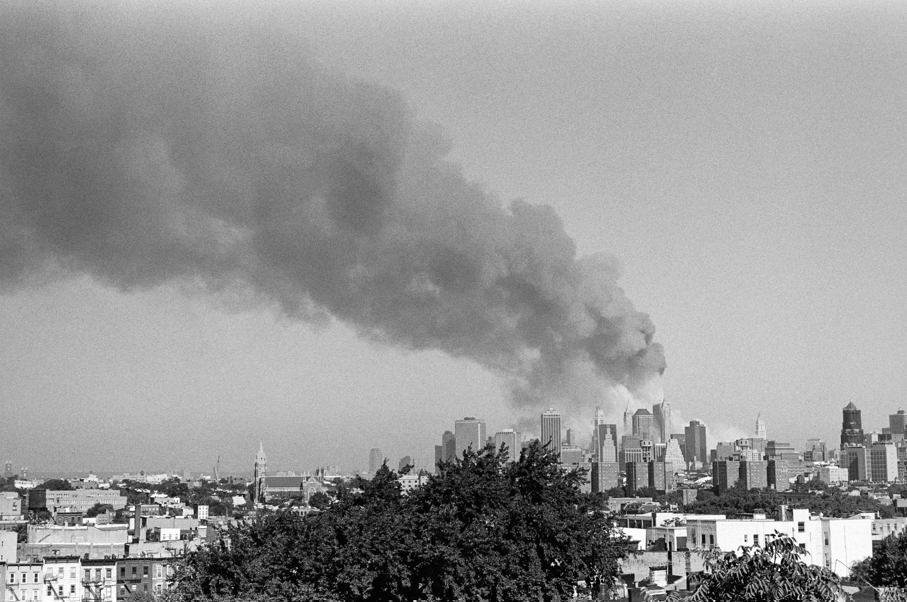
Image Source: Photo by Julien Maculan on Unsplash
Adrija Bhattacharjee is an undergraduate student of International Relations with research interests spanning security studies, geopolitics, public policy, and international law. With her minor in World History, her work engages with themes involving hybrid and grey-zone conflicts, border security and strategic studies surrounding South Asia and the Middle East. She is also interested in global governance, humanitarian issues, and policy-oriented research that bridges academic analysis with contemporary geopolitical developments. Adrija enjoys exploring how evolving political realities shape state behaviour and security strategies in the twenty-first century, on a global level.