Coalition Politics in West Asia: Implications for Multipolarity and Strategic Balancing
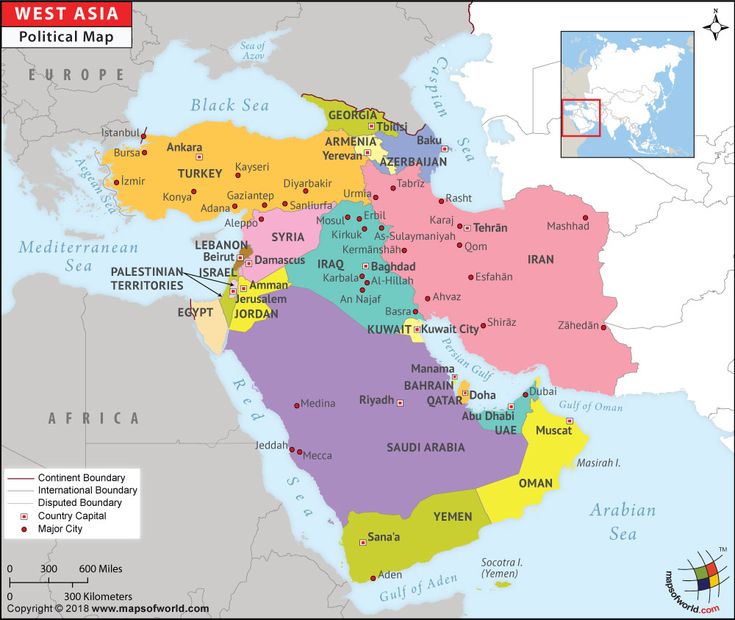
The West Asia region has fostered complex geopolitical tactics coupled with fragile alliances and coalitions. Coalition Politics in the Middle-East region, has comprised of many volatile and make-shift alliances over the years between state...
The region’s pivot towards a multipolar dynamic, with the decreasing influence of the U.S. and the evolution of China and Russia as firm powers both in the region and global geopolitical setting. The trends also reflect a rise of middle powers in the region like Iran, Israel and Turkey. These changes in the region reflect the shifting global order which is transitioning towards a scenario with multiple contenders to the hegemonic throne. A dynamic battlefield with evolving structures pushes these middle powers to work on foreign policies that incorporate multiple alliances and geopolitical hedging strategies both against the hegemonic and regional contenders.
Some of the evidences from the contemporary times are the Abraham Accords and the rapprochement deal between Saudi Arabia and Iran which was brokered by China, highlighting how there is an assertion of the new hegemonic contenders who intervene in regional politics to create an influence. However, there are rivalries and proxy conflicts that have sustained through the contemporary times based on ideological differences that have existed for centuries like the Iran’s idea of the “Crescent of the Shia”. The article examines these coalitions, the evolution, the various manifestations, and the impact that it has on the current geopolitical scenario.
Coalition Politics: A Historical Evolution
The coalitions in the Middle East have persisted to tackle hegemony, in order to preserve the geographic significance and civilisational credibility that the region holds. The Cold War witnessed alignments based on evolving pragmatism and dynamism as the Arab loyalties kept swinging between the U.S and Soviet Union. The fall of the Soviet Union catalysed the increasing interference of U.S. in the region, employing alliances and interventions, with the primary objective of securing the abundant resources, constrain Iranian rise, and facilitate a better Israel-Arab relations.
This framework was disrupted as the Arab Spring occurred in 2011, leading to local cooperative frameworks. A few instances which highlighted this phenomenon were the suspension of Syria by the Arab League, support to the Libyan intervention and the Gulf Cooperation Council’s intervention in Bahrain and mediation in Yemen. This change rooted in the insecurities vested in protests and rise of the Islamic elements like Iran and Muslim Brotherhood and the perceived threats.
However, these perceptions caused cracks in the temporarily formed coalitions. This is evident from the Intra-Sunni confrontations like the boycott of Qatar by Saudi Arabia, UAE, Egypt and Bahrain with proxy wars in Yemen, Libya and Syria aggravating the already existing divisions. These fragile alliances popping up in mid-2010s were pragmatic like the Islamic Military Counter Terrorism Coalition led by Saudi Arabia alongside the emerging bilateral relations, started dominating the existing established institutions. This shift can also be accredited to the continuous international interference like Russian intervention in Syria, China expanding economic ties, and U.S. meddling in the domestic and regional affairs.
Coalitions and Alliances in Contemporary Times
The relations in the last decade as witnessed have been more pragmatic than based on traditional structures. The Abraham Accords have worked on the standardisation of the relations between Israel and Arab states like UAE, Bahrain, Sudan and Morocco, primarily aligned because of a common impediment in the form of Iran, coupled with the economic benefits that follow. These agreements have worked on the traditional Arab-Israeli rivalry, based on the foundation of the same Abrahamic roots and a common enemy which calls for a rather practical approach. This has taken dents in the recent past with Israel’s confrontations with the Iranian proxies transitioning into a Humanitarian catastrophe, especially the Gaza war after October 2023, and recent skirmish with the Houthis in the Red Sea. The recognition of Somaliland with a pledge of joining the Abraham Accords has been considered another impediment. However, the accords persist till date, showing resilience.
The March 2023 rapprochement deal between Saudi Arabia and Iran stands in a contrast to the foundations of these major pragmatic coalitions as the China-brokered deal worked on the damaged diplomatic ties, by the reopening embassies and engaging in high-level activities after seven years. This was supported by Iraq and Oman and was aimed at a reduction in the proxy warfare and enhance bilateral trade relations, even though the U.S. has sanctioned Iran multiple times over the last decades.
Iran has also invested in creating an “Axis of Resistance” which incorporates Hezbollah, the Hamas, the Iraqi Popular Mobilisation Forces and the Houthis to act as a counter-force acting on the Anti-Israel and Anti-Western agendas. The counter-coalition also included the former regime of Bashar-al Assad and has taken a severe blow since his fall, coupled with the loss of multiple Hezbollah leaders. The coalition sustains on energy trades, shadow finance networks, and firm relations China and Russia, which provides them with a resilient and firm defence to the threats to its existence.
One major example of multiple alignment is Turkey, who has improved relations with its former adversaries like Egypt, Saudi Arabia and UAE after 2021 while walking a tightrope between ties with NATO and an independent connection with Russia. Turkey has also engaged in mediation with conducting operations in Syria and Iraq, influencing domestic security needs in the region, evident in the resistance created against the Kurdish groups.
The reconciliation by the GCC to end the blockade of Qatar in 2021 and the readmission of Syria in the Arab League have shown signs of de-escalation, while the volatility of the region and the increasing assertion of the upcoming hegemonic powers alongside Israel have forced countries to invest in pragmatic coalitions.
The Impact of a Multipolar World
The circumstances and pragmatic alliances have caused a multipolar change in the West Asia. A reduction in the U.S. interference comparatively and a transition towards offshore balancing have provided space to focus on the regional matters. The gulf states have also tackled the over interference by strengthening relations with China and Russia, while balancing the relationship with the U.S. One of the major examples of this can be the Chinese contribution in the rapprochement deal between Saudi Arabia and Iran highlighting opportunities as a unipolar hegemonic interference reduces.
The regional powers in the meanwhile like Turkey and Iran have tried to enforce the age-old rivalries while working on policies that promote their autonomy. However, the structures like the Abraham Accords have encouraged these regional middle powers to act in cohesion. The primary objective remains creating a deterring force to Iran’ nuclear ambitions, but through collective action, rather than a unilateral hegemonic domination. Multipolarity can be rewarding as it provides opportunities to diplomatically hedge, counter monopolies and promote cultural and economic diversification. However, a multipolar world with numerous contenders have also created a situation where the middle-east will have to defend itself against each and every one of these stakeholders.
A Reactionary Foreign Policy Navigating the Volatility
The volatility has created circumstances where the foreign policy needs to be dynamic to support acts of strategic balancing as these powers have to assess external hegemonic threats as well as the internal ones in the region, which comprises of proxy wars and age-old rivalries. The nations both balance and bandwagon based on the circumstance, evident from Saudi Arabia’s approach who has reduced violence and animosity with Iran while maintaining a relationship with U.S.A as well. Turkey also balances its relation with the NATO while having independent relations with the Russian Federation.
This pragmatism helps these countries to not adhere to certain structures but to create a case-by-case strategy. However, this also creates an environment where proxy wars prevail, complemented by overlapping ideologies and sectors of land. Iran with its Axis of Resistance also portrays how non-state networks are employed to tackle superior powers as well.
The Posed Challenges and A New Chapter of Multipolarity
The major challenges include complex frameworks sustained by weak institutions, a persistent proxy warfare environment and continuous attempts made by external powers to meddle in regional affairs. The scale of the war in Gaza, and the fall of the regime of Bashar-al Assad in Syria have showcased the limited capacity and impact of a détente. Another significant juncture lies in the Iran’s nuclear programme and strong protests. The protests have created a major unrest and left space for external power like the U.S. to intervene to satisfy their geopolitical interests.
However, these trends also elucidate a multipolar structure settling in this geopolitical scenario, as regional powers create temporary and pragmatic alliances to waive off hegemonic threats and moving towards alliance building, rather than sticking to the rigid classical structures existing for the last couple of centuries.
Conclusion
Coalition Politics in West Asia showcases a pivot towards a global multipolar geopolitical scenario, encouraging and enhancing strategic balancing and bandwagon, as a unipolar hegemonic structure declines. The dynamic alliances like Saudi-Iran deal in 2023, and the Abraham Accords encourages a peaceful framework, while networks like the “Axis of Resistance” invest in contestation. While the paradigm reflects volatility, it also emphasises on the region constantly resisting the hegemonic forces, to enhance a more balanced future. As we move towards a more multipolar world, the growing middle powers get a more influential stake in the upcoming geopolitical structures.
References
1. Citino, Nathan J. “The Middle East and the Cold War.” Cold War History 19, no. 3 (2019): 441–456. https://doi.org/10.1080/14682745.2019.1576677.
2. Hoetjes, G. “The Gulf Cooperation Council and the Failure of Peacebuilding in Yemen.” The International Spectator 56, no. 4 (2021): 151–166. https://doi.org/10.1080/03932729.2021.1987034.
3. Bennett, C. “The Importance of Regional Cooperation: The GCC Initiative in Yemen.” In Planning Ahead for a Postconflict Syria: Lessons from Iraq, Lebanon, and Yemen, 10–12. New York: International Peace Institute, 2013. http://www.jstor.org/stable/resrep09598.7.
4. Al Jazeera. “Qatar Blockade: Five Things to Know about the Gulf Crisis.” June 5, 2020. https://www.aljazeera.com/news/2020/6/5/qatar-blockade-five-things-to-know-about-the-gulf-crisis.
5. Alam, K., Khan, W.S. “Saudi Arabia’s Islamic Anti-Terrorism Effort: Coalition of the Willing or Anti-Iran Front?” Royal United Services Institute (RUSI), December 6, 2017. https://www.rusi.org/explore-our-research/publications/commentary/saudi-arabias-islamic-anti-terrorism-effort-coalition-willing-or-anti-iran-front.
6. Al Jazeera. “What Has Russia Gained from Five Years of Fighting in Syria?” October 1, 2020. https://www.aljazeera.com/features/2020/10/1/what-has-russia-gained-from-five-years-of-fighting-in-syria.
7. U.S. Department of State. “The Abraham Accords.” https://www.state.gov/the-abraham-accords.
8. Cafiero, G. “Iran-Saudi Arabia-China Deal: One Year On.” Atlantic Council, March 6, 2024. https://www.atlanticcouncil.org/blogs/iransource/iran-saudi-arabia-china-deal-one-year/.
9. Al Jazeera. “One Year since the Fall of Bashar al-Assad: A Timeline.” December 8, 2025. https://www.aljazeera.com/news/2025/12/8/one-year-since-the-fall-of-bashar-al-assad-a-timeline.
10. Coon, Carleton S. “The Impact of the West on Middle Eastern Social Institutions.” Proceedings of the Academy of Political Science 24, no. 4 (1952): 3–26. https://doi.org/10.2307/1173501.
(The views expressed are those of the author and do not represent the views of CESCUBE)
Source: Maps of World, https://www.mapsofworld.com/asia/regions/western-asia-map.html

Bhaskar Jha is a master's student in OP Jindal Global University. He is a budding researcher who has prior research experience gained at research centres and think tanks like the The Indian Netizens Co. And Center For Land Warfare Studies. He is a Political Science Gold Medalist and takes keen interest in Geopolitical hedging and Security Studies.