The Saudi-Pakistan Defence Pact: Changing Geopolitics and India's Strategy
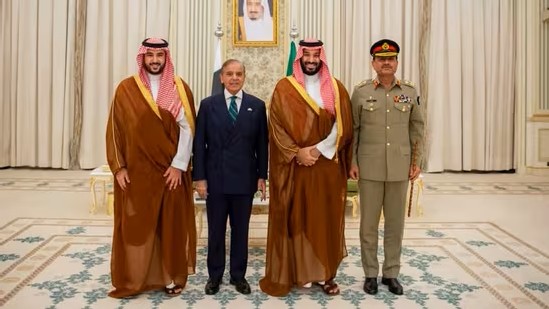
The Strategic Mutual Defence Agreement between Saudi Arabia and Pakistan, signed on September 17, 2025, changes the geopolitical situation in South Asia and the Middle East. This agreement, which came just after Israel's airstrikes in Qatar...
Understanding the Agreement: More Than Just Diplomatic
The Strategic Mutual Defence Agreement, signed by Saudi Crown Prince Mohammed bin Salman and Pakistani Prime Minister Shehbaz Sharif, goes beyond previous informal security deals between the two countries. While the full text is not public, the joint statement and later information from officials show several important parts.
The most important part of the agreement is a mutual defence clause, which says that an attack on one country is an attack on both, starting automatic defence actions. The agreement includes broad military cooperation, suggesting work together across regular forces, intelligence sharing, and possibly even nuclear defence. Besides security efforts, the agreement includes plans for defence industry cooperation, technology sharing, military production, and programs to build capacity. While much of the attention has been fixed on the mutual defence clause, the quieter details of the agreement may carry an even deeper significance. Beyond the headlines, the pact lays the foundation for long-term cooperation between Saudi Arabia and Pakistan that is not limited to military exercises or security guarantees.
As Jamal Al Harbi, media attaché at the Saudi embassy in Islamabad, explained, the deal reaches into the very heart of defence development. “The agreement is about more than protection. It brings in defence industry collaboration, technology transfer and military co-production,” he said, pointing to an ambition that stretches decades into the future.
For Saudi Arabia, this step ties directly into Vision 2030, which seeks to build a self-sufficient military industry at home. For Pakistan, it offers more than symbolic solidarity — it provides real investment, advanced know-how, and the chance to reduce dependence on Western suppliers. Together, the two countries are not just signing a treaty; they are beginning to weave a partnership that could transform their defence relationship into something resilient, innovative, and uniquely their own. Pakistan's Defence Minister said that Pakistan's nuclear weapons would be available to Saudi Arabia under this agreement. This is a big change from Pakistan's position that its nuclear weapons are only to keep India away. With about 170 nuclear warheads that can reach Israel, Pakistan's nuclear protection now covers Saudi Arabia. This changes the strategic situation in a region where Israel was once the only country with nuclear weapons.
Reasons Behind the Pact: Different Goals, Same Interests
For Saudi Arabia, the defence pact with Pakistan is a way to protect itself from security threats in an unstable region. The Israeli airstrikes in Qatar made Riyadh worry about Gulf stability. Saudi Arabia is also concerned about American security support, especially after what it sees as weak American reactions to Israeli actions and Iranian aggression. The agreement helps to discourage Iran, which has attacked Saudi infrastructure, and Israel, whose military actions have caused worries in the region. While Saudi Arabia has considered building its nuclear weapons, Pakistan's nuclear protection provides immediate defence against regional nuclear powers without causing international concerns about nuclear spread.
Pakistan's reasons are also complex. Pakistan's struggling economy gets help from Saudi loans, strengthening economic ties. By joining with Saudi Arabia and other Muslim countries, Pakistan gains power and support that could limit India's choices in future problems. The agreement also supports Pakistan's claim as a key player in Islamic geopolitics, increasing its status as the only Muslim country with nuclear weapons. Despite these shared interests, the partnership is uneven. Saudi Arabia gets security guarantees, while Pakistan gets economic support and diplomatic help. How this imbalance is fixed will decide the agreement's future.
India's Challenges: A Regional Power in a Tight Spot
From India's view, the Saudi-Pakistan defence pact creates a complex security challenge that may limit its options with Pakistan and shift the regional balance of power. India's military power over Pakistan is harder to use when actions against Pakistan could cause reactions from a group including Saudi Arabia and other Muslim countries. Pakistan's nuclear protection of Saudi Arabia sets an example for nuclear guarantees, possibly stopping India's no-first-use advantage and creating a less stable nuclear situation. The agreement also threatens to make the Kashmir issue international against India's wishes, as Saudi Arabia has been neutral in India-Pakistan problems, but may change its position under the agreement. Besides security worries, the agreement is a setback for India's Middle East policy. India has worked to build partnerships with Gulf states, especially Saudi Arabia and the UAE, based on energy security, defence cooperation, and economic ties. The defence pact shows the limits of these partnerships when compared to the religious and historical ties between Pakistan and Saudi Arabia.
The India-Middle East-Europe Economic Corridor, which started during the 2023 G20 Summit to compete with China's Belt and Road Initiative, relies on Saudi Arabia’s role and political trust. Riyadh's move toward Pakistan raises questions about the corridor's success and Saudi support for this economic plan. India's balance between keeping relations with Russia while building ties with the United States becomes harder as Middle Eastern partners closely align with Pakistan and China.
Wider Regional Effects: Beyond India-Pakistan Competition
The Saudi-Pakistan defence agreement changes Gulf security, with effects beyond South Asia. For the first time, a non-Arab country joins the Gulf security as a protector, ending the monopoly of Western and Arab security providers. The pact creates a security plan outside American-led organizations, showing less trust in U.S. support and a trend toward regional security methods. Pakistan's suggestion that other Muslim countries might join similar plans shows the chance of a wider Islamic security alliance that could include Turkey, Malaysia, or other Gulf states. The defence pact also speeds up the competition between major powers in the region. By aligning with Pakistan, a Chinese partner, Saudi Arabia moves toward China's influence, possibly hurting U.S. interests in the Gulf. The agreement may speed up the cooperation between India and Israel, which share worries about terrorism and Iranian influence. This could create a group stretching from South Asia to the Eastern Mediterranean. Russia, which has better relations with Saudi Arabia and Pakistan while keeping ties with India, faces a hard balance in this new situation.
Future Effects and Conclusion: Dealing with a New Situation
The Saudi-Pakistan defence agreement is more than a deal; it shows a change in regional security plans. For India, the pact creates a hard situation that may limit New Delhi's options and hurt its regional power. Looking ahead, several things will decide the pact's effect on regional stability and India's strategy. The ways to use the mutual defence clause are not clear. How automatically and when duties will start will decide the agreement's effect. If more Muslim countries join the security plan, it would create a wider Islamic security alliance that could change regional balances. India's reaction, whether strengthening ties with Israel, working with the Quad, or seeking its regional partnerships, will decide if the agreement makes a balanced system or more disagreement. How the major powers react, especially if the U.S. offers more security to India or China supports the Saudi-Pakistan group, will affect the pact's strategy.
In this new situation, India cannot see the Saudi-Pakistan pact as a problem between India and Pakistan. Instead, New Delhi must take a broad approach that includes strengthening regional partnerships with Gulf states like the UAE, Qatar, and Oman that may have doubts about Saudi-Pakistani control. India should use its economic power to keep influence in Riyadh despite security differences while speeding up security work with regional powers, including France, Japan, Australia, and Southeast Asian countries, to create balancing partnerships.
The Saudi-Pakistan defence agreement makes India's strategic situation harder, but it does not put it in an impossible spot. It is another step in the change of the global order away from American dominance toward a more complex system. India's reaction will test its claim and shape regional security for years to come.
Footnotes:
1. Reuters. (2025). Saudi Arabia, nuclear-armed Pakistan sign mutual defence pact.
2. The Indian Express. (2025). Why India shouldn't be worried by Saudi-Pak deal.
3. Wikipedia. (2025). 2025 India–Pakistan conflict.
4. Associated Press. (2025). Pakistan says defense deal gives Saudi Arabia access to nuclear program.
5. Hindustan Times. (2025). India urges Saudi Arabia to mind 'sensitivities' after Pakistan deal.
6. Frontline. (2025). Saudi Arabia's Pakistan pivot leaves India isolated.
7. ISPI. (2025). Saudi-Pakistan Mutual Defence Pact: Implications for India, IMEC, and US Influence in the Gulf.
8. NDTV. (2025). Pakistan Minister On Whether Saudi Arabia Will Get Nuclear Weapons.
9. Wikipedia. (2025). Strategic Mutual Defense Agreement.
10. Times of India. (2025). Defence pact: Pakistan minister asked if Saudi Arabia will step in case of war with India.
11. Third Eye OSINT & Analysis. Telegram channel.
Photo by AP
(The views expressed are those of the author and do not represent the views of CESCUBE.

Jaiee is an International Relations specialist with an MA in Political Science and a Postgraduate Diploma from the University of Strathclyde. She is an expert in policy research, conflict analysis, and strategic communication. She excels at translating rigorous analysis into actionable policy recommendations and shaping public debate through high-impact publications.