The Sino-Russian Axis and Its Impact on India’s Strategic Autonomy
Strategic autonomy is the ability of a nation to make independent foreign policy decisions based on national interests without being aligned to a singular bloc. India’s strategic autonomy, deeply rooted in its colonial history and the princ...
Russia’s Eastward Turn
Following the annexation of Crimea and intervention in Donbas, the ties between the two countries deepened further. Strong and somewhat similar ideologies of challenging Western and American hegemony give this partnership an edge. Russia’s geographical depth is of great benefit to China. Both these countries hold regular military exercises demonstrating a strong defence partnership. On 4th February 2022, right before the invasion of Ukraine, the “Joint Statement of the Russian Federation and the People's Republic of China on International Relations: Entering a New Era and Global Sustainable Development" was signed by Xi and Putin, giving this relationship a new direction forward.
The New Geopolitical Dynamic and Pragmatic Relationship with Russia
Historically, India’s relationship with Russia (soviet-union before) has served as a hedge against the Sino-Pakistani nexus. Soviet support, particularly during the 1971 war, provided the much-needed assurance against the Chinese intervention. This strategic balancing could now be compromised. Russia is now less likely to support India’s position on sensitive issues such as border tensions with China or its bid for a permanent seat in the UN Security Council, as doing this could jeopardise its relationship with Beijing.
India still remains heavily reliant on Russian Military equipment, accounting for 60-70 per cent of its defence inventory. Russia’s growing dependence on China for technology could now bring a shift, as Moscow now treats Beijing and New Delhi as equal customers for key systems like the S-500 missile system. There is also a significant long-term security risk due to Sino-Russian defence integration.

Figure 2: China’s trade with Russia
Source: SCEEUS
India, continuing its deep ties and refusing to limit its purchase of heavily discounted oil and also refusing to condemn the invasion at the UN, has drawn both scrutiny and pressure from the US and its allies. This posture has been strategically tolerated by the U.S., evidenced by the 2022 bipartisan legislative amendment in the U.S. House of Representatives recommending an India-specific waiver for CAATSA sanctions over the S-400 purchase. While West particularly QUAD members do tolerate India’s position due to the critical role it plays in the Indo-Pacific strategy against China, any move perceived as too close, such as joint military exercises or providing material support to Russia, could create friction with its western partners, potentially impacting cooperation in areas like Semiconductor technology or defence collaboration.
BRICS: The Enlarged China Centric Bloc
BRICS (Brazil, Russia, India, China, South Africa) has been a grouping where India, as a major emerging economy, has sought to champion the cause of the Global South. The expansion of BRICS, particularly to include Iran, Saudi Arabia, UAE and Ethiopia, is a thoughtfully curated Chinese strategy. An enlarged group exhibits a greater emphasis on de-dollarisation. While India does support Breton Woods institutions and local currency trade, a very aggressive and politically motivated de-dollarisation could carry significant financial risks. The influx of new members, many of them being old Chinese partners or having anti-Western leanings, poses a risk of diluting India’s influence and transforming BRICS into a de facto Sino-centric group.

Figure 3: BRICS Expansion
Source: Visual Capitalist
The Shanghai Cooperation Summit: Sino-Russian Sphere
The Shanghai Cooperation Summit is a Eurasian political, economic and security organisation representing 40 per cent of the global population. Within the SCO, the enhanced Sino-Russian relationship cements Beijing’s regional dominance over the Eurasian security sphere. The SCO is the primary battleground for India’s connectivity rivalry with China. With China pushing for the BRI, India’s goal of strengthening its ties with the Central Asian Republics and advancing its own connectivity projects like the North-South Transport Corridor (INSTC) becomes difficult. Moreover, the SCO operates on consensus. The Sino-Russian axis carries a significant diplomatic weight and is also tactically supported by Pakistan; this limits India’s ability to advance security initiatives, specifically in counter-terrorism through RATS.
Deepening Western Ties and the Voice of the Global South
New Delhi has been actively prioritising its partnership with the US and the QUAD (Japan, Australia, US), trying to frame its foreign policy as indispensable to the Indo-Pacific balancing strategy. India’s active participation in QUAD serves as a much-needed counterweight against the Sino-Russian strategic coordination in the region. Initiatives like the US-India Initiative on critical and emerging technology (iCET) are designed to reduce India’s long-term dependence on Russian defence and technology. The purchase of Rafales from France and MQ-9B drones from the US is decreasing the dependence on Moscow. Moving towards co-development and co-production of military systems, India is trying to build internal resilience while diversifying its supply chain to mitigate the vulnerability posed by the Sino-Russian technological nexus. India’s G20 presidency and advocacy for African Union membership strategically position it as the Voice of the Global South. It repositions India as a leader not aligned with the Western or the Sino-Russian Bloc.
Conclusion
The Sino-Russian axis post Ukraine war has irrefutably changed the global strategic landscape, making India’s pursuit of strategic autonomy a demanding exercise. This alignment’s primary impact is the erosion of Russia’s role as a strategic balancer and increased pressure within multilateral forums. Within the BRICS and SCO, India’s flexibility has been significantly curtailed. India’s response has been strategically curated- balancing its partnership with the West and pragmatically dealing with Russia while also asserting its leadership in the Global South. India’s ability to avoid being constricted to a secondary status within a China-dominated Eurasian landscape is a challenge that will define its diplomatic strength in the coming decade.
References
1. “The China-Russia Axis Realigned: Assessing Risks to India’s Strategic Autonomy and Global Influence Samvada World.” Samvada World. July 29, 2025.
2. O?uz, Ali. 2025. “India between SCO and BRICS: Contrasting Platforms in a Shifting Order.” TASAM | India between SCO and BRICS: Contrasting Platforms in a Shif... TASAM - Turkish Asian Center for Strategic Studies. September 9, 2025.
3. Studies, China. 2025. “The Rise of SCO, BRICS, and China’s Emerging Hegemony amidst Tariff Escalations and India’s Balancing Act: By.” C3S India. September 15, 2025. ?https://www.c3sindia.org/post/the-rise-of-sco-brics-and-china-s-emerging-hegemony-amidst-tariff-escalations-and-india-s-balancin
4. Kapoor, Nivedita. 2024. “Multilateral Cooperation in India-Russia Ties: A Decadal Review of BRICS and SCO.” Orfonline.org. OBSERVER RESEARCH FOUNDATION ( ORF ). December 19, 2024. https://www.orfonline.org/research/multilateral-cooperation-in-india-russia-ties-a-decadal-review-of-brics-and-sco
5. Bajpaee, Dr Chietigj , and Lisa Toremark. 2024. “India–Russia Relations.” Chatham House – International Affairs Think Tank. October 17, 2024.
https://www.chathamhouse.org/2024/10/india-russia-relations
6. “Strategic Autonomy as India’s Global Compass.” 2025. Drishti IAS. 2025. https://www.drishtiias.com/daily-updates/daily-news-editorials/strategic-autonomy-as-india-s-global-compass
7. Rajeev, Nishant. 2017. “IP25015 | Understanding India’s Evolving Policy of Strategic Autonomy.” @RSIS_NTU. 2017. https://rsis.edu.sg/rsis-publication/idss/ip25015-understanding-indias-evolving-policy-of-strategic-autonomy/
8. “Much Ado about ‘Sino-Russian Axis.’” 2018. Carnegie Moscow Centre. 2018.
https://carnegie.ru/commentary/55870
9. “China-Russia Relations since the Start of the War in Ukraine.” 2025. Asia Society. August 20, 2025.
https://asiasociety.org/policy-institute/china-russia-relations-start-war-ukraine
10. “Russia-China Economic Relations since the Full-Scale Invasion of Ukraine.” n.d. Sceeus. ?
11. Hung Tran. 2023. “China and India Are at Odds over BRICS Expansion.” Atlantic Council. August 8, 2023. https://www.atlanticcouncil.org/blogs/new-atlanticist/china-and-india-are-at-odds-over-brics-expansion/
12. Raj, Ravi Shankar. 2025. “India’s Rising Influence: Leading the Global South’s Agenda in a Multipolar World.” Diplomatist. 2025. https://diplomatist.com/2025/01/15/indias-rising-influence-leading-the-global-souths-agenda-in-a-multipolar-world/
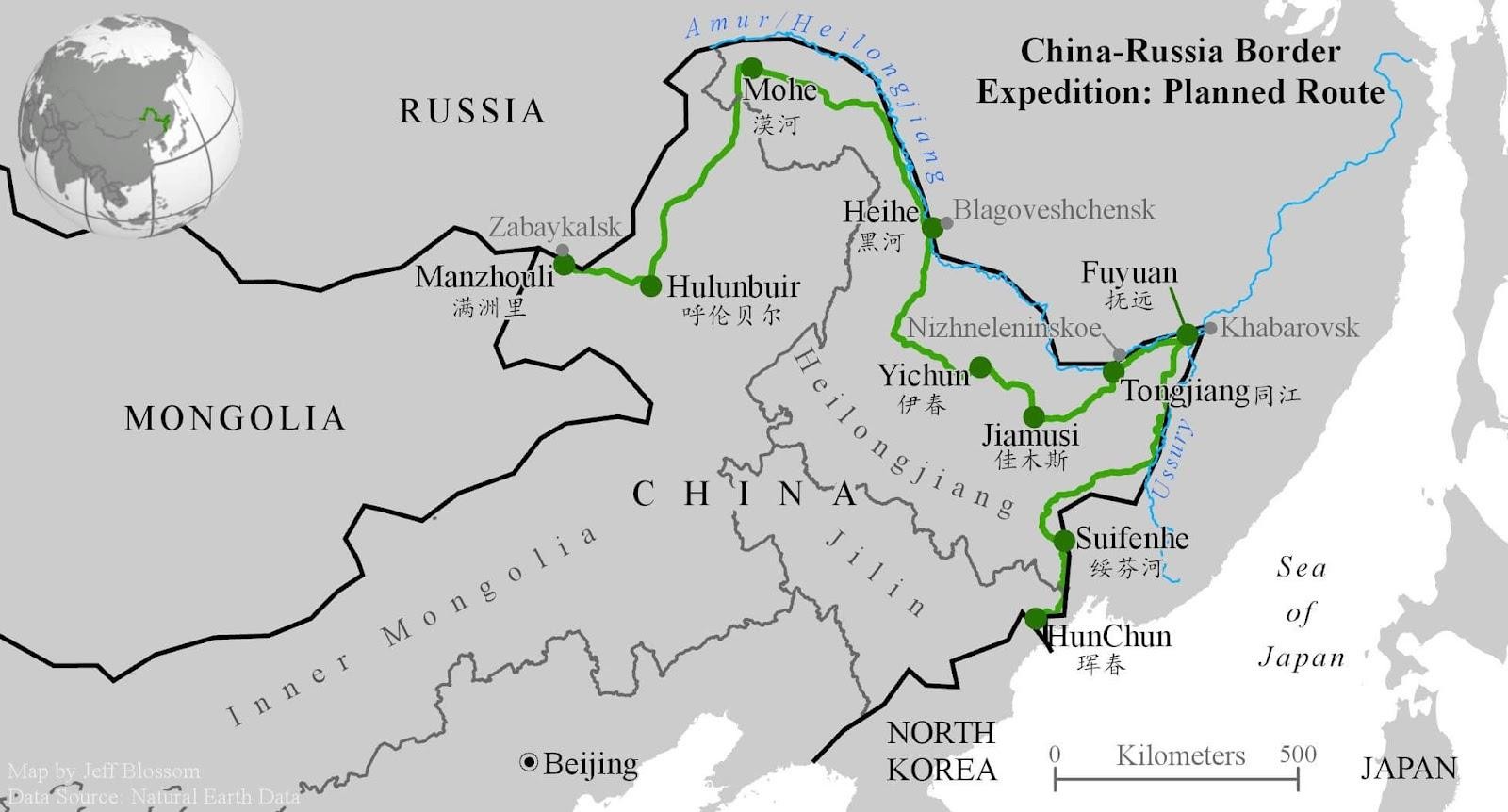
Image Source: Reconnecting Asia- Center for Strategic and International Studies, https://reconasia.csis.org/exploring-bri-chinas-border-russia/
(The views expressed are those of the author and do not represent the views of CESCUBE)

Tamanna is a third-year student at Banasthali Vidyapith. Trained in the sciences and deeply interested in international relations, she combines scientific rigor with contemporary international theory to develop a multidisciplinary understanding of global affairs. Her key professional experiences include serving as a Research Intern at the Centre for Land Warfare Studies, where she worked on Russian military technology, and interning at the National Museum, where she gained insight into cultural diplomacy and heritage-based soft power. She continues to explore how science, strategy, and culture interact to shape contemporary geopolitics.