India’s Balancing Act in the Middle East: Navigating Between Israel, Iran, and the Gulf States
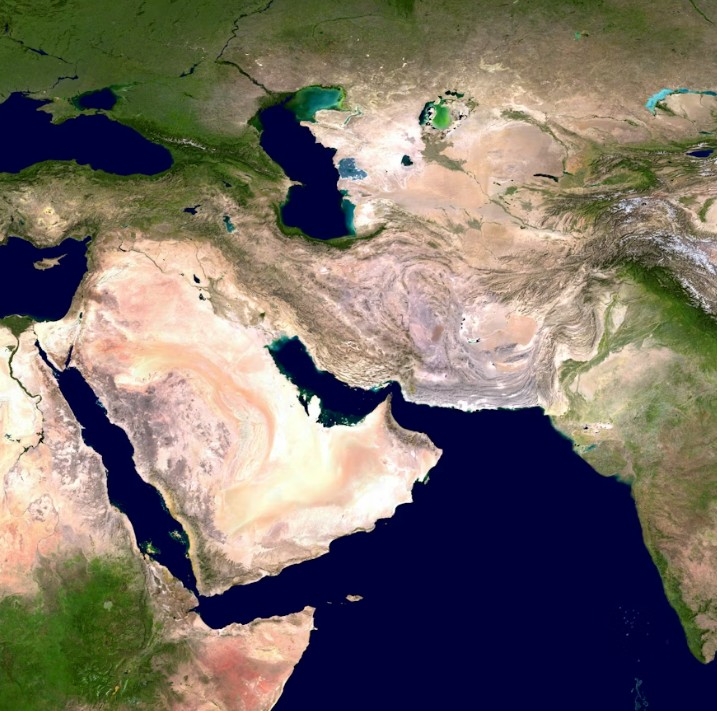
Since the onset of the current Israel-Palestine conflict since 7th October 2023, tensions have glared up in the Middle East with current geopolitical shifts such as the regional escalation in multiple fronts like Israel's engagement with Lebanon (Hezbollah), Syria, Islamic Republic of Iran, and Yemen (The Houthis) with respect to the Red Sea crisis. Therefore, the traditional deterrence structure in the Middle East has undergone a significant change and this has inadvertently led to the strategic realignment of Regional Power in the Gulf States where countries like the UAE and Saudi Arabia are playing active and assertive roles. Due to the current Israel-Gaza conflict, a strategic strain has been put over the terms and provisions of the Abraham Accords which formalized the relationship between Israel and the Gulf countries. Despite a huge public outrage, diplomatic ties still exist between Israel and other Gulf countries. Amidst the humanitarian and the socio-economic fallout, major developments have shaped the geopolitical scenario in the Middle East such as the Beijing Declaration on Ending Division and Strengthening Palestinian National Unity in 2024 with Iran’s weakening proxy networks. This declaration highlights the role of growing external powers such as China to project itself as an alternative mediator in place of the United States of America. Iran has created a more axis of resistance with Gaza, Syria, and Lebanon with internal crisis and power vacuum that implicates its risky regional position and reveals its long stretched economic vulnerabilities.
Amidst such heightened tension and global scenario, India has played an important role in their strategic outreach programme across this entire volatile scenario. In January 2024, External Affairs Minister, S. Jaishankar visited Tehran placing a significant stress on its part with regards to the continuous engagement between New Delhi and Tehran despite the critical evolution of relationship shaping the Middle Eastern politics for the longest period. Similarly in February 2024, Jaishankar met Saudi Arabia’s Foreign Minister, Prince Faisal bin Farhan bin Abdullah at the Munich Security Conference to review their bilateral relations and enhance diplomatic cooperation at a multilateral level focusing on several regional and international issues that serve their common strategic interests. Within this framework both the Foreign Ministers agreed on placing a significant emphasis on the commitment of a two-state solution in order to resolve the Israel-Palestinian conflict. Moreover, India had signed a USD 78 Billion deal to renew their support with regards to LNG imports from Qatar for another 20 years till 2048 at a rate lower than the current prices. The provisions of this deal were signed in Betul, Goa on the sidelines of the India Energy Week. These provisions clearly reflect India’s goal for strategic autonomy and highlight its foreign policy of non-interference and strategic neutrality. India’s foreign policy emphasizes multilateral engagements across a broader spectrum which is evident in the presence of several diplomatic ties and strategic partnerships with key regional actors in the Middle East given the turbulent nature of relationship which this state actors have within both the global domain and internal spheres.
(a) Israel and Gaza Situation and India’s Relationship with Iran
The ability to pursue independent foreign relations and engage in an all-alignment strategy, helps India to resist external pressure stressing on its achieved ability to make their own diplomatic choices. For instance, despite the Economic Tariffs imposed on India by the Trump administration, economic engagement between India and Russia from 2022, has enabled India to import discounted crude oil, improving India’s energy security. From last year 2024, Russian federation has emerged as the top Crude oil Supplier for India and this flexibility and prevention of being dependent on any single power has become the underlying defining characteristics of India’s current multi alignment strategy. With respect to the Gaza crisis, India has attempted to work on its own interests and choices, reiterating the importance of its continued commitment to the two-state solution. The sustainable support calls for immediate humanitarian help for the civilians in Gaza but also condemning the 7th October 2023 attack conducted by Hamas on Israel.
India’s diplomatic visit to Israel in 2017 shaped a new alignment in their cooperative relationship. Historically centered around military, defense procurement, intelligence cooperation, currently it has upgraded to a wider platform inculcating sectors like trade and start-ups. With the ongoing international condemnation of Israel’s actions towards Palestine, India has strongly preserved their diplomatic relations, reflecting New Delhi’s tactical plan to compartmentalize its strategic interests while also acknowledging the existing regional volatility. Israel is India’s fourth largest supplier for arms, along with India being the single largest purchaser of Israeli defense equipment, reinforcing this security convergence. Yet India’s simultaneous deepening of diplomatic ties with the Islamic Republic of Iran strengthens its continued commitment to multipolar engagement in the Middle East. The January agreement established a “long-term cooperation framework” for the Chabahar port and this represented a significant milestone in India’s regional connectivity strategy. Chabahar, linked to the reactivated 'International North-South Transport Corridor' (INSTC), is envisioned as India’s gateway to Central Asia, Russia, and European markets allowing New Delhi to bypass Pakistan and reduce reliance on maritime chokepoints. This initiative not only places Iran as an energy supplier but also as a critical transit partner.
More significantly, India’s developing collaboration with Iran has gained more attention after the imposition of the US sanctions which had put external pressure on India to reduce its oil imports but also compelled it to focus on improving its bilateral ties. For instance, major regional issues such as stabilizing Afghanistan by countering extremist tendencies and ensuring a proper humanitarian, socio-economic cooperation has also received significant momentum, acting as new pillars for diplomatic cooperation. Within this framework, India has successfully delivered 47,500 metric tons of wheat and essential aids to Afghanistan via Iran through Chabahar highlights the strategic utility of this port and underscores Indian government’s efforts to maintain their influence in the Afghan theatre despite the return of Taliban in power since 2021. Therefore, this parallel, equidistant engagement of India with that of both Israel and Iran becomes the central pillar to India’s Balancing of Act serving India’s distinct economic, security, and geopolitical objectives. This dual track approach reflects India’s role as an autonomous actor, capable of navigating West Asian dynamics by identifying the role of complex rivalries and securing their own developmental and strategic goals.
(b) Strategic Partnership with the Gulf Countries:
India has been successfully creating an array of strategic partnerships with several important regional actors. India’s strategic engagement with the West Asian nations have evolved and improved simultaneously. The primary buyer-seller relationships have upgraded themselves to a more nuanced bilateral, multilateral relationships covering a vast range of domains such as energy security, to foreign relationships, oil supply, science and technology, to trading partners. India’s ability to identify situation specific challenges which vary according to their degree, scope, and scale, have helped the country to formulate economic diplomacy as central to their foreign policy. Therefore, these key strategic partnerships in the Middle East reflect Indian foreign relation’s flexible nature with the Gulf Cooperation Council and other countries like Iran along with their common adversary Israel. India’s growing economic cooperation with the GCC displays both commercial interdependence and foreign policy recalibration in West Asia. GCC constitutes India's largest trading bloc crossing over $180 billion back in 2022-23, highlighting how the cooperation has become indispensable to India’s diplomatic diaspora, blooming investment landscape, and crucial to India’s maritime security. UAE positions as India’s third largest trading partner under the Comprehensive Economic Partnership Agreement (CEPA) in May 2022. The agreement accelerated the concept of “Trade Liberalization”, expanded market access for Indian exports. This economic synergy strengthens India’s global aspiration to integrate with the international supply chains and UAE’s transition towards a post-hydrocarbon economy.
Similarly, Saudi Arabia has emerged as India’s fourth largest trading partner and third largest oil supplier. Riyadh’s strategic outreach strengthened under Vision 2030 has driven their collaboration in the fields of defense, critical technologies, space cooperation, joint military training exercise. This strategic convergence reflects Saudi Arabia’s evolving image of India as their reliable security and economic partner. Therefore, these strategic developments indicate a broader trend in the contemporary Indian foreign policy scenario where India acts an indispensable external partner for GCC and focuses on state diversification, strategic autonomy and prioritizing regional stability amidst an uncertain Middle Eastern environment. This results in reinforcing a mutual partnership characterized by economic pragmatism, and a shared interest in shaping a stable, multipolar regional order in West Asia. Apart from this, the Modi Government initiative of the “Link West” policy along with the I2U2 grouping of India, US, Israel, and the UAE concentrates on areas of energy supply, and food processing. With a renewed interest India, UAE, and France conducted their large-scale air force exercise over the Arabian Sea as well. The Indian navy has prioritized on actively improving their role in the waters of the Western Indian Ocean to act as their security provider straight from Red Sea to Singapore. This protection would ensure a strong deterrence against the Houthi missile attacks.
Conclusion:
India’s ability to not only strengthen bilateral and multilateral ties with rival actors in Middle East that includes Iran, Israel, UAE, Saudi Arabia, Palestine and others but also its caliber to shift its diplomacy from being ideologically driven to a more pragmatic, issues-specific and interest related, makes India’s foreign policy in the 21st century to standout. India’s Foreign Minister, S. Jaishankar notes this willingness of India to look beyond dogma and enter into the practical, contemporary geopolitical era of strategic convergence captures this shift which has replaced rigid bloc-based alliance with more policy oriented and issue specific politics. As the international global order is constantly evolving, these strategic convergencies have formed the diplomatic backbone of India’s geopolitical approach in maintaining diverse strategic partnerships. The ongoing crisis in Palestine and the widespread criticism of the Israeli government’s actions has exposed the Middle East environment to be extremely volatile and largely fragmented. In such a situation, choosing strategic autonomy by carefully compartmentalizing partnerships and advancing connectivity initiatives with Iran and the Gulf, defence and technology cooperation with Israel, highlights India’s promise and long term commitment to their strategic interests. This flexibility is extremely crucial given India’s energy dependence, diaspora presence, maritime interests, and connectivity ambitions in West Asia. In the long run, India’s success will constantly be dependent on aligning its diplomatic, economic, and security initiatives with a clear re-assessment of the presence of several regional risks, while preserving the credibility of its neutral posture. Tactfully working on the issue of policymaking will be central to balancing the competing demands of humanitarian expectations, domestic constituencies, and strategic imperatives.
References:
1. Arab Gulf States Institute. (2025, May 2). India’s Balancing Act in the Middle East - AGSI. AGSI.
https://agsi.org/analysis/indias-balancing-act-in-the-middle-east/
2. Bhattacherjee, K. (2024, January 13). Jaishankar to visit Iran in the backdrop of U.S.-U.K. attack on Yemen. The Hindu. https://www.thehindu.com/news/national/eam-jaishankar-likely-to-travel-to-iran-on-january-15-amid-war-in-middle-east/article67737069.ece
3. PTI. (2024, February 6). India saves $6 bn on Qatar LNG deal renewal; signs $78 billion pact for 20 years. The Economic Times. https://economictimes.indiatimes.com/industry/energy/oil-gas/india-likely-to-extend-lng-import-deal-with-qatar-for-20-years-at-lower-rates/articleshow/107445186.cms’from=mdr
4. PTI (2024b, February 6). India saves $6 bn on Qatar LNG deal renewal; signs $78 billion pact for 20 years. The Economic Times. https://economictimes.indiatimes.com/industry/energy/oil-gas/india-likely-to-extend-lng-import-deal-with-qatar-for-20-years-at-lower-rates/articleshow/107445186.cms’from=mdr
5. Taneja, K. (2025, May 9). Potential of India–Gulf defence cooperation lies in co-development. orfonline.org. https://www.orfonline.org/expert-speak/potential-of-india-gulf-defence-cooperation-lies-in-co-development
6. Bhardwaj, A. ‘. (2025, June 19). India’s Middle East Balancing Act: Navigating the Israel-Iran Conflict — Foreign Affairs Forum. Foreign Affairs Forum. https://www.faf.ae/home/2025/6/19/indias-middle-east-balancing-act-navigating-the-israel-iran-conflict
7. Online, I. (2024, December 2). Conflicts in West Asia: India’s trade and diaspora at risk amid prolonged Gaza War. The Indian Express. https://indianexpress.com/article/upsc-current-affairs/upsc-essentials/indias-trade-and-diaspora-at-risk-amid-prolonged-gaza-war-9697385/lite/
8. India & UAE commit to deepening defence partnership at 13th Joint Defence Cooperation Committee Meeting. (n.d.). https://www.pib.gov.in/PressReleasePage.aspx?PRID=2150322
9. Welcome to the Embassy of India, Tehran, Iran. (n.d.). https://www.indianembassytehran.gov.in/eoithr_listview/Mzc5
(The views expressed are those of the author and do not represent the views of CESCUBE)

Aakansha Sengupta is currently pursuing her undergraduate degree in Political Science from the Department of International Relations at Jadavpur University. Her academic interests span across Gender and Politics, Peace and Conflict Resolution, International Politics, and Global Diplomacy. She also maintains a strong engagement with Public Policy, Administration, and key debates in Political Theory. In addition, Aakansha has a keen interest in Middle Eastern Politics, reflecting her broader focus on global affairs. Alongside her major in Political Science, she is also pursuing a minor in Sociology at Jadavpur University.