Tracing the Israel-Palestine Conflict: From a Troubled Past to a Conflict-Free Future
How many times have we read in our history textbooks that the colonial forces and the conquerors of the post-Renaissance and post-Enlightenment era were responsible for the hurried boundaries and geographical features that have taken a perm...
The Israel-Palestine Conflict: A Grim Present Scenario
“Security alone will not provide peace. Only a negotiated, political solution will give Israelis and Palestinians security and peace.[1]”
-Josep Borrell
A case in this point is the ongoing Israel-Palestine conflict as well. To be historically honest and correct in the present analysis, it must be put before the readers that the Israel-Palestine conflict has nothing to do with either the actions of Jews or the past actions of Palestinians and Arabs. The Israel-Palestine conflict today has reached its summit to a level that all the world leaders are trying their very best to stop it, in some way or the other so as to stop the killing of innocent humans on both sides of a disputed border. An ongoing military and political conflict, this conflict has shaken the conscience of today’s cosmopolitan world, with global citizens worried over its conclusion of the same. Even though the starting point of the conflict was legitimately in favour of Israel, with Israel’s geographical identity and citizens targeted by Hamas, killing and kidnapping innocent people, and then Israel responding with a legitimate response. This is not the case anymore.
However, the negative consequence that the retaliation and corresponding strikes by both sides on other diplomatic entities have taken now irked the whole world, due to the incessant loss of life and property. To understand the present situation, it is pertinent to have a glance at the past of this troubled relationship.
A Troubled Past: Analysing the Israel-Palestine Conflict
Jews have historically faced several persecutions in many territories, with Jews looking for a permanent home for centuries. This led to conflicting viewpoints, a rejuvenated urge to have a Zionist homeland, to which Jews could call their home, and the rise of Zionist forces in late 19th-century Europe. This resulted in the first settlements of Jewish people in Ottoman Palestine in the year 1882, with the British and other colonial forces now wanting to take a piece of the pie[2]. In other words, Western forces wanted some part to play in the great resurgence and readjustment of the geographical territories of the world. This movement of Zionism garnered a lot of support in the Balfour Declaration, which was highly supported by the British Forces for the creation of a “Jewish Homeland.”
It is not so simple; the creation of a Jewish Homeland was supported in the already existing territory of Palestine. Nevertheless, the problems then got compounded because of the British occupation of the Ottoman Empire, and the establishment of a mandatory Palestine territory, as a British Mandate. What was meant to follow, did follow. Arrival of innumerable Jews started coming in, and conflicts arose with the Arabs, already living there. This could-be-contained small friction point, has now spiraled into a full-blown regional and religious conflict, which nobody knows how to end, and who actually could be pointed fingers at for its very start. Arab and Israelis fought with each other, and inter-communal tensions erupted, with the Arabs demanding that the British end their support for Zionism and grant the whole land to the Palestinian Arabs.
However, this was not to be, and hence this led to the issue being taken up by the United Nations, and the eruption of Civil War following the same. The British withdrew their forces from the Palestinian territory in the year 1948, further plunging the area into a grave conflict crisis, with the United Nations compounding the tensions when it decided to propose a partition plan for the region, for peace and further conflict resolution. What followed was a Greek tragedy, the same one that is being continued up until today. What could have been a peaceful home for two communities is not peaceful, is not even a home, for either of the communities. What is left of the region is a tattered and shattered dream, with no dreamers visible anymore.
In the year 1948, the Israelis released a Jewish Declaration, with a stunned surrounding Arab world, now attacking Israel; a war that Israel won and controlled, and now gained geographical territory of at least 50% more than what was envisioned in the UN partition plan. This war was termed the Arab Israeli War. As per the UN Partition Plan, the Jordanian establishment was meant to control the West Bank as well as Jerusalem’s holy sites, with Egypt then having control over the Gaza Strip. However, none of these things could see the light of day, and then formed what is today known as the Palestinian Liberation Organisation (1964)[3]. This further complicated the situation. This did inevitably lead to the creation of Hamas, in future as well. To understand the situation further, it is now pertinent to understand the origins of the Palestinian Liberation Organisation and Hamas.
The Changed Big Picture: Role of Palestinian Liberation Organisation (PLO) and Hamas
With the Israelis and the Palestinian Arabs now at loggerheads with each other, it was time, and rightfully, the time was absolutely on point for the creation of an entity that would work as a pressure group in the then-current situation. Thus, the Palestinian Liberation Organisation or the PLO was formed. It was inevitably formed with a steadfast aim of freeing Palestine from the hard-held clutches of the Israelis and Jewish dominating forces, along with the objective of setting up a Muslim Brotherhood in the Arab World. Surprisingly enough, the PLO was given observer status by the United Nations (UN) in 1975, for the further identification and determination of the rights of the Palestinians.
When the PLO was in its initial stages, another war was brewing in the region, and the same is internationally known as the Six-Day War of the year 1967. This war was probably the most decisive war fought by the Israeli forces, whereby the Israelis now conquered and were poised to control the Golan Heights of Syria, the Sinai Peninsula and the Gaza Strip from Egypt, and finally the West Bank and East Jerusalem from the Jordanians. What really followed was utter chaos and unattended egoistic wars in the region, with newer actors now propping up to earn a piece of the pie for fanning their egos and earning a respectable place in the global world order by limiting the prospects of peace.
Israel and the US are allies of each other, and Israel has been continuously supported by the US forces. This was also the time when the Cold War was going on, and the US and the USSR wanted an upper hand in most of the happenings of the geopolitical world. This also resulted in bruised egos in the Middle East, with the Iranian Revolution also happening at the same time, and so did also happen the Soviet Invasion of Afghanistan.
This intricate mesh of events with the US and the Soviet Union training their guns at each other, and Iran undergoing a revolutionary front, made the geopolitical scenario go all round and thus led to the creation of three major proxies of Iran: Hamas in the Palestinian territory[4], Houthis near Yemen, and Hezbollah in Lebanon (all Shia-backed proxies for Iran’s protection of own interest in these strategic areas). Thus, the creation of Hamas in 1987 at the turn of a new century, and the eventual disintegration of the Soviet Union, as well as the upcoming formation of Mujahids, the upcoming first Taliban regime in the Afghan territory, all catapulted the world to a greater order of chaos.
Hamas is regarded as a terrorist organisation by the US government, as mentioned earlier, and has stabilised itself as a legitimate Palestinian voice in the Middle East, with its election-winning streak in the 2006 Authority elections. Fatah also got eliminated from Gaza during this time, thus exacerbating tensions. The First Intifada (1987) and the following movements also concretised the authority of Hamas (a non-regional but a proxy player in the crisis). The Oslo Accords tried to stabilise the region in the year 1993, with the build-up leading to the upgradation of the Palestinian representation at the United Nations to a “Non-Member Observer State”. However, Israel is in constant conflict with the neighbouring nations over occupied territories, such as the West Bank, the Golan Heights and the Gaza Strip.
The recent buildup and escalation started in the background of the events aforementioned, and the same has not yet abated. Counter strikes by both parties, also involving Hezbollah in Lebanon, targeted strikes at Houthis in the Red Sea near Yemen, and of course, in Gaza at the Hamas-built tunnels; and reciprocatively by Hamas at Israel by still not releasing the hostages, and breaking up ceasefire attempts have literally torn the world and international efforts to stop the war till today. The recent events at the United Nations General Assembly’s 80th session have played out any farce that ceasefire attempts have showcased to the world[5].
Parting Note: The Indian Way
India opposed the Partition Plan proposed by the United Nations, and recognised the Palestinian Liberation Organisation as a representative of the Palestinian people. However, it must be noted that India has been growing close to the Israeli State, without relinquishing its strong bond with the Palestinian State. India, today, under the current leadership, is recognised as one of the very few countries in the world which has good relationships with every nation of the world, barring a few (of course).
India has always walked on the path of “Vasudhaiva Kutumbhakam” and de de-hyphenation policy measures for maintaining good relationships with all the other diplomatic players. The famous statement of our Hon’ble Prime Minister, “This is not the era of War”, resonates well with all. However, India has also stood strongly against any acts or justification of terrorism, and has always spoken against the same too. India has believed in and constantly supported the Two-State Solution for the conflict and thereby supported all efforts of peace, such as backchannel talks, the signing of the Abraham Accords, normalisation of relationships between all the regional players, etc. Thus, India, in all her courage and diplomatic tight-rope walking, has stood and will consistently stand for peace and development. However, what will happen to the region under conflict and how a concrete solution can be reached by both sides, is yet to be seen by India and the rest of the world.
References:
[1]“Israel-Palestine after the Ceasefire: what Should Europe do?”, European Union External Action, May 22, 2021, https://www.eeas.europa.eu/eeas/israelpalestine-after-ceasefire-what-should-europe-do_en
[2]“Israel-Palestine Conflict”, Centre for Preventive Action, July 27, 2025, https://www.cfr.org/global-conflict-tracker/conflict/israeli-palestinian-conflict
[3]“History of the Palestine Question”, The United Nations, January 23, 2025, https://www.un.org/unispal/history/
[4]“What is Hamas?”, Council for Foreign Relations, October 17, 2024, https://www.cfr.org/backgrounder/what-hamas
[5]“UNGA Walkout as Israel PM Netanyahu Addresses World Leaders on Hamas Conflict”, September 26, 2025, News on AIR, https://www.newsonair.gov.in/unga-walkout-as-israel-pm-netanyahu-addresses-world-leaders-on-hamas-conflict/
(The views expressed are those of the author and do not represent the views of CESCUBE)
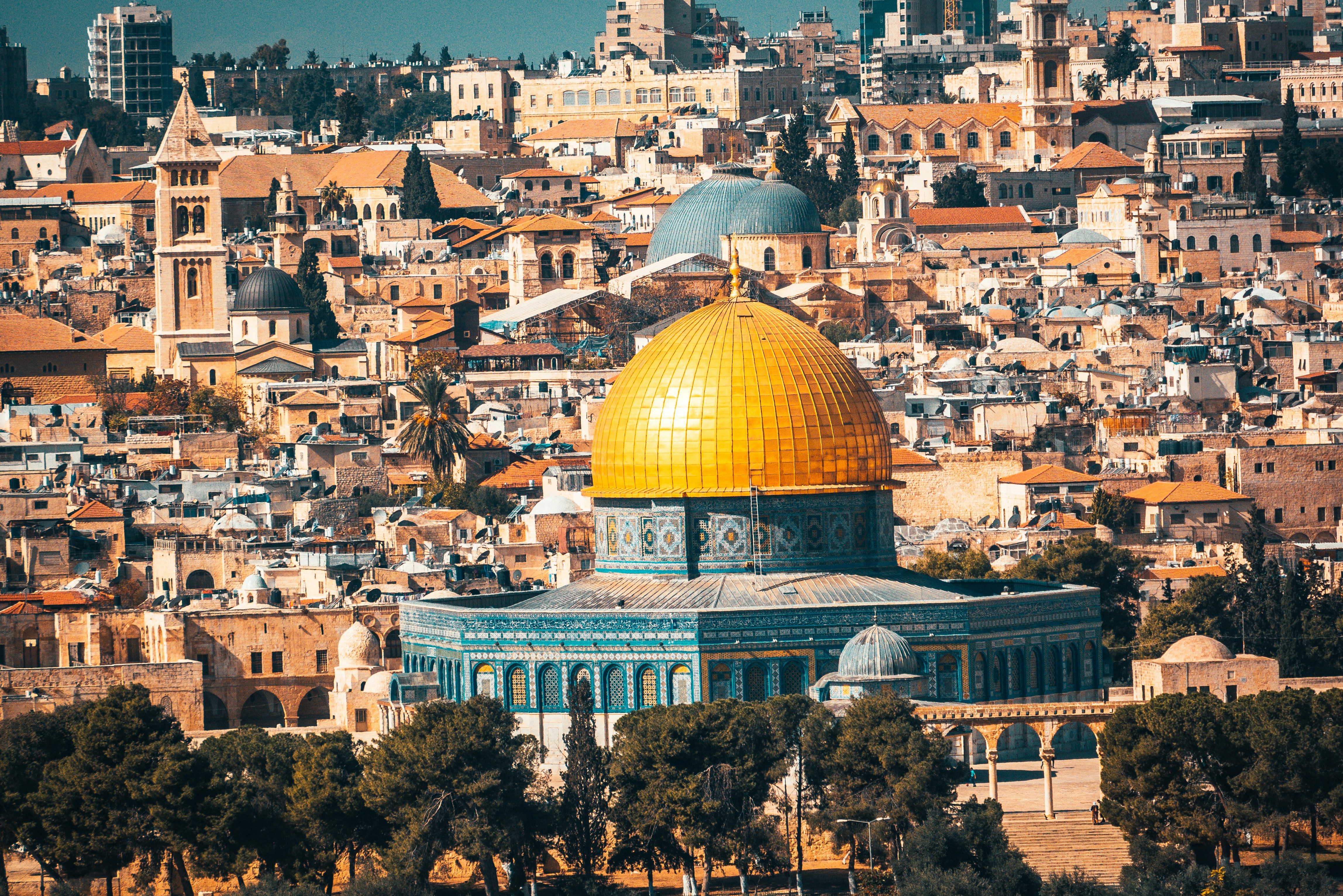
Photo by Raimond Klavins on Unsplash

Ms. Sanighdha is currently a Doctorate Junior Research Fellow (UGC-JRF), pursuing her Ph.D. in A.I. and National Security Laws at the Department of Laws, Panjab University, Chandigarh. Having pursued her graduation in the field of law, she is an enrolled advocate, and has her Masters in the field of constitutional and administrative laws. She is a published poet with her two publications "The Musings of My Heart" and "My Reflective Contemplations", with the Bookleaf Publishing Agency, and additionally a published legal author with the Allahabad Law Agency, of a book titled "Indian Constitutionalism: Originalism, Living Constitutionalism and Transformative Theories", co-authored with Prof. Rattan Singh (VC, Punjab State Open University, Patiala). Additionally, she is a regular fortnightly contributing columnist to a premier defense magazine, "Life of Soldiers", and contributes to ETLegal World as well. Apart from this, she has numerous research paper publications to her credit and has presented her research papers touching socio-legal issues across international/national conferences/seminars in India. She has immense interest in issues touching upon India's defense sector and national security issues.