Waging War by Other Means: Assessing India’s Emerging Geoeconomic Statecraft
This paper explores whether India can truly embrace geoeconomics, what Robert D. Blackwill and Jennifer M. Harris call "war by other means", as a central part of its statecraft. In today's world, where open military conflict is often too co...
The word Geoeconomic might seem unusual and novel, part of the answer might be that it is practised in silence; however, its impact is quite conspicuous. However, what is Geoeconomics in the first place, and how is it practised in real life? Robert D. Blackwill and Jennifer M. Harris, in their ‘War by Other Means- Geoeconomics and Statecraft,’ explain this in great detail. The book is written in the context of the US. However, I have tried to use the instruments used by the authors in the Indian context, which is the essence of this paper, “Can India Wage War by Other Means?”
Geoeconomics is defined as using economic instruments to promote and defend national interests and produce favourable geopolitical results. It also includes the effects of other nations’ economic actions on a country’s geopolitical goals.2 Geoeconomics is closely connected to traditional geopolitics, the pursuit of national power and influence, but it relies on economic tools rather than military force or diplomacy. It can take many forms, including trade policy, investment flows, sanctions, financial leverage, aid, cyber tools, energy policy, and commodity controls. Essentially, any economic action that is motivated by strategic, not just commercial, objectives.2 The authors stress that while the methods of achieving national interests have shifted toward economic tools, the interests themselves (like security, power, and influence) remain essentially the same. It is the means, not the ends, that are evolving. There is much confusion about its positioning. It is better, should it be cleared at this juncture only. Geoeconomics is distinct from historical mercantilism and economic liberalism. Unlike mercantilism (which emphasised economic strength for national power) or pure liberal economics (focused on mutual economic gains), modern geoeconomics blends economic interaction with the strategic pursuit of national advantage, often at others’ expense.2 But why so much fuss about Geoeconomics? Furthermore, what explains the increased use of Geoeconomics? Actually, there are good reasons for this trend. Also, the use of economic tools as geopolitical statecraft is not new; rather, it is a renewed study that explains its frequent use.
The surge in the use of geoeconomics as a tool of geopolitical statecraft can be attributed to a changing international environment where traditional military confrontation has become riskier and less practical, especially among major powers. In this context, countries like China, Russia and many others have increasingly turned to economic instruments, like trade controls, investment strategies, and financial sanctions, to achieve their strategic objectives without resorting to military force. The rise of state capitalism, where governments exercise significant control over key economic assets, has made it easier for states to mobilise their economies for geopolitical gain.2 Additionally, today's global markets are deeper, faster, and more interconnected, allowing economic actions to have swift and far-reaching geopolitical consequences. This environment favours subtle, non-military tools that can exert pressure without the political costs of open conflict.2 While the Realist tradition has often defaulted to military approaches, many other states have embraced geoeconomics as a first resort, creating a strategic imbalance that increasingly disadvantages Washington. The tool is particularly vital for smaller nations that lack military wherewithal. The modern practice of statecraft thus reflects a world where economic leverage is often more decisive than military strength.
Leading Geoeconomic Instruments” from War by Other Means offers a robust theoretical and empirical foundation for understanding the strategic application of economic tools to achieve geopolitical objectives; a domain broadly defined as geoeconomics. While historically economic tools were often adjuncts to diplomacy or military action, it is argued that in the 21st century, geoeconomics has become a frontline tool of statecraft, enabled by globalised finance, digital interdependence, and shifting energy dynamics. The Book identifies seven key instruments: trade policy, investment policy, sanctions, cyber capabilities, aid, financial/monetary policy, and energy/commodities 2 and elaborates on how these levers have been utilised by various state actors and, as per the mandate of this paper, how India to subtly but effectively project power and influence the behaviour of other states.
Trade policy emerges as a quintessential geoeconomic tool, capable of rewarding allies through preferential access or punishing adversaries through restrictions and regulatory harassment. Trade policy refers to the set of rules and actions that a government uses to control trade with other countries, including tariffs, quotas, export controls, and trade agreements. While trade policy is traditionally designed to promote economic growth, it can also be a powerful geoeconomic tool. When used strategically, trade policy allows a country to influence the political behaviour of other nations without resorting to military force. By offering favourable trade agreements, a state can strengthen alliances, and by imposing tariffs or restricting exports, it can punish rivals or pressure them to change their policies. This way, access to a country's markets, goods, and investments becomes a lever of political influence. 7
Trade policy as a geoeconomic tool is desirable because it directly targets another country's economic well-being, impacting industries, jobs, and public welfare, areas that governments are often highly sensitive about. Thus, trade can serve as both a weapon and a reward in the broader game of international power and statecraft. This is seen in the U.S. incentivising peace via industrial zones in Jordan and Egypt, or more starkly in Russia’s punitive bans on imports from former Soviet states seeking EU alignment. 1 Trade is one of India’s most visible geoeconomic tools. Regionally, India has promoted trade integration through SAFTA and bilateral agreements with Nepal, Bangladesh, Bhutan, and Sri Lanka. These relationships are not purely economic; India uses trade to foster regional stability and hedge against Chinese influence.13
However, India's decision to walk out of the Regional Comprehensive Economic Partnership (RCEP) illustrates its defensive economic nationalism, driven by concerns about dumping by China and protecting domestic producers. While this shields specific sectors, it also limits India's geoeconomic projection through preferential trade arrangements.8 India's trade coercion, unlike Russia’s overt weaponisation, is subtle. For example, temporary halts in onion exports to Bangladesh 11 or refined petroleum to Nepal have had diplomatic repercussions. However, Delhi tends to avoid sustained punitive trade actions that might harm long-term regional goodwill. The Critical Insight is that India’s market is a potential coercive tool. However, its reluctance to weaponise trade stems from its self-image as a benign hegemon in South Asia and from limitations in economic resilience.
Investment policy has evolved in scale and sophistication to become a critical channel of geopolitical influence. Unlike previous eras dominated by private capital, today's investment flows are increasingly driven by state-owned enterprises (SOEs), sovereign wealth funds (SWFs), and government-controlled banks. These entities do not merely seek returns; they advance strategic agendas, particularly in sectors like energy, telecommunications, and infrastructure. China exemplifies this fusion of capital and strategy, using its outward FDI to secure resources and cultivate dependency and political loyalty. It often requires recipients to recognise the “One-China” policy or adhere to Beijing’s digital standards. As the U.S. does via CFIUS, the ability to screen inbound investments also allows states to protect strategic industries from foreign influence, reinforcing national autonomy in key.2
India’s outward investment, particularly in energy and infrastructure, is increasingly strategic. Initiatives such as the Chabahar Port in Iran, investments in Mozambique’s gas fields, and infrastructure financing in Bhutan reflect India’s ambitions to secure supply chains and counter China's Belt and Road Initiative. Domestically, India has tightened its FDI screening regime, especially for Chinese investors, using the COVID-19 pandemic as a legal pretext. Though India lacks a formal sovereign wealth fund (SWF), public sector undertakings (PSUs) and state financial institutions play a role akin to state-directed geoeconomic actors. 22,3,10 The limitation lies in India’s outbound investments, strategically, as of today, they are not yet on the scale or integration of Chinese SOES. Additionally, without a dedicated SWF, India lacks the firepower for flexible long-term geoeconomic manoeuvring in a volatile market.4
Economic Sanctions, though more traditional, remain potent. Their efficacy depends on the sanctioning state's market size and financial centrality. The U.S. Treasury’s dominance in global banking, particularly via dollar clearing, enables it to impose powerful extraterritorial sanctions, effectively deterring even third-country firms from violating sanctions regimes. However, sanctions also face diminishing returns when overused or applied without multilateral backing. They often provoke counter-responses, including developing alternative financial infrastructures and regional currencies, as seen in Russia’s pivot to Ruble- and yuan-based trade post-2014. Blackwill & Harris note that sanctions work best when narrowly targeted, strategically sequenced, and reinforced by allied coordination.2
Unlike the U.S. or the EU, India rarely imposes unilateral economic sanctions. Its legal and institutional architecture is underdeveloped in this regard. Instead, it often aligns with multilateral sanctions, especially under UN mandates.6 However, India has historically navigated grey areas, such as maintaining energy trade with Iran despite U.S. sanctions and emphasising strategic autonomy.19 India’s historical experience with Western sanctions post-1998 nuclear tests fostered an aversion to overt coercive economic statecraft, reinforcing its preference for strategic hedging over punitive economic diplomacy.17
The Outlook here is that while India’s current leverage to impose sanctions is limited, the rupee’s regional use (in energy and trade deals) and expansion of the Unified Payments Interface (UPI) globally may create new avenues for financial influence.5
Cyber capabilities represent the most novel addition to the geoeconomic toolkit. State-sponsored cyberattacks can inflict massive economic costs on rivals by targeting financial systems, intellectual property, or energy infrastructure. These attacks serve dual functions: espionage and coercion, while offering plausible deniability. Russia’s attack on Estonia and China’s industrial espionage campaigns illustrate how cyber tools can erode economic strength and dissuade hostile alignment without triggering overt military escalation. However, attribution challenges and the blurred line between military and economic motives complicate effective responses.2
India’s cybersecurity capabilities are evolving. Establishing the Defence Cyber Agency (2019) and collaborating with Quad partners on cyber norms reflect awareness of the geoeconomic risks. However, India remains a net target rather than a significant offensive cyber power. Cyberattacks from state-sponsored groups (notably Chinese) on Indian infrastructure, telecom, and power grids underscore the vulnerability of India’s economic sovereignty. During the Galwan Valley clashes (2020), cyber intrusions on Indian power infrastructure were reportedly traced to Chinese actors, suggesting geoeconomic signalling.15
Challenge: India’s private sector, central to its digital economy, remains insufficiently shielded, and interagency coordination is weak compared to cyber powers like the U.S., China, or Russia. Economic Assistance in its military, humanitarian, and development forms remains a visible and flexible instrument of influence. While some aid is altruistic, much is strategically allocated to gain loyalty, support friendly regimes, or shape long-term dependencies. Saudi and Qatari aid to Egypt, U.S. military support to Israel, and China’s Belt and Road-related development finance demonstrate how donors use aid to reshape regional power balances. Humanitarian aid, too, carries strategic overtones, especially when delivered quickly in crisis zones, enhancing soft power and undermining rival narratives.2
India’s foreign aid, especially to Nepal, Bhutan, the Maldives, and Afghanistan, has strong geoeconomic undertones. Through Lines of Credit, capacity building, and disaster relief, India sustains its soft power and checks China’s influence. The Indian Technical and Economic Cooperation (ITEC) program and key infrastructure funding (e.g., the Parliament building in Bhutan) exemplify this. However, India’s development aid is modest compared to China’s aggressive infrastructure financing. Its recent co-financing with Japan in third countries (e.g., Sri Lanka, Bangladesh) marks a shift toward coordinated geoeconomic strategy.24
Strength: India’s development assistance is tied to democratic capacity-building and human capital, which may yield more enduring influence than opaque debt financing. Financial and monetary policy is a more subtle yet deeply powerful domain of geoeconomic influence. States with reserve currencies or deep financial markets can exert control over global liquidity, borrowing costs, and capital flows. The U.S. dollar’s dominance gives Washington immense leverage, but other players, like the EU with the euro, and China with the renminbi (RMB), are seeking to challenge this centrality. The internationalisation of the RMB, Russia’s divestment from U.S. treasuries, and the establishment of SWF-based lending mechanisms indicate an emerging contest over financial geoeconomics. Additionally, countries like Germany have used control over sovereign bond markets during the eurozone crisis to enforce fiscal discipline and shape political outcomes. 2
India’s $600+ billion foreign exchange reserves grant it significant strategic autonomy. During crises (e.g., the Sri Lankan economic collapse in 2022), India extended dollar swap lines and aid, asserting its role as a financial stabiliser. The RBI maintains monetary prudence, anchoring India’s macroeconomic credibility.12 However, the rupee is not a reserve currency, and India lacks significant financial choke points to exercise extraterritorial monetary influence (unlike the U.S. dollar or Eurozone banks). India’s aspiration to internationalise the rupee faces structural hurdles: capital account convertibility, shallow bond markets, and limited global liquidity.18
Emerging Trend: India is promoting rupee-settled trade (e.g., with Russia, Mauritius) and is expanding UPI internationally, laying the foundations for future monetary influence. Energy and commodity policy is another critical axis of economic statecraft. Countries rich in oil, gas, or rare earths can use their supply power to reward compliant partners and punish defiant ones. Russia’s gas cut-offs to Ukraine and Europe, China’s rare earth embargoes, and Qatar’s gas diplomacy all underscore the strategic value of controlling essential inputs. On the other hand, large importers, such as China and India, use their monopsony power to negotiate favourable terms and diversify suppliers, thereby gaining geopolitical insulation. Energy is not merely a sectoral issue but a strategic battleground where control overflows equal control over sovereignty.2
India’s energy strategy is rooted in diversification and diplomacy. Its dependence on oil and gas imports (~85%) compels deep engagement with Middle East suppliers, Russia, and Central Asia. India's strategic petroleum reserves, solar energy push (through the International Solar Alliance), and critical mineral agreements (e.g., lithium with Argentina) are efforts to de-risk supply chains. India has also defied pressure by continuing oil imports from Russia post-Ukraine war, citing national interest and energy security, reflecting its willingness to assert strategic autonomy in global energy markets.21,9 Strategic Asset: As one of the world’s largest energy consumers, India possesses significant monopsony power but lacks domestic commodity production leverage.23
Conclusion
The analysis presented in this paper affirms that while India has begun integrating geoeconomic instruments into its strategic toolkit, there remains significant room for expansion and refinement if it wishes to compete effectively in the evolving global order. Drawing upon Robert D. Blackwill and Jennifer M. Harris’s conceptual framework in War by Other Means, this study illustrates that economic statecraft has become the frontline of modern power projection, often surpassing traditional military and diplomatic means in influence and subtlety.
India’s use of trade policy, investment strategies, foreign aid, and energy diplomacy demonstrates a growing, though cautious, adoption of geoeconomic tools. Initiatives like regional trade agreements, targeted infrastructure investments, and strategic aid to neighbouring states highlight India's recognition of economic interdependence as a lever of influence. However, India’s geoeconomic statecraft remains limited by structural challenges: an absence of a sovereign wealth fund, underdeveloped sanction regimes, cyber vulnerabilities, and the lack of a fully internationalised currency. Additionally, India’s historical experience with sanctions and its self-image as a benign regional leader often temper its willingness to deploy coercive economic measures aggressively. 14
Despite these constraints, the trends are promising. India’s efforts to internationalise the rupee, expand digital financial infrastructure like UPI across borders, fortify cybersecurity capabilities, and assert strategic autonomy in energy imports reveal a maturing understanding of the geoeconomic battlefield. Importantly, India’s geoeconomic conduct tends to blend hard strategic objectives with the soft power advantages of democratic values and developmental partnership, differentiating its approach from more overtly transactional or coercive models pursued by other major powers. 16
Going forward, India must institutionalise its geoeconomic thinking more deeply into policy design and execution. This requires building dedicated economic statecraft units within its foreign policy establishment, expanding financial and cyber capabilities, fostering private sector resilience, and adopting a calibrated but confident approach to using economic leverage. Furthermore, India must recognise that geoeconomic instruments work most effectively when used in concert; trade, investment, aid, cyber capabilities, and financial policies must be coordinated to achieve coherent strategic outcomes.
In a world where the lines between economics and geopolitics are increasingly blurred, India's ability to wage "war by other means" will determine not only its regional dominance but also its credibility and influence as a rising global power. By mastering the art of geoeconomic statecraft, India can secure its strategic interests, shape its neighbourhood, and contribute to a more balanced and multipolar world order.
References:
- BBC News. n.d. “Can India Retaliate against Trump’s 50% Tariffs?” BBC News. Accessed September 25, 2025. https://www.bbc.com/news/articles/cn76llny57zo.
- Blackwill, Robert D., and Jennifer M. Harris. 2016. War by Other Means: Geoeconomics and Statecraft. Cambridge, MA: Harvard University https://doi.org/10.4159/9780674545960
- Business Standard. 2024. “India Sends 2nd Tranche of INR Nu 5 Bn to Bhutan for Infrastructure Project.” March 27, 2024. https://www.business-standard.com/india-news/india-sends-2nd-tranche-of-inr-nu-5-bn-to-bhutan-for-infrastructure-project-124032700068_1.html.
- CENFA (Centre for Financial Accountability). 2024. “SWF and PF Infrastructure Investments in India.” https://www.cenfa.org/wp-content/uploads/2024/10/SWF-and-PF-Infrastructure-Investments-in-India-2.pdf.
- Chacko, Priya. 2014. “The New Geo-Economics of a ‘Rising’ India: State Transformation and the Recasting of Foreign Policy.” Journal of Contemporary Asia 45 (2): 326–44. https://doi.org/10.1080/00472336.2014.948902.
- Chauhan, Raghav. 2014. “Decoding India’s Stand on International Sanctions.” Center for the Advanced Study of India (CASI). https://casi.sas.upenn.edu/iit/chauhan.
- Council on Foreign Relations. n.d. “What Is Trade Policy?” CFR Education. https://education.cfr.org/learn/reading/what-trade-policy.
- East Asia Forum. 2022. “India’s RCEP Exit and Its Regional Future.” April 13, 2022. https://eastasiaforum.org/2022/04/13/indias-rcep-exit-and-its-regional-future/.
- ECFR (European Council on Foreign Relations). n.d. “India’s Strategic Opportunities.” https://ecfr.eu/special/what_does_india_think/analysis/indias_strategic_opportunities
- Economic Times. 2020. “Mozambique Gas Project of OVL: Oil Ties Up $14.9 Billion Debt for LNG Project Financing.” July 16, 2020. https://economictimes.indiatimes.com/industry/energy/oil-gas/mozambique-gas-project-of-ovl-oil-ties-up-14-9-billion-debt-for-lng-project-financing/articleshow/76997657.cms.
- The Indian Express. 2023. “Express View on Export Ban: The Onion Diktat.” September 1, 2023. https://indianexpress.com/article/opinion/editorials/express-view-on-export-ban-the-onion-diktat-8908166/.
- The Indian Express. 2024. “India-Sri Lanka: Aid and Trade.” August 8, 2024. https://indianexpress.com/article/opinion/columns/india-sri-lanka-aid-trade-9729776/.
- Indian Council for Research on International Economic Relations (ICRIER). n.d. “Working Paper No. 263.” https://icrier.org/pdf/working_paper_263.pdf.
- Milner, Helen V., and Dustin Tingley. 2013. “Introduction to the Geopolitics of Foreign Aid.” In The Geopolitics of Foreign Aid, 1–15 https://doi.org/10.4337/9781784714536
- NASSCOM Community. n.d. “Cybersecurity in India: Trends, Threats, and Strategies for Protection.” https://community.nasscom.in/communities/cyber-security-privacy/cybersecurity-india-trends-threats-and-strategies-protection.
- Digital Public Infrastructure – lessons from India https://www.orfonline.org/research/digital-public-infrastructure-lessons-from-india
- ORF (Observer Research Foundation). n.d. “The Transcending Arc of India-US Relations since Pokhran-II.” https://www.orfonline.org/expert-speak/the-transcending-arc-of-india-us-relations-since-pokhran-ii.
- Reddy, Y. V. 2002. “India’s Foreign Exchange Reserves: Policy, Status and Issues.” Economic and Political Weekly 37 (20): 1906–14. http://www.jstor.org/stable/4412131.
- Reuters. 2018. “India to Keep Buying Iranian Oil Despite US Sanctions: Sources.” October 1, 2018. https://www.reuters.com/article/us-india-iran-oil/india-to-keep-buying-iranian-oil-despite-us-sanctions-sources-idUSKCN1MF19U/.
- India offers cheap loans for arms, targeting Russia's traditional customers. Reuters https://www.reuters.com/world/india/india-offers-cheap-loans-arms-targeting-russias-traditional-customers-2025-04-16/
- Singh, Balwinder Kumar. 2010. “India’s Energy Security: Challenges and Opportunities.” Strategic Analysis 34 (6): 799–805. https://doi.org/10.1080/09700161.2010.512473.
- Stimson Center. 2024. “Despite a Recent India-Iran Agreement, Challenges Loom for Chabahar Port.” https://www.stimson.org/2024/despite-a-recent-india-iran-agreement-challenges-loom-for-chabahar-port/.
- VIF (Vivekananda International Foundation). 2021. “Outlining a Geoeconomic Strategy for India.” https://www.vifindia.org/2021/february/19/outlining-a-geo-economic-strategy-for-india
- Nachiappan, Karthik. 2023. “India’s Geo-Economic Foreign Policy.” The India Forum, March 20, 2023. https://www.theindiaforum.in/international-affairs/indias-geo-economic-foreign-policy.
(The views expressed are those of the author and do not represent the views of CESCUBE)
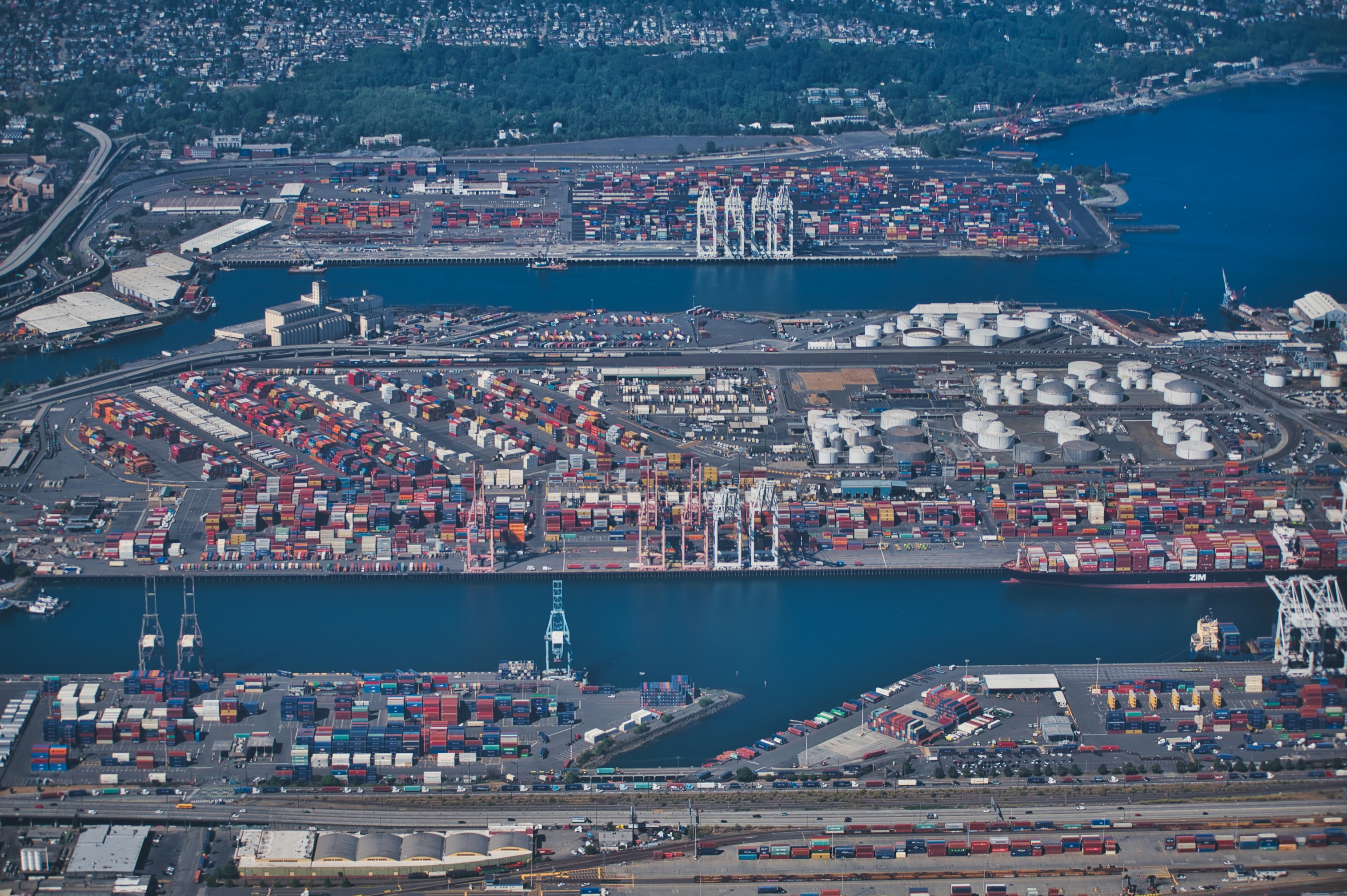
Photo by Marco Bicca on Unsplash

Saurav Kumar is currently pursuing a Master’s in International Relations at South Asian University, New Delhi. He completed his graduation in Political Science from Jamia Millia Islamia, New Delhi. As a student of International Relations, he is keen to explore diverse dimensions of geopolitics, geoeconomics, security studies, conflict transformation, and peacebuilding. With a particular interest in area studies, his focus lies in South Asian and West Asian studies.