Belgium’s Strategic Dilemma Over Frozen Russian Funds
This article examines Belgium’s opposition to the European Union’s proposal to use frozen Russian sovereign assets as collateral for large-scale loans to Ukraine, arguing that the controversy exposes deeper structural tensions in the EU’s e...
Introduction
Belgium’s unexpected resistance to the European Union’s proposal to use frozen Russian sovereign assets as collateral for large-scale loans to Ukraine[1] reveals far more than a technical dispute over wartime financing. It highlights a structural dilemma at the heart of the EU’s evolving statecraft. The EU has sought creative ways to support Kyiv's defence since Russia's full-scale invasion of Ukraine in 2022. The European Commission's recent plan is to monetise nearly €290 billion in immobilised Russian reserves held throughout the EU[2]. Instead of seizing the assets outright, the proposed plan utilises their revenue to support loans that Ukraine would repay after Russia makes war reparations[3]. The effort aims to utilise Moscow's frozen wealth as a tactical tool of pressure to cease its war on Kyiv.
However, this plan is predicated on an unequal allocation of risk. If Russia challenges the plan, only Belgium would be subject to possible lawsuits because Euroclear (which is headquartered in Belgium) owns the majority of the frozen assets. Belgian Foreign Minister Maxime Prévot has therefore insisted that while solidarity with Ukraine is unquestionable, solidarity cannot mean that Belgium alone assumes the legal and financial risks of monetising Russian reserves[4]. Belgium's concerns stem from its disproportionate vulnerability rather than geopolitical uncertainty. Belgium’s position must be understood within a broader landscape of geopolitical strain and institutional transition. Individual states have significant veto power due to the unanimity requirement for EU foreign policy decisions, which has already been tested by Viktor Orban's persistent rejection of aid to Ukraine while maintaining close ties with Vladimir Putin[5]. Consequently, Brussels's reluctance stems from a structure that is fragmented by asymmetric interdependence rather than a cohesive one. At the same time, Europe must contend with Moscow's increasingly hybrid warfare tactics, tightening sanctions on Russian energy, and the scenario that U.S. security guarantees may no longer be reliable.
Belgium’s stance reveals a critical tension in Europe’s geopolitical evolution. The EU wants to strategically use financial power to prevent Russian aggression, stabilise Ukraine, and weaponise interdependence. However, these goals need a degree of institutional resilience, economic unity, and legislative harmonisation that the EU has not yet attained. This article examines the legal & financial risks involved and analyses how Belgium's complaints underscore the structural limitations of the EU's evolving geopolitical role.
Belgium’s Position: Legal Exposure & Financial Risks
Belgium’s opposition to the reparations loan scheme is rooted in legal exposure and financial risk. Due to Euroclear's incorporation in Brussels, the legal exposure is exclusive to Belgium. In contrast to larger member states with more varied geopolitical portfolios, Belgium would run the risk of having its judiciary serve as a test bed for previously unheard-of issues, including the line between asset freezing and expropriation, and the legitimacy of monetising a foreign state's financial instruments without formal seizure[6]. It is argued that utilising the assets as collateral constitutes a practical intrusion on ownership rights, which Russia might legitimately question as a violation of international law, notwithstanding the European Commission's insistence that the assets remain technically untouched[7].
This legal exposure is compounded by financial risk related to possible reprisal from Russia. Since neutrality and sovereign insulation are the cornerstones of Euroclear's business strategy[8], any impression that the company has become an active tool of geopolitical coercion risks damaging its standing in international financial markets. Russia has already indicated that it considers the EU's plan to be theft, implying that retaliatory actions (such as targeted legal attacks or countersanctions) are likely rather than just hypothetical[9]. Euroclear reported billions in profits derived from the interest generated on immobilised Russian assets, which Belgium has partially taxed [10]. Although this revenue stream benefits Belgium in the short term, it paradoxically increases Russia’s incentive to target Belgian institutions in the long term, particularly if the assets become further leveraged to finance Ukraine’s defence. Belgium is aware that the EU's plan does not distribute financial risk equally. For instance, a court decision against Euroclear or a punitive Russian countersanction would fall directly on Belgian shoulders rather than the EU.
How EU Member States Interpret Belgium’s Objections
The wider EU reaction to Belgium’s objections reveals the extent to which the frozen-assets controversy has become a proxy battle for questions of burden-sharing and risk distribution within the Union. Although Brussels's reluctance was initially viewed by many member states as an unwelcome complication, the discussion has progressively revealed different perspectives on what solidarity means during a time of increased geopolitical vulnerability. Major European nations, including Germany, France, and the Netherlands, have acknowledged the validity of Belgium's concerns, emphasising that no member state should be held disproportionately responsible for a decision intended to benefit the EU[11]. Their willingness to consider backstopping potential Belgian losses reveals that the EU’s evolving strategy of economic coercion requires institutional and financial mechanisms that go beyond symbolic unity. These governments see Belgium's reservations more as a warning that high-risk innovation in EU financial governance needs to be accompanied by corresponding collective obligations than as an impediment.
Countries such as Lithuania, Estonia, and Poland (states closest to Russian military and hybrid activity) have expressed frustration that Belgium’s procedural and legal concerns might hinder urgent assistance to Ukraine[12]. For these administrations, the reparations-loan system is more than just a financial tool. It is a strategic imperative aimed at undermining Russia's military apparatus and strengthening Ukraine's defences[13]. Given the geopolitical implications along NATO's eastern flank, where Russian airspace violations, drone incursions, and military drills like the Zapad series have reignited fears of regional escalation, they see Belgium's caution as conservative[14].
The disparity between these interpretations results in a range of strategic objectives, making it challenging to develop a cohesive response. The use of Russian assets is viewed by Eastern European states as a component of a broader deterrent strategy, which aligns with their long-standing support for more assertive actions against Moscow. Despite their support for Ukraine, Western European nations often place a strong priority on institutional protections, legal strictness, and economic stability. This is partially due to their greater integration into international financial networks and their comparatively reduced vulnerability to immediate military threats. Consequently, Belgium becomes the pivot of these conflicting demands due to its location in Western Europe, and its institutional position at the centre of the asset issue through Euroclear. The ensuing conflict is not an indication of division, but rather of an evolving security discussion within the EU, one that calls for not only consensus on goals but also a more thorough examination of the institutional framework required to achieve them. Belgium’s objections, far from weakening Europe, may be forcing the EU to confront the realities of becoming a geopolitical actor for the first time since its founding.
The Institutional Politics Ahead:
The institutional politics surrounding Belgium’s resistance expose the structural limits of the EU’s ambition to act as a cohesive geopolitical actor. The frozen-assets controversy highlights a fundamental conflict: the EU's institutional architecture remains based on a governance model designed for regulatory unification rather than geopolitical confrontation. The Union still relies on unanimity when making choices about foreign policy, lacks a centralised budgetary authority that can take on shared liabilities, and operationalises supranational plans through national infrastructures (Euroclear is a clear example). Because of these limitations, the EU's strategy remains vulnerable. This fragility becomes clearer when considered within Europe’s rapidly transforming security environment. Since the Russian invasion of Ukraine, the EU has faced a deteriorating geopolitical landscape marked by hybrid warfare, energy coercion, and declining American commitment to European defence[15]. The EU has been compelled to consider a defence posture that is autonomous and fiscally sustainable due to signals from Washington, which have been made worse by rhetoric from the Trump administration’s growing internal scepticism toward NATO[16]. Initiatives such as the “ReArm Europe Plan 2030,” which allocates substantial resources to drone development, air & space defence, and eastern flank surveillance, reflect efforts to adapt[17]. However, these efforts further highlight a paradox. The EU is trying to establish strategic autonomy on top of institutional underpinnings that are still influenced by post-Cold War presumptions of stability and regulation. This leaves Europe relying on mechanisms designed for economic integration rather than geopolitical confrontation, creating a structural mismatch between ambition and capacity[18]. Thus, Belgium's caution highlights a broader issue. The EU cannot rely on peacetime institutions that are unable to guarantee fair liability sharing while pursuing wartime economic governance initiatives.
These tensions give rise to several plausible political scenarios. Initially, Belgium accepts the EU's proposal, but only after obtaining solid assurances regarding shared liability, legal defence, and safeguards for Euroclear. This result may create a precedent for future risk-sharing arrangements, enabling the EU to proceed with asset-based financing while acknowledging Belgium's vulnerability. In a second scenario, Belgium maintains its objections, compelling the EU to rely on traditional market borrowing. Despite being legally sound, this option requires unanimity, giving Hungary another opportunity to oppose funding for Ukraine. This could lead to a protracted impasse and damage the EU's credibility. A third option envisions a hybrid arrangement that combines partial collateralization, intended to mitigate Belgian risk, with interest revenues from frozen assets, which are already allocated to loans backed by the G7. While less transformative, such a compromise could strike a balance between financial innovation and institutional prudence. A fourth scenario sees the EU undertaking substantial institutional reforms in response to Belgium’s concerns. Recognising that concentrated financial infrastructures create systemic vulnerabilities, the Union might pursue an EU-level clearing mechanism, a central sanctions authority, or a collective treasury capable of assuming liabilities for future coercive economic measures. Such reforms would represent a major shift in the EU's institutional architecture, enhancing its long-term capacity to act strategically and reducing its reliance on national authorities, although they would be politically challenging.
At the opposite extreme, the frozen-assets controversy could accelerate fragmentation. If member states perceive EU initiatives as disproportionately burdensome or legally ambiguous, enthusiasm for collective action may diminish. Informal levels of geopolitical responsibility may result from states hosting vital infrastructures – financial, energy, or otherwise – resisting ideas that put them at risk of asymmetric reprisal. At a time when Russia's hybrid warfare is creating a volatile security environment, this result would undermine Europe's developing defence posture[19]. Therefore, the stakes in Belgium's predicament go far beyond asset governance. Whether Europe's emerging geopolitical identity is sustainable or if institutional inertia and uneven vulnerability will prevent it from acting cohesively and purposefully will depend on how the EU responds.
Conclusion
Belgium’s resistance to the EU’s frozen-assets proposal reveals far more than a procedural disagreement over wartime financing. It exposes the structural tensions shaping Europe’s emergence as a geopolitical actor. A mismatch between the EU's strategic goals and the institutional underpinnings intended to support them is at the heart of Belgium's predicament. Europe has sophisticated financial mechanisms that weaponise interdependence to combat Russian aggression, but these tools require levels of political coherence, budgetary solidarity, and legal harmonisation that the Union has not yet attained. The controversy also reflects the fragility of Europe’s current geopolitical moment. The EU is simultaneously rearming, attempting to reduce its dependence on Russian energy, confronting escalating hybrid threats, and adjusting to a future in which U.S. security guarantees are no longer certain. In addition to new instruments of military and economic might, addressing these issues calls for a more profound reinterpretation of solidarity. Therefore, Belgium's emphasis on shared culpability is a recognition that Europe cannot build strategic competence on institutional instability or unevenly distributed risks, rather than an act of narrow self-interest.
In this context, Belgium’s position may prove transformative. Belgium is putting pressure on the EU to implement the institutional changes required for true strategic autonomy by calling for more centralised procedures for managing frozen assets, greater liability-sharing arrangements, and more transparent legal frameworks. The frozen-assets issue has become a testing ground for Europe's evolving identity, putting its capacity to balance ambition and justice, innovation, and caution, to the test. Belgium’s dilemma thus highlights a defining choice: whether Europe can establish a resilient geopolitical posture based on shared responsibility, or whether institutional inertia will limit its capacity to act coherently in an increasingly volatile international order.
References:
[1] Kozul-Wright, A. (2025, December 4). Why is Belgium opposed to using Russian assets to support Ukraine? Al Jazeera. https://www.aljazeera.com/economy/2025/12/4/why-is-belgium-opposed-to-using-russian-assets-to-support-ukraine.
[2] Lagerkranser, P. (2025, December 3). EU proposes new plan for funding Ukraine using Russian assets. Bloomberg. https://www.bloomberg.com/news/newsletters/2025-12-03/eu-proposes-new-plan-for-funding-ukraine-using-russian-assets
[3] McCready, A., & News Agencies. (2025, December 4). EU proposes using Russian assets, loans to fund $105bn package to Ukraine. Al Jazeera. https://www.aljazeera.com/news/2025/12/4/eu-proposes-using-russian-assets-loans-to-fund-105bn-package-to-ukraine
[4] Beake, N. (2025, December 3). Belgium urges Europe to drop plan for frozen Russian assets to aid Ukraine. BBC News. https://www.bbc.com/news/articles/cz7n95wzl9lo
[5] Cafiero, G. (2025, October 26). Hungary’s rejection of confrontation with Russia. Trends Research & Advisory. https://trendsresearch.org/insight/hungarys-rejection-of-confrontation-with-russia/; Euronews. (2025, November 5). Ukraine does not defend Hungary, Orbán says in Zelenskyy rebuff. https://www.euronews.com/my-europe/2025/11/05/ukraine-does-not-defend-hungary-orban-says-in-zelenskyy-rebuff
[6] The Economist. (2025, December 7). A crisis over using frozen Russian assets to help Ukraine: It’s an old-style Euro punch-up in a deadly new context. https://www.economist.com/europe/2025/12/07/a-crisis-over-using-frozen-russian-assets-to-help-ukraine
[7] Setser, B. W. (2025, November 21). How to use Russia’s frozen assets. Council on Foreign Relations – Wachenheim Program on Peace and Security. https://www.cfr.org/article/how-use-russias-frozen-assets; The Hindu. (2025, March 18). The $300 billion question: What to do with Russia’s frozen central bank money? https://www.thehindu.com/business/the-300-billion-question-what-to-do-with-russias-frozen-central-bank-money/article69343967.ece
[8] Euroclear. (n.d.). Regulatory initiatives. https://www.euroclear.com/about/en/regulatorylandscape.html
[9] Croft, A. (2025, December 5). Moscow says EU plan to freeze Russian assets would be considered an ‘act of war’. The Independent. https://www.independent.co.uk/news/world/europe/russia-ukraine-eu-frozen-assets-war-medvedev-b2877964.html
[10] Sorgi, G., & von der Burchard, H. (2025, November 28). EU allies turn screws on Belgium over its tax income from Russia’s frozen assets. Politico. https://www.politico.eu/article/bart-de-wever-eu-allies-turn-screws-on-belgium-tax-income-russia-frozen-assets/
[11] The Economist. (2025, December 7). A crisis over using frozen Russian assets to help Ukraine: It’s an old-style Euro punch-up in a deadly new context. https://www.economist.com/europe/2025/12/07/a-crisis-over-using-frozen-russian-assets-to-help-ukraine
[12] Rohemäe, M.-A. (2025, December 1). Estonia urges Belgium, EU to free over €100 billion frozen Russian assets to aid Ukraine. ERR News. https://news.err.ee/1609872627/estonia-urges-belgium-eu-to-free-over-100-billion-frozen-russian-assets-to-aid-ukraine
[13] Nardelli, A. (2025, December 5). How EU would use frozen Russian assets to support Ukraine. Bloomberg. https://www.bloomberg.com/news/articles/2025-12-05/frozen-russian-assets-and-their-role-in-funding-ukraine
[14] Al Jazeera. (2025, September 16). Russia launches cruise missiles in Zapad 2025 military drills with Belarus. https://www.aljazeera.com/news/2025/9/16/russia-launches-cruise-missiles-in-zapad-2025-military-drills-with-belarus
[15] Sauer, P., & Roth, A. (2025, December 3). Russia ‘ready’ for war if Europe starts it, Putin says, as US peace talks end without progress. The Guardian. https://www.theguardian.com/world/2025/dec/02/witkoff-in-moscow-for-talks-as-putin-claims-to-have-taken-key-ukrainian-city
[16] Wright, T. (2017, June 1). Trump remains a NATO skeptic. Brookings Institution. https://www.brookings.edu/articles/trump-remains-a-nato-skeptic/
[17] Clapp, S., Höflmayer, M., Lazarou, E., & Pari, M. (2025, April 3). ReArm Europe Plan / Readiness 2030. European Parliament Think Tank. https://epthinktank.eu/2025/04/03/rearm-europe-plan-readiness-2030/
[18] Balfour, R., Baroncelli, E., Bomassi, L., Csernatoni, R., Goldthau, A., Grevi, G., Hoeffler, C., Jones, E., Nair, P. P., Ülgen, S., & Youngs, R. (2025, November 19). Geopolitics and economic statecraft in the European Union. Carnegie Endowment for International Peace. https://carnegieendowment.org/research/2024/11/geopolitics-and-economic-statecraft-in-the-european-union?lang=en
[19] Clapp, S., Höflmayer, M., Lazarou, E., & Pari, M. (2025, April 3). ReArm Europe Plan / Readiness 2030. European Parliament Think Tank. https://epthinktank.eu/2025/04/03/rearm-europe-plan-readiness-2030/
(The views expressed are those of the author and do not represent the views of CESCUBE)
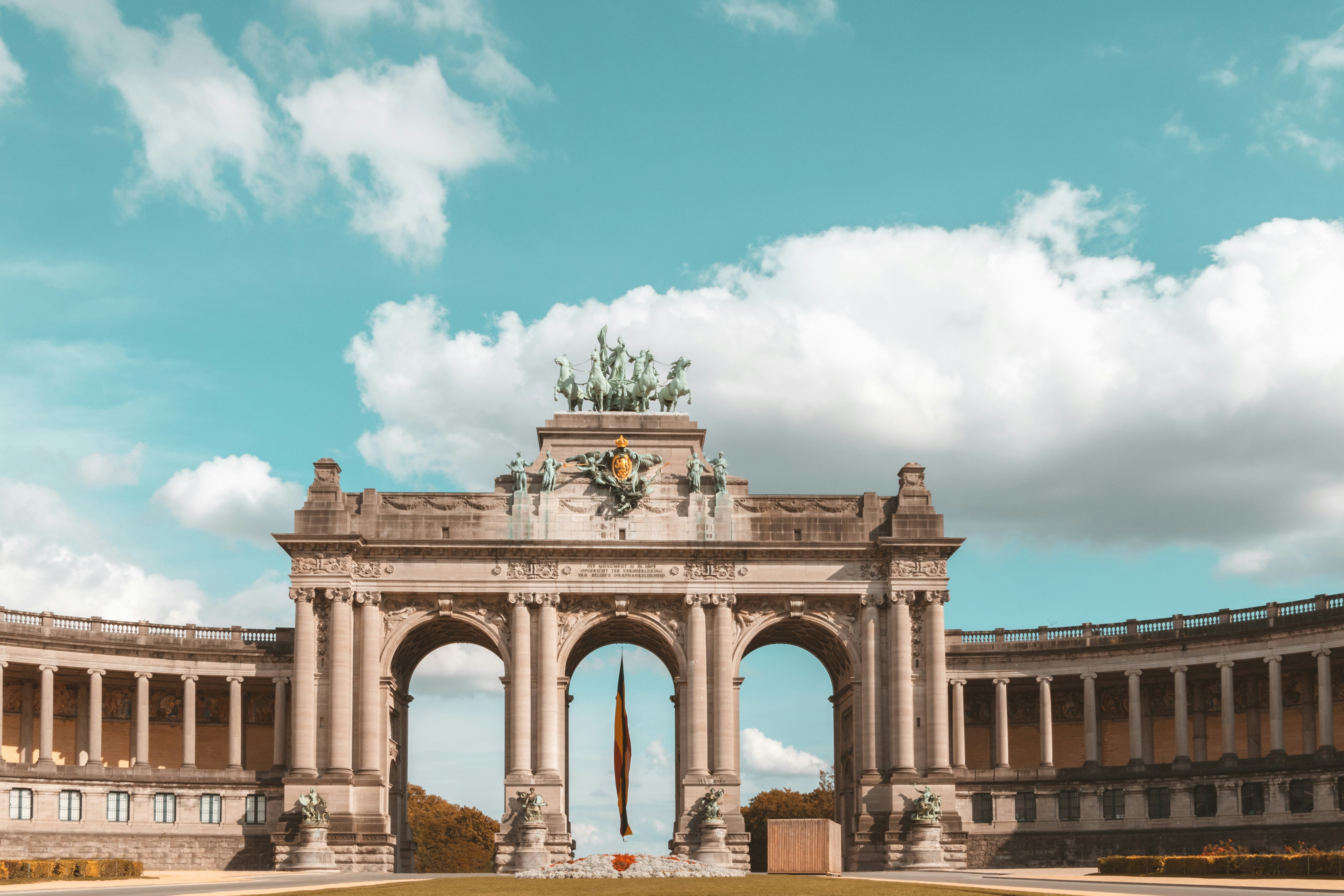
Photo by Thomas Somme on Unsplash

Jyot Shikhar Singh has completed his graduation in Political Science (Hons.) from University of Delhi and his post- graduation in Diplomacy, Law, and Business from Jindal School of International Affairs. His research areas focus on the political and strategic interaction of foreign policies through national developments, especially European politics, and development. Other than international relations, his interest in political philosophy, focusing on post- structural school of international relations, is part of his objective to focus on the theoretical understanding of international relations including factors like culture and nationalism. He is currently associated with CESCUBE as research associate. He is currently associated with CESCUBE as research associate.