Resurgence, Realignment & Repercussions: the Evolving Geometry of AfPak-Indo-Pak Relations
The resurgence of the Tehreek-e-Taliban Pakistan (TTP) following the Taliban’s takeover of Afghanistan has altered South Asia’s security dynamics, intensifying instability across the AfPak region. This article analyses the drivers of TTP’s ...
21st century South Asia has witnessed a significant shift in its security landscape- this shift has been especially characterised by the Taliban’s takeover of Afghanistan in 2021. The region now experiences the resurgence of an offshoot of the Taliban re-emerging, the Tehreek-e-Taliban Pakistan, and its bid to reform Pakistan, with a Taliban-style Islamic state, at its centre. This article brings to light, the concerns of cross-border militancy and ideological expansion, with its possible implications for India’s Western-border and security framework; testing India’s diplomatic posture.
Doctrinal roots and political motivations of the Tehreek-e-Taliban Pakistan:
The Tehreek-e-Taliban Pakistan (TTP), was formed as an umbrella organisation, with its primary objective being the dismantling of Pakistan’s constitutional framework and replacing it with Sharia law. The TTP has been infamous for activating multiple militant factions in and along Pakistan’s tribal areas, often encashing on tribal grievances that stem from the militarisation of Pakistan’s border regions. With a major ideological driving force being the Deobandi School of Sunni Islam- drawing commonalities with the Afghan Taliban. At present, the TTP stands as one of the most active and capable terror entities in South Asia, ambitiously striving for an Islamic emirate, modelled on the Afghan Taliban’s formal takeover of Afghanistan. The group has been justifying its methods and campaigns of violence by framing the Pakistani state as an agent of foreign powers. This narrative has gained considerable attention post Taliban’s seizure of Kabul in 2021, with the TTP interpreting this as proof that an Islamist insurgency could positively defeat a state which is backed by external actors. Factors such as increased man-power, organisational strength and reach, has enabled the TTP to operate with relative freedom. Increased recruitment, propaganda activities and operations across Pakistan’s northwestern frontier have further aided the glorification of the group.
Enablers of the resurgence:
Historical ties and shared ideological foundations have kept the Taliban government in Kabul from taking cohesive measures against the TTP leaders in Afghanistan, proving the nation to be a reluctant safe haven for the group. Along with this, Pakistan’s strained political and economic landscape backed by divisions and downturn have hindered its ability to sustain its counterinsurgency operations against the TTP- facilitating the group to take advantage of Pakistan’s internal instability and security vacuums.
Further, the withdrawal of US troops from Afghanistan and in turn, the reduction of western influence, has created a power void where local militant groups operate with less external pressure, fostering an unsavoury environment.
Pakistan’s security and Governance strains:
The TTP has now created an air of control in the peripheral regions, by targeting both Pakistan’s military and civilian infrastructure. While Pakistan has attempted to systematically retaliate with operations that have reduced militant activity, the state has failed to strategically dismantle the TTP’s transnational framework. This failure has worsened after Pakistan and the Afghan Taliban’s unsuccessful ceasefire agreements, particularly when the TTP demanded the reversal of Pakistan’s constitutional merger of the former Federally Administered Tribal Areas (FATA), with Khyber Pakhtunkhwa; a demand which was met with complete refusal by Islamabad. The TTP’s demands reflect not only territorial grievances but also firm ideological goals that aim to roll back Pakistani authority in Pashtun regions.
The Regional Dimension:
The region’s calculus which is now actively being shaped by the TTP’s ideological entrenchments in the eastern provinces of Afghanistan, along with a deteriorating trust between Islamabad & Kabul, may spillover and create an uncomfortable situation for India. Signalling an unprecedented shift in South Asia’s security landscape.
Afghanistan: The ambivalent ally
Despite its deep-rooted ideological leanings, the Taliban government has been actively seeking international legitimacy since 2021. A duality, that has positioned Afghanistan as Pakistan’s ambivalent partner in its counterterror strategies.
However, Islamabad’s hopeful judgement has proven to be misplaced, in terms of the Taliban regime curbing anti-Pakistan elements- weakening relations between the two governments. Kabul’s hesitations towards a firm stance on the TTP, seems to stem from the Taliban’s strategic programme, which steers clear from risking internal fragmentation within the Pashtun belt and alienating influential militant factions, whose loyalty underpins the Taliban’s domestic authority.
Left without any western military forces, Afghanistan has turned into a congenial environment for militant entities, once again. The continued presence of the Al-Qaeda and the Islamic State Khorasan (IS-K) in the region has increased the perception of threat for Pakistan. The competition for ideological supremacy between the TTP and IS-K, intensifying a potential outpour.
Pakistan’s strategic predicament:
The TTP’s re-emergence highlights the cracks in Pakistan’s security doctrines and counterinsurgency models, which have produced tactical gains but have disappointed when it came to eliminating militant infrastructure and ideological deficits that have sustain militancy.
Islamabad is now faced with a multidimensional security dilemma. The first being its inability to control the state’s western frontier, secondly, its disintegrating synchronisation between civil and military actors which has polarised the population, undermining the country’s strategic focus and thirdly, Pakistan’s fragile economic state and its possible inability to sustain long-term counterinsurgency operations.
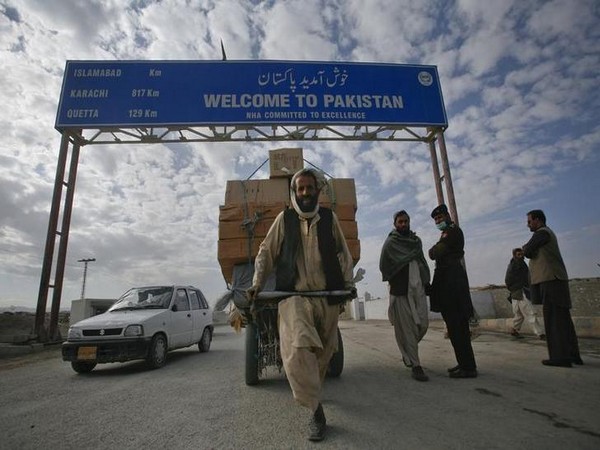
Another contentious issue that continues to fester and adversely affect the situation, is that of the unilateral fencing of the Durand Line- a major cause of disrupted bilateral trade and recurring skirmishes amongst the two nations. These hostilities in Pakistan have been exploited by the TTP, by carrying out coordinated attacks in Balochistan, Punjab and Khyber Pakhtunkhwa- indicating a steady escalation in the frequency and lethality of the attacks, greatly reversing a decade of Pakistan’s counterterrorism progress.
A shifting strategic landscape:
The withdrawal of the United States and its sustained coordination, from Afghanistan has formed a void of external oversight in South Asia, leaving regional actors to manage the security profile of the region- an absence which has amplified insecurities within the region, gradually segueing into broader geopolitical friction. Perceptions of kinship and patronage between Pakistan and the Afghan Taliban are now vastly diplomatic. Islamabad’s efforts to pressure Kabul have reversely resulted in a complicated influence over Afghan politics, reaffirming Islamabad’s inability to contain the scenario. At the same time, Afghanistan has limited its engagement with neighbouring countries, especially its dependence on Pakistan, reflecting a balancing act approach towards the region’s diplomacy. These shifting alignments suggest a gradual erosion of Pakistan’s once dominant influence over Afghan affairs.
Implications for India:
The TTP’s bounce-back, holds significant implications for India, despite its geographic posture. The possible convergence between anti-state and anti-India elements cannot be dismissed, particularly keeping in mind the state of Pakistan. Islamabad’s use of asymmetric tools to project deterrence may add a layer of unpredictability to India’s threat profile. However, insurgent elements on Pakistan’s western frontier have compelled the state to redistribute its security resources to maintain equilibrium- providing India with temporary strategic respite.
Features such as expanded surveillance capabilities along with the amalgamation of satellite and UAV monitoring with digital intelligence platforms, play a crucial role in pre-empting potential infiltration networks- demands which are being actively backed by Indian agencies like the Research & Analysis Wing (R&AW) and the Intelligence Bureau (IB).
Over the past year, New Delhi’s coordinated efforts to deal with counterterrorism and humanitarian assistance has aided in stabilising relations with Kabul, initiating a strategic opening. This calculated, diplomatic attempt, should now be nurtured to maintain balance without heightening Islamabad’s insecurities.
India’s response to this regional shift, must be dealt with geopolitical prudence. Channelling coordination through frameworks such as the Shanghai Cooperation Organisation (SCO), present an avenue for influence and functional dialogue on border security and counterterrorism in the region.
The security triangle & the way forward:
Pakistan’s internal insurgency, Afghanistan’s unrecognised sovereignty and India’s stable yet vulnerable posture causes the security triangle between the three nations to remain askew. With the likelihood of an enhanced misperception and escalation looming in the region.
Under these circumstances, the insulation of counterterrorism from broader political disputes is an ambitious yet necessary approach. However, the political mistrust between Pakistan and Afghanistan has stunted the operational capabilities of the two nations.
Internal incoherence and an imbalance in kinetic operations stand as Pakistan’s prime issues. On the other hand, Afghanistan’s will, to suppress or tolerate the TTP, shall dictate the trajectory of militancy in the region. In the midst of this, India’s sustained vigilance and enhanced cooperation and calibration with Afghanistan represents a realistic measure to contain a likely spillover. The Tehreek-e-Taliban Pakistan’s revival, exhibits the interconnected nature of South Asia’s security climate. Bringing to light the most pragmatic strategy- containment. An approach which emphasises on the political, economic and institutional construction of each state actor, against large-scale militancy.
(The views expressed are those of the author and do not represent the views of CESCUBE)
Image Source: DD News https://ddnews.gov.in/en/afghanistan-border-clashes-ease-thousands-seek-shelter/
Aavriti Chauhan is a political science and journalism graduate who is presently completing her Master’s in Political Science, with a concentrated interest in defence strategy, national security, and international relations. Shaped by her upbringing in an infantry family, she brings practical insight and a grounded understanding of military culture to her analysis. Her work examines India’s strategic challenges, military affairs, and the broader shifts defining the global security environment.