Narratives, Morale, and Psychological Warfare: The Hidden Trident of Modern Strategy
“Mind over maps. That’s twenty-first century warfare for you.”Whilst conventional strategies involving firepower continue to redraw tactical borders, one cannot deny the unmistakable and somewhat frightful regularity with which political, e...
From Kinetic to Cognitive Battlespace
Historically, the India-Pakistan rivalry has been characterized by kinetic engagements: 1947-48, 1965, 1971, and Kargil in 1999, with other crises that have continued to follow thereafter. Yet each conflict also carried a parallel struggle over interpretation- who initiated, who escalated, who prevailed.
Kargil was instructive. The war raged at a great altitude but its diplomatic and informational aspects were equally decisive- enabling India to position the intrusion as a breach of the Line of Control, and get international recognition of that positioning- constraining the diplomatic flexibility of Pakistan. Narrative discipline amplified this battlefield success.
In the post-Kargil era, and especially after the 2016 Uri attack and the 2019 Pulwama-Balakot incident, the cognitive battlespace has become even more pronounced. Precision strikes and cross-border operations are now accompanied by carefully calibrated public disclosures. Information is neither fully concealed nor fully revealed; it is managed to achieve strategic signalling without uncontrolled escalation. This reasoning is quite evident: in a nuclearized world, perception management is a preventive tool. The war is not about territory but about authority.
Narratives as Strategic Capital
Narratives operate at three levels: domestic, adversarial, and international. They support morale and justify the action of the state at home, and in the case of India- presenting the operations as defensive and proportionate, and as retaliatory to terror is a reinforcement of political agreement and popular belief. For Pakistan, this interpretation as resistance against Indian aggression is what maintains internal unity and civil-military harmony.
Narratives are weapons of coercion against an adversary. An open retaliatory strike will cause the opponent to retaliate, or clarify non-retaliation. Silence can signal restraint; rhetoric can compel escalation. The information released becomes a calculated provocation or reassurance.
Internationally, narratives shape diplomatic space. In an era of rapid digital dissemination, the first credible account often frames subsequent debate. India’s increasing emphasis on timely official briefings reflects recognition that strategic communication is not an afterthought but a line of effort.
Notably, the process of narrative constructions does not stand synonymous with propaganda. Effective narratives are anchored in verifiable events, consistent messaging, and institutional credibility. Overstatement erodes trust, restraint enhances it. Strategic communication, therefore, demands discipline equal to that required on the battlefield.
Morale: The Invisible Force Multiplier
The psychological centre of gravity of a prolonged rivalry is morale. It has an impact on the effectiveness of combat, resilience and political determination of the population. In the case of professional armies, the morale is a result of institutional cohesion, trust in leadership as well as clarity of mission. The Indian Army’s regimental traditions, decentralized command culture, and long experience in counterinsurgency operations have cultivated a robust internal ethos.
Yet morale is not static. The use of sustained psychological support systems and adaptive leadership is necessary in order to sustain continuous deployment in high intensity environments such as the Line of Control and security grids that exist within internal settings.
The Pakistan army’s deep entrenchment into the political system of the state, aids in its morale, fuelling the idea of the army as the custodian of national identity. This intertwining strengthens internal cohesion but also elevates the stakes of narrative contestation. Challenges to institutional prestige can have amplified domestic implications.
Morale goes beyond uniformed ranks. The effectiveness of civilian resilience, in response to crises, is the ability to be confident in leadership, have trust in information, and believe in strategic competence, which either combines or divides societies. In India and Pakistan, media ecosystems and social platforms are trying to serve two purposes: amplifying patriotic sentiment while simultaneously exposing publics to disinformation and emotional volatility.
Psychological Warfare in a Nuclear Dyad
Psychological warfare between India and Pakistan is uniquely shaped by nuclear deterrence. The shadow of escalation imposes caution, yet it also incentivizes ambiguity. Demonstrative strikes, calibrated leaks, and military exercises in sensitive sectors- all carry psychological significance. They express ability and will without going beyond proclaimed red lines. The objective is to influence adversary calculus- to shape how the opponent interprets thresholds.
This dynamic was depicted in the 2019, when the airstrike by India in Balakot was openly recognized- marking a dogmatic change of direction to open cross-border retribution. The Pakistani reaction that followed, with air interference was also a highly publicized one. Both sides sought to demonstrate resolve while avoiding uncontrolled escalation. The psychological contest was as significant as the tactical exchange.
The cyber and information domains have expanded this space. Fake news, manipulated images, and synchronized social media postings are aimed at attempting to impact both domestic and international audiences. Attribution issues make selection of answers difficult and in the long term, credibility is a strategic asset more durable than momentary informational advantage.
However, psychological warfare is not solely offensive. It includes defensive resilience: inoculating populations against misinformation, ensuring transparent communication, and maintaining institutional credibility. In the long term, credibility is a strategic asset more durable than momentary informational advantage.
The Ethics and Risks of Narrative Strategy
The instrumentalization of narratives raises normative questions. At what point does strategic communication cross the line to manipulation? At what point does controlled disclosure risk unintended escalation? In an area characterized by historic resentment and ethnic sensitivities, a kinetic impact of inflammatory rhetoric can be observed. Strategic messaging must therefore be moderate and firm. The point is to influence the perception, not inflame it beyond control.
Besides, the narrative competition may cement the zero-sum thinking. When every single development is set in terms of total triumph or defeat, diplomatic options do not have room to manoeuvre. The art of statecraft requires a space to run de-escalation narratives, ways through which the adversary retreats without perceived capitulation.
Toward an Integrated Trident
The conceptualization of narratives, morale, and psychological warfare as a hidden trident is an awareness of interdependence. Narratives influence morale. High morale enhances the credibility of narratives. Psychological operations exploit or reinforce both. Neglect one prong, and the others weaken.
In the case of India, to incorporate this trident, institutional coordination is needed between the military, public information wings, and diplomacy channels, as well as strategic communication units. It demands professionalization of information operations, investment in cyber resilience, and doctrinal clarity on disclosure thresholds.
For Pakistan, whose civil-military balance shapes national messaging, coherence between political leadership and military signalling remains critical. Disjointed narratives risk miscalculation in a high-stakes environment. Both states face the problem of controlling fast-paced domestic media ecosystems which function on minimal check. Strategic communication cannot be improvised in crisis; it must be rehearsed, institutionalized, and credible.
Conclusion: Strategy in the Age of Perception
Clausewitz wrote that war is a continuation of politics by other means. In the India-Pakistan context, perception has become a continuation of war by other means. The battlefield has expanded into living rooms, newsrooms, and digital feeds. For the Indian Army and its adversary, success in future crises will not hinge solely on firepower or manoeuvre. It will depend on the ability to sustain morale, control narratives, and conduct psychological operations without triggering unintended escalation.
The concealed trident is not peripheral but abstract. It is imprinted in each press statement, each change of direction of the doctrine, each pronouncement or refusal of the truth. In a nuclearized competition, in which the full-scale war is still unlikely, but crises are common, the management of perception is likely to be one of the determinants of whether a confrontation becomes stabilized or spiral. There is a need, then, in modern strategy not only to have soldiers and systems, but to have storytellers and strategists, officers and policymakers who recognize that credibility is power, restraint is signalling and morale is momentum. The future of the India-Pakistan contest will not be decided solely on mountain ridges or across borders. It will also be decided in the contested terrain of belief.
(The views expressed are those of the author and do not represent the views of CESCUBE)
Photo by engin akyurt on Unsplash
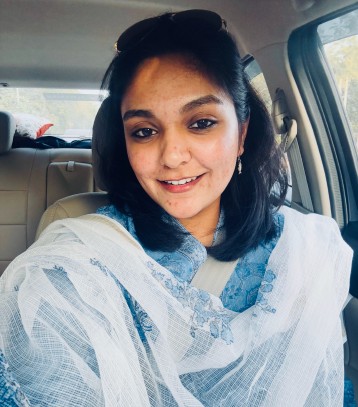
Aavriti Chauhan is a political science and journalism graduate who is presently completing her Master’s in Political Science, with a concentrated interest in defence strategy, national security, and international relations. Shaped by her upbringing in an infantry family, she brings practical insight and a grounded understanding of military culture to her analysis. Her work examines India’s strategic challenges, military affairs, and the broader shifts defining the global security environment.