Foot-Dragging as Feminism: Iran, South Korea, and the Ungovernable Body
The global attention surrounding Iran's Women, Life, Freedom movement following the death of Mahsa Jina Amini created the impression of a feminist uprising that briefly captured international consciousness before gradually fading from view. Yet visibility should not be mistaken for vitality. While street protests have become less frequent and state repression has intensified through surveillance, internet restrictions, and political crackdowns, the underlying structures of resistance continue to evolve in less visible but equally significant ways.Drawing upon James C. Scott's concept of "Weapons of the Weak" and the comparative framework of South Korea's 4B movement, this article argues that the apparent decline of the Iranian feminist movement is not a recession of intensity but a transformation of form. Through everyday acts of refusal, demographic resistance, alternative interpretations of Islamic law, and hidden transcripts of dissent, Iranian women continue to challenge systems of gender control beyond the spectacle of mass mobilisation. The article contends that the most durable forms of political resistance are often those that operate beneath the surface of public visibility, making them harder to suppress and easier to sustain over time.
A crowd gathered and cheered as women threw their hijabs into street fires on 17 September 2022.1 The news of the movement spread quickly, through social media feeds, the front pages of newspapers, and the floor of the United Nations. Within months, the fire spread. The Women, Life, Freedom movement, whose central slogan emerged from the Kurdish city of Saqqez, carried with it a history and political connotation, explicitly feminist in tone. It became not merely a series of protests in which women participated but an uprising in which women’s bodies, experiences, and forms of resistance became the primary subject of political struggle in Iran. On 22nd October 2022, miles away from the first sites of protest, more than 80,000 protestors marched in Berlin in solidarity, organised by the Iranian diaspora. A formal open letter demanded that United Nations Member States immediately remove the Islamic Republic of Iran from the Commission on the Status of Women, which they did.2 For a moment, the entire world was tuned into the same frequency. However, since then, the frequency’s been jammed.
Following the collapse of the national currency in late 2025, a new wave of protests erupted. Images of the protests began circulating with captions such as “Man, Homeland, Prosperity,”3 a shift in the narrative away from the feminist slogan towards a masculinist current, particularly within the opposition. This actively displaced the feminist framing of the earlier uprising. Meanwhile, since the war in Iran began, reports of greater monitoring of dissent and an internet blackout have been imposed, which deliberately cuts communication and prevents human rights monitoring. AI-assisted surveillance has also been deployed to target women for violations of morality laws.4 Nobel Laureate Narges Mohammadi, too, continues to be incarcerated as a political prisoner. 5
Most of the literature around the Iranian feminist movement states that the movement peaked in 2022 and has since retreated under the combined pressures of state repression, geopolitical turmoil, and now open warfare. This is a result of focusing on the form of resistance rather than its substance. Yet the question this article wishes to sit with is not simply what happened to the movement, but something more unsettling: Is the recession real, or is it a recession in visibility? The difference between the two forms is what follows, arguing instead that the movement has not diminished but transformed, shifting from spectacular street-level protest into forms of refusal that are more durable, strenuous to suppress because they’re less visible. The article posits that the recession is not one of intensity but of form. The 4B movement in South Korea; Bihon: No heterosexual marriage, Bichulsan: No childbirth, Biyeonae: No dating men, Bisekseu: No sexual relationships;6 is one of the analytical lenses that form the dialogue of the article. While the movement has no direct influence on Iranian women, it forms a structural analogy for what bodily refusal looks like when the state writes women’s reproductive and domestic lives, turning them into a nationalist project. The second is James C. Scott’s notion of the Weapons of the Weak, which explores every day and systematically overlooked forms of non-compliance through which subordinate groups resist domination without declaring it. Foot-dragging, false compliance, and feigned ignorance, and other acts of resistance form a hidden transcript.7 These lenses together allow the article to document what the global gaze, led by geopolitics and a structural bias toward the spectacular, has turned a blind eye to: that the Iranian feminist movement did not go quiet after 2022. It sublimated into the fabric of everyday life, where it has always been, and where it now remains.
Section I: Gender at the Centre:
In most political analyses, revolutions, corps, and movements, gender is treated as an afterthought, something that will be addressed once the “real” political questions are settled. Masculinity and politics have always been closely tied in this regard; characteristics such as autonomy, power, and toughness, which are associated with the conduct of politics, are often associated with masculinity. Gender shapes politics. Socially constructed gender differences are based on socially sanctioned, unequal relationships between men and women that reinforce compliance with men's stated superiority. Nowhere in the public realm are these stereotypical gender images more apparent than in the realm of international politics, where the characteristics associated with hegemonic masculinity are projected onto the behaviour of states whose success as international actors is measured in terms of their power capabilities and capacity for self-help and autonomy.8
As such, politics influences gender and can make available or limit different constructions of being a woman or a man in a changing society. This vocabulary of binary is not synonymous with understanding sexual differences alone, but is one of the primary languages through which political power organizes, legitimizes, and reproduces over time. The change in political order is proportional to the change in the distribution of authority, which directly influences the extent of control women can exert. However, the gendered aspects of political struggle in the region have been reduced to the deceiving symbolism of “the veil” and the question of how they treat their women. This mode of analysis positions women as patiently suffering or heroically resisting a universal and unchanging patriarchy. Consciously stirring clear of that reductive framing, it is imperative to note that gender is a fundamental category of understanding political dynamics. In the case of Iran, the question isn’t if gender matters but why, and what it reveals about the nature of political resistance.
Regardless of whether revolutions have leaned towards liberation or restriction, toward the left or the right, or toward modernity or tradition, they almost immediately turn toward the female body as a site of symbolic and juridical reorganisation. Across various nationalistic and revolutionary contexts, the recurrent use of the female body as a guardian of culture, a body of collective communal identity, is stark. Whether in post-colonial nation-building, religious nationalistic movement, or mobilisations, women are assigned the role of carrying the identity of the group, a double-edged sword. This assignment confers symbolic centrality while demanding compliance and meting out punishment for failure.
As such, the Iranian state, post the 1979 revolution, by imposing compulsory veiling within weeks of taking power, did not just impose a law on women, but displayed a poster of what the Islamic Republic was and what kind of bodies were at its forefront. It needed women’s reproductive, domestic, and moral compliance, which is a more demanding claim than the observation that the state itself was patriarchal. The ideological Parthenon of the Islamic Republic could not stand without the specific organisation of gender that the revolution put in place. The compulsory hijab, when read through this lens, is not just a religious symbol or instrument of oppression but a statement on the daily Islamic social order. The marriage law, which returned divorce rights to men and reduced the minimum marital age of girls to nine, led to organising the domestic sphere as a microcosmic unit of the Islamic governance. The removal of women from the judiciary and fields of study and employment isn’t just a peripheral adjustment but the formation of a structure.9
Internally, this produced a contradiction: when the custodians of Shari’a became the legal basis of a state, they had to balance the claim to elevate women to their “true and high” status in Islam against the enforcement of men’s Shari’a prerogatives over divorce, custody, and civic life. The result of this tension was the institutionalization of this contradiction managed through the morality police, surveillance, and the law.10 In an attempt to capture the inside, Marjane Satrapi’s Persepolis is a graphic memoir where Satrapi was ten years old when the Islamic Republic mandated the veil in 1980. She captures the confusion and the grief of girls who had been part of the revolution but were its first casualties. In the span of a few panels, Saptrapi depicts her experience of being present at the moment when not only the dress code but the revolution announced the role that women would then play.11 The private self that continued beneath the public performance demanded by the state is precisely the hidden transcript that James Scott would later theorise. The resistance that persists in the gap between what is performed and what is chosen. Satrapi’s Persepolis documents this hidden transcript at play in Iran, panel by panel; it shows what Iranian women as a structural category had to understand about their role in the revolution.
The comparison to the 4B movement in South Korea becomes inevitable here. The rejection of marriage, childbirth, dating, and heterosexual sex, which is the basis of the movement, emerged from a competitive capitalistic society in which the South Korean developmental project required women’s domestic labour and reproductive capacity to function; it formed the grounds on which the economic miracle was possible.12
Even though the context is thoroughly distinct, the demand made of women remains the same; their compliance is presented not as a choice but a condition. While in Iran, the women’s compliance is policed by the morality police and encoded in family law. In South Korea, the labour market structure, cultural expectations, and social norms enforce it. Both the societal claim laid and the refusal carry the same structural weight, regardless of whether it is within the language of Islamic feminism or the declining birth rate in South Korea.
Section II: The Revolution and Re-Islamisation
While the revolution of 1979 announced what they needed women to be, the decades preceding it, though not without contradiction, were expansionary for Iranian women. The Shah’s White Revolution of 1963 granted women the right to vote, raised the minimum age of marriage, and widened the professions available to women, even if it was instrumentalised as a marker of Western modernity.13 The revolution that followed made clear that what was to follow was not just a change of government but an alternative social order. The previous section made clear the extent of re-Islamisation in terms of compulsory veiling and the Family Protection Law, and, more importantly, the institutionalisation that made it possible and removed any scope for dissent.
Literature from this period consistently underestimates how quickly Iranian women began resisting the system from within. The journal Zanan, launched in 1992, became the primary institutional vehicle for Islamic feminism. It highlights how much of Islamic law consists of “accidents of history,” contingent on seventh-century Arabia rather than divine mandate. It sparked the rajol debate, in which it was argued that the Arabic word used to denote presidential eligibility need not be gender-exclusive. Zanan had also famously translated Simon de Beauvoir and Virginia Woolf alongside Quranic reinterpretation, opening up the discourse from both inside and outside Islamic legal discourse, creating an institutional process on its terms.
However, Zanan was progressively dismantled and shut down in 2008, with activists imprisoned and organisations dissolved.14 Locating the state much closer to when this is being written, the Woman, Life, Freedom uprising was not a beginning. Following four decades of accumulation, the status of Iranian women was finally at the forefront. What made this structurally distinct was Mahsa Jina Amini’s death in the custody of the morality police over an improperly worn hijab, collapsing the gap between routine state operation and political dissidence. The slogan Jin, Jiyan, Azadi, which is from the Kurdish liberation movement, has an explicitly feminist tone. And the scope of the movement, which challenged the entire framework of gender control, not just the law or the policy, but what is now termed gender apartheid.15
The movement enabled a layered form of resistance that produced a global moment of solidarity and a formal UN reckoning. Therefore, the question is not what happened to the movement, but where global attention is drawn.
Section III: The World Outside:
The year 2022 marked both the Women, Life, Freedom uprising and the war in Ukraine. Within this scenario, the apparent recession of the Iranian feminist movement from global attention remains the dominant narrative. As the war in Ukraine continues without resolution, the human rights of Ukrainian women and civilians have become an urgent case, and understandably so, while the case of Iranian women has been deprioritised. At this time, it must also be documented how the dominant lens through which the Iranian government is viewed is saturated with its nuclear potential, positioning the country as a strategic problem rather than a society whose population was engaged in a fundamental political struggle. To be held accountable for gender apartheid without that accountability creating friction in a diplomatic negotiation result in negotiations being resolved in its favour.
The China-brokered Saudi-Iranian rapprochement in 2023 restored diplomatic relations and shifted the geopolitical landscape. A less isolated Iran is also less tractable as a target for human rights pressure. The impact of the war on the civilian population, particularly women and girls, has been catastrophic. On 28 February 2026, the bombing of an elementary school in Minab killed more than 165 girls. Iranian women continue to face serious environment-related health complications due to the bombing, including, but not limited to, reproductive complications.16 The war has therefore added a layer of violence to the apparatus of gender control rather than liberating Iranian women. As the regime clings to power, reports of greater monitoring of dissent and an internet blackout cutting off communication, and AI-assisted surveillance are deployed to target women for morality laws.17 The feminist movement within this environment of chaos has not been given space to function. It has been compressed into the invisible and every day, which this article argues is the most durable form.
The war also cultivated an environment that makes it harder to hold the country accountable for its treatment of women. Here, the primary framing is not gender apartheid but military operations, civilian casualties, and the international code of conduct and law. Neither the U.S. nor Iran is a party to the Rome Statute, which forecloses jurisdiction from the International Criminal Court. 18 Suggesting that accountability mechanisms are already structurally limited even for the most visible violations.
While situating the feminist movement in the current climate provides some answers, it is also worth looking at the nature of attention that was always paid. Fereshteh Ahmadi, in her paper, observes that Western feminist scholars have paid attention to the visible, dramatic markers of gender oppression, such as the hijab, the morality police, and the street protest, which paints an image of a narrative in which Iranian women are victims and Western attention comes to rescue. 19
This observation throws light on the structural function that Iranian women’s rights perform within Western political discourse, a narrative in which the West positions itself as the norm against which Islamic societies are measured. After September 11, 2001, Iranian, more importantly, Muslim women became both symbols of oppression and objects of the “war on terror” framework.20 Within this context, what began as a movement centred on women’s rights, bodily autonomy, and resistance to systemic gender discrimination has become contingent on when it is useful for the West to notice.
Section IV: Islamic Feminism:
Islamic feminism is distinct as a form of resistance. One that operates from within the dominant framework rather than in direct opposition to it. Where secular feminist movements found themselves excluded from the Islamic republic mechanism, Islamic feminists engage the regime’s own legal and religious language, and in doing so, they turn that language against the patriarchal structure that sustains it. Abdol Karim Soroush’s doctrine draws a difference between what he termed the zati, the essential core of Islamic belief, and the arazi, the historically contingent “accidentals” produced by the specific cultural place and time in which the Quran was written. The traditions reflected depict the contingencies of that specific historical context rather than transhistorical divine will.21 This logic was extended to the Sharia to articulate that it is not a fixed manifesto but a text that breathes, situated in human interpretation.
Zanan, the journal, uses this framework to illustrate how many of the laws governing women, including asymmetric divorce rights and polygamy, were products of seventh-century Arabian social arrangements. They argued that a genuine understanding of Islam requires ijtihad, an independent investigation of religious sources and tafsir, interpretation of the Quran.22
The debate over the Arabic word, rajol depicts this mode of resistance at its core. Article 115 of the Iranian constitution required presidential candidates to be rajol, a term whose primary reference is to a man;23 Islamic feminist activists have drawn on the semantic range of the term to argue that the term refers to a “person of standing”. Noting that the Quran itself applied the plural form rejal to both men and women, undermining any claim that the gendered reading was linguistically necessary. Drawing on the postmodern feminist dimension, she insisted that language is not natural, and the Council’s interpretation was not a straightforward grammatical observation but an act of political will dressed as a fact. This debate is simultaneously linguistic, jurisprudential, and deeply political; the activists did not reject the constitution’s authority or call for its abolition; they contested the interpretation of it.
By operating within the system’s own categories and language, Islamic feminists illustrate James C. Scott’s theory of infra-politics. Not a compromised form of resistance, but a distinct form. By exhibiting this uncontested form of resistance, they’re able to contest patriarchal power at the very site of its legitimation.
Section V: The 4B Framework:
Posing a complete withdrawal from a system that prioritised productivity over the welfare of women, the 4B feminist movement emerged in the late 2010s in South Korea. While earlier feminists sought to reshape family norms and advocated for better conditions within marriage, 4B feminists challenge the legitimacy of those frameworks altogether. Understanding the weight of this movement necessitates an understanding of South Korea’s gender order, which was shaped by the Cold War development and export capitalism, showing how state hierarchies uphold and reproduce the global economic system that they’re embedded within. South Korea has had the OECD's largest gender pay gap for nearly thirty years, and women’s labour has remained consistently undervalued.24 When the entire economy favours the development of one gender over the other, despite over half the women of reproductive age in South Korea expressing no intention of having children, 4B feminists cite this as a stark example of how the state prioritises population growth over women’s autonomy. The movement frames the rejection of marriage and motherhood as an act of political resistance.
This article does not claim that Iranian women are following the 4B movement; the claim is that it is structurally analogous to conditions of refusal, regardless of whether those forms carry a name. The Iranian state’s relationship with women’s reproductive and domestic lives is legally enforced. Khomeini has repeatedly linked demographic growth to national power.25 Moreover, the marriage law, as documented by Ahmadi, organises women’s domestic lives as units of Islamic governance. Viewed against this, Iranian women are doing what the 4B describes; Iran’s fertility rate has fallen, while the share of women who never marry has increased sevenfold in less than four decades.
This directly contradicts the goals of the government’s pro-natalist policy. Iran’s demographic decline represents the steepest fertility decline recorded globally, comparable only to other countries such as South Korea and Italy.26 The decision for Iranians to have fewer children is rooted in a complex social and political reality that has made raising children increasingly unaffordable, particularly in urban areas. The 4B movement offers this analysis conceptual clarity; it names the logic of refusal that was already at work in Iran. The body that withholds itself from the national project does not announce its politics; the 4B movement offers feminists a radical way to subvert state-prescribed notions of womanhood.
Section VI: The Infra-politics:
James C Scott, in his book Weapons of the Weak, documents how the people of Sedaka, a village in Malaysia, were constantly engaged in resistance during the Green Revolution. He identified two assumptions in the dominant theory of resistance that his experience at the village demolishes. The first is that resistance only counts when it is organised, visible, and confrontational. And the second is the Gramscian corollary, which states that the subordinate groups who do not openly revolt must have been successfully incorporated through hegemony, reflecting a false consciousness. The people of Sedaka refute both these assumptions; they know that the system is unjust, and any open demonstration would be crushed immediately. 27
They use weapons hidden in plain sight. Instruments such as foot-dragging, which is the act of working slowly and doing the minimum, and feigned ignorance, which is simply pretending not to understand or have received the message. False compliance, which is appearing to conform while systematically subverting the signs of conformity, engages in rumours as a calculated erosion of elite reputation through the slow, deniable circulation of damaging truths. Lastly, petty pilfering, which is an act of sabotage that looks like an accident. These acts require no formal organisation or coordination and are available to any individual at any moment. Precisely why this form of resistance is hard to suppress. Scott termed this field infra-politics, a submerged and permanently operating base of everyday resistance. The concept of the hidden transcript added to this completes the framework; it is what is said amongst groups, hidden from political supervision.28 The increase in permanent singlehood and reduction of marriage rate is foot-dragging in Scott’s terms; it represents a withdrawal of productive coordination, performed so individually and so gradually that it appears to have no root cause.
The hidden script too circulates with equal vigour, underground feminist literature, memes that encode critique in the guise of irony, are forms of resistance when the public cost of speech is too high. However, Scott’s insight is that hidden transcripts are never private but are gradually built when conditions allow it. Counter-discourse in the form of Zanan, the rajol debate, and the ijtihad tradition are institutionalised forms of hidden transcript.
Persepolis is, among other things, an epitome of infra-politics. Satrapi’s Iran is an Iran of hidden transcripts: the underground parties where Western music plays, the cassette tapes, the private conversations where they say what cannot be said in public are not just scenes of rebellion. 29 They’re hidden transcripts in operation; her characters aren’t simply oppressed or resistant but are strategic.
The central claim, as Scott argues, is that what might look like the absence of resistance is often its most durable form. When applied to Iranian women, the quieting after 2022 and the apparent disappearance of the street protests can be termed as infra-politics. The Women, Life, Freedom uprising was not the movement but the moment at which the hidden transcript went public; however, when the uprising ended, the movement returned to its weapons: foot-dragging, false compliance, demographic refusal, and hidden transcripts, the everyday withdrawal of the body from the project that claimed it.
The Iranian feminist movement has not receded. Its dispersion is the weapon.
Conclusion:
This article began with a fire and a slogan; it does, however, end somewhere quiet. To watch a fire and mistake it for a movement meant that when the fire dies down, so does the movement. The global gaze that this article traced is never a neutral instrument; it’s shaped by geopolitical hierarchies and a structural bias towards the legible. There was no framework for the decades of discourse on ijtihad, the word rajol, and of hidden transcripts. Yet, as the demographics point out, the low fertility rate of below 1.5 and a decline in marriage registrations,30 without an organisation to arrest or a manifesto as testament. The only accumulated weight of individual refusals in the form of false compliance and foot-dragging leaves an ungovernable uprising without a single author. The Women, Life, Freedom uprising was not the start of the Iranian feminist movement, but the moment the hidden transcript went public, under conditions that made the cost of visibility briefly survivable. When the conditions changed, the movement changed course too, returning to its most durable form, which also happens to be the invisible without any structure to dismantle. The Iranian feminist movement has outlasted regime changes, diplomatic abandonment, and open war, not despite its invisibility but because of it. The resistance that cannot be seen cannot be suppressed. The body that continues to withhold itself makes its own claim. Scott cautioned against the possibility of romanticising the movement. The argument is that these forms of resistance are real, and the absence of a visible form of resistance is not the absence of politics.
References:
1. David Gritten and Oliver Slow, Iran unrest: Women burn headscarves at anti-hijab protests, BBC News, 21 September 2022, https://www.bbc.com/news/world-middle-east-62967381.
2. Woman, Life, Freedom, womanlifefreedom. Today, Vital Voices and For Freedoms, accessed May 31st, 2026, https://www.womanlifefreedom.today/.
3. Shiva Sharifzad, Against the “Woman, Life, Freedom” Movement: Anatomy of a Backlash, PRIF Blog, 19 May 2025, https://blog.prif.org/2026/05/19/against-the-woman-life-freedom-movement-anatomy-of-a-backlash/
4. Rachel George, The AI Assault on Women: What Iran’s Tech Enabled Morality Laws Indicate for Women’s Rights Movements, Council on Foreign Relations, 7 December 2023,https://www.cfr.org/articles/ai-assault-women-what-irans-tech-enabled-morality-laws-indicate-womens-rights-movements.
5. Narges Mohammadi, ‘Blindfolded, I sat down slowly. Then the interrogation began’: Iranian Nobel laureate Narges Mohammadi on the torture of solitary confinement, The Guardian, 10 May 2026, https://www.theguardian.com/global-development/2026/may/10/nobel-peace-prize-narges-mohammadi-solitary-confinement-excerpt-writings-prison-iran.
6. Ming Gao, ‘A woman is not a baby?making machine’: a brief history of South Korea’s 4B movement – and why it’s making waves in America, The Conversation, 11 November 2024, https://theconversation.com/a-woman-is-not-a-baby-making-machine-a-brief-history-of-south-koreas-4b-movement-and-why-its-making-waves-in-america-243355.
7. James C. Scott, Weapons of the Weak: Everyday Forms of Peasant Resistance (Yale University Press,1985), xv-xix and 282-350, https://voidnetwork.gr/wp-content/uploads/2020/04/Weapons-of-the-Weak_-Everyday-Forms-of-Peasant-Resistance-James-C.-Scott.pdf.
8. J. Ann Tickner, Gender in International Relations: Feminist Perspectives on Achieving Global Security (Columbia University Press, 1992), https://ciaotest.cc.columbia.edu/book/tickner/tickner12.html.
9. Fereshteh Ahmadi, Islamic Feminism in Iran: Feminism in a New Islamic Context, Journal of Feminist Studies in Religion, Vol.22, No 2 (2006), https://www.jstor.org/stable/20487863.
10. Fereshteh Ahmadi, https://www.jstor.org/stable/20487863.
11.Marjane Satrapi,Persepolis(Penguin book,2003), 5-11,https://archive.org/details/persepolis_book1/page/n5/mode/2up.
12. Ji Hye Jeong, Boycotting Men? How the 4B Feminist Rebellion is Taking on Patriarchy, Atlantic Fellows, 19 March 2025, https://afsee.atlanticfellows.lse.ac.uk/en-gb/blogs/how-the-4b-feminist-rebellion-is-taking-on-patriarchy.
13. Dustin John Byrd, Ayatollah Khomeini and the Islamic Revolution in Iran Ayatollah Khomeini and the Islamic Revolution in Iran, (Western Michigan University, 2006): https://scispace.com/pdf/ayatollah-khomeini-and-the-islamic-revolution-in-iran-4s7csrcq2h.pdf
14. Fereshteh Ahmadi, https://www.jstor.org/stable/20487863.
15. Woman, Life, Freedom, https://www.womanlifefreedom.today/.
16. Statement by UNICEF in the Middle East and North Africa, The brutality of war measured in children’s lives as hostilities escalate in Iran, 5 March 2026, https://www.unicef.org/press-releases/brutality-war-measured-childrens-lives-hostilities-escalate-iran.
17. Rachel George, The AI Assault on Women: What Iran’s Tech Enabled Morality Laws Indicate for Women’s Rights Movements, Council on Foreign Relations, 7 December 2023,https://www.cfr.org/articles/ai-assault-women-what-irans-tech-enabled-morality-laws-indicate-womens-rights-movements.
18. The United Nations Diplomatic Conference of Plenipotentiaries on the Establishment of an International Criminal Court, Rome Statute of the International Criminal Court, 17 July 1998, https://www.ohchr.org/en/instruments-mechanisms/instruments/rome-statute-international-criminal-court.
19. Fereshteh Ahmadi, https://www.jstor.org/stable/20487863.
20. Sahar F. Aziz, The Muslim 'Veil' Post-9/11: Rethinking Women's Rights and Leadership, (2012), https://doi.org/10.7282/T33200FJ.
21. Fereshteh Ahmadi, https://www.jstor.org/stable/20487863.
22. Fereshteh Ahmadi, https://www.jstor.org/stable/20487863.
23. Human Rights Watch, Iran, 1997, https://www.hrw.org/reports/1997/iran2/Iran-03.htm.
24.OECD,Korea,2025,https://www.oecd.org/content/dam/oecd/en/publications/reports/2025/11/pensions-at-a-glance-2025-country-notes_e320013d/korea-republic-of_7399de46/5cd52913-en.pdf.
25. Islamic Republic News Agency, Leader: Iran’s status as a major power directly linked to population growth, 19 May 2026,https://en.irna.ir/news/86159220/Leader-Iran-s-status-as-a-major-power-directly-linked-to-population.
26. Farnaz Vahidnia, Case study: Fertility decline in Iran, (Springer Science+Business Media, 2007), DOI 10.1007/s11111-007-0050-9, https://mahb.stanford.edu/wp-content/uploads/2014/02/2007_Vahidnia_FertilityDeclineinIran_PopulEnviron.pdf.
27. James C. Scott, Weapons of the Weak: Everyday Forms of Peasant Resistance (Yale University Press,1985), xv-xix and 282-350, https://voidnetwork.gr/wp-content/uploads/2020/04/Weapons-of-the-Weak_-Everyday-Forms-of-Peasant-Resistance-James-C.-Scott.pdf.
28. James C. Scott, Everyday Forms of Resistance, (The Copenhagen Journal of Asian Studies, 1989) Vol no. 4, https://doi.org/10.22439/cjas.v4i1.1765.
29.Marjane Satrapi,Persepolis(Penguin book,2003),https://archive.org/details/persepolis_book1/page/n5/mode/2up.
30.Farnaz Vahidnia, Case study: Fertility decline in Iran, (Springer Science+Business Media, 2007), DOI 10.1007/s11111-007-0050-9, https://mahb.stanford.edu/wp-content/uploads/2014/02/2007_Vahidnia_FertilityDeclineinIran_PopulEnviron.pdf.
(The views expressed are those of the author and do not represent the views of CESCUBE)
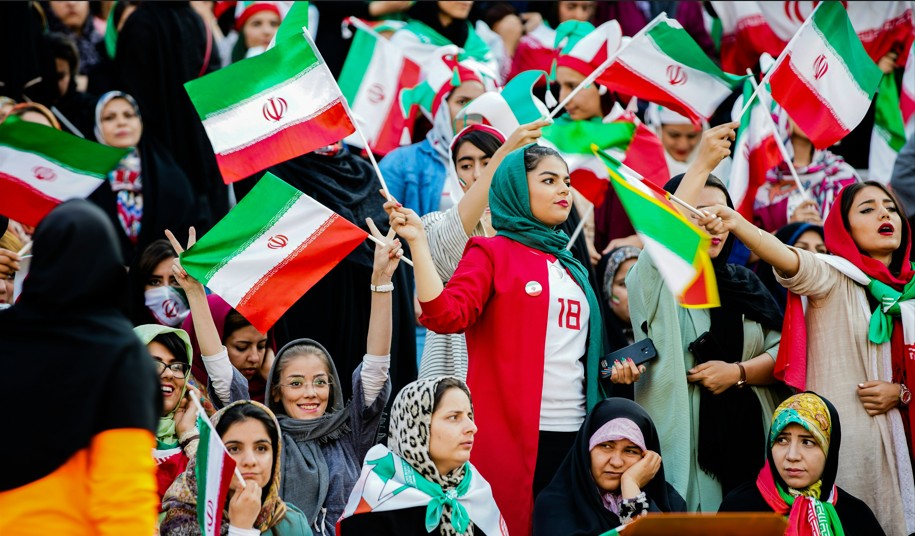
Photo by Hadi Yazdi Aznaveh on Unsplash