From Op Sindoor to the South China Sea: How BrahMos’ Battlefield Performance Is Reshaping Indo-Pacific Deterrence
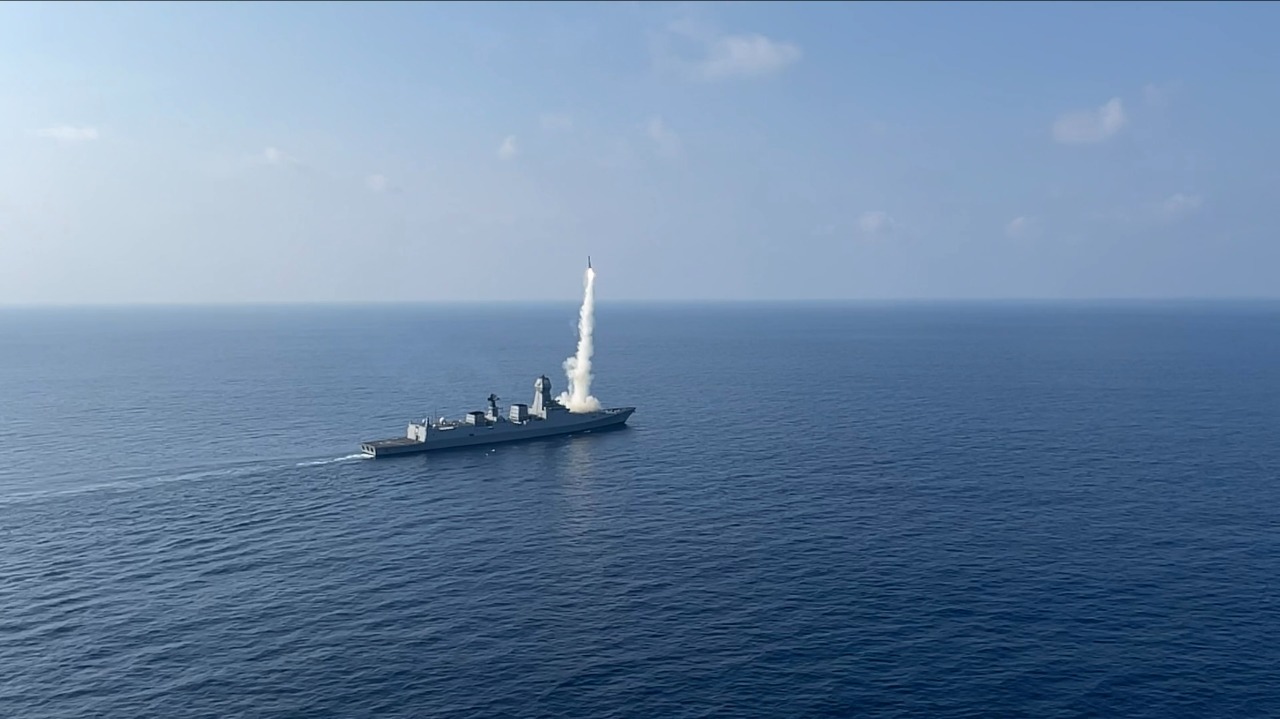
As India's strategic role in the Indo-Pacific changes, its ability to credibly and effectively project its military capabilities, based on its defence technologies, becomes increasingly crucial. Of its defence capabilities, the BrahMos supe...
BrahMos' Exhibited Precision and Operational Credibility During Op Sindoor
Operation Sindoor provided India the chance to assess BrahMos in operational conditions and not in laboratory testing conditions. The missile was able to demonstrate a high level of terminal precision due to its sophisticated seeker technology, stable navigation systems, and low circular error probability. Rather than conventional demonstration firings, Operation Sindoor included dynamic maritime parameters, including moving targets and active environmental factors. Delete "The missile's performance aided in re-affirming its reputation for very high-speed travel (Mach 2.8-3.0), sea-skimming flight paths, and ability to defeat contemporary air- and ship-based sensor approaches for interception." 1 The value of Op Sindoor does not simply reside in a technical verification of BrahMos. It demonstrated India's ability to operationalize and integrate BrahMos into naval and coastal defence operations. Delete "This provided a reinforcement to some assessments made by some regional analysts indicating that battlefield tested systems greatly contribute to deterrence value." 2 Therefore, BrahMos advanced from being considered simply a high-end missile system to a field-tested platform designed for adjusting regional security dynamics.
Enhancing Global Confidence in Indian Defence Capabilities
Historically, India's ambition with defence exports have been challenged from the perspective of unstable technology, slow acquisition timelines, and inadequate after-sales service. In the course of Op Sindoor, BrahMos demonstrated exceptional performance, establishing India's capability to deploy modern weapons. The operation's success aligns well with India's effort to make progress towards a defence self-reliance strategy and policy through Aatmanirbhar Bharat, which aims to transition India from a net importer to a competitive arms exporter. When Indian defence research institutions have published reports to support this view, they have expressed the sentiment that confidence increases significantly with battlefield success of indigenous technologies. 3 The BrahMos system, as one of India's most mature joint-development projects, has become a key illustration of India's defence competence as a result. Additionally, reliability as a supplier, without the usual strategic conditionalities that come with purchase from the major arms exporting countries, has rendered BrahMos an option to Singapore and the Southeast Asian states to try out this missile system for further example on diversifying their defence procurement pathways. Philippines and Vietnam also expressed interest in the missile, considering Op Sindoor brought credibility to this platform.4
Strategic Impact of the BrahMos Deal in the South China Sea for Indonesia-Philippines Deterrence
The BrahMos purchase of the Philippines from 2022-2024 forms a strategic inflection point in the Southeast Asian military balance. For years, the Philippines and its naval modernization efforts have been constrained; however, through acquiring BrahMos, it has obtained its first near credible anti-access/area-denial (A2/AD) operational capability. The shore-based BrahMos batteries will enable the Philippines to engage and target hostile naval vessels at ranges up to 290-300 km within critical areas of the West Philippine Sea. Research on the defence posture of Southeast Asia has concluded that the Philippines generated no demonstrable deterrent capability to counter Chinese grey-zone coercion, including exercising aggressive manoeuvres by the PLA Navy and maritime militia. 5 BrahMos is a cost-imposing mechanism; any aggressive Chinese naval mission deployment risks deployment of a Mach 3 missile. Moreover, BrahMos makes interception problematic for adversaries. Even advanced Chinese destroyers would encounter significant technical and tactical challenges to intercept BrahMos in flight, which flies at supersonic speeds, at a low altitude. There are four implications of this deal strategically; firstly, increases operational risks for Chinese coercive maritime actions. BrahMos forces the People's Liberation Army (PLA) navy to operate significantly further from Filipino-held features, and under significantly more alert conditions. 6 secondly It reduces dependence on one defence partner or system more broadly in Southeast Asia. By formally acquiring BrahMos, the Philippines will help establish a precedent for other ASEAN countries to procure military hardware and equipment in a more diversified way, and possibly even from India, to supplement their reliance on the US, or to mitigate tension with China. Third, it solidifies India's "Act East" strategic priority through a tangible security partnership, rather than a formal declaration or minor rhetorical commitments. Fourth It affords support for developing minilateral approaches, wherein mid-sized Indo-Pacific states engage in collective action against unilateral maritime expansion. In addition, the deal entails avenues for joint training and maintenance ecosystem, and maritime domain awareness engagement too, bolstering bilateral security relations overall.
India as a Trustworthy Security Partner and New Arms Exporter
The elevation of India as the most recent proliferator of advanced missile systems, constitutes a shift in India´s strategic identity. The BrahMos export is an illustration of India´s willingness to engage in a more interventionist role in determining regional military equilibria. Three features comprise this shift primarily Institutional Change, The BrahMos export assists India’s long-term goal to develop its defence manufacturing ecosystem. As iDEX developed the domestic innovation pipeline, BrahMos is evidence of India’s ability to transform domestic capability into success in the international market. 7 secondly Strategic Autonomy and Non-alignment, India provides strategic capabilities without imposing alliance obligations; this should appeal to ASEAN states wary of U.S.–China competition. Analysts have described India as a "non-aligned defence partner" offering high-tech capabilities without political weight. 8 last but not the least Indo-Pacific Maritime Convergence BrahMos adds to India’s purpose in establishing a free and rules-based Indo-Pacific. Contributing to partners’ deterrence capabilities is consistent with India’s own apprehensions about the militarisation of maritime commons and the degradation of international maritime law. 9 The cumulative effect is the affirmation of India and its emerging role as a net security provider.
Conclusion
The BrahMos missile system has become critical to changing deterrent dynamics in the Indo-Pacific, moving from its battlefield employment in Operation Sindoor to its strategic deployment in the Philippines. BrahMos's demonstrated accuracy and operational reliability have increased global trust in Indian defence technology, and enticed Southeast Asian defence procurement diversification, as well as substantially enhanced the Philippines capacity to counter coercion in the South China Sea. Besides this capability, BrahMos signifies India's shift from being a country that imports defence equipment to one that exports and provides security partnerships. With the Indo-Pacific region experiencing a growing competition among the major powers, BrahMos denotes more than a mere missile system; it is the concrete proof of India's expanding influence in determining the power distribution in the area.
Endnotes
1. BrahMos Aerospace. Brahmos Home Page https://share.google/guKO3i7bymFAzLtGU
2. Indo-Pacific Missile Arsenals: Avoiding Spirals and Mitigating Escalation Risks - Carnegie Endowment for International Peace
https://share.google/G32rDv2pePXKriveP
3. MP-IDSA, “India’s Path to Defence Self-Reliance: Challenges and Prospects”, Issue Brief, July 2024. https://www.idsa.in/publisher/system/files/ib-snahmed-190724.pdf
4. The Eurasian times “BrahMos: 2024 To See The Philippines Deploying Indian Cruise Missile To Defend Its Long Coastline Against China”, 2023. https://share.google/N0jHryApenGiPhTgt
5. Castro, Renato. (2016). The Strategic Balance in East Asia and the Small Powers: The Case of the Philippines in the Face of the South China Sea Dispute: Strategic Balance and Small Powers. Pacific Focus. https://www.researchgate.net/publication/301319489_The_Strategic_Balance_in_East_Asia_and_the_Small_Powers_The_Case_of_the_Philippines_in_the_Face_of_the_South_China_Sea_Dispute_Strategic_Balance_and_Small_Powers
6. U.S. Naval Institute, “A Campaign Plan for the South China Sea
,” 2022. https://share.google/efM02gUGYwMqNmzEO
7.Wankhede, Rahul . “ India’s Defence Exports: Unravelling the Potential of the BrahMos Missile”
oct10.pdf https://share.google/tXSnOp2QgaogyaKHB
8. C. Raja Mohan, Garima Mohan, and Tanvi Madan December 27, 2023. “The role of the US, Europe, and Indo-Pacific partners in India’s China strategy.” Brookings Commentary. https://share.google/904P4dWCfLYiKup46
9. Ministry of External Affairs (MEA). “Prime Minister’s participation in the 19th East Asia Summit,” https://share.google/TTR3r1ZZm7N5WnJrg
(The views expressed are those of the author and do not represent the views of CESCUBE)
Image Source: Press Information Bureau

Soumyadip Mondal is an international relations scholar whose research focuses on South Asian geopolitics, strategic studies, and foreign policy. He publishes analytical work on regional security and conducts rigorous research on conflict, constitutional change, and multilateral engagement through affiliations with leading academic institutes and think tanks.