The Rise of Middle Power Coalitions: Can India, Japan, and Australia Shape the New Asian Order?
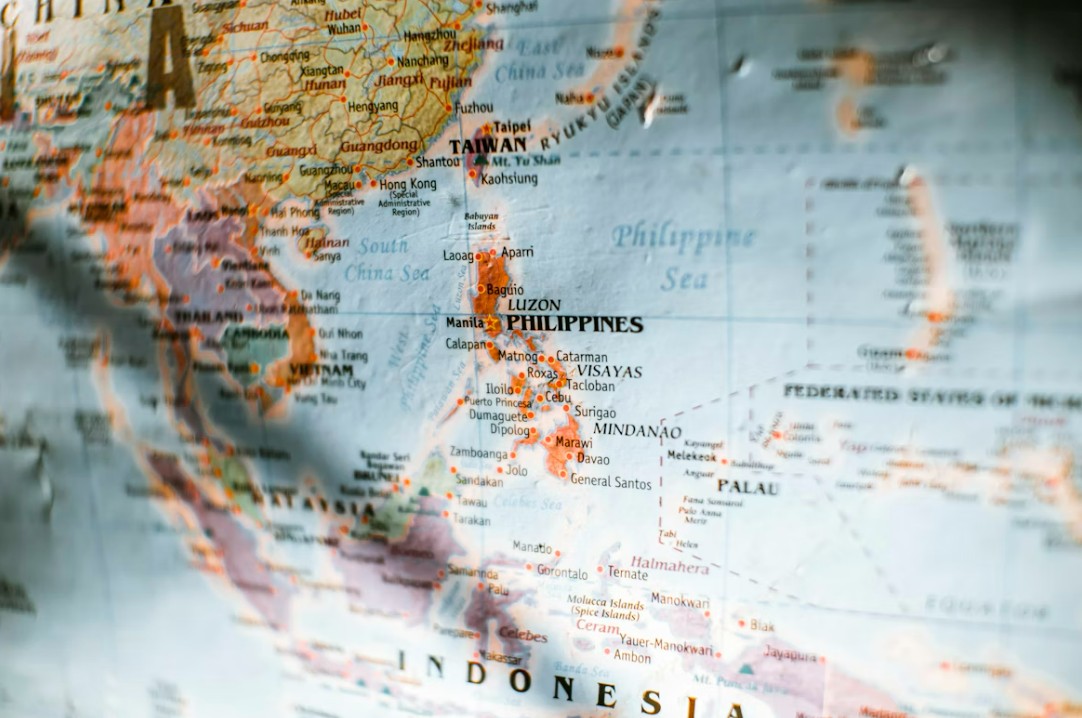
Within the last decade, the Indo-Pacific has become a strategically important region, not only for the US and China but also for major powers like India, Japan, and Australia. The dynamics among the major powers have been complicated by the...
A glance at the current positions of these countries
Japan’s interests in the Indo-Pacific were highlighted first in 2007 by former Prime Minister Abe Shinzo in his speech titled the ‘Confluence of Two Seas”[i]. With the steady increase in China’s power, Japan aimed at firming up its own military presence in this region, which eventually led to the creation of the QUAD between Japan, India, Australia, and the US. As per Abe’s vision, Japan continues to advocate for free, open and peaceful navigation in the region. Presently, the official Japanese foreign policy doctrine regarding this is “Japan’s Free and Open Indo-Pacific”, which was first presented in 2016[ii]. By 2019, the FOIP was no longer just a strategy but a vision for Japan and its neighbours.
Australia had a gradual increase of interest in the Indo-Pacific, starting in 2008, when former Prime Minister Kevin Rudd envisaged an Asia-Pacific Community as well as a minilateral grouping of middle powers known as MIKTA (Mexico, Indonesia, Korea, Turkey, and Australia)[iii]. The Asia-Pacific Community aimed to create a rule-based order and envisioned it to be the centre of defence activities in the Indo-Pacific region by 2030[iv]. Unfortunately, both the APC and the MIKTA were abandoned, the former, as it was going against the ASEAN Centrality and the latter, because it simply failed to make an impression in the global space of politics. At present, Australia continues to push for bilateralism and multilateral cooperation.
India’s involvement with the Indo-Pacific began with the Look East Policy of the 1990s, although it was formally mentioned in official documents since 2012[v]. India’s outlook has always been underlined by, earlier, non-alignment, and now strategic autonomy, i.e. leaning away from depending completely on any one actor. In the Indo-Pacific theatre, actor-groupings like Russia-India-China and Japan-America-India are both important. For India, the Indo-Pacific is all about working in tandem with all individual actors while promoting inclusive growth.
While all these three countries have different relations with the USA, varied foreign policy priorities as well as differing ideas about the expanse of the Indo-Pacific, they can come on the same page with regards to the Indo-Pacific region on certain aspects, i.e. keeping China at bay and maintaining a healthy balance of power as well as a rules-based order. The Indo-Pacific is a viable space for a coalition between these emerging powers on various issues. As said by an eminent scholar, the Indo-Pacific is a laboratory for new forms of economic cooperation[vi].
Methods of making Coalitions
As discussed above, the Indo-Pacific region is not only an important channel for trade but also highly contested between the larger powers like the US and China. In general, the world is witnessing largely polarising tendencies and choosing a particular side is becoming the norm. It is either about following China’s aggressive maritime policies or giving up a part of one’s national interests to US-led groupings like QUAD or AUKUS. Hence, the Indo-Pacific has become a hub for experimenting with smaller groupings, so that countries can continue to follow their own goals while having support from their neighbours or partners.
One of the major methods of that is to form minilateral groups. The core reason for the rise of minilateral groups is the high incompetence of the larger groupings like the WTO, IMF, etc. For most of the larger groupings, the (relatively) less powerful countries lose their agency to the larger powers, and the aims and motivations can be skewed[vii]. Taking the example of QUAD, many of its aims are overwhelmingly tainted by the US foreign policy and used by it as a mechanism to fight China. But the rest of the 3 members have faced acute bilateral issues with China as well, and must tread a thin line of combating its aggressiveness while maintaining its trade ties. Hence, smaller groupings like Japan-Australia-India, India-France-Australia, India-Australia-Indonesia, and India-Japan-Italy are minilateral groupings which have more niche focuses and can which these countries can work together[viii]. These minilateral groupings are also a step away from over-reliance on the US.
This brings us to the next form for countries to remain independent of the US-China rivalry in the Indo-Pacific, i.e. foreign policies based on strategic autonomy. This has been spearheaded by India, at the moment, though most countries have various iterations of this same idea. In a realist sense of the world, strategic autonomy refers to issue-based collaboration rather than becoming dependent or committing to any major power. This has been best observed amongst the South-East Asian countries and in the Indo-Pacific region. Taking the example of India, it is a core member of QUAD, but has also been able to maintain stable relations with members of BRICS and SCO. In the case of Japan, which is also a member of QUAD, it has been a Dialogue Partner of ASEAN as well. Strategic autonomy helps countries to hedge, i.e. diversify their sources of help rather than being dependent on just one.
Minilateralism and Strategic Autonomy are driven by soft power diplomacy, while maritime security operations are a manifestation of hard power. Be it the Malabar exercises of MILAN or IFC IOR, such military exercises showcase the powers of countries in the traditional sense and help create alliances. Apart from that, Indo-Pacific is a hub of undersea cables with 17 landing points in India, which require infrastructural protection from attacks[ix]. Last but not least, maritime security in the Indo-Pacific region from IUU Fishing and Piracy also requires minilateral engagement.
Conclusion
This paper looks into the role of middle powers in the Indo-Pacific region from both historical and contemporary perspectives. The paper has considered the collaborations between countries like India, Japan and Australia. In a much polarising world, with growing tensions between the US and China, a minilateral and strategic autonomy approach is needed to safeguard one’s own interests.
References
[i] Chacko, Priya, and Jeffrey Wilson. Australia, Japan and India: A Trilateral Coalition in the Indo- Pacific, n.d.
[ii] Ibid
[iii] ‘Explore Pacific Forum’s Insightful Indo-Pacific Analysis’. Pacific Forum, n.d. Accessed 14 November 2025. https://pacforum.org/publications/pacnet-43-indo-pacific-middle-powers-rethinking-roles-and-preferences/.
[iv] Chacko, Priya, and Jeffrey Wilson. Australia, Japan and India: A Trilateral Coalition in the Indo- Pacific, n.d.
[v] Chacko, Priya, and Jeffrey Wilson. Australia, Japan and India: A Trilateral Coalition in the Indo- Pacific, n.d.
[vi] ‘Read Transcript of Panel Discussion on “Rise of Minilateralism in the Indo-Pacific and the Changing World Order”, Sapru House, 6 November 2025 - Indian Council of World Affairs (Government of India)’. Accessed 14 November 2025. https://www.icwa.in/show_content.php?lang=1&level=2&ls_id=13862&lid=8428.
[vii] ‘Read Transcript of Panel Discussion on “Rise of Minilateralism in the Indo-Pacific and the Changing World Order”, Sapru House, 6 November 2025 - Indian Council of World Affairs (Government of India)’. Accessed 14 November 2025. https://www.icwa.in/show_content.php?lang=1&level=2&ls_id=13862&lid=8428.
[viii] Joseph, Biyon Sony. ‘Middle Power Minilateralism: An Effective Indo-Pacific Strategy for India?’ South Asian Voices, 28 February 2024. https://southasianvoices.org/geo-m-in-n-middle-power-minilateralism-02-28-2024/.
[ix] ‘India - Submarine Networks’. Accessed 14 November 2025. https://www.submarinenetworks.com/en/stations/asia/india.
(The views expressed are those of the author and do not represent the views of CESCUBE)
Photo by Road Ahead on Unsplash

Kinnori Mukherjee is currently pursuing a Master’s degree in International Studies at Christ University, Bangalore. She has completed her Bachelor’s from Fergusson College with a Major in German Language and Minors in Political Science and Economics. Her core interests lie in diplomacy, consulting, and socially impactful research. She also aspires to contribute towards strengthening the Indo-German partnership and, in the long term, advancing Indo-European relations.