From Peacekeeping to Peacemaking: Reimagining India’s Role in Conflict Resolution
As global conflicts grow more complex in an increasingly multipolar world, traditional UN peacekeeping models often militarised and externally imposed have shown clear limitations in delivering sustainable peace. This commentary argues that...
As the world becomes increasingly complicated and multipolar, the maintenance of peace and the settlement of disputes and conflicts have become the main issues of international relations. The United Nations peacekeeping operations have historically contributed to stabilising volatile regions. Yet, their top-down, militarised approaches often struggle to address the social, cultural, and historical dimensions of conflict. For many communities, such interventions usually feel externally imposed, neo-colonial, and limit trust, local ownership, and the prospects for long-term reconciliation.[i] This structural gap presents a unique opportunity for India. With over 2,90,000 personnel serving in more than 50 UN missions, India combines unparalleled operational experience with moral and normative credibility derived from its history of non-alignment, strategic restraint, and ethos. India, compared to a lot of other major countries, has never initiated a war, has a No First Use nuclear policy, and has similar postcolonial experiences, which help in building trust with the Global South.[ii] India, using its strengths, has a strong chance to not only rely on the classic way of troop deployment but also to engage into proactive, culturally friendly ways of peace-making, facilitating communication among parties, empowering local players, and resolving the underlying issues of conflict. The transition of India from a peacekeeping force to an independent peacemaker is being advocated in this essay. This transition will not only coexist with the formal international frameworks but also go beyond them, offering a model for sustainable, people-centred conflict resolution in the 21st century.
Although United Nations peacekeeping is a very important tool for maintaining security worldwide, it bears several grave structural and operational limitations. The UN system, established in 1945, remains rooted in a post-World War II framework, and the disproportionate influence of the five permanent members of the Security Council has created a legitimacy crisis. This obsolete framework usually gives the geopolitical interests of the strongest countries precedence over the ground situations, affecting the reliability of peacekeeping operations and raising doubts regarding the impartiality of the organisation. Peacekeeping frequently emphasises containment rather than resolution.[iii] Deployments monitor ceasefires, protect civilians, and maintain order; however, they seldom deal with the underlying issues that cause the conflict. Consequently, the missions can appear externally imposed, reinforcing the idea of a neo-colonial authority rather than that of local empowerment. According to Tudor (2023), the mid-tier UN personnel very frequently imposed colonial hierarchies and thus greatly influenced the governance and political scenario of the nations they were posted in, all the while pretending to be benevolent and rendering technical assistance.[iv] These interventions of a paternalistic nature limited the actual contact with the native people, and their right to self-determination was also reduced. Recent experiences in Haiti illustrate these challenges. UN peacekeepers were tasked with protecting civilians, yet reports of human rights abuses and intimidation contributed to a trust deficit among local communities. Opinions of the public were split: on one hand, some Haitians considered the peacekeepers to be essential for the security of the country, while on the other hand, some others considered them to be a source of harm. This was indicative of the complex relationship between the external forces and the local populations.[v] These limitations indicate that traditional peacekeeping, although encumbering, is not sufficient for enduring peace. Presently, UN peacekeeping is perceived as a means of containment rather than as a means of true reconciliation and transformation of conflict. With no reforms to enhance local ownership, democratise decision-making, and integrate culturally sensitive approaches, UN peacekeeping will likely remain stagnant..[vi]
India's role in global peacekeeping is something special and fashioned by its past, philosophy, and practice. Unlike many former colonial powers, India is not named an aggressor and thus has the moral support of the international community. This neutrality permits India to act as a trustworthy mediator, especially in the Global South, where common postcolonial experiences facilitate trust and collaboration. In areas where UN peacekeeping has gotten into trouble regarding its legitimacy, India’s historical position as a non-aggressor strengthens its credibility and ability to fill operational and normative gaps. Moreover, India’s normative framework is a source of strength that further enhances its advantage. Rooted in the ancient principle of “Vasudhaiva Kutumbakam” (the world is one family) and reinforced by its legacy of the Non-Alignment Movement, Indian foreign policy prioritises dialogue, diplomacy, and peaceful coexistence. This approach of India can be expressed in terms of its soft power, enabling India to engage stakeholders effectively, build consensus, and promote inclusive, culturally sensitive peace processes; areas where traditional UN missions have often struggled. Operationally, India’s track record reinforces its credibility. Since its independence, India has never initiated war, adheres to a No First Use nuclear policy, and maintains a reputation for impartial mediation. The moral authority, along with the strategic restraint, is a combination that gives not only the host countries but also the UN the assurance that Indian participation is motivated by peace rather than narrow geopolitical gain, addressing the legitimacy and trust deficits that have hindered some UN missions. India’s ground-level experience in peacekeeping further enhances its unique advantage. Having contributed over 290,000 personnel to more than 50 UN missions since 1953, India brings deep knowledge of operational realities, logistical challenges, and community engagement. Their forces have been present in highly unstable parts of the world and have provided not only military assistance but also other activities like civil-military coordination, infrastructure development and humanitarian help, thus being supportive in areas where UN missions have at times been reactive instead of proactive. Also, India has taken the lead in peacekeeping with gender inclusion, sending the first all-women Formed Police Unit to Liberia in 2007 and continuing to field women in critical missions today. Indian women peacekeepers strengthen community trust, address gender-based violence, and exemplify the transformative potential of inclusive operations.[vii]
The UN formally distinguishes between peacekeeping and peacemaking; however, in practice, the boundary has become blurred and often instrumental. Peacekeeping today is primarily a technique of stabilisation, the insertion of external personnel to prevent violence from escalating. In the United Nations context, peacemaking is understood in the very same procedural way: it encompasses all the activities like negotiations, shuttle diplomacy, and good offices mediation aimed at producing a formal agreement between warring elites.[viii] The focus is on cessation, not transformation. It repairs order, not relationship. Two major weaknesses run deep in this model. First, it remains state-centric: peace is achieved when governments or armed actors agree, not when social wounds are healed. Second, it is normatively hollow: the actor mediating the conflict is often a former colonial or strategic power whose political interests are neither neutral nor morally legitimate. Consequently, the UN’s peace-making mechanism has a generally negative image as being more of a manager than a mediator, and more of a stabiliser than a distributor of justice. It ends violence but rarely restores dignity. India’s tradition offers a fundamentally different template. UN peacemaking is mostly contractual and India’s way of dealing with such situations has always been through strong ties. The intellectual foundation of India’s international engagement, from the non-aligned movement to Gandhian nonviolence, positions peace not as the suspension of hostilities but as the re-humanisation of political opponents. This enables India to mediate without domination, advise without coercion, and heal without occupying. It is precisely for this reason that India must not merely expand its role within UN peacekeeping but articulate a parallel peacemaking architecture outside of it. Power hierarchies and the interests of permanent members of the Security Council structurally constrain the UN system. India, by contrast, holds postcolonial credibility, moral trust, and cultural non-threat, qualities that cannot be operationalised inside a framework still governed by great-power veto logic. Peace that emerges from a relationship, rather than compliance, requires a mediator that is not seen as an extension of geopolitical enforcement. Therefore, India’s natural transition is not from troop contributor to UN peacekeeper-plus, but from stabiliser to independent peacemaker: a South-led, dignity-centred model of conflict resolution capable of addressing the social, historical and psychological dimensions that UN architecture cannot reach. In this sense, India does not supplement UN peacekeeping; it surpasses its paradigm.
India's standing as a reliable non-imperial player with vast experience in peacekeeping gives it a special path to come up with new ways in mediation and conflict resolution. Moving beyond conventional state-to-state diplomacy, India can leverage Track II and Track 1.5 diplomacy, which create informal, trust-based spaces for dialogue and collaboration. Such approaches not only allow the identification of sensitive issues but also give local people a voice and open the way to the discovery of context-specific solutions which are not bound by the limitations of formal negotiations or geopolitical pressure.[ix] Through the promotion of multi-track diplomacy, India can ensure that there is constant engagement among the grassroots actors, the representatives of the diaspora, and the official authorities, guaranteeing that the peacebuilding process is both inclusive and flexible. A central pillar of India’s approach should be cultural mediation rather than military intervention. Efforts in peacemaking are most sustainable when they are built on local knowledge, connections among the peoples, and traditions deeply rooted in cultures.[x] Using Lederach’s moral imagination as a source, mediators can skilfully move through relational networks, modify their interventions to suit local practices, and acknowledge the symbolic and narrative aspects of the conflict. Reconciliation activities should depend on language, local mediators, and cultural intermediaries to steer clear of producing the impression of external imposition and to let the community's lived experience breathe.[xi] Local ownership of peace is another essential principle.[xii] There is a possibility for India to give assistance to programs that will permit communities to identify genuine political stakeholders, set priorities, and oversee rebuilding operations. This eliminates the dilemma of intervention by outsiders, who often face legitimacy deficits, and guarantees that the government post-conflict reflects indigenous social, cultural, and political structures. For reconciliation and justice, India can draw inspiration from South Africa’s Truth and Reconciliation Commission, which gave precedence to dignity, moral accountability, and social repair over punitive measures.[xiii] Adopting this framework will undoubtedly help in creating environments where victims and perpetrators can interact positively. This interaction will not only lead to healing but also restore social ties and the conflict’s shared narrative. This model is particularly relevant in contexts where communal trauma, grievances, or identity-based divisions pose a threat to long-term stability. Finally, the integration of diaspora diplomacy, interacting with overseas communities that have direct links to the conflict, can enhance local and cultural mediation. The parties in the diaspora can provide historical perspectives, global networks, and advisory roles, thus creating a link between local truths and global support networks.[xiv] When coordinated transparently, such hybrid approaches can help India cultivate peace processes that are inclusive, culturally attuned, and durable. In practical terms, India can operationalise these models through concrete policy initiatives. The creation of a Peacemaking Corps independent from the UN would result in a multilateral South-South platform for conflict intervention, promoting cooperation with the other Global South actors. Institutes that provide specialised training in mediation, conflict psychology, and cultural negotiation would create the necessary skills for the advanced peacebuilding process. Furthermore, India can collaborate with regional organisations, such as the African Union and ASEAN, by forming strategic partnerships to launch joint projects and exchange knowledge. Eventually, women-led and community-based facilitation models leverage India's moral standing, not allowing the oppressed to be excluded from the peacebuilding process and thus promoting inclusiveness at the grassroots level. Through the combination of: multi-track diplomacy, cultural mediation, involvement of the diaspora, and practical policy mechanisms, India can develop conflict resolution models that are inclusive, context-sensitive, and sustainable. Such an approach redefines India’s role from a traditional peacekeeping contributor to a proactive mediator capable of fostering durable reconciliation in diverse, complex conflict environments.
India stands at an important turning point in global affairs, uniquely positioned to transition from a traditional UN peacekeeping contributor to an independent, credible peacemaker. Moral credibility, historical non-alignment, operational expertise, and culture-based trust are the reasons why it can handle the structural weaknesses of traditional peacekeeping, especially the absence of local ownership, social reconciliation, and sustainable conflict resolution. India, by working outside the UN framework, has the potential to occupy the critical spaces left by the traditional missions and propose people-oriented, culture-friendly, and inclusive methods that not only give power to the local actors but also support the dialogue and dig into the roots of the conflicts. Through multi-track diplomacy, cultural mediation, and diaspora engagement, India can not only stabilise conflict zones but also foster durable reconciliation and trust-building. In this way, India can recast its position in the newly discovered multipolar world order and showcase the potential of being principled, independent, and context-sensitive in peacemaking, which would not only coexist with the conventional peacekeeping model but also, in some instances, surpass it, creating a new norm for global conflict resolution.
References:
[i] Roland Paris and Timothy D. Sisk, Managing Contradictions: The Inherent Dilemmas of Postwar Statebuilding (New York: International Peace Academy, 2007), https://www.ipinst.org/wp-content/uploads/publications/iparpps.pdf
[ii] Press Information Bureau, “India’s Legacy in UN Peacekeeping: Leadership, Commitment, and Sacrifice,” Ministry of External Affairs, March 9, 2025, https://www.pib.gov.in/PressReleasePage.aspx?PRID=2109587
[iii] Daniel Araya, “Transforming the United Nations for a Multipolar World,” Centre for International Governance Innovation, May 8, 2025, https://www.cigionline.org/articles/transforming-the-united-nations-for-a-multipolar-world-order/
[iv] Margot Tudor, Blue Helmet Bureaucrats: United Nations Peacekeeping and the Reinvention of Colonialism, 1945-1971 (Cambridge: Cambridge University Press, 2023), https://doi.org/10.1017/9781009264952
[v] Mariana Cabrera Figueroa, “Peacekeeping in Haiti: Successes and Failures,” The Pardee Atlas Journal of Global Affairs, https://sites.bu.edu/pardeeatlas/research-and-policy/back2school/peacekeeping-in-haiti-successes-and-failures/
[vi] Roland Paris and Timothy D. Sisk, (2007)
John Paul Lederach, Building Peace: Sustainable Reconciliation in Divided Societies (Washington, DC: United States Institute of Peace Press, 1997), https://www.defence.lk/upload/ebooks/John%20Paul%20Lederach%20-%20Building%20Peace_%20Sustainable%20Reconciliation%20in%20Divided%20Societies-United%20States%20Institute%20of%20Peace%20(1998).pdf
[vii] Press Information Bureau. (2025, March 9).
[viii] United Nations Peacekeeping, “Terminology,” United Nations, https://peacekeeping.un.org/en/terminology
Boutros Boutros-Ghali, An Agenda for Peace: Preventive Diplomacy, Peacemaking, and Peace-keeping: Report of the Secretary-General Pursuant to the Statement Adopted by the Summit Meeting of the Security Council on 31 January 1992 (New York: United Nations, 1992), https://digitallibrary.un.org/record/145749?v=pdf
[ix] Staats, J., Walsh, J., & Tucci, R, “A Primer on Multi-Track Diplomacy: How Does It Work?” United States Institute of Peace, July 31, 2019, https://www.usip.org/publications/2019/07/primer-multi-track-diplomacy-how-does-it-work
[x] John Paul Lederach, (1997).
[xi] John Paul Lederach, The Moral Imagination: The Art and Soul of Building Peace (Oxford: Oxford University Press, 2005), https://www.beyondintractability.org/bksum/lederach-imagination
[xii] Roland Paris and Timothy D. Sisk, 2007
[xiii] Alex Boraine, A Country Unmasked, 2000, https://www.columbia.edu/itc/ce/s6403/alex_boraine.pdf
[xiv] Democratic Progress Institute, Makers or Breakers of Peace: The Role of Diasporas in Conflict Resolution (London: Democratic Progress Institute, 2014), https://www.democraticprogress.org/wp-content/uploads/2014/08/Makers-or-Breakers-of-Peace-The-Role-of-Diasporas-in-Conflict-Resolution.pdf
(The views expressed are those of the author and do not represent the views of CESCUBE)
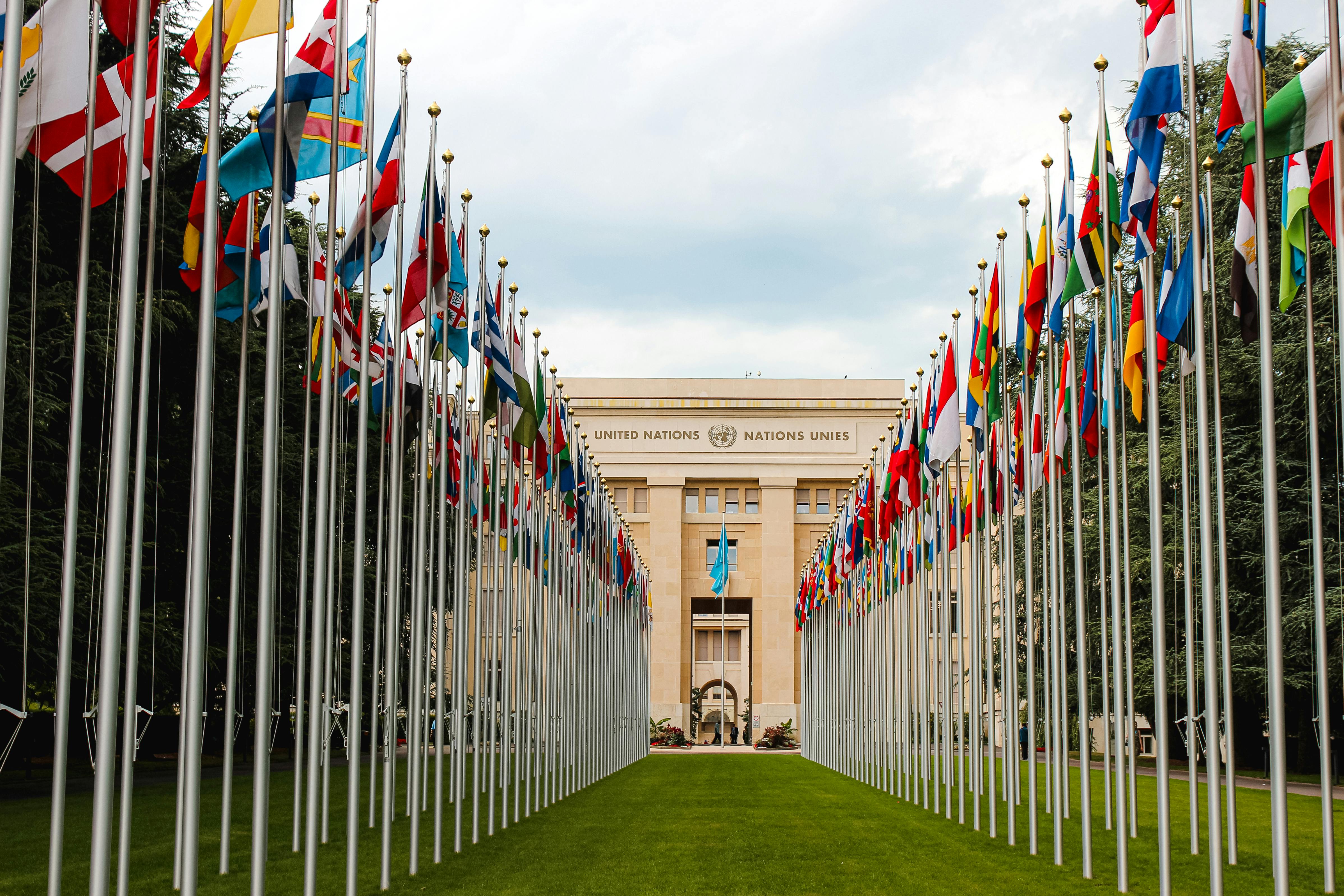
Photo by Mathias Reding: https://www.pexels.com/photo/flag-of-different-countries-un-members-4468974/
Mannya is an interdisciplinary researcher with two postgraduate degrees in International Relations and English, blending academic depth with a sharp analytical edge. She has contributed to research, editorial, and evidence synthesis work at Campbell South Asia, The Research and Evaluation Centre, WWF India, and DRaS, across EGMs, systematic reviews, literature reviews, and qualitative analysis. She is skilled in turning complex global issues into clear, compelling insights. She is known for critical thinking, and delivering rigorous, evidence-based research that informs action.