Trade regionalism as geoeconomic competition: Case of IPEF & RCEP
The Indo-Pacific has emerged as the epicentre of 21st century economic and strategic competition, where regionalism functions as a primary instrument of power projection and order-building. This paper examines the competing frameworks of re...
The contemporary dynamics of Indo-Pacific regionalism can be understood most effectively through the combined analytical lenses of New Regionalism Theory (NRT) and geoeconomics, which together explain why competing economic frameworks such as the Regional Comprehensive Economic Partnership (RCEP) and the Indo-Pacific Economic Framework for Prosperity (IPEF) have emerged as strategic instruments of order-building. New Regionalism, which appeared in the late 1980s and early 1990s, diverges sharply from the “old regionalism” of the Cold War era by conceptualising regionalisation as a comprehensive, multidimensional, and multi-actor process unfolding within a multipolar environment (Hettne and Inotai, 1994, as cited in Acharya, 2002). Whereas older forms of regionalism were often driven “from above” by hegemonic powers and tended to reinforce sovereignty through narrow economic or security cooperation, NRT emphasises autonomous, internally driven (“from within and below”) regionalisation shaped by states, markets, and non-state actors, including TNCs and civil society (Hettne and Inotai, 1994, as cited in Acharya, 2002). It also recognises that contemporary regional projects increasingly involve varying degrees of “intrusive regionalism (Acharya,2002),” where normative commitments, such as human rights, governance standards, or macroeconomic discipline may require adjustments in domestic policy. Crucially, NRT highlights that regionalism is neither linear nor harmonious: it is inherently competitive, involving struggles among actors to define membership, norms, and regional identity (Hettne & Söderbaum, 2000). This competitive quality often gives rise to exclusionary or rival regional arrangements, as seen historically in initiatives such as the East Asian Economic Caucus, which aimed to exclude Western powers from East Asian economic governance (Acharya, 2002).
Parallel to this, the theory of geoeconomics provides insight into how major powers use economic tools as instruments of statecraft to pursue strategic advantage. Defined by Edward Luttwak (1990, P. 19) as the “admixture of the logic of conflict with the methods of commerce,” geoeconomics emphasises the zero-sum strategic logic that underpins state behaviour, even within a global economy characterised by interdependence. As the relative importance of military power gives way to economic power, manifested through control over capital flows, production networks, standards regimes, technology ecosystems, and critical infrastructure. States increasingly rely on financial instruments to optimise benefits within their own territorial boundaries (Luttwak, 1990). From this perspective, regional institutions such as trade agreements, supply-chain initiatives, and regulatory frameworks are not merely mechanisms of cooperation, but deliberate tools of competitive statecraft designed to shape markets, influence technological trajectories, and manage interdependencies in ways that prioritise national strategic objectives (Blackwill & Harris, 2016).
When these two frameworks are integrated, they offer a compelling explanation for why competing regional projects characterise the Indo-Pacific institutional landscape. NRT explains the structural environment as a multipolar order characterised by overlapping and sometimes conflicting regionalisms, shaped by a wide array of state and non-state actors (Hettne & Söderbaum, 2000). Geoeconomics explains the strategic behaviour within that environment: major powers deploy economic tools to build institutions that advance their relative strategic position (Blackwill & Harris, 2016).
This competitive environment reinforces the NRT claim that regionalisation is inherently contested, generating overlapping institutions and exclusionary dynamics as major powers attempt to define the economic and normative boundaries of the Indo-Pacific. It also underscores the geoeconomic premise that institution-building itself is a strategic act, one in which economic tools are employed to pursue zero-sum geopolitical objectives (Luttwak,1990). Analogously, the Indo-Pacific can be conceptualised not as a coordinated orchestra but as a competitive, multi-level arena where actors use economic instruments such as regulatory standards, infrastructure financing, and technological ecosystems as strategic tools to influence outcomes in their favour (Blackwill & Harris, 2016). In this sense, trade regionalism in the Indo-Pacific is no longer merely an economic exercise but a form of economic order-making in which regional institutions serve as platforms for geopolitical competition, identity construction, and the pursuit of relative advantage.
Comparative Institutional Analysis: RCEP vs. IPEF
RCEP and IPEF represent two contrasting models of regional economic governance, differing in institutional design, policy orientation, strategic purpose, and underlying political logic. RCEP is structured as a comprehensive, market-driven free trade agreement that reduces tariffs, harmonises rules of origin, facilitates customs procedures, and strengthens East Asian production networks. RCEP eliminates tariffs on more than 90% of goods over a decade and provides special and differential treatment to least-developed members, making it an inclusive, integration-oriented framework rooted in the long-standing ASEAN-centred regional architecture. This institutional form reflects an endogenous regional demand for economic cooperation, driven by existing production networks and shared material interests (Liu et al., 2022).
By contrast, IPEF represents a structural departure from traditional free-trade agreements. IPEF offers no market access or tariff liberalisation, instead relying on four governance-oriented pillars: trade and regulatory standards, supply chain resilience, a clean economy, and a fair economy (Trade Economics, 2024). This design is deliberate: U.S. domestic political constraints render tariff concessions politically untenable, prompting Washington to shift toward a model of economic statecraft based on standards, export controls, supply chain diversification, and regulatory convergence (Brookings Report, 2024). The CSIS analysis further confirms that IPEF aims to deliver “tangible benefits” not through tariff reductions, but through de-risking finance, technology cooperation, and decarbonization-oriented investment mobilisation (Benson et al., 2022).
Institutionally, RCEP and IPEF therefore operationalise fundamentally different approaches to regionalism. RCEP deepens integration through market access, harmonisation, and production networks, an extension of East Asia’s long-standing economic geography. IPEF, however, operationalises an alternative vision that, rather than liberalising markets, seeks to govern standards, supply chains, investment flows, transparency rules, and climate commitments. IPEF places high demands on members regarding environment, labour, transparency, and digital governance, contrasting sharply with RCEP’s state-to-state flexibility. RCEP thus embodies ASEAN-style non-interference and inclusive integration, while IPEF constitutes a form of intrusive, rules-heavy regionalism that embeds U.S. preferences and strategic priorities (Liu et al., 2022).
Finally, the practical status of each institution differs. RCEP entered into force in January 2022 and is fully operational, whereas IPEF remains in negotiation, with several pillars still incomplete. The IPEF’s credibility is constrained by its incomplete institutionalisation and the absence of tariff benefits, making its success dependent on Washington’s ability to provide concrete incentives, such as project finance, supply chain mapping, and regulatory capacity building. This asymmetry reinforces the central analytic conclusion that RCEP is a market-integration mechanism, while IPEF is a governance-based strategic architecture rooted in U.S. geoeconomic objectives (Liu et al., 2022; Trade Economics, 2024).
Articulating the Competing Visions of Regional Order
The competing institutional architectures of RCEP and IPEF reflect divergent visions of what the Indo-Pacific regional order should look like, both economically, politically, and strategically. RCEP advances a vision of open, production-network-led regional integration, grounded in economic pragmatism and ASEAN’s long-standing commitment to inclusivity, non-interference, and sovereignty-oriented cooperation. RCEP represents China’s preferred model of regional order; one that emphasises trade facilitation, tariff reduction, and the strengthening of pan-Asian supply chains without imposing intrusive standards or political conditions. This vision aligns with the deep structure of East Asian economic interdependence (Liu et al.,2022).
IPEF, meanwhile, articulates a fundamentally different vision of regional order, one based on regulatory alignment, supply-chain reengineering, high-standard environmental and labour norms, and geopolitical balancing against China. The CSIS report illustrates this most clearly. IPEF’s clean economy pillar, supply-chain pillar, and trade norms emphasise decarbonization standards, embedded carbon measurement, procurement norms, and digital governance rules, thereby seeking to shape “the rules of the road” for the region’s economic transformation (Petri & Plummer, 2020; Benson et al., 2022). Instead of liberalising trade, IPEF aims to restructure Asia’s economic environment around principles consistent with U.S. economic and security priorities.
The Brookings report (2024) reinforces this point by demonstrating that U.S. economic statecraft has undergone a paradigm shift from free-trade liberalisation to financial security, including export controls and technological governance. This reorientation underpins the normative and geopolitical ambitions of IPEF: it is not a trade agreement designed to increase interdependence, but a strategic framework aimed at reshaping how interdependence operates, particularly in sensitive sectors such as semiconductors, clean energy, and digital infrastructure.
These competing visions produce divergent regional trajectories. RCEP’s model institutionalises Asia-centric production networks and reinforces ASEAN centrality. IPEF’s model institutionalises a U.S.-led normative and regulatory order, designed to diversify supply chains away from China and synchronise regulations among “trusted partners.” IPEF is explicitly framed as a mechanism for “De-Chinaization,” seeking to reconfigure the global division of labour to protect U.S. competitive advantages in high-technology industries (Liu et al., 2022).
Ultimately, the two frameworks represent incompatible visions:
- RCEP’s order is inclusive, market-driven, and sovereignty-preserving.
- IPEF’s order is selective, governance-driven, and strategically interventionist.
These contrasting visions reflect broader structural realities, a declining U.S. hegemonic position, China’s technological rise, and the fragmentation of global governance documented in the systemic-fragmentation report. As mistrust, sanctions, and supply-chain disruptions intensify, the battle between RCEP and IPEF becomes part of a larger contest over who sets the norms, controls the value chains, and defines the future economic order of the Indo-Pacific.
The Role of Major Powers- United States, China, and ASEAN:
The evolution of RCEP and IPEF is profoundly shaped by the strategic behaviour of the United States, China, and ASEAN, each employing distinct forms of economic statecraft to advance its preferred regional architecture.
United States
A fundamental shift in economic statecraft defines the U.S. role. The Brookings report (2024) makes clear that the United States has reoriented its strategy toward financial security, supply-chain resilience, export controls, and regulatory rule-making, reflecting bipartisan scepticism toward traditional free-trade agreements. This new paradigm directly informs IPEF’s design: Washington avoids tariff concessions and instead seeks regulatory convergence, clean-economy investment, and resilient supply chains (Trade Economics, 2024). The CSIS report emphasises U.S. efforts to use decarbonization finance, standards, and blended finance tools to project influence (Benson et al., 2022). However, both Brookings and CSIS note constraints; limited financing, political volatility, and uncertain bureaucratic follow-through that undermine the long-term credibility of IPEF.
China
China’s role is rooted in its position as the economic centre of Asian production networks. China views the RCEP as a crucial mechanism for consolidating its regional supply chain dominance, countering U.S. influence, and resisting technology containment. China promotes a vision of open, Asia-centric, non-exclusive regionalism that is compatible with ASEAN principles, while simultaneously deepening its integration with ASEAN, the region’s largest trading partner (Park et al., 2021). China’s participation in RCEP, as well as its bids for CPTPP and DEPA membership, reflects a strategy of reinforcing institutional centrality, promoting interdependence, and contesting U.S. efforts to reorganise supply chains.
ASEAN
ASEAN operates as both a driver and a buffer in regional order-making. RCEP is fundamentally an ASEAN initiative, reflecting its preference for inclusive, consensus-based, sovereignty-respecting cooperation. ASEAN’s centrality in shaping the region’s integration model. However, the systemic-fragmentation report indicates that ASEAN faces increasing pressure as geopolitical tensions escalate, supply chains fracture, and states are forced to choose between competing U.S. and Chinese frameworks (Liu et al., 2022). ASEAN’s strategy is one of cautious hedging: participating in IPEF’s supply-chain and climate pillars for economic benefit, while relying on RCEP for market-based integration. It aims to maintain regional stability and prevent bloc polarisation (Petri & Plummer, 2020).
Together, these great-power strategies illustrate a core finding: RCEP and IPEF are not merely economic arrangements but instruments of geopolitical competition in a fragmented international system. The United States utilises IPEF to institutionalise a new security-driven economic order, while China employs RCEP to reinforce Asia-centric economic integration. ASEAN, in turn, seeks to balance these two approaches, preserving autonomy and preventing regional bifurcation.
India’s positioning in the trade regionalism
India’s refusal to accede to the RCEP agreement was not entirely surprising, given its ideological commitment to self-reliance (Foreign Policy, 2020). Despite significant ideological differences, both India’s dominant political parties, the Bharatiya Janata Party (BJP) and the Indian National Congress, remain sceptical of free-market economics, a legacy that continues to shape India’s trade posture (Foreign Policy, 2020). Beyond ideological reservations, at least two structural factors explain India’s resistance to free-trade agreements such as RCEP.
First, a rapid reduction of tariffs would severely affect several domestic industries that struggle to compete internationally. Consequently, sectors such as steel, plastics, copper, aluminium, paper, automobiles, and chemicals strongly supported the government’s decision to stay out of RCEP, fearing losses from foreign competition (Foreign Policy, 2020).
Second, Indian policymakers must contend with the political influence of the agricultural sector. Many farmers believe that sudden market liberalisation, especially in sensitive areas like dairy, would expose them to overwhelming competition from large, technologically advanced producers in countries like Australia and New Zealand. Such reforms could threaten the viability of India’s predominantly small-scale, family-run farms, making agricultural liberalisation politically costly (Foreign Policy, 2020). On the other hand, the Indo-Pacific Economic Framework for Prosperity (IPEF) appeals to India because it departs from conventional free trade agreements by offering no tariff liberalisation or market-access commitments, which alleviates long-standing domestic concerns that previously led India to withdraw from RCEP. Since IPEF is built around four flexible pillars. These are trade standards, supply-chain resilience, clean-energy cooperation, and fair-economy governance, allowing members to opt into specific areas selectively. It provides India with a non-intrusive mechanism for engagement that does not threaten sensitive industrial and agricultural sectors. This modular design aligns with India’s preference for policy autonomy while still enabling participation in strategic domains such as supply-chain diversification, where New Delhi seeks to reduce dependence on China and integrate more deeply with trusted partners. Moreover, the framework’s emphasis on regulatory cooperation, clean energy investment, and capacity building offers India opportunities for technological upgrading and foreign investment without the pressures associated with opening its domestic markets. Thus, IPEF offers India a strategically advantageous platform that balances economic collaboration with the preservation of sovereignty, making it a more acceptable alternative to market-driven agreements like RCEP (Trade Economics, 2022).
Conclusion
The evolution of trade regionalism in the Indo-Pacific reflects a profound transformation in both the structure of regional order and the logic of statecraft. Through the combined analytical lenses of New Regionalism Theory and geoeconomics, this paper demonstrates that the emergence of RCEP and IPEF is not an accidental or purely economic phenomenon, but a manifestation of competitive regionalism unfolding within a fragmented multipolar environment. RCEP embodies an endogenous, market-driven model rooted in ASEAN centrality, open production networks, and sovereignty-respecting cooperation, hence mirroring the historical trajectory of East Asian economic integration. Its inclusive architecture and tariff liberalisation seek to deepen regional interdependence in ways that reinforce Asia’s existing economic geography. In contrast, IPEF represents a paradigmatic shift toward governance-oriented, strategically motivated regionalism that prioritises standards, supply-chain security, and regulatory alignment over traditional market access. Driven mainly by constraints within U.S. domestic politics and the broader recalibration of American economic statecraft, IPEF is designed less to promote free trade than to reshape the institutional and technological foundations of the Indo-Pacific in line with U.S. strategic preferences.
The tensions between these two frameworks reveal competing visions of regional order—one that emphasises open economic integration and another that seeks to engineer secure, values-based economic ecosystems insulated from geopolitical risk. RCEP’s model reflects China’s ambitions to consolidate Asia-centric production networks and institutionalise its economic centrality. Conversely, IPEF expresses Washington’s intent to redefine interdependence by embedding high-standard norms across critical sectors, thereby curbing China’s influence and securing the technological and regulatory pillars of American power. ASEAN, positioned at the centre of this contest, attempts to maintain strategic autonomy through hedging behaviour, continuing to anchor regional economic integration through the RCEP while selectively engaging with the non-market pillars of IPEF to avoid rigid alignment.
India’s trajectory further illustrates the complex interplay between domestic political economy and external geoeconomic imperatives. Its withdrawal from RCEP underscores long-standing structural and ideological constraints, including industrial non-competitiveness and agricultural sensitivities. Simultaneously, its selective participation in IPEF reflects a strategic calculation. The framework’s absence of market-access commitments aligns with India’s protection of domestic constituencies, while its modular architecture allows New Delhi to participate in supply-chain resilience, clean-energy cooperation, and regulatory capacity-building without compromising policy sovereignty. In doing so, India positions itself as a middle power navigating the pressures of a bifurcating regional order.
Ultimately, the Indo-Pacific is no longer defined by a singular regional project but by the coexistence and contestation of overlapping institutional architectures. RCEP and IPEF epitomise a new era in which economic regionalism serves as a vehicle for geopolitical competition, normative contestation, and strategic order-building. As geoeconomic instruments increasingly supplant traditional military tools, regional institutions become arenas through which major powers seek to shape technological pathways, influence cross-border flows, and define the parameters of interdependence itself. This shift signals that Indo-Pacific trade regionalism has evolved beyond the domain of economics. It is now a central battleground for economic order-making in a fragmented international system. How states navigate these competing architectures will not only determine the region’s economic future but also shape the contours of power in the twenty-first century.
References:
1. Acharya, A. (2002). Regionalism and the emerging world order: sovereignty, autonomy, identity. New Regionalisms in the Global Political Economy, 20-32.
2. Blackwill, R. D., & Harris, J. M. (2016). War by other means: Geoeconomics and statecraft. Harvard University Press.
3. Benson, E., Reinsch, W. A., & Reynolds, G. (2022). The Indo-Pacific Economic Framework for Prosperity.
4. Delo, C. (2023, September 1). The Indo-Pacific Framework: A Move Away from Conventional Free Trade Agreements? - International Economics. International Economics Consulting LTD. https://tradeeconomics.com/the-indo-pacific-framework-a-move-away-from-conventional-free-trade-agreements/
5. Hettne, B., & Söderbaum, F. (2000). Theorising the rise of regionness. New political economy, 5(3), 457-472.
6. Igata, A., Wessel, D., Hsu, J., Meltzer, J. P., Solís, M., Yoo, M., & Kreps, S. (2024, February 22). American Economic Statecraft in the Asian Century. Brookings. https://www.brookings.edu/articles/american-economic-statecraft-in-the-asian-century/
7. Luttwak, E. N. (1990). From geopolitics to geo-economics: Logic of conflict, grammar of commerce. The national interest, (20), 17-23.
8. Liu, J., Li, M., Zhang, L., & Yu, M. (2022). A Comparative Analysis of RCEP and IPEF from the China-U.S. Competition. Modern Economics & Management Forum, 3(4), 280. https://doi.org/10.32629/memf.v3i4.1029
9. Petri, P. A., & Plummer, M. G. (2020). East Asia Decouples from the United States: Trade War, COVID-19, and East Asia’s New Trade Blocs. SSRN Electronic Journal. https://doi.org/10.2139/ssrn.3630294
10. Park, C., Petri, P. A., & Plummer, M. (2021). The Regional Comprehensive Economic Partnership and Recent Trade Policy Developments in Asia and the Pacific: Detailed Results. SSRN Electronic Journal. https://doi.org/10.2139/ssrn.3866164
(The views expressed are those of the author and do not represent the views of CESCUBE)
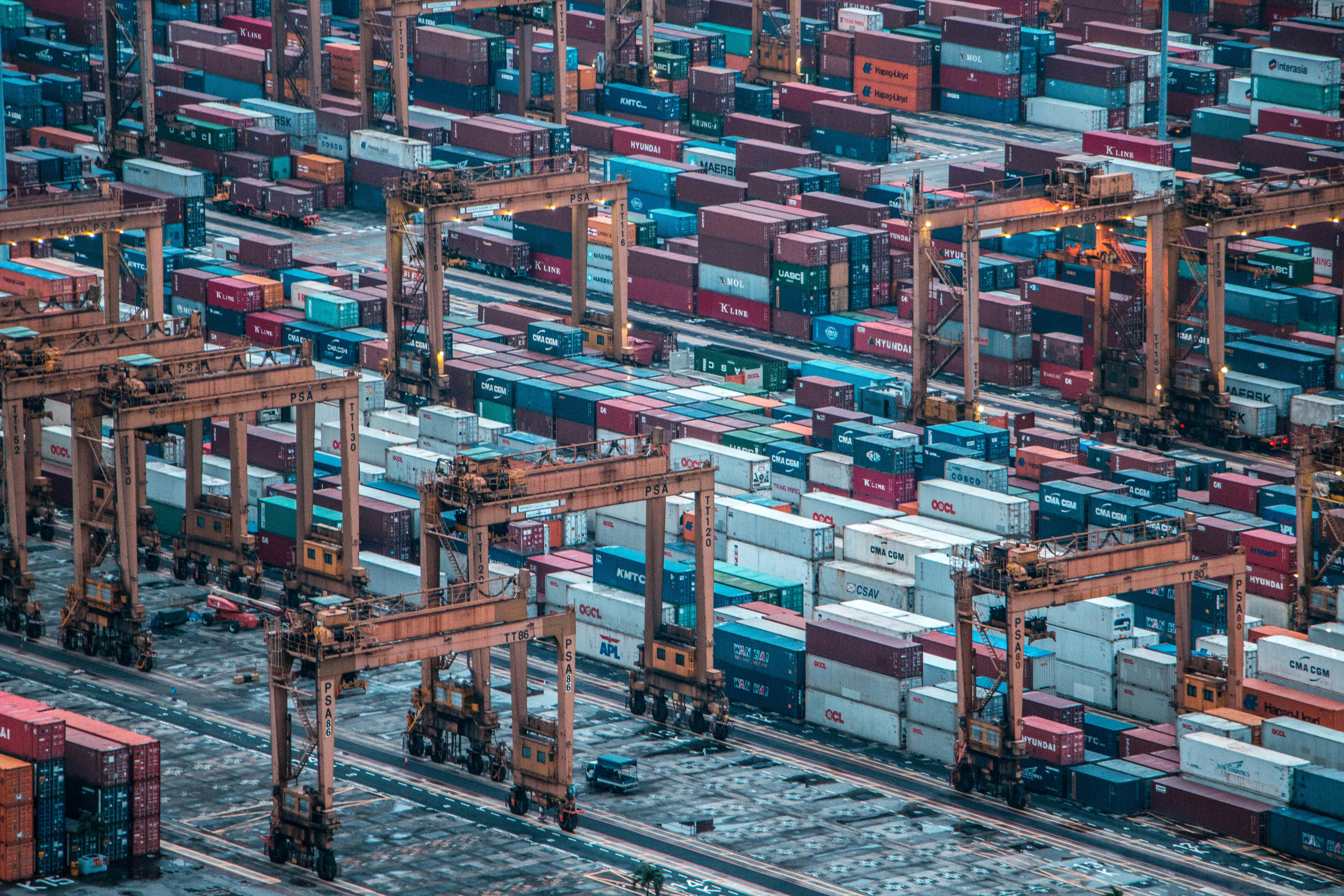
Photo by Ammiel J Wan on Unsplash

Saurav Kumar is currently pursuing a Master’s in International Relations at South Asian University, New Delhi. He completed his graduation in Political Science from Jamia Millia Islamia, New Delhi. As a student of International Relations, he is keen to explore diverse dimensions of geopolitics, geoeconomics, security studies, conflict transformation, and peacebuilding. With a particular interest in area studies, his focus lies in South Asian and West Asian studies.