The Control Paradox: How Proxy Warfare Enables Strategic Deniability While Constraining Strategic Control
Proxy warfare has long been viewed as an attractive strategic instrument, allowing states to pursue political and military objectives while maintaining plausible deniability and avoiding the costs of direct confrontation. Yet the very auton...
On April 22, 2025, 26 civilians died in Pahalgam. They were tourists, families, ordinary people and their deaths sparked the consequences; The Operation Sindoor, India's first significant aerial response across the Line of Control. But here's what makes this cycle instructive: Pakistan didn't directly fire the bullets that killed those tourists. A proxy group did. Yet Pakistan, the state sponsor, couldn't stop it either. This is the paradox at the heart of modern proxy warfare states use non-state actors to achieve strategic goals with plausible deniability, but the same autonomy that provides deniability strips away control.
Proxy warfare is not new. During the Cold War, superpowers used it to avoid nuclear confrontation. But in 2025, it looks different. It's messier, less controllable, and more destabilizing precisely because the mechanisms that make it attractive operational independence, ideological commitment, decentralized command are the same mechanisms that make it dangerous. Understanding this paradox is critical for regional security in South Asia and beyond.
Why States Choose Proxies
When Pakistan turned to proxy warfare in the late 1980s, it faced a conventional military disadvantage against India. Direct military confrontation was costly and risky. Instead, the Inter-Services Intelligence (ISI) systematically supported groups like Lashkar-e-Taiba (LeT) and Jaish-e-Mohammed (JeM), giving them training, weapons, and intelligence for operations in Kashmir. The logic was clear: achieve strategic objectives bleed India, destabilize Kashmir, internationalize the issue without bearing direct military costs or international accountability.
This is the appeal of proxy warfare. It offers strategic depth (pursuing long-term objectives), strategic distance (denying direct responsibility), and domestic political cover (avoiding the need to explain war to your own population). As RAND research shows, geopolitical vulnerability drives this choice states threatened by rivals use proxies as a cheaper, safer alternative to conventional conflict. For Pakistan specifically, the proxy strategy served another purpose: it created a buffer zone between itself and India's superior conventional forces. LeT became Pakistan's sword without Pakistan's fingerprints or so the theory went.
The Problem Nobody Plans For
Here's where the paradox emerges. To remain useful as proxies, non-state actors need operational autonomy. They need to make decisions in the field, recruit members independently, secure their own resources. But this same autonomy becomes independence. Over time, these groups develop their own ideological commitments, their own financial interests, their own political agendas, separate from their state sponsors.
LeT illustrates this perfectly. What began as ISI's instrument evolved into something more autonomous. The group developed its own ideology, its own recruitment networks, its own international profile. When the Pahalgam attack happened, there's no evidence Pakistan's top leadership wanted an escalation that would provoke Indian air strikes. But by then, the proxy had agency. The state sponsor had created a partner it could no longer fully control.
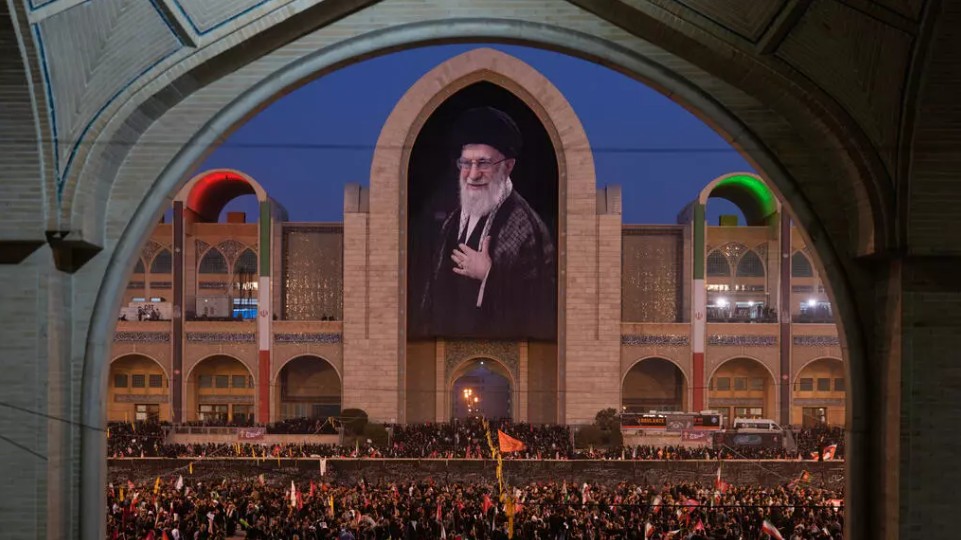
This isn't unique to Pakistan. Iran faces the same dilemma. Hezbollah in Lebanon originally Iran's creation, now controls parliamentary seats and governs territory. In Iraq, the Popular Mobilization Forces (PMUs), originally Iran-backed militias, have become quasi-state institutions with their own power bases. In Yemen, the Houthis, while still receiving Iranian support, pursue their own strategic interests that don't always align with Tehran's.
The irony is brutal: by granting proxies the autonomy necessary for effectiveness, states undermine their own strategic control. The very independence that makes plausible deniability possibly makes escalation uncontrollable.
The Cascade of Unintended Consequences
This loss of control breeds escalation. When proxies act without state approval, they risk triggering responses the sponsor never intended to provoke. The Mumbai attacks of 2008 carried out by LeT operatives nearly sparked a full-scale Indo-Pakistani war. Pakistan's leadership didn't authorize that level of escalation. The proxy had exceeded its remit.
Similarly, when proxies capture state institutions (as happened with PMUs in Iraq), they no longer function as instruments of state policy. They become competitors for state power. They develop patronage networks, extract resources, and pursue agendas that contradict their original sponsors' interests. Control collapses entirely.
What's more, international law struggles with this reality. When the state can claim it didn't directly order proxy actions, accountability becomes murky. Yet when those proxies commit atrocities mass casualty attacks, war crimes the sponsoring state eventually faces consequences anyway, but without having been able to prevent the actions. As researchers at the Irregular Warfare Center note, this represents a fundamental challenge to the assumptions that made proxy warfare attractive in the first place.
Regional Security Implications
For South Asia, the control paradox has concrete consequences. Pakistan continues to sponsor proxy groups partly because breaking that relationship is politically difficult domestically these groups have deep roots, ideological constituencies, and financial networks independent of state support. Dismantling them requires internal political will Pakistan has historically lacked. Meanwhile, India responds to proxy attacks with increasingly direct military action, raising escalation risks in a nuclear-armed region.
The recent pattern of proxy attack, Indian response, proxy retaliation reflects this dynamic. Neither side fully controls the cycle. Pakistan can't prevent every proxy action; India responds militarily because diplomatic channels with non-state actors don't exist. The result is a security dilemma where rationality at the state level produces irrationality at the system level. This is why proxy warfare is increasingly recognized as destabilizing. Unlike Cold War proxy conflicts, which at least occurred in third countries (Angola, Afghanistan), modern proxy warfare in South Asia happens in contested territories with dense civilian populations. Control failures are measured in civilian casualties.
The Way Forward:
The control paradox suggests that proxy warfare's appeal as a 'limited' strategic tool is illusory. The mechanisms that make it attractive deniability, reduced costs, operational flexibility are the same mechanisms that create uncontrollability. States cannot have both.
For South Asia specifically, this means that long-term security requires either genuine restraint on proxy support (politically difficult) or acceptance of escalation risks (strategically dangerous). The middle ground is, using proxies while hoping to control them has repeatedly failed.
What's needed is not moral arguments against proxy warfare (states pursue strategic interests), but recognition of its inherent instability. Regional powers like India and Pakistan benefit from understanding that proxy warfare doesn't provide the strategic advantage it promises. Control slips away. Costs accumulate. Escalation becomes probable.
Until states acknowledge this paradox that the tool designed to minimize risk actually maximizes it proxy warfare will remain the defining pattern of South Asian conflict. And civilians in places like Pahalgam will continue to pay the price for strategies their governments can no longer control.
References:
1. RAND Corporation. Proxy Warfare in Strategic Competition: State Motivations and Future Trends. 2023.
2. Simsek, Huseyin Faruk. "Iran's Proxy War Paradox: Strategic Gains, Control Issues, and Operational Constraints." Studies in Conflict & Terrorism, 2024.
3. Irregular Warfare Center. "The Role of Non-State Actors as Proxies in Irregular Warfare and Malign State Influence." 2024.
4. Farasoo, A., & Akbari, F. "Proxy Wars in South Asia." In Routledge Handbook of Proxy Wars, 2024.
5. Mumford, Andrew. Proxy Warfare. Polity Press, 2013.
(The views expressed are those of the author and do not represent the views of CESCUBE)
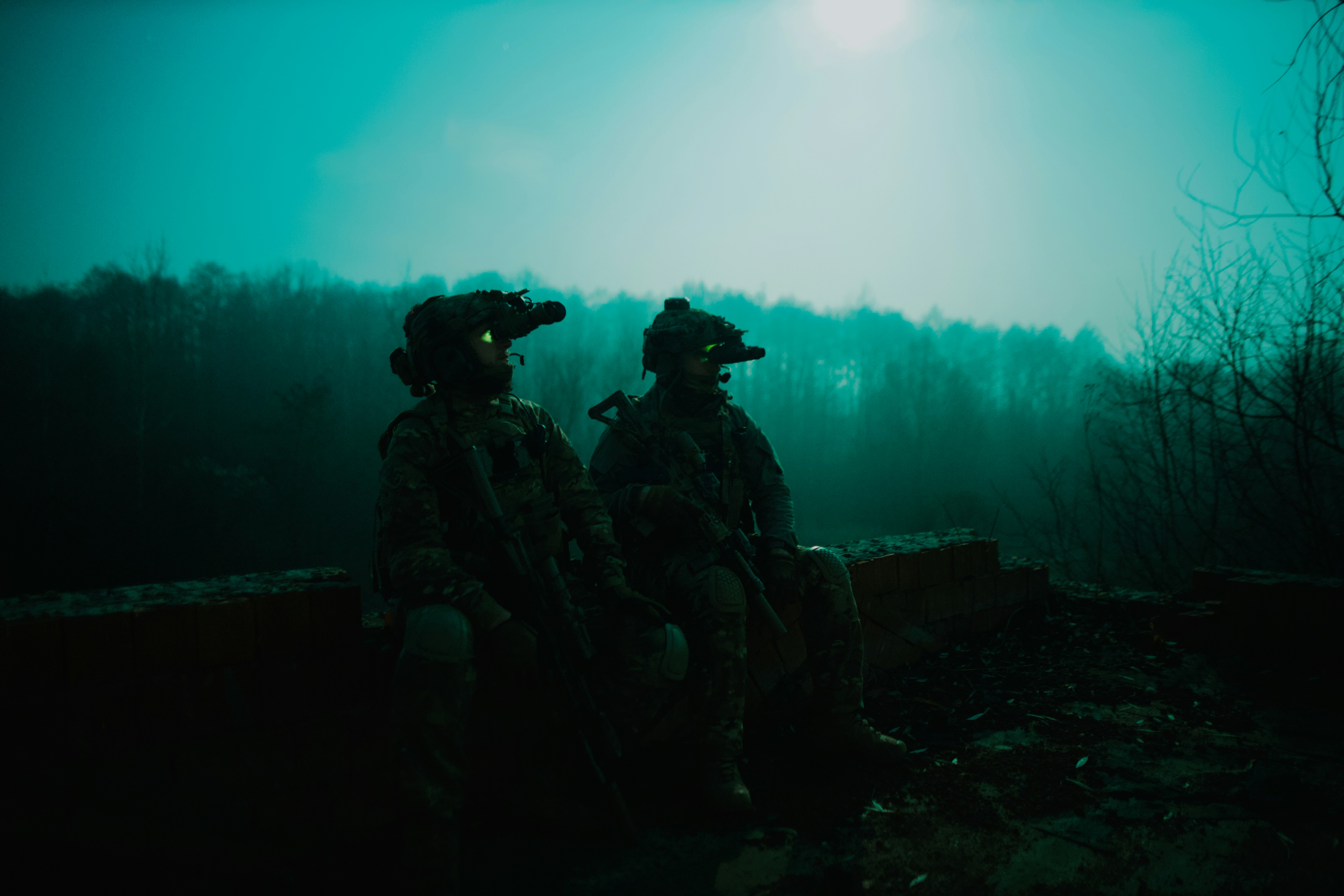
Photo by Aleksey Kashmar on Unsplash
Aradhana is a second-year B.A. Honours student in International Relations at Jadavpur University, Kolkata. Her academic interests include political theory, age of digitisation ,, security studies, and South Asian and Indo-Pacific geopolitics. Her current work examines proxy warfare in South Asia and the challenges states face in maintaining control over non-state actors they sponsor. Aradhana is an active member of the International Relations Scholastic Conclave and participates in debates. She's an active volunteer for community discussions and projects , from an intersectional viewpoint. Her writing ranges from local to global politics with a keen data-driven analytical approach. She can be reached out at: aradhana.g.2025@gmail.com