India’s BRICS 2026 Chairmanship Navigating a tightrope Amidst the Chinese Geopolitical Rise
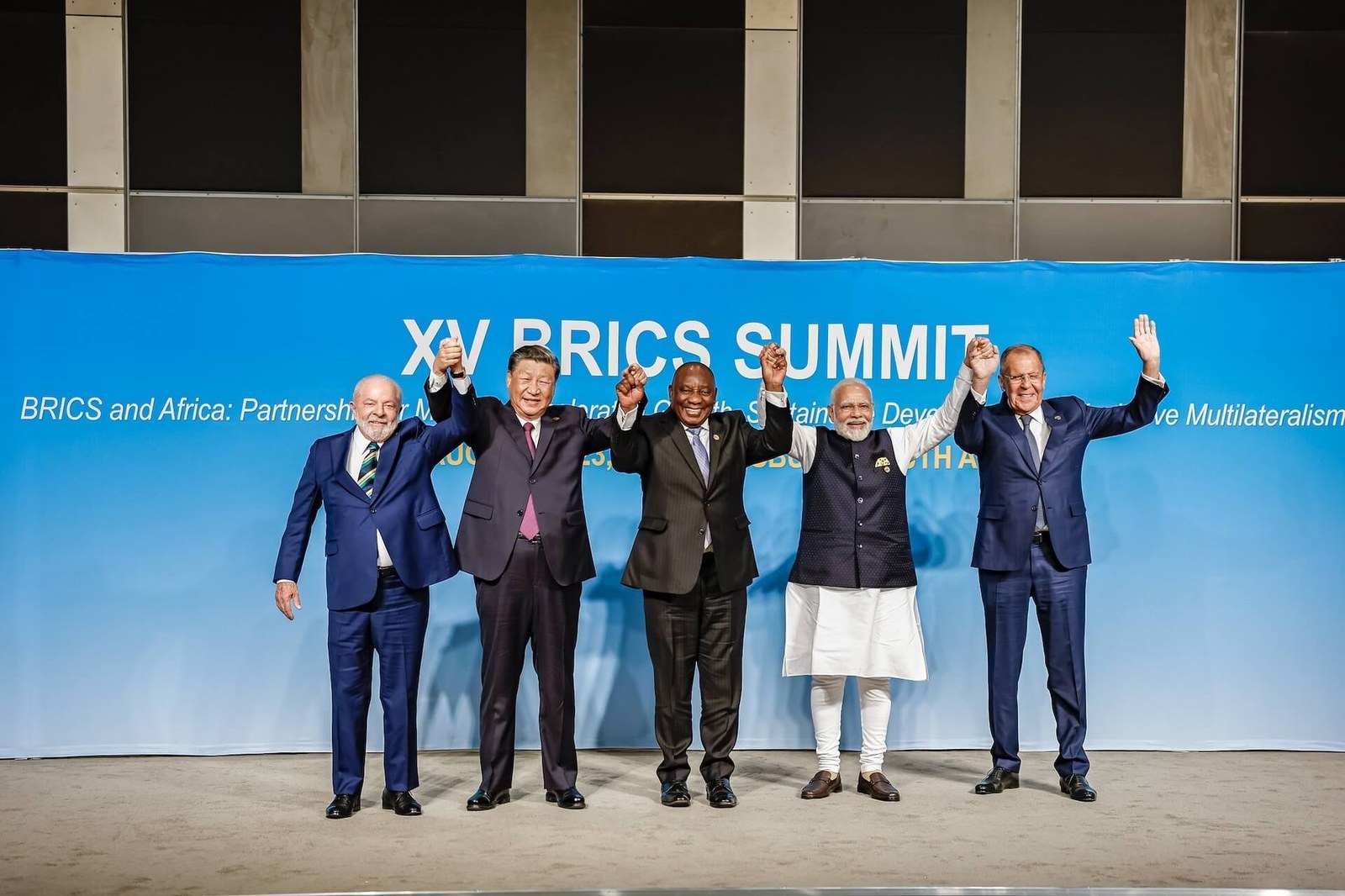
India’s assumption of the BRICS 2026 chairmanship comes at a critical geopolitical moment marked by intensifying U.S.–China rivalry, expanding BRICS+ membership, and growing demands for a more multipolar international order. While the platf...
India has taken over the BRICS Chairmanship from Brazil for the calendar year 2026. The rotating chairmanship has provided India with more than just ceremonial position as it holds strategic opportunity to project its national interests and priorities, spreading its culture, sowing the seeds of becoming one of the significant powers. India also gets the opportunity to pen itself as a prominent leader of the Global South, gather support and tackle the geopolitical difficulties that it faces in its subcontinent in an era where the face of coalitions and power sharing goes through a significant transition. However, India gets only 12 months to set an agenda that benefits its stance as well as voice the Global South and create a dominant vantage point, as the Chinese will presume chairmanship in 2027.
The chosen theme for India’s BRICS chairmanship is “Building for Resilience, Innovation, Cooperation and Sustainability, reflecting a people-centric and humanity-first approach which was also mentioned by Prime Minister Narendra Modi at the 2025 Rio Summit. This also provides a counter to the China’s weaponisation of the BRICS to create a bloc of its own, with the initiatives such as the Belt and Road Initiative (BRI) and De-Dollarisation. BRICS+ which is now a 10-11 member strong (Brazil, India, China, Russia, South Africa + Egypt, Ethiopia, Iran, UAE and Indonesia, with Saudi Arabia having its status pending) represents almost half of the world population and shares an estimate of 36-38% of Global GDP on PPP.1 The threat comes from the share held by China which accounts for almost 65% of the total GDP of the bloc, which provides its with a dominant stronghold, with its influence reflecting in the agenda settings, and the finance provided through the New Development Banks (NDB).2
We take the definitions used by Daron Acemoglu and James A. Robinson in their piece: Why Nations Fail: The Origins of Power, Prosperity and Poverty, as we examine through this article how India can employ its chairmanship into inducing virtuous cycles, by encouraging the establishment of various inclusive institutional reforms, tackling the extractive institutions instilled by the Chinese empires. The following piece will examine the asymmetric dynamics of the BRICS+ bloc, the theme for India’s chairmanship and its potential to act as mitigation to these institutions, concluding with recommendation regarding the steps that can be taken to advance its interest, regarding its national security and the idea of Viksit Bharat 2047 (Developed India by 2047).
The BRICS+ Condition in Early 2026
BRICS+ has gone through significant changes since the Johannesburg summit in 2024. The addition of Iran, Ethiopia, Egypt and the United Arab Emirates in 2024, with Indonesia joining the group in January 2025 increasing the membership to 10-11 members. This was followed by ten countries (Belarus, Bolivia, Cuba, Kazakhstan, Malaysia, Nigeria, Uganda, Vietnam, Uzbekistan and Thailand) joining the BRICS+ group as partners, making it a dominant representative of the Global South.3
The Bloc that commands control over almost 3.5 billion people, and enjoys almost 50% of total global GDP growth in the last decade, 22-26% of the global trade, 43.6% of the global oil production and 36% of natural gas with a labour force of 1.5 billion, suffers from asymmetric power sharing. China that comprises of almost 65% of the total BRICS+ GDP, the status of a primary trading partner of all the BRICS+ nations, dwarfs the contribution of countries like India, Russia, UAE, etc.
As India takes BRICS chairmanship in a period that is geopolitically hostile and economically challenging, India is walking a tightrope as it goes through a time period where major BRICS nations are engaged on the forefront of war, while a dominant China grows in strength and awaits the chairmanship for the next calendar year.
China’s Narrative Push through BRICS
China has been employing the bloc which it holds a strong dominance over, to do its bidding in the broader hegemonic race, promoting De-Dollarisation and its Belt and Road Initiative.
China uses its influential shareholding in the New Development Banks to divert loans towards projects that suffice and BRI. It has also not failed once to mention and reference the BRI in BRICS action plans and declarations, often portraying it as a collective initiative of the BRICS rather than an individual project of their own. Beijing has also used the BRICS ministerial meetings and summits to work on bilateral agreements and projects with other nations.5 Moreover, while new African members like Ethiopia and Egypt add to the strategic value of the bloc, commanding pivotal Indian Ocean Region chokepoints through the Suez Canal and Bab-El- Mandeb strait. However, each of these countries are afflicted by Chinese debts through projects like the Grand Ethiopian Renaissance Dam, railway projects that enhance connectivity, Egypt’s BRI linked projects, etc. China also employs co-finance mechanisms like the China Development Bank and Export-Import Bank of China that helps BRI project along with the New Development Banks.6
A similar kind of method is employed for promoting De-dollarisation, through promoting local currency settlement systems, especially in Intra-BRICS trade, utilising national currencies and bilateral swap agreements. China also encourages the NDBs to provide more loans in RMB and other local currencies. Moreover, China also uses platforms like CIPS and mBridge for cross-border transactions, especially in the case of BRICS, to reduce dependency on SWIFT transactions and dollar clearing. China also uses NDB and Chinese institutions for issuing RMB bonds for the BRICS projects which builds international demand for the currency.7
China has employed a system which runs on the friction of inclusive and extractive institutions. A façade of economic inclusivity, combined with strongly extractive political institutions provides it an opportunity to extract long-term strategic concessions, in the forms of resources, access to crucial ports and political alignment.
The Potential of India’s Theme of Building for Resilience, Innovation, Cooperation, and Sustainability
India’s primary objective is to build on strategic leadership through taking command over the narrative, preventing the BRICS+ bloc from becoming a mere extension of the Chinese influence, instead shaping it into a beacon for the Global South that promotes multipolarity. The changing world order with the transatlantic divide, and the rise of middle powers in the recent decades, coupled with the global south fatigue with the P5 veto paralysis, along with the institutional rigidity showcased by the western-front has aggravated the demand for a multipolar order, which gives India’s RICS theme to act promptly before handing over the chairmanship to China in 2027.
India’s RICS theme comprises of four pivotal pillars:
Resilience: This segment includes the strengthening institutional, social and economic resilience to help tackle the global supply chain disruption, climate risks, and the persisting uncertainty.
Innovation: Investing in new technologies and related themes like the advent of AI, Fintech, the role of digital public infrastructure and further knowledge sharing for efficient service delivery systems and growth that adapts and matches the global standards.
Cooperation: Increasing and enhancing multilateral engagement and ministerial meetings between BRICS+ members and partners, putting special emphasis on policy coordination, facilitating better trade relations, development finance, eventually building towards introducing reforms in the domain of global institutional governance, building human-centric partnerships.
Sustainability: Promote collective action to mitigate the climate crisis, encouraging green finance frameworks and just energy transitions, focusing on an overall theme of sustainable development.8
Unlike the state-centric framing of the Chinese institutions, which portrays BRICS as an anti-western platform, focusing on its own infrastructure expansion, and financial autonomy, the RICS theme provides a more people-centric approach. It promotes inclusivity, elucidating its intent to tackle the uncertainties expanding in the geopolitical arena as well as other crucial developmental sectors of food and climate, while building a platform that builds innovation with an efficient approach of knowledge sharing. These ideals directly challenge the extractive institutional approach employed by Beijing till now.
The theme works on a shift from the dictation of the Chinese Geoeconomic tools of RMB and BRI, taking a more rules-based multipolar approach, which emphasises on the importance of credibility, accountability and transparency, reducing the threat of a single power commanding the major discourse and viewpoint of the bloc.
Therefore, the theme of RICS is not just the voice of India, but a vision that resonates with each and every developing member of the BRICS+ community, deterring China from framing BRI and De-dollarisation as the primary agenda of the BRICS+.
Recommendations
The RICS theme can also reflect in the policies that India takes for its chairmanship in 2026 to leverage the position that it enjoys. The following recommendations work on inclusive institutions that promotes inclusive norms and provides India strategic autonomy over Chinese attempts at influencing the BRICS+ bloc:
Instil a “Quality over Quantity” Protocol for Membership
This incorporates institutionalising a proper admission criterion, which would work on unanimous consensus and a strict assessment for any new member joining the bloc, with a special emphasis on the members’ alignment with the RICS theme. A special desk should be denoted for BRICS coordination by the Ministry of External Affairs, India for the following admission, selection and regulation.
A Formal Report on RICS Vision and Open Innovation Fund
This includes the creation of a RICS Vision Report before the next Tech Ministers meeting taking place in April 2026. This meeting should also include the inauguration of the BRICS Open Innovation Fund, which supports AI, quantum and green tech projects, with a special regard to projects prioritising India in order to promote Atmanirbhar Bharat (Self–Dependent India).
Create an official BRICS Multi-currency Settlement Platform with limits and added safeguards
Propose a BRICS Multi-Currency Settlement Platform and limit it to trade invoicing in national currencies, with a proper framework, which talks in detail about the limits, compliance, and sanctions. This will neutralise the Chinese narrative assertion and de-dollarising attempts.
Propose half yearly G4+BRICS Troika Summit pushing for UNSC Reforms
Convene G4+BRICS Troika summits and try to align interests in order to have a unified stance on the UNSC Reforms. Make attempts at pushing for a binding 2028 UNGA Deadline within the BRICS Global South Compact.
Create a Permanent BRICS Strategic Communications Cell under NSCS
Establish a BRICS Strategic Communications Cell under National Security Council Secretariat, producing monthly editions of “Global South Voice” reports, magazines, collaborating with research centres and Think Tanks, highlighting the voice of the nation, scholars, and the youth, to challenge the Chinese narrative at multiple levels.
Leverage BRICS+ for Joint Doctrine additions and attain Atmanirbharta in the supply of Critical Minerals
Utilise the innovations pacts under the RICS theme to diversify the critical mineral supply chains away from China. India can also learn from the following and apply it to its joint military doctrine, especially in operations that require multi-dimensional knowledge in cyber and information warfare domains, which collectively enhances the strategic autonomy that India has been working towards.
Enhance Border Infrastructure through Projects linked through RICS and focus on the Indian Ocean Region
Work on BRICS Maritime domain awareness merging it directly with the Information-Fusion centre-Indian Ocean Region, coupled with investments in projects enhancing border infrastructure in along the Himalayas and in the Northeast region.
Incorporate IMEC and INSTC creating a New RICS Connectivity Corridor
Integrate the International North-South Transport Corridor (INSTC) and India-Middle-East-Europe Economic Corridor through flagship projects under the RICS theme creating a transparent and rules-based alternative to the expanding and exploitative BRI strengthening India’s influence in the IOR region.
BRICS Resilience Index and a Mechanism for Just and Accountable Green Transition
Create an index to quantify the progress made in the domains of food security, climate change etc, with an accountable mechanism for green transitions which also tracks the sustainability of the projects taken by the members of BRICS.
Conclusion
India stands at a critical juncture in international history with an opportunity of creating a major impact in the current geopolitical scenario, commanding the path for one of the most influential blocs in the world, but for a limited period of time as China takes the mantle next year. However, the next 9 months provide India to make critical changes that can afflict China’s narrative assertion, and can change the portrayal of BRICS+ into a more inclusive and multipolar platform, also enhancing India’s stance in the current world order, making it a credible leader of the Global south.
References
1. “About the BRICS,” BRICS Official Website, accessed March 12, 2026, https://brics.br/en/about-the-brics/brics-data.
2. Chukwuma Okafor and Tobi I. Akingbade, “Building a Bloc from BRICS: Assessing China’s Strategic Interests and Influence,” Afripoli, 2025, https://afripoli.org/building-a-bloc-from-brics-assessing-chinas-strategic-interests-and-influence.
3. “About Us,” BRICS India 2026, accessed March 12, 2026, https://www.brics2026.gov.in/about-us/.
4. Polish Institute of International Affairs (PISM), “China Building Up BRICS as an Important Foreign Policy Tool,” PISM Report, 2024, https://pism.pl/publications/china-building-up-brics-as-important-foreign-policy-tool.
5. Observer Research Foundation (ORF), “BRICS and BRI: China Aims for Strategic Alignment,” ORF Occasional Paper, 2025, https://www.orfonline.org/research/brics-and-bri-china-aims-for-strategic-alignment.
6. S. Cheng, “Impact of the Belt and Road Initiative on China's Overseas Renewable Energy Development Finance,” Renewable and Sustainable Energy Reviews 187 (2023): 113777, https://doi.org/10.1016/j.rser.2023.113777.
7. Carnegie Endowment for International Peace, “The Difficult Realities of the BRICS De-Dollarization Efforts and the Renminbi’s Role,” December 2023, https://carnegieendowment.org/research/2023/12/the-difficult-realities-of-the-brics-dedollarization-effortsand-the-renminbis-role.
8. “BRICS India 2026,” Official Website, accessed March 12, 2026, https://www.brics2026.gov.in/.
(The views expressed are those of the author and do not represent the views of CESCUBE)
Image Source: https://brics.br/en/about-the-brics
Bhaskar Jha is a master's student in OP Jindal Global University. He is a budding researcher who has prior research experience gained at research centres and think tanks like the The Indian Netizens Co. And Center For Land Warfare Studies. He is a Political Science Gold Medalist and takes keen interest in Geopolitical hedging and Security Studies.