India–Russia Defence Relations Post-Ukraine War: Realignment or Continuity?
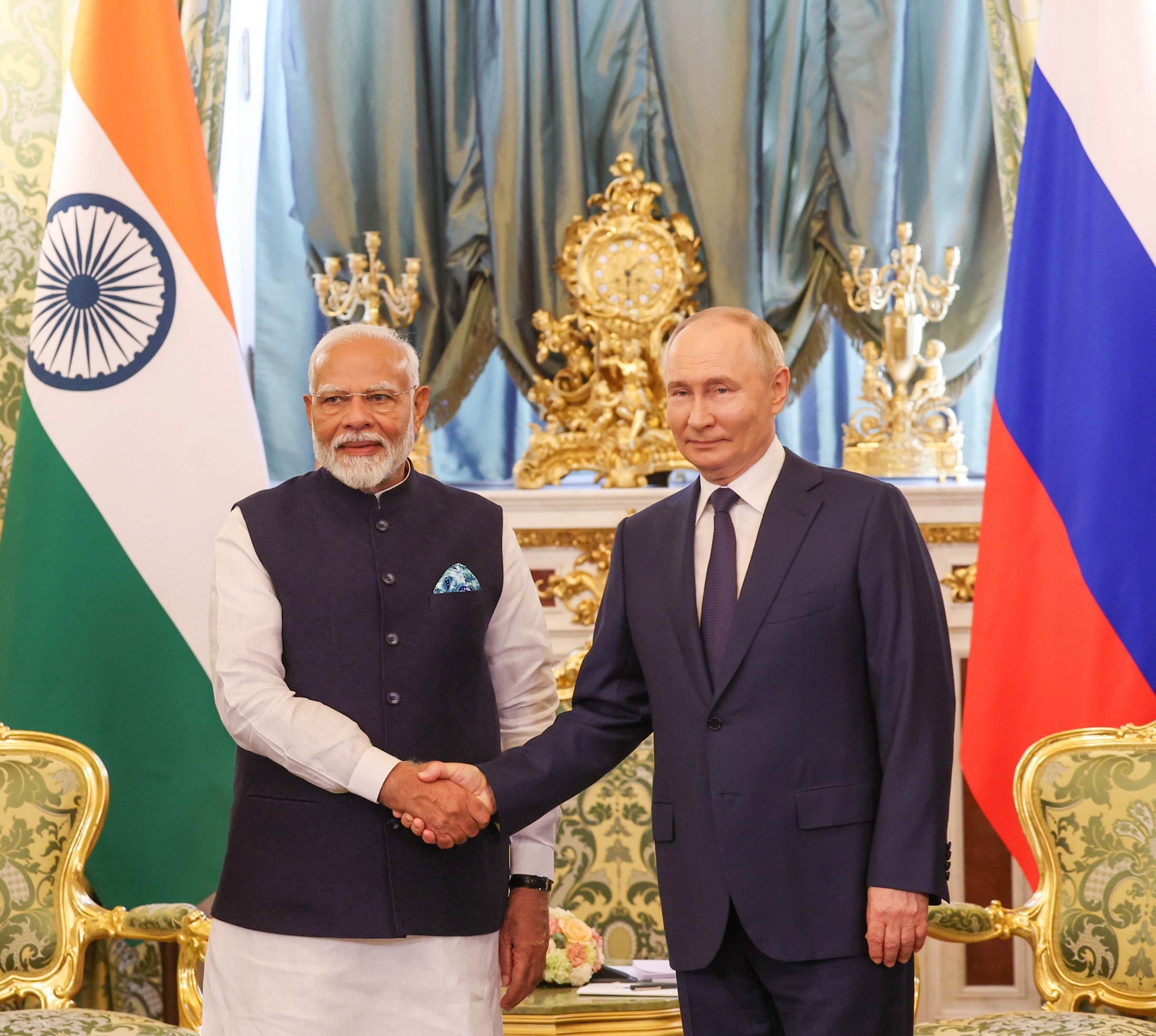
India’s defence partnership with Russia, rooted in the Soviet era, has been strained by the Ukraine war. Sanctions, delivery delays, and supply chain disruptions have compelled India to diversify towards Western partners while advancing dom...
India and Russia have a long history of defence cooperation stretching back through the Soviet era. After India gained independence, the Soviet Union continued to support the country with heavy industry, the energy sector, and defence equipment manufacturing. India is strategically dependent on Russia for various defence systems, including tanks, infantry vehicles, aircraft, and air force operators. The relation between India and Russia is difficult to pin down, despite the geopolitical ramifications of the Ukraine war. Due to the war, the defence alliance of both countries was put to the test, and their future partnership was called into question. The western sanctions have brought a new kind of impact on delivery delays and shortages in supplies, which forced India to quicken its diversification efforts.[1] The United States, our ally in a strategic response to China, has accepted India successfully maintaining its neutrality. This balancing act reflects India’s belief that Russia is a trustworthy ally and has been crucial to the development of India’s military capabilities. In this article, we will discuss India’s defence partnership with Russia, diversification towards Western allies and future challenges.
How has the Ukraine war tested India-Russia defence ties?
The Ukraine war has challenged the defence partnership of India and Russia, casting doubt on the presumption of their relations. Since the war started in February 2022, practical issues have surfaced about the strategic defence alliance between the countries. Since the defence demand of India has been severely limited by the war and Russia has acknowledged the delay of major deliveries.[2] The Indian authority had admitted these delivery failures and faced critical delays of the two remaining regiments of S-400, which have been postponed to 2026. Russia has faced difficulties due to the sanctions issue, which has caused a construction delay of the project and two frigates of the Indian Navy.[3] The main concern of India was maintaining the Russian equipment due to the lack of replacement parts. There was a crucial concern as Russia’s military has strained its own production capacity to meet domestic demands.
The combat performance of Russian combat systems in Ukraine has concerned the Indian military planners over supply chain problems. Since the start of the conflict, the Indian and Russian defence forces have no longer operated in conjunction, and there has been a significant decrease in military-to-military interaction.[4] The joint military exercise of both countries has also been impacted, and there were only a few instances of participation in multilateral exercises. These difficulties have caused India to reevaluate its approach to defence acquisition. India has planned to upgrade and promote domestic manufacturing, which indicates a strategic realignment.
India’s strategic diversification toward Western defence partners
India has historically relied on Russia for military cooperation, but in recent years, it has shifted its attention towards the West. The reason for this shift can be associated with the Ukraine war, self-reliance or China’s factor. There has been significant advancement in India-US relations, particularly in areas of technology, military cooperation and trade. Within the EU countries, France and India have the most active partnership.[5] A longstanding period of diplomatic trust, which is especially noticeable in the areas of nuclear energy, technology and defence, has formed the basis of the bilateral relationship. India’s efforts to broaden its alliance with the fighter jet engine point to a strategic realignment of its defence strategy.
Due to the global uncertainty, India’s decision to look for new partners demonstrates a shift in emphasis towards supply chain security, reliability and technological advancements. In order to manage global polarisation, India is maintaining strategic independence by striking between Russia and its Western alliances. The goal of a larger Indo-Pacific security network is in line with Japan’s indication of transparency to strengthen the defence industrial ties. India is ensuring multiple options to strengthen its defence sector by engaging with multiple global players like the UK, Japan and France.[6] The multi-alignment strategy of India is maintained to strategic ties with Russia without becoming dependent. Supply disruptions from Russia, geopolitical limitations and more technological advancement in Western systems are the factors to drive this shift. However, India maintains its historical ties with Russia through their defence partnerships and industrial supplies.
India is maintaining strategic autonomy amid global pressure
India has been able to able to express concern about the humanitarian impact of the Ukraine-Russia war without offending either of its allies. India’s clarification frequently cites the UN charter and the necessity of dialogue between the nations. Neutral stance of India on UN votes demonstrates its commitment to international law, while calling for peace and respect of sovereignty. Without specifically mentioning Russia, India has consistently emphasised a halt to conflict and focus on diplomacy.[7] The phrase “this is not an era of war” best captures India’s stance that the post-conflict era should reject escalation and favour diplomacy. The multi-alignment strategy of India supports maintaining a neutral stance, which becomes appealing to Western democracies and countries in the Global South.[8]
India is free to engage with all parties and has the ability to act as a mediator without being compelled to join any bloc. India has come under increasingly international scrutiny due to the EU sanctions on Russian companies. It is operating under UN-authorised sanctions, which maintain energy imports that are transparent and highlight its developmental needs. India still maintains its autonomy when making decisions. Balancing national interests with international expectations alongside various strategies and diplomacy is a message about a state's sovereignty. This engagement indicates a diplomatic exercise that is based on the deliberate pursuit of strategic balance rather than ideology.
What does the future hold for India-Russia defence relations?
India’s arms imports rely on Russian origin systems and deep collaboration of cruise missiles like BrahMos. Russia has consistently backed India both internationally and in its pursuit of nuclear weapons. To address the supply shortage, Russia has offered the production of its stealth jet in India with complete transfer of technology. India will keep maintaining and improving its current Russian-origin assets, for which joint ventures are still a vital source of hardware supplies. In the meantime, more modernisation initiatives and new acquisitions will come from Western partners. India seems to be wavering between realignment and continuity.[9]
In addition to broadening future acquisition and enhancing local potential, Russia maintains ties to safeguard military capabilities and diplomatic protection. Moscow maintains a balance with New Delhi despite Russia’s increasing ties to China, in part to preserve its strategic independence and influence in Asia.[10] In a multilateral forum, Russia backed India's strategic interests in the UN Security Council and BRICS. India will continue to deepen its relations with Russia for diplomatic reasons, but by strengthening its ties with Western funding, it will gradually focus on warfare domains like AI, space and cybersecurity.[11]
Conclusion
Despite the declining strategic alignment, India will not entirely turn its back on Russia because of their mutual interests without being in direct conflict. Regardless of significant disruptions brought by the Ukraine war, both countries preserve their strategic partnership. As a trustworthy defence partner, Russian credibility has undoubtedly been harmed by the supply chain problems, delivery delays and battlefield concerns. Western sanctions have also made financial transactions more difficult, which has required both nations to look into alternative payment options. In the meantime, India has successfully worked to diversify its defence by securing its allies in the West. France has risen to become the second-largest arms supplier to India, and the US-India partnership has displayed a practical approach to security needs. India is able to secure advanced military technologies while preserving its valuable autonomy through its strategic balancing act. The numerous weapons systems of Russian origin are needed by India, while Russia needs its biggest arms buyer. Additionally, this developing relationship takes on a new significance with India’s role as a diplomatic mediator in the Ukraine war. Therefore, this defence partnership is still too valuable for either party to fully abandon, despite having declined from its historical peaks.
Endnotes:
[1] Spenser A. Warren, Sumit Ganguly, India–Russia Relations after Ukraine, (University of California Press, 2022). https://online.ucpress.edu/as/article/62/5-6/811/194124/India-Russia-Relations-after-Ukraine.
[2] Dr. Chietigj Bajpaee and Lisa Toremark, India-Russia relations, (Chatham House, 2024). https://www.chathamhouse.org/2024/10/india-russia-relations.
[3] Aleksei Zakharov, The changing nature of India-Russia defence cooperation, (ORF, 2024). https://www.orfonline.org/expert-speak/the-changing-nature-of-india-russia-defence-cooperation.
[4] Chethan Kumar, Ukraine War: sanctions cast shadow on Indo-Russian joint venture for 200 choppers, (Times of India, 2025). https://timesofindia.indiatimes.com/india/ukraine-war-sanctions-cast-shadow-on-indo-russian-joint-venture-for-200-choppers/articleshow/122305984.cms.
[5] Suhasini Haidar, Dinakar Peri, India-France defence ties take a bigger leap, (The Hindu, 2024). https://www.thehindu.com/news/national/india-france-announce-defence-industrial-roadmap-space-defence-cooperation-after-modi-macron-meet/article67780915.ece.
[6] Patrizia Cogo Morales, India’s inevitable military diversification to the West, (9DASHLINE, 2024). https://www.9dashline.com/article/indias-inevitable-military-diversification-to-the-west.
[7] India Today World Desh, India, China abstains from UN vote demanding Russia to 'immediately' withdraw from Ukraine, (India Today. 2023). https://www.indiatoday.in/world/russia-ukraine-war/story/india-china-abstain-un-vote-russia-withdraw-ukraine-war-2338838-2023-02-24.
[8] Shubhajit Roy, ‘Not an era of war’: In US, Modi calls for peaceful resolution of Ukraine conflict, (The Indian Express, 2023). https://indianexpress.com/article/india/narendra-war-speech-us-modi-peaceful-resolution-ukraine-conflict-8681176/.
[9] Shivam Patel and Abhijith Ganapavaram, Russia offers India its most advanced Su-57 stealth fighter jet, (Reuters, 2025). https://www.reuters.com/business/aerospace-defense/russia-offers-india-its-most-advanced-su-57-stealth-fighter-jet-2025-02-11/.
[10] Dr. Sunita Meena, India’s Strategic Autonomy in the Russia–Ukraine War: Analysing Challenges and Opportunities, (Eurasia Review, 2025). https://www.eurasiareview.com/11062025-indias-strategic-autonomy-in-the-russia-ukraine-war-analysing-challenges-and-opportunities/.
[11] Dipanjan Roy Chaudhury, Russia again backs India for permanent UNSC membership, (The Economics Times, 2022). https://economictimes.indiatimes.com/news/india/russia-again-backs-india-for-permanent-unsc-membership/articleshow/96155358.cms?from=mdr.
Image Source: Press Information Bureau
(The views expressed are those of the author and do not represent the views of CESCUBE.

Kushmita Kapoor is a postgraduate in Politics and International Relations with a particular interest in international security, geopolitics, and strategic policy frameworks. She has previously interned at the Future of India Foundation, where she engaged in policy-oriented research and gained hands-on experience in data analysis and policy research. Skilled in OSINT, GIS tools, and multilingual research, she brings a strong analytical lens to the study of strategic policy.