Saudi Arabia’s Strategic Autonomy: Balancing the US, China, and Regional Security
For close to eighty years, the Middle Eastern geopolitical order was founded on consensus; a stiff, transactional order that simply traded Saudi Arabian oil for U.S. security guarantees. Yet in the pluralized world of 2026, this unipolar anachronism has been replaced by a far more subtle strategy of "aggressive strategic autonomy." No longer satisfied with being a shielded client state within a Euro-Atlantic security framework, Riyadh has instead undergone a deep-seated transformation into a "structural hub" of a multipolar world. This development is far more than a simple reactive strategy of Saudi hedging against perceived U.S. strategic disengagement; it is instead a proactive declaration of neorealist sovereignty based on the existential imperatives of Vision 2030.
The Security Paradox: Diversifying the Shield
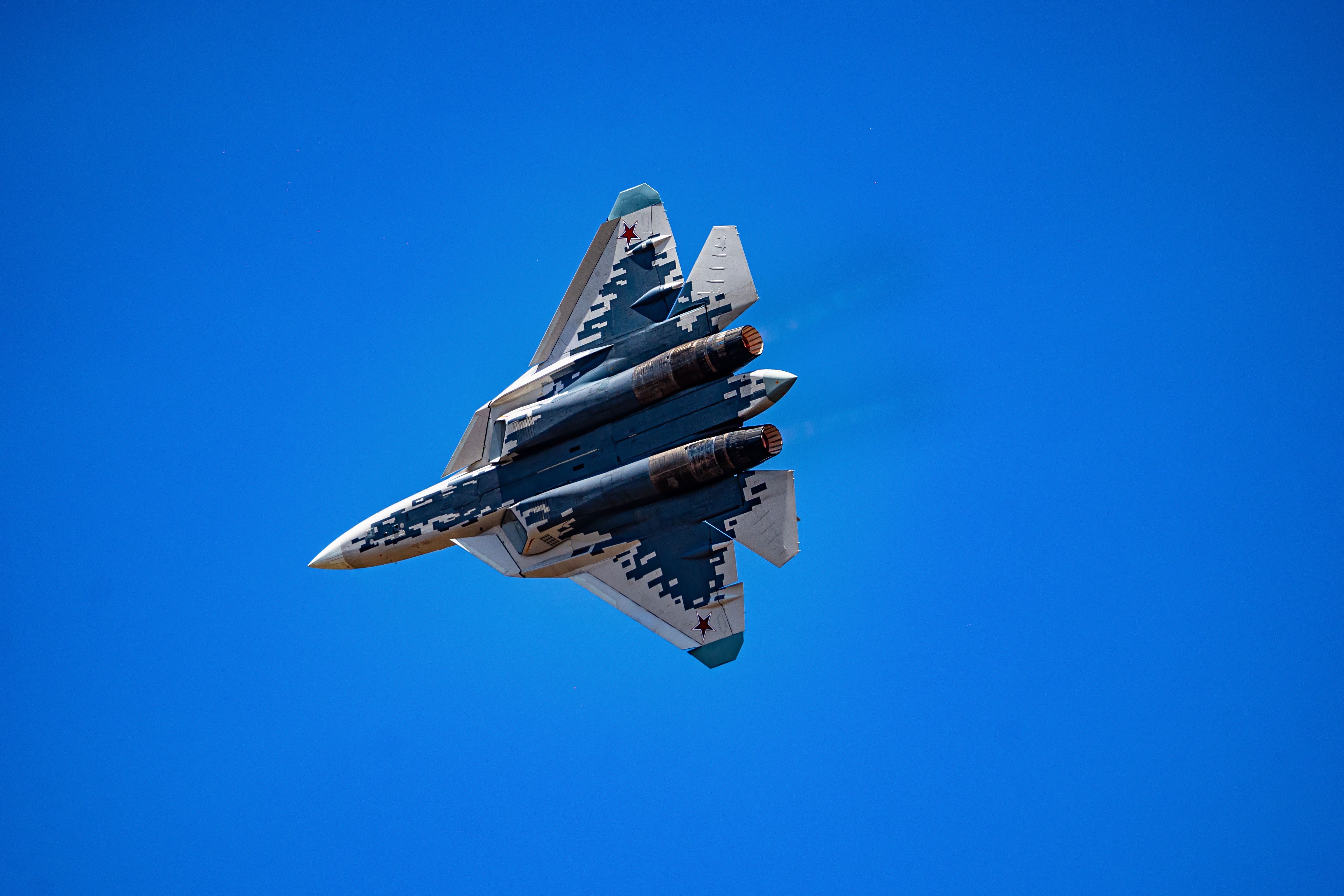
Although the United States is Riyadh’s main security guarantor, the character of the relationship has evolved from a fraternal relationship to a cold and transactional one. The perceived American passiveness in the 2019 Abqaiq attacks conveyed to the Saudi leadership that the U.S. "security umbrella" was no longer a constant but a variable. Consequently, Riyadh has turned to "Strategic Substitution," a strategy of diversifying its defense structure to ensure that no foreign capital has a veto power over its national security.
At the World Defense Show 2026, the Kingdom’s national champion, SAMI (Saudi Arabian Military Industries), evolved from a simple assembly company to a strategic group launching local autonomous systems. With a target of 50% localization of military expenditure, the Kingdom is trying to resolve its "Security Paradox": how to sustain high-end U.S. aircraft such as the F-15 while developing a multi-aligned security shield through agreements with partners such as Pakistan and Turkey.
The Beijing Symbiosis: Geoeconomics as Deterrence
As long as Washington remains the Kingdom’s "shield," Beijing has clearly emerged as its "architect." The Saudi-Chinese relationship has clearly evolved from the simplistic "oil-for-goods" trade of the 20th century to a profound, structural symbiosis that is the very foundation of the Kingdom’s geoeconomic neutrality. By incorporating China’s tech giants into the very fabric of Vision 2030 itself, namely, through Huawei’s enabling 5G infrastructure and Alibaba’s cloud computing framework in "Giga-projects" such as NEOM—the Kingdom is pursuing a highly refined form of "deterrence through interdependence." This strategic move guarantees that the world’s ascendant superpower has a direct, multi-billion-dollar stake in the very physical and digital integrity of the Arabian Peninsula.
For Riyadh, China is clearly the "partner of non-interference," a far more pragmatic choice that provides access to world-class technological collaboration and investment on a truly massive scale, unencumbered by the partisan politics and moralistic conditionality that all too often paralyzes American foreign policy. Through the Saudi "Global Supply Chain Resilience Initiative" alignment with Beijing’s "Belt and Road," Riyadh is positioning itself as an essential player in Chinese energy security while at the same time capitalizing on Chinese strengths in green hydrogen and satellite technology. The "Hedging of Hegemons" strategy enables Saudi Arabia to view its geopolitical positioning as a modular system, where American hardware is used for defense purposes while Chinese software is used for the future economy. This means that any instability in the region now poses a threat not only to American interests but to the flagship of China’s foreign technological outreach, giving Riyadh a two-tiered security guarantee that only Washington could previously offer.
Energy Realpolitik: The OPEC+ Lever
In 2026, the Kingdom has successfully leveraged its traditional "Central Bank of Oil" role to create a highly sophisticated tool of energy realpolitik that is as keen as it is unabashedly diplomatic. By maintaining the intricately balanced OPEC+ structure, Riyadh has successfully decoupled global energy prices from the wildly fluctuating cycles of Western politics. This is a deeply transformative shift in the global pecking order; by maintaining a disciplined production cartel with Russia, despite high-level pressure from the Trump administration to deliberately suppress the market, the Kingdom has clearly indicated an era of fiscal nonconformity. The implication is unmistakable: the capital-intensive needs of Vision 2030 and the strategic preservation of national wealth now take precedence over Washington's domestic inflationary priorities or the electoral politics of the G7.
This marks the full realization of the "Oil-for-Influence" paradigm. The Saudi Kingdom is no longer simply interested in liquidating its hydrocarbon assets but has come to see them as a strategic hedge and a diplomatic tool. Riyadh makes sure that both the traditional G7 great powers and the rising BRICS+ countries have to negotiate with the Kingdom on its terms. Moreover, Riyadh has skillfully positioned itself as the “Indispensable Bridge” in the global energy transition. By aggressively investing in the world’s largest green hydrogen projects and, at the same time, arguing for the continued relevance of hydrocarbons, Riyadh is effectively diversifying away the very risks of the energy transition that imperil other petro-states. The logic is that of energy realism: Riyadh makes sure that it is the conductor of the global economy irrespective of the speed of the net-zero agenda. Whether the world is fueled by the burning of Brent Crude or the electrolysis of water, the global energy synapse will continue to be rooted in the Hejaz and the Nejd. Riyadh’s two-track approach effectively nullifies the “obsolescence risk” of the energy transition, compelling even the most fervent proponents of decarbonization to accept that a stable global order is simply impossible without a successful and cooperative Saudi state.

Saudi Arabia Trade with EU, US, and China; Source: Voronoi
The Geoeconomic Pax Saudiana
The third and final leg of this emerging autonomy is the subtle transition from reactionary interventionism to a strategy of deliberate de-escalation. In the cold, neorealist climate of 2026, the Saudi regime has come to understand that regional tensions are no longer a means of leverage, but rather a "tax" on its own metamorphosis at home. This "Zero Problems" foreign policy is not the product of an ideological epiphany but rather a calculation: that the enormous influx of foreign direct investment (FDI) necessary to fuel a post-oil economy is, in fact, highly sensitive to instability. By maintaining the 2023 Iran rapprochement and continuing to observe a tense but operative ceasefire in Yemen, the Saudi regime is, in effect, "quieting the neighborhood" to protect the trillions of dollars in fixed assets emerging from the desert sands.
This approach turns the Kingdom from a regional belligerent into a regional stabilizer. By tempering proxy wars that once depleted the national exchequer and damaged the international reputation of the Kingdom, Saudi Arabia is sweeping away the geopolitical dust to emerge as the indispensable leader of the "New Middle East." In this new order, ideological purity is sacrificed for economic integration. The Kingdom believes that by securing the economic destiny of its neighbors, including erstwhile adversaries, to its own success, it can establish a "security through prosperity" feedback mechanism.
However, this strategic shift has a dual benefit: it protects the "Giga-projects" from the danger of asymmetric warfare and, at the same time, reduces the influence of foreign powers that have long benefited from the divisions of the region. By emerging as the "Economic Hub" of a peaceful Levant and Gulf, Saudi Arabia is ensuring that the road to regional prosperity leads to Riyadh. And this exactly is the hallmark of the Saudi strategy of 2026: the pursuit of a “sovereign peace” in which the rewards of regional peace are channeled back, directly, into the survival and preeminence of the Saudi state, in order to guarantee that the Kingdom itself is the stable center of a multipolar world.
Conclusion: The Architect of a New Order
The transformation of Saudi Arabia represents the final nail in the coffin of the post-Cold War era in the Persian Gulf, thus exemplifying the end of the "unipolar protectorate" paradigm. By the year 2026, the Kingdom has illustrated that true strategic autonomy is not the product of irresponsible estrangement from traditional allies but rather the deliberate establishment of indispensability on a global range of new partners. The Kingdom has successfully evolved and taken a front foot in Great Power politics, expertly maneuvering between the tension of Washington and Beijing with cold calculation.
Through the strategic utilization of its sovereignty and the dogged determination to resist being boxed into the options of a "New Cold War," the Kingdom is writing a groundbreaking manifesto for middle powers in international diplomacy. This paradigm shift illustrates that in a multipolar and fragmented international system, the most precious resource is no longer the military or the oil fields, but the freedom to choose.
The ascent of Riyadh marks the emergence of a "transactional sovereignty," in which allegiance is modular and the national interest is the only guiding star. As the Kingdom secures its future beyond oil through these various engagements, it is not simply surviving the transition in global power but is, in fact, setting the agenda for the new international order, such that any route to global stability must necessarily pass through the Saudi state.
References
1. Naftalin, Brigitte. “What Is Saudi Vision 2030 and How Will It Impact Procurement?” Ivalua, December 4, 2025. https://www.ivalua.com/blog/what-is-saudi-vision-2030-and-how-will-it-impact-procurement/
2. Pandit, Puja. “Realignment and Strategic Autonomy: Middle Power Countries and China.” Vision of Humanity, February 4, 2026. https://www.visionofhumanity.org/realignment-and-strategic-autonomy-middle-power-countries-and-china/
3. Taneja, Kabir. “Saudi Arabia’s Multi-Alignment Strategy Through BRICS and OPEC+.” orfonline.org, January 21, 2026. https://www.orfonline.org/expert-speak/saudi-arabia-s-multi-alignment-strategy-through-brics-and-opec
4. Codings. “ANALYSING CHINA-SAUDI COMPREHENSIVE STRATEGIC PARTNERSHIP,” n.d. https://orcasia.org/article/156/analysing-china-saudi-comprehensive-strategic-partnership
5. Ali, Ghulam. “Beijing’s Quiet Advance: How China and Saudi Arabia Are Deepening Defence Ties.” ThinkChina - Big Reads, Opinions & Columns on China, October 28, 2025. https://www.thinkchina.sg/politics/beijings-quiet-advance-how-china-and-saudi-arabia-are-deepening-defence-ties
6. INSS. “Saudi Arabia-China Relations: A Brave Friendship or Useful Leverage?,” April 1, 2020. https://www.inss.org.il/strategic_assessment/saudi-arabia-china-relations-a-brave-friendship-or-useful-leverage/
7. Middle East Council on Global Affairs. “The Saudi–Iranian Détente: A Strategic Imperative - Middle East Council on Global Affairs,” February 19, 2026.
https://mecouncil.org/publication/the-saudi-iranian-detente-a-strategic-imperative
8. Helmy, Dr.Nadia. “China Rejects US Gunboat Diplomacy.” Modern Diplomacy, February 22, 2026. https://moderndiplomacy.eu/2026/02/22/china-rejects-us-gunboat-diplomacy/
9. Kennedy, Charles. “Saudi Arabia Leads OPEC Output Increase.” OilPrice.Com, September 3, 2025. https://oilprice.com/Latest-Energy-News/World-News/Saudi-Arabia-Leads-OPEC-Output-Increase.html
10. Al-Arbash, Kowther. “Saudi Arabia’s foreign policy: Balancing national interests with regional stability” Arab News, September 10, 2025 https://www.arabnews.com/node/2614789
11. Hickert, Leah. “Saudi Arabia’s Strategic Vision,” February 3, 2026. https://www.csis.org/analysis/saudi-arabias-strategic-vision
12. Johny, Stanly. “Saudi Arabia’s Quest for Strategic Autonomy.” The Hindu, April 11, 2023. https://www.thehindu.com/news/international/saudi-arabias-quest-for-strategic-autonomy/article66726348.ece
13. “Hedging at the Crossroads: Saudi Arabia’s Strategic Dilemma Between U.S. Security Ties and Chinese Economic Engagement - Cindy Saade,” n.d. https://www.napforum.org/policy-briefs/hedging-at-the-crossroads-saudi-arabia-s-strategic-dilemma-between-u-s-security-ties-and-chinese-economic-engagement
14. “Saudi Arabia’s Foreign Policy.” Report. EPRS | European Parliamentary Research Service, 2025. https://www.europarl.europa.eu/RegData/etudes/BRIE/2025/777922/EPRS_BRI(2025)777922_EN.pdf
15. Gulec, M. Nurullah. “GCC’s Pursuit of Strategic Autonomy: Localizing Defense Industries | Al Sharq Strategic Research.” Al Sharq Strategic Research (blog), February 17, 2023. https://research.sharqforum.org/2023/01/11/gccs-pursuit-of-strategic-autonomy-localizing-defense-industries/
Image Source: Vecteezy
(The views expressed are those of the author and do not represent the views of CESCUBE)

Tamanna is a third-year student at Banasthali Vidyapith. Trained in the sciences and deeply interested in international relations, she combines scientific rigor with contemporary international theory to develop a multidisciplinary understanding of global affairs. Her key professional experiences include serving as a Research Intern at the Centre for Land Warfare Studies, where she worked on Russian military technology, and interning at the National Museum, where she gained insight into cultural diplomacy and heritage-based soft power. She continues to explore how science, strategy, and culture interact to shape contemporary geopolitics.