
Peace as Performance: Populist Diplomacy and the US-Mediated DRC–Rwanda Agreement
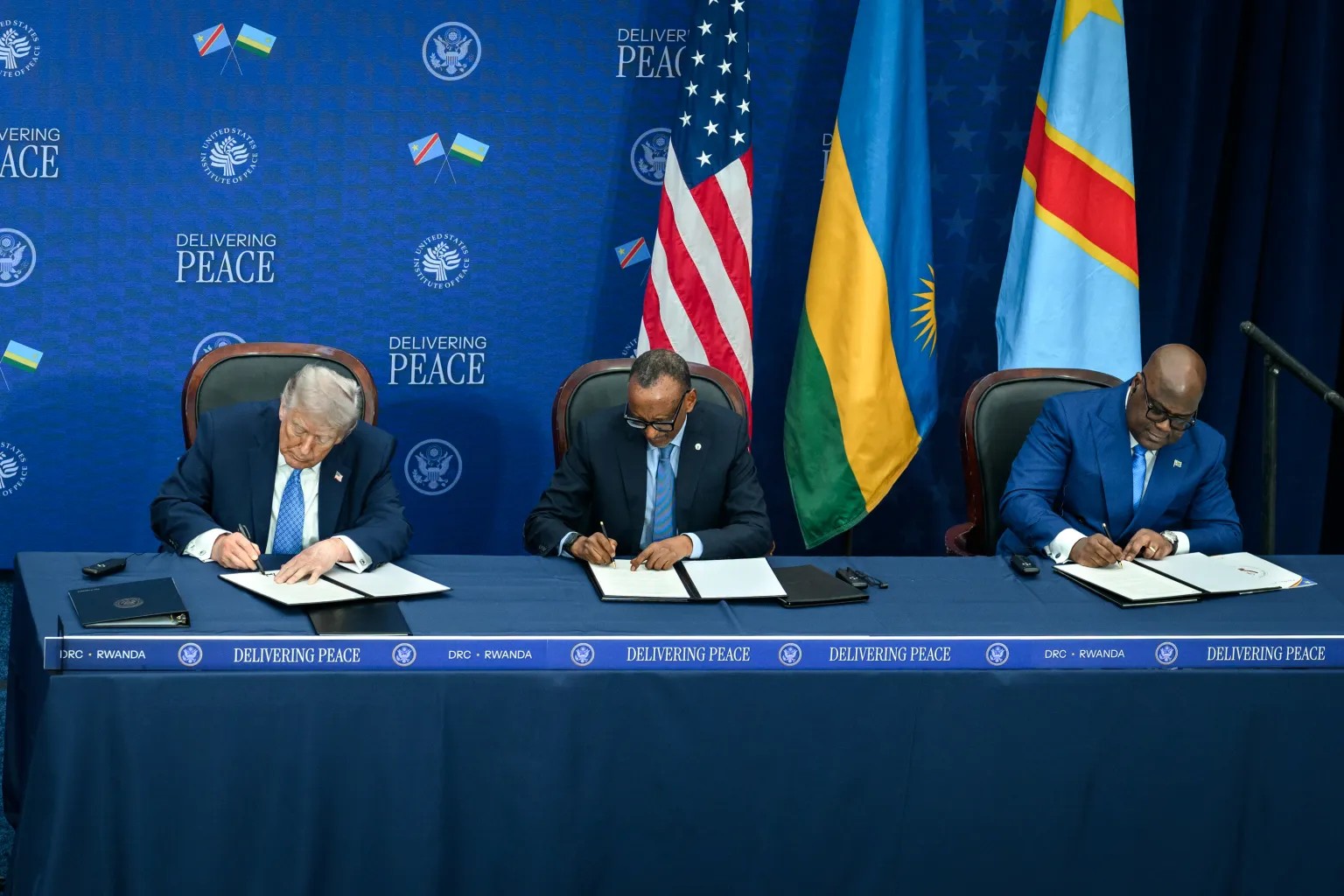
This article examines the USA-mediated peace agreement between Rwanda and the Democratic Republic of the Congo (DRC) through the lens of populist diplomacy, arguing that the initiative reflects a broader shift toward performative and transactional approaches to conflict resolution. Framed by the Trump administration as a historic diplomatic breakthrough, the agreement was accompanied by highly symbolic gestures and declaratory rhetoric that portrayed peace as an achieved outcome rather than an ongoing and fragile process. The article highlights how the peace narrative drastically deviated from reality on the ground by drawing on developments in the eastern DRC, including ongoing M23 advances, conflicting ceasefire violations, and ongoing claims of Rwandan proxy involvement. It places this disparity within the complexity of the war between Rwanda and the DRC. The analysis also demonstrates how the peace process was infused with economic incentives, especially US access to key minerals, which reinforced a transactional logic that runs the risk of recreating extractive political economies.
Introduction
The Trump administration portrayed the signing ceremony between the presidents of Rwanda and the Democratic Republic of the Congo (DRC) in Washington, DC, as a historic diplomatic achievement that would put an end to one of Africa's bloodiest and longest-running conflicts[i]. Trump hailed the agreement as a “great day for Africa” and “a great day for the world,” framing the deal as the culmination of his personal intervention and deal-making ability[ii]. Leader-level handshakes, along with the portrayal of American diplomacy as the decisive force capable of settling a problem steeped in decades of violence, were all staged. However, this performativity[iii] did not sit well with real-world circumstances. Fighting persisted throughout the eastern DRC even after the deal was finalised, especially in North and South Kivu, where the M23 armed group, supported by Rwanda[iv], took control of important towns like Goma and Uvira, and built parallel governmental institutions[v].
The United Nations and the West continued to accuse Rwanda of exercising de facto control over M23 operations, allegations Kigali publicly denies while invoking the enduring threat posed by Hutu militias linked to the 1994 Rwandan genocide[vi]. This contrast between material reality and diplomatic spectacle is not accidental. It illustrates a larger trend in Trump's strategy for resolving international conflicts, which favours transactional incentives, in this case, US access to the DRC's enormous reserves of vital minerals over long-term political settlement. This article argues that, by situating the Rwanda-DRC agreement within this broader framework, Trump's mediation embodies a distinctly populist style of diplomacy characterised by spectacle, while ignoring the deeper political nuances underpinnings of the conflict.
Why the Rwanda-DRC Conflict Resists Simple Solutions?
The Rwanda-DRC conflict resists simple diplomatic solutions because it is not a discrete interstate dispute but a layered crisis that operates simultaneously at local, national, regional, and historical levels. Hyperlocal conflicts over land, mineral wealth, and political affiliation are the primary causes of violence in DRC, especially in North and South Kivu, where armed groups fight for recognition as “Congolese” in areas characterised by long-standing ethnic pluralism[vii]. Even though the UN has documented Rwanda's material and operational involvement in M23 advances, the M23 rebellion, which is primarily composed of Congolese Tutsi fighters, derives its legitimacy from both local grievances and transnational narratives of protection rooted in the aftermath of the 1994 Rwandan genocide[viii]. At the national level, the Congolese state itself remains a central part of the problem. Congolese security forces are widely perceived by the local population as unable to maintain territorial control without escalating harm to civilians, while President Félix Tshisekedi leads a government whose democratic legitimacy has been repeatedly questioned following flawed electoral processes in 2019 and 2023[ix]. Although the majority of analysts consider Hutu militias, such as the Democratic Forces for the Liberation of Rwanda (FDLR), to be militarily weakened, Rwanda can justify its involvement by citing its continuous presence, which is attributed to these internal deficiencies, creating an atmosphere conducive to external intervention[x]. At the regional level, the conflict is further complicated by Burundi's alignment with DRC, as well as the larger security dynamics of the Great Lakes, where mutual accusations, proxy warfare, and shifting alliances make bilateral confidence precarious at best[xi].
Beneath these contemporary layers lies a deeper historical structure of instability shaped by colonial legacies and Cold War interventions. From Belgium’s deliberate underdevelopment of Congolese institutions to the CIA-backed installation and prolonged support of Mobutu Sese Seko, which detached state survival from domestic accountability and entrenched patterns of misrule that successive peace agreements have failed to undo[xii]. Additionally, efforts to keep peacebuilding separate from geopolitical rivalry have been made more difficult by the strategic importance of the eastern Congo's mineral wealth, which attracts foreign powers and encourages armed groups to control the territory. The Rwandan-DRC conflict persists not because peace has not been declared frequently enough, but rather because its underlying structures consistently resist reduction to a single agreement or diplomatic moment.
Problem with Populist Peacekeeping
Trump’s mediation of the Rwanda-DRC agreement exemplifies a populist style of peacekeeping in which diplomatic substance is subordinated to political performance, and structural complexity is flattened into a narrative of personal intervention. The accord is frequently framed as “historic,” a rhetorical device that positions peace as a singular event made possible by the leader's presence and determination rather than as a precarious process[xiii]. Trump's description of the signing as “a great day for Africa” and “a great day for the world” is indicative of a larger trend in which peace is portrayed as an achievement that has already been made rather than as a contingent and reversible result that depends on enforcement and compliance. This performative declaration of success is characteristic of populist diplomacy, where the authority to define reality rests with the leader rather than with empirical developments on the ground[xiv]. In fact, M23 forces were advancing in the eastern DRC, consolidating control over important towns, and openly defying the spirit, if not the letter, of the agreement even as the Washington ceremony was being celebrated[xv]. Trump's rhetoric not only ignored this incongruity but actively attempted to transcend it through narrative assertion.
The personalising of the peace process, which reduced a war with profound regional and global roots to a matter of trust between strong leaders, is equally important. Trump frequently expressed his faith in Presidents Tshisekedi and Kagame, framing compliance as a matter of personal dedication. He even mispronounced both leaders' names when speaking in public, which is a clear indication that symbolic affirmation has replaced contextual familiarity[xvi]. This leader-centric framing sidelines regional organisations, peacekeeping missions, and enforcement mechanisms that have historically shaped conflict management in the Great Lakes region, while amplifying the populist trope of the dealmaker who succeeds precisely because he bypasses bureaucratic constraints[xvii]. The end effect is a diplomacy that prioritises spectacle (public declarations of peace and summits) over the unglamorous task of governance reform. Trump's public self-identification as the president of peace, which is further demonstrated by his frequent assertions that he has resolved several foreign conflicts, serves as an example of how peacekeeping is no longer a collaborative international endeavour but rather a means of personal political branding[xviii].
This emphasis on style over structure also manifests in the simplification of causality, where enduring violence is treated as a residual problem rather than as evidence of unresolved power relations. Despite persistent claims that Rwanda exercises de facto control over M23 operations and continues to deny troop presence in eastern Congo, the Rwandan-DRC conflict, shaped by genocide memory and proxy warfare, was subtly reframed as a resolvable misunderstanding between states[xix]. Populist peacekeeping reverses the conventional logic of diplomacy by announcing peace before compliance, delaying or externalising implementation. In this sense, Trump’s mediation did not merely underestimate the conflict’s complexity; it actively reimagined peace as a performative act, one whose credibility derives less from changes on the ground than from the authority and visibility of the leader who proclaims it.
Transactional Diplomacy
The economic dimension of the Rwanda–DRC agreement reveals how Trump’s peacekeeping approach is underpinned by a distinctly transactional logic. Trump publicly stated that the United States would seek bilateral agreements with both Rwanda and the DRC to secure access to rare earth minerals concurrently with the announcement of the peace deal[xx]. His claim that “everyone is going to make a lot of money” encapsulated the fundamental tenet of this strategy, which is that political trust and reliable enforcement mechanisms can be replaced by shared economic incentives[xxi]. This framing is consistent with Trump's larger foreign policy approach, which views peace as a transaction rather than as a common good. This pattern was already evident in his mediation attempts in the Middle East[xxii]. However, such economic optimism runs the risk of replicating the very patterns that have maintained conflict for decades in the eastern Congo, where mining wealth has often served as a catalyst for violence rather than its remedy.
With Rwanda, China, and certain Western states all directly or indirectly involved in extractive competition, the Eastern DRC’s enormous reserves of cobalt, copper, lithium, and other strategic minerals have drawn outside actors and encouraged armed territorial control[xxiii]. A significant portion of the Congo's mining industry is currently dominated by Chinese companies, a trend that has increasingly influenced US strategic thinking, particularly as Washington seeks to reduce its reliance on Chinese-controlled supply chains for technology and renewable energy sources[xxiv]. Within this context, Trump’s mediation cannot be separated from geopolitical calculations: brokering peace offered not only symbolic diplomatic credit but also a potential pathway to reinsert US companies into a resource landscape where American influence has waned. However, transactional diplomacy runs the risk of legitimising a precarious equilibrium in which economic cooperation continues alongside ongoing bloodshed by tying peace to future investment without first resolving the underlying issues of the conflict. As long as armed organisations (M23 in this case) continue to set up parallel governments and the Rwandan military is suspected of operating in eastern Congo, significant economic integration between Rwanda and the DRC is unlikely. Trump's strategy blurs the line between peacebuilding and profit-making by treating access to minerals as both an incentive and a consequence of conflict. This reinforces a model that views peace as important insofar as it facilitates economic extraction. This logic may yield short-term diplomatic wins, but it leaves unresolved the deeper question of whether peace built on transactional leverage can endure once the economic calculus shifts or external interest wanes.
Contradictions in the Trumpian Peace Narrative
The fragility of Trump’s peace narrative becomes most visible in the contradictions that emerged almost immediately after the Washington signing ceremony, exposing the gap between declaratory diplomacy and empirical reality. Trump publicly praised the agreement as a miracle and expressed his confidence that Rwanda and the DRC will fulfil their commitments. These claims, however, were quickly called into question by reports of continued combat in eastern Congo, where M23 troops were advancing into Uvira and securing control of crucial territory in South Kivu[xxv]. Congolese President Félix Tshisekedi accused Rwanda of violating the pact within days of its ratification, alleging that Rwandan forces had supported operations with heavy armament prior to the agreement's signing. These accusations were dismissed by Kigali as scapegoating attempts[xxvi]. These exchanges reflect a familiar pattern in protracted conflicts, where ceasefires become sites of mutual blame rather than mechanisms for de-escalation. However, they also demonstrate how populist peacekeeping exacerbates these failures by declaring victory too soon, thereby reducing the room for diplomatic adjustment. The idea that strong military and political incentives on the ground could be defeated by leader-level commitment alone was called into doubt by the violence, which was a direct challenge to the peace narrative rather than a minor divergence from it.
Further cracks in the peace narrative emerged from the selective and inconsistent moral framing that accompanied Trump’s mediation. Only a few days prior, he had disparaged Somalia, referring to it as “hell” and making disparaging remarks about Somali Americans[xxvii]. His cordial reception of Rwanda and the DRC as peaceful allies was in stark contrast to this description. This juxtaposition highlights a key characteristic of populist foreign policy: the fluid construction of friends and enemies, based not on principled criteria or regional coherence, but on the immediate narrative utility. Such inconsistency undermines the legitimacy of peace efforts by suggesting that diplomatic participation is situational and performative rather than rooted in a genuine commitment to conflict resolution. Furthermore, it makes Washington's role as an impartial mediator more challenging, particularly in a region where feelings of outside prejudice and historical grievances are already deeply embedded. The fact that important armed actors are not included in the accord itself exacerbates the contradiction. Despite not being a signatory to the Washington Accords and continuing to pursue its goals through parallel negotiations in the Qatar-led Doha process, M23 – widely regarded as the dominant military force in the conflict – effectively operated outside the framework that Trump declared decisive.
These contradictions point to a deeper incoherence within the peace narrative itself: peace was framed as an achieved outcome even as its foundational conditions remained unmet. Formal pledges coexist with informal practices that maintain conflict, as demonstrated by Rwanda's persistent denial of army presence in the eastern Democratic Republic of Congo, despite repeated findings by UN experts stating Kigali's de facto influence over M23 operations[xxviii]. In this way, the emphasis on economic cooperation and future investment conflicted with unresolved questions of territorial sovereignty, militia reintegration, and governance reform, suggesting that peace was being told forward rather than built outward. In this sense, the gaps in the story are not accidental; rather, they are an indication of a diplomacy that prioritises declaration over alignment and symbols above evidence. Populist mediation undermines the legitimacy of the agreement and the authority of the mediator, who claims it as a personal victory by turning contradictions into annoyances rather than warning signs, thereby declaring peace in the absence of compliance.
What would a Durable Peace Plan look Like?
A durable peace between Rwanda and the DRC would require a decisive shift away from performative diplomacy toward sustained structural engagement. The emergence of a capable and legitimate Congolese state – one that can exercise territorial sovereignty through legal democratic processes rather than contested electoral mandates – is necessary for any meaningful internal solution. Due to long-standing patterns of corruption and incompetence of the Congolese government, armed groups have established themselves as alternative authorities in eastern regions. This emphasises that peace cannot be imposed from the outside without commensurate investments in security sector accountability and government reform. Equally critical is the need for sustained external pressure on Rwanda, whose military leverage in eastern DRC remains a central obstacle to the de-escalation of the conflict. Western governments have considerable influence over Kigali because of Rwanda's dependence on international loans and aid[xxix]. Coordinated pressure, such as the diplomatic engagement and assistance suspensions conducted in 2012-13, can alter Rwandan calculations if employed consistently rather than intermittently[xxx].
Beyond bilateral dynamics, a durable peace would also require integrating armed actors into a negotiated political framework. The absence of M23 in the Washington Accords highlights the limitations of state-centric agreements in conflicts where non-state actors possess substantial military and territorial power, particularly when such parties have no immediate incentive to disarm[xxxi]. Reintegration, disarmament, and local reconciliation processes are crucial if ceasefires are to lead to long-term peace. Regional peacebuilding must consider the interconnected security concerns of neighbouring states like Burundi, whose involvement reflects shared histories of ethnic violence and cross-border insurgency. This, in turn, demands multilateral coordination through regional organisations and international institutions to ensure accountability. Economic cooperation can only function as a stabilising force when it follows a political solution rather than replacing it. In the absence of clear governance and efficient enforcement, investments run the risk of reinforcing extractive hierarchies that benefit elites and armed actors. Durable peace in the Great Lakes region requires a strategy that views peace as a process to be maintained, rather than a moment to be declared, in contrast to populist peacekeeping, which prioritises immediacy and notoriety.
Conclusion
The Rwanda-DRC agreement brokered by Donald Trump encapsulates what may be described as the populist peace paradox: the capacity to declare peace loudly and visibly, while simultaneously weakening the conditions required for it to endure. Trump turned a deeply ingrained regional conflict into a stage for performative diplomacy by portraying peace as a personal accomplishment. This strategy did more than simply underestimate the complexity of the Great Lakes crisis; it actively redefined peace as an event rather than a process. The paradox lies in the fact that populist diplomacy can generate short-term momentum and symbolic breakthroughs precisely because it bypasses procedural constraints, yet this same bypassing erodes enforcement and durability. Peace was rhetorically elevated but structurally hollowed out in Rwanda and DRC, relying on transactional incentives and leader-centric promises. The lesson to be drawn from Trump's mediation is not that peace efforts are futile, but rather that a proclamation of peace without institutional backing runs the risk of becoming merely another layer of conflict narrative rather than its resolution.
References:
[i] Emery Makumeno, Samba Cyuzuzo, Natasha Booty, and Bernd Debusmann Jr., “Trump hails ‘historic’ peace deal between DR Congo and Rwanda,” BBC News, December 5, 2025, https://www.bbc.com/news/articles/cjrjn88jqn4o.
[ii] “Trump hails ‘great day for the world’ as DRC, Rwanda finalise peace deal,” Al Jazeera, December 4, 2025, https://www.aljazeera.com/news/2025/12/4/trump-hails-great-day-for-the-world-as-drc-rwanda-finalise-peace-deal
[iii] An endnote on the idea of performativity and how it is being described here for that matter.
[iv] Damian Zane and Wedaeli Chibelushi, “What’s the fighting in DR Congo all about?” BBC News, December 5, 2025, https://www.bbc.com/news/articles/cgly1yrd9j3o
[v] “DR Congo: US pressure forces M23 to retreat from Uvira,” DW News, December 17, 2025, https://www.dw.com/en/dr-congo-us-pressure-forces-m23-to-retreat-from-uvira/a-75186776
[vi] David Lewis, Sonia Rolley, and Giulia Paravicini, “M23 rebels entrench their rule in east Congo even as Trump claims peace,” Reuters, December 9, 2025, https://www.reuters.com/investigations/m23-rebels-entrench-their-rule-east-congo-even-trump-claims-peace-2025-12-08/; Damian Zane and Wedaeli Chibelushi, “What’s the fighting in DR Congo all about?” BBC News, December 5, 2025, https://www.bbc.com/news/articles/cgly1yrd9j3o
[vii] Stuart Reid and Mariel Ferragamo, “War Returns to the Democratic Republic of Congo: What to Know,” Council on Foreign Relations, February 7, 2025, https://www.cfr.org/article/war-returns-democratic-republic-congo-what-know
[viii] Paul Nantulya, “Risk of Regional Conflict Following Fall of Goma and M23 Offensive in the DRC,” Africa Center for Strategic Studies, January 29, 2025, https://africacenter.org/spotlight/risk-of-regional-conflict-following-fall-of-goma-and-m23-offensive-in-the-drc/
[ix] Reuben Loffman, “The DRC’s election was flawed. But it still offers signs of hope,” The Conversation, January 8, 2019, https://theconversation.com/the-drcs-election-was-flawed-but-it-still-offers-signs-of-hope-109442; Jason K. Stearns, “DR Congo elections: How Félix Tshisekedi won chaotic poll,” BBC News, January 3, 2024, https://www.bbc.com/news/world-africa-67833216; Mvemba Phezo Dizolele and Pascal Kambale, “Congo’s Least Bad Elections: How a Fragile Democracy Inched Forward—and How It Can Consolidate the Gains,” Foreign Affairs, January 19, 2024, https://www.foreignaffairs.com/democratic-republic-congo/congos-least-bad-elections
[x] Erik Kennes, “What does Rwanda want in the DRC?” Egmont Institute, July 19, 2024, https://www.egmontinstitute.be/what-does-rwanda-want-in-the-drc/
[xi] Emery Makumeno, Farouk Chothia, and Wycliffe Muia, “Rebels reportedly enter key DR Congo city despite Trump peace deal,” BBC News, December 10, 2025, https://www.bbc.com/news/articles/cly59283d7ko
[xii] Denis M. Tull, “Troubled State-Building in the DR Congo: The Challenge from the Margins,” The Journal of Modern African Studies 48, no. 4 (2010): 643–61, http://www.jstor.org/stable/40961832
[xiii] Liam Karr and Yale Ford, “What Trump’s ‘Historic’ Rwanda–DR Congo Peace Deal Doesn’t Achieve,” TIME, December 9, 2025, https://time.com/7339284/trump-rwanda-drc-peace-deal/
[xiv] Hakk? Ta?, “The Formulation and Implementation of Populist Foreign Policy: Turkey in the Eastern Mediterranean,” Mediterranean Politics 27, no. 5 (2022): 563–87, https://doi.org/10.1080/13629395.2020.1833160
[xv] “M23 armed group says it begins withdrawing from key DR Congo town of Uvira,” Al Jazeera, December 17, 2025, https://www.aljazeera.com/news/2025/12/17/drc-says-m23-vow-to-pull-out-of-uvira-is-a-distraction-as-forces-remain
[xvi] Kathryn Palmer, “Trump fumbles African leaders’ names, jokes about ‘killing each other’,” USA Today, December 4, 2025, https://www.usatoday.com/story/news/politics/2025/12/04/trump-rwanda-congo-peace-agreement/87607729007/
[xvii] D. Jenkins, “Understanding and Evaluating Populist Strategy,” Philosophy & Social Criticism 51, no. 1 (2023): 77–97, https://doi.org/10.1177/01914537231155171
[xviii] David A. Graham, “Trump’s ‘Peace President’ Claim Isn’t Holding Up,” The Atlantic, December 17, 2025, https://www.theatlantic.com/newsletters/2025/12/trump-peace-president-unresolved-conflicts/685305/
[xix] Christophe Châtelot, “In Washington, DRC and Rwanda sign fragile peace agreement under auspices of Trump,” Le Monde, December 5, 2025, https://www.lemonde.fr/en/le-monde-africa/article/2025/12/05/in-washington-drc-and-rwanda-sign-fragile-peace-agreement-under-auspices-of-trump_6748181_124.html
[xx][xx] “Trump hails ‘great day for the world’ as DRC, Rwanda finalise peace deal,” Al Jazeera, December 4, 2025, https://www.aljazeera.com/news/2025/12/4/trump-hails-great-day-for-the-world-as-drc-rwanda-finalise-peace-deal
[xxi] Emery Makumeno, Samba Cyuzuzo, Natasha Booty, and Bernd Debusmann Jr., “Trump hails ‘historic’ peace deal between DR Congo and Rwanda,” BBC News, December 5, 2025, https://www.bbc.com/news/articles/cjrjn88jqn4o
[xxii] Jeffrey Sachs and Sybil Fares, “From illusion to real peace: Trump’s test in Gaza and Ukraine,” Al Jazeera, October 23, 2025, https://www.aljazeera.com/opinions/2025/10/23/from-illusion-to-real-peace-trumps-test-in-gaza-and-ukraine
[xxiii] Paul Nantulya, “China’s Critical Minerals Strategy in Africa,” Africa Center for Strategic Studies, December 9, 2025, https://africacenter.org/spotlight/china-africa-critical-minerals/
[xxiv] Paul Nantulya, “China’s Critical Minerals Strategy in Africa,” Africa Center for Strategic Studies, December 9, 2025, https://africacenter.org/spotlight/china-africa-critical-minerals/
[xxv] “Trump hosts Congo, Rwanda leaders in latest push for peace,” Reuters, December 4, 2025, https://www.reuters.com/world/africa/trump-hosts-congo-rwanda-leaders-latest-push-peace-2025-12-04/
[xxvi] Trevor Hunnicutt, “Congo, Rwanda leaders affirm commitment to Trump-backed peace deal,” Reuters, December 5, 2025, https://www.aljazeera.com/news/2025/12/9/drc-accuses-rwanda-of-peace-deal-violations-as-m23-advances-in-the-east
[xxvii] Zolan Kanno-Youngs and Shawn McCreesh, “Trump Calls Somalis ‘Garbage’ He Doesn’t Want in the Country,” New York Times, December 2, 2025, https://www.nytimes.com/2025/12/02/us/politics/trump-somalia.html
[xxviii] Musinguzi Blanshe, “UN experts cast blame on Rwanda and Uganda. What are they doing in DRC?” Al Jazeera, July 18, 2025, https://www.aljazeera.com/news/2025/7/18/un-experts-cast-blame-on-rwanda-and-uganda-what-are-they-doing-in-drc
[xxix] Cai Neber, “Explaining the West’s love affair with Rwanda,” DW News, March 15, 2025, https://www.dw.com/en/explaining-the-wests-love-affair-with-rwanda/a-64980547
[xxx] “UK and the Netherlands withhold Rwanda budget aid,” BBC News, July 27, 2012, https://www.bbc.com/news/world-africa-19010495
[xxxi] Sheriff Bojang Jnr., “DRC: M23 withdrawal from Uvira puts pressure on Washington and Doha,” The Africa Report, December 16, 2025, https://www.theafricareport.com/402529/drc-m23s-unilateral-withdrawal-from-uvira-puts-pressure-on-washington-and-doha/
(The views expressed are those of the author and do not represent the views of CESCUBE)
Image Source: The White House https://www.whitehouse.gov/gallery/president-donald-trump-president-paul-kagame-of-the-republic-of-rwanda-and-president-felix-tshisekedi-of-the-democratic-republic-of-the-congo-sign-washington-accords-for-peace/

Jyot Shikhar Singh has completed his graduation in Political Science (Hons.) from University of Delhi and his post- graduation in Diplomacy, Law, and Business from Jindal School of International Affairs. His research areas focus on the political and strategic interaction of foreign policies through national developments, especially European politics, and development. Other than international relations, his interest in political philosophy, focusing on post- structural school of international relations, is part of his objective to focus on the theoretical understanding of international relations including factors like culture and nationalism. He is currently associated with CESCUBE as research associate. He is currently associated with CESCUBE as research associate.